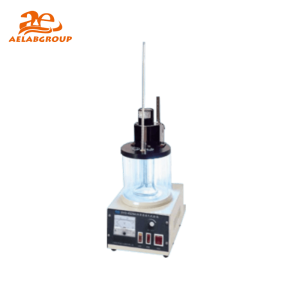
AELAB | Petroleum Testing Equipment | Dropping Point Tester
Dropping Point Tester
Introduction
A Dropping Point Tester determines the temperature at which a lubricating grease becomes fluid enough to form a drop, indicating its upper service temperature. This fast, precise test is essential for high-temperature grease testing in automotive, aerospace, and industrial environments.
What Is Dropping Point Tester?
A Dropping Point Tester is a laboratory instrument that measures the grease dropping point—the temperature at which a grease softens under controlled heating and releases a drop through a small orifice. This parameter helps define the upper temperature limit for grease applications and supports product development, quality control, and compliance with standards such as ASTM D566, ASTM D2265, and ISO 2176.
Devices in This Category
Manual Dropping Point Tester (ASTM D566 oil-bath method)
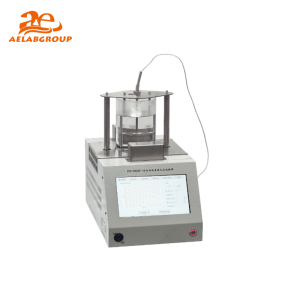
Semi-Automatic Dropping Point Tester (digital readout + optical detection)
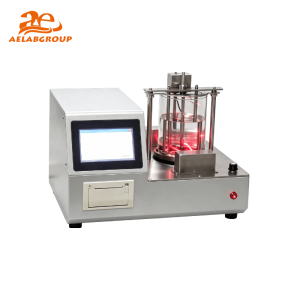
Fully Automated Dropping Point Tester (touchscreen, programmable protocols)
High-Temperature Dropping Point Tester (per ASTM D2265)
Automated dropping point apparatus with optical drop sensing
Technical Features and Specifications
FeatureDetails
Temperature RangeUp to 400 °C or higher (model dependent)
Temperature Accuracy±0.1 °C or better for automated systems
Heating RateProgrammable, typically 1–2 °C/min
Detection MethodVisual (manual) or optical drop detection (automated)
Compliance StandardsASTM D566, ASTM D2265, ISO 2176
Interface & ConnectivityDigital display; USB/Ethernet for data export
ThroughputSingle or multi-sample configurations
Sample FormatGrease cup with calibrated orifice; prepared grease specimens
Benefits
Precise characterization of grease thermal stability and upper service limit
Supports formulation screening and QC release decisions
Automated optical detection improves repeatability and reduces operator bias
Standardized per ASTM/ISO methods for global comparability
Programmable heating profiles streamline high-throughput testing
Applications and Tests
🔬 Molecular Biology
Qualification of instrument grease for centrifuge and shaker bearings used near incubators
Verification of thermal stability for greases used in lab robotics and pipetting systems
🧪 Clinical Diagnostics
QA of maintenance greases in analyzers and centrifuge rotors
Vendor qualification of high-temperature greases for automated clinical platforms
🏭 Industrial & Food Testing
Automotive bearing and engine component grease evaluation
Aerospace actuator and control system lubricant screening
Industrial machinery lubrication design and QC release
Grease formulation benchmarking against ASTM D566/D2265
🌱 Environmental & Agricultural Labs
Selection of grease for field instruments exposed to temperature extremes
Durability checks for lubricants used in environmental samplers and pumps
Dropping Point Tester vs. Melting Point Tester
AspectDropping Point TesterMelting Point Tester
Target SampleLubricating greases (semi-solids)Waxes, fats, pharmaceuticals, chemicals
Measurement FocusTemperature at first drop (flow onset)Temperature of complete melting/phase transition
Typical MethodsASTM D566, ASTM D2265, ISO 2176ASTM D127, USP, ISO 926
Heating ArrangementGrease cup with orifice; oil bath or electric heaterCapillary tube in oil or electrical bath/block
Application DomainAutomotive, aerospace, industrial lubricationPharma, food, chemicals, materials science
Expert Tips for Choosing the Right Dropping Point Tester
Match temperature range and accuracy (±0.1 °C) to your highest expected dropping points.
Prefer optical detection and programmable heating for repeatable, operator-independent results.
Verify ASTM D566/D2265 and ISO 2176 compliance in product documentation.
Select single vs. multi-position systems based on throughput and QC cycle times.
Plan for calibration tools, certified reference materials, and data export (USB/Ethernet).
Maintenance Best Practices
Clean cups, orifices, and holders after each run to prevent residue-induced false drops.
Verify temperature calibration monthly with certified standards; document results.
Inspect optical sensors and windows; remove deposits that impede detection.
Check heating rate verification and re-tune control loops as required.
Replace worn seals, gaskets, and bath fluids per manufacturer intervals.
FAQ
Q: What is the dropping point of grease?
A: It is the temperature at which a grease becomes fluid enough to release a drop through a calibrated orifice, indicating its upper temperature limit in service.
Q: Which standards are used for dropping point testing?
A: ASTM D566 (manual, oil bath) and ASTM D2265 (higher-temperature applications) are most common; ISO 2176 provides an international method.
Q: Is the dropping point the same as the melting point?
A: No. Dropping point reflects flow onset in a structured semi-solid (grease), while melting point describes a phase change of relatively pure solids such as waxes or pharmaceuticals.
Q: Can dropping point predict maximum operating temperature?
A: It provides an upper limit indicator, but safe operating temperatures are typically below the dropping point and also depend on oxidation stability and base oil volatility.