AELAB | Pharmaceutical Equipments | Abbe Refractometer
Abbe Refractometer
Introduction
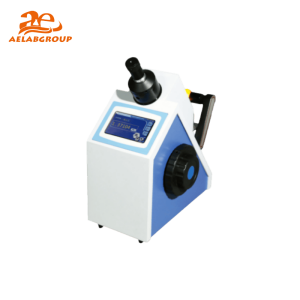
An Abbe Refractometer is a precision lab refractometer used for refractive index measurement and Brix analysis across research, QC, and food industries. Trusted for quick, accurate results, the Abbe Refractometer supports both liquids and transparent solids with excellent repeatability.
What Is Abbe Refractometer?
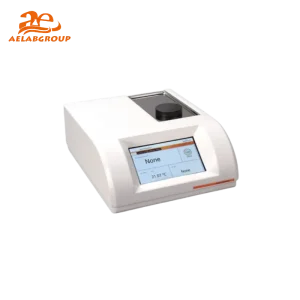
An Abbe refractometer is an optical instrument (originating from Ernst Abbe’s design) that determines a sample’s refractive index by applying Snell’s Law to light passing through a prism-sample interface. Core components typically include a prism assembly for sample placement, a light source (white light or LED), a viewing system or digital display, and thermostatic control to stabilize temperature for accurate readings.
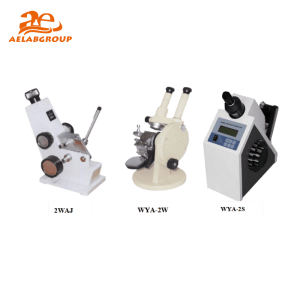
Devices in This Category
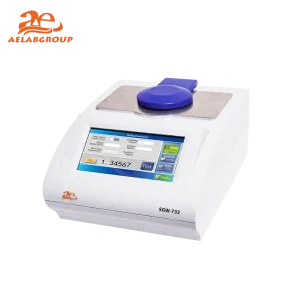
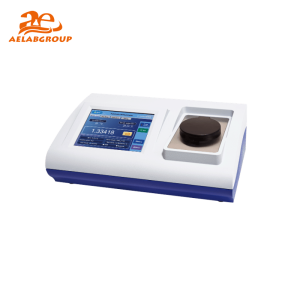
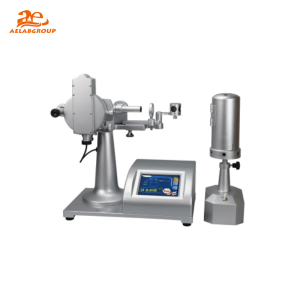
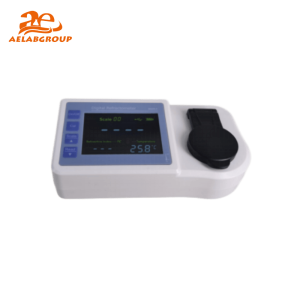
Manual Abbe refractometer (viewfinder/scale readout)
Digital Abbe refractometer (automated measurement)
Thermostated Abbe refractometer for temperature control
Abbe refractometer for Brix and RI measurements
Abbe refractometer with LED/white-light illumination
High-accuracy Abbe refractometer for liquids and transparent solids
Technical Features and Specifications
FeatureDetails
Measurement PrincipleSnell’s Law–based refraction at sample–prism interface
AccuracyUp to ±0.0002 RI (model-dependent)
Temperature ControlThermostatic control; best practice at 20 °C; many models offer ATC
Measurement ModesRefractive Index (nD) and Brix (%) conversion
Light SourceWhite light or LED illumination
Display/ReadoutTelescope/viewfinder scale (manual) or digital display with data logging (digital)
CalibrationDistilled water or certified standards; user-adjustable
Sample CompatibilityLiquids and transparent solids; not suited for opaque/highly viscous samples
Typical RangeModel-dependent; select based on expected RI/Brix of samples
Benefits
High accuracy and repeatability for critical QC and research.
Measures both refractive index and Brix for flexible workflows.
Works with liquids and many transparent solids.
Straightforward calibration using water or certified standards.
Digital models reduce operator bias and speed up throughput.
Applications and Tests
🔬 Molecular Biology
Solvent purity checks for buffer preparation
Polymer and resin RI verification for optical studies
Characterization of transparent films or gels
🧪 Clinical Diagnostics
Urine specific gravity estimation (via RI)
Formulation and concentration checks of reagents
Pharmaceutical excipient identification and QC
🏭 Industrial & Food Testing
Brix measurement in juices, syrups, and wines
Raw material identification in chemical manufacturing
Process control for concentration and purity
🌱 Environmental & Agricultural Labs
Pesticide formulation checks (transparent matrices)
Soil extract and nutrient solution screening (clear samples)
Water quality assessment for dissolved solids (RI trend)
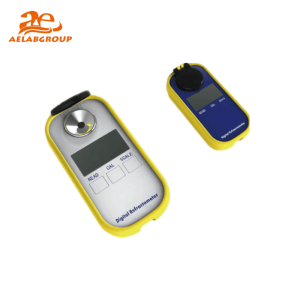
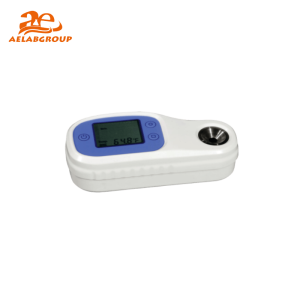
Abbe Refractometer vs. Handheld Refractometer
AspectAbbe RefractometerHandheld Refractometer
AccuracyHigh; suitable for research/QCModerate; field screening
Sample TypesLiquids & some transparent solidsPrimarily liquids
PortabilityBench-top, stationaryHighly portable
CostHigherLower
Temperature CompensationCommon (thermostat/ATC)Optional/limited
Throughput & DataDigital models support logging & traceabilityUsually manual readout
Expert Tips for Choosing the Right Abbe Refractometer
Check measurement range to cover expected RI or Brix values.
Prioritize temperature compensation (built-in thermostat or ATC) for accuracy.
Choose digital vs. manual based on throughput and need to reduce reading errors.
Look for scratch-resistant glass prisms and robust prism mounts for durability.
Consider reputable manufacturers and service availability for long-term support.
Maintenance Best Practices
Calibrate regularly with distilled water or certified standards.
Clean prisms after each use with ethanol or distilled water; avoid abrasive wipes.
Maintain instrument at ~20 °C; allow samples to reach thermal equilibrium.
Inspect seals and prism contact surfaces; address scratches or residue promptly.
Protect from dust and spills; cover the instrument when not in use.
FAQ
Q: What does an Abbe refractometer measure?
A: It measures refractive index (nD) and can report Brix (%) for suitable samples, aiding identification and concentration checks.
Q: How accurate is an Abbe refractometer?
A: Modern instruments can reach ±0.0002 RI under controlled temperature and proper calibration.
Q: Can you use an Abbe refractometer for Brix measurements?
A: Yes. Most models convert RI to Brix, widely used in food and beverage quality control.
Q: Why is temperature control important?
A: Refractive index is temperature-sensitive; maintaining ~20 °C or using ATC ensures consistent, accurate readings.
Q: Are opaque or viscous samples suitable?
A: No. Abbe refractometers require clear, well-wetting samples; highly opaque or very viscous materials can compromise accuracy.