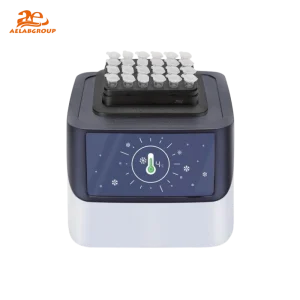
AELAB | Themostat Equipment | Ice Maker/Freezer | Ice Maker
Ice Maker
Introduction
An Ice Maker is a machine designed to automatically produce ice cubes or flakes, offering a reliable and hygienic supply of ice for various settings. From households and restaurants to laboratories and commercial facilities, ice makers provide the convenience of on-demand ice production, ensuring consistent cooling for beverages, samples, and perishables.
Key Features
Automatic water intake and freezing cycle with storage bin.
Multiple ice forms available: cube, flake, or nugget shapes.
Automatic shut-off when storage bin reaches capacity.
Energy-efficient design for reduced power consumption.
Durable stainless-steel housing and easy-to-clean components.
Compact countertop or large industrial models for diverse needs.
Optional air- or water-cooled systems for temperature stability.
Technical Specifications
Feature
Specification
Ice Type
Cube, Flake, or Nugget
Production Capacity
10–100 kg per 24 hours (model dependent)
Storage Capacity
2–50 kg of ice
Operating Temperature
0°C to -5°C
Power Supply
AC 220–240V, 50/60 Hz
Material
Stainless Steel and Food-Grade Plastic
Cooling System
Air-cooled or Water-cooled
Control Interface
Digital or mechanical control panel
Benefits
Provides a consistent and hygienic ice supply for various uses.
Reduces dependency on external ice supply or manual ice making.
Energy-efficient operation lowers running costs.
Compact and ergonomic designs suit both small and large-scale applications.
Automatic operation with minimal user intervention.
Applications
Laboratories: Cooling reagents, maintaining sample temperatures.
Healthcare: Preserving medical samples and vaccine storage support.
Hospitality: Beverage service in restaurants, bars, and hotels.
Food Industry: Food display, seafood storage, and processing.
Commercial & Industrial: Ice production for packaging and transport cooling.
Maintenance Best Practices
Clean the water lines and ice bin every 1–2 weeks to prevent biofilm and scaling.
Use filtered water to reduce mineral buildup and improve ice clarity.
Inspect water inlet valves and filters periodically for clogging.
Defrost and sanitize components regularly following manufacturer guidelines.
Ensure proper ventilation around the machine to maintain efficiency.
FAQ
Q: How does an ice maker work?
A: The machine draws water from a connected supply, freezes it into cubes or flakes, and automatically releases the ice into a storage bin when complete.
Q: How often should I clean my ice maker?
A: Regular cleaning every 1–2 weeks is recommended to prevent bacteria and mineral buildup, especially in high-usage environments.
Q: Can I choose different ice shapes?
A: Yes, most ice makers allow you to select from cube, flake, or nugget ice depending on the model and intended use.
Q: What’s the difference between a commercial and household ice maker?
A: Household models are compact with smaller production capacities, while commercial units are larger, produce ice continuously, and are built for heavy-duty operation.