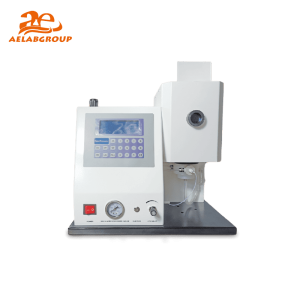
AELAB | Analytical Equipment | Flame Photometer
Laboratory Flame Photometer
Introduction
The Laboratory Flame Photometer is a vital analytical instrument designed for rapid and accurate determination of alkali and alkaline earth metals such as sodium, potassium, lithium, calcium, and cesium. Offering a simple and cost-effective approach to elemental analysis, it is widely applied in clinical, agricultural, pharmaceutical, environmental, and food testing laboratories.
What Is a Laboratory Flame Photometer?
A Laboratory Flame Photometer measures the concentration of specific metal ions in a sample by detecting the characteristic emission of light produced when the sample is introduced into a flame. The emitted light intensity is directly proportional to the element’s concentration, making it an essential tool for routine elemental analysis of alkali and alkaline earth metals.
Devices in This Category
Basic Laboratory Flame Photometer
Digital Flame Photometer with Dual-Channel Detection
Automatic Flame Photometer with Sample Dilution System
Microprocessor-Controlled Flame Photometer
Clinical Flame Photometer for Electrolyte Analysis
Technical Features and Specifications
Feature
Details
Elements Detected
Na, K, Li, Ca, Cs (alkali and alkaline earth metals)
Detection Range
ppm to ppb levels, depending on instrument sensitivity
Emission Wavelengths
Na: 589 nm, K: 766 nm, Li: 670 nm, Ca: 622 nm, Cs: 852 nm
Flame & Fuel
Propane, butane, or acetylene with air/oxygen mixture; up to 2000°C
Display
Analog or digital readout with concentration display
Automation
Optional auto-dilution, calibration, and multi-sample processing
Connectivity
USB/RS-232 data export, software for calibration curve plotting
Safety Features
Flame monitoring, gas pressure control, and automatic shutoff
Benefits
High sensitivity for detecting trace metal ions.
Rapid analysis and short response time per sample.
Cost-effective compared to AAS or ICP methods.
Easy to operate with minimal training.
Reliable for routine quality control and clinical testing.
Applications and Tests
🏥 Clinical and Medical Testing
Measurement of sodium and potassium in blood serum and urine.
Electrolyte balance analysis for diagnostic purposes.
🌱 Agriculture and Fertilizer Testing
Determining potassium and calcium in fertilizers and plant materials.
Soil nutrient evaluation for precision agriculture.
🌊 Environmental Monitoring
Detection of metal content in water and soil samples.
Monitoring environmental contamination and pollution sources.
🍎 Food and Pharmaceutical Analysis
Quality control of sodium and potassium levels in food and beverages.
Determination of metal content in drug formulations and raw ingredients.
Flame Photometer vs. AAS vs. ICP-AES
Feature
Flame Photometry
AAS
ICP-AES
Principle
Light emission in flame
Light absorption by atoms
Emission spectroscopy using plasma
Elements Detected
Alkali and alkaline earth metals
Most metals
Almost all elements
Sensitivity
Moderate
High
Very High
Analysis Speed
Fast
Moderate
Moderate
Cost
Low
Higher
Very High
Complexity
Simple
Moderate
High
Expert Tips for Optimizing Flame Photometer Performance
Use high-purity gas and maintain a stable flame for consistent results.
Calibrate the instrument regularly using standard solutions.
Clean sample holders, nebulizers, and tubing to prevent contamination.
Apply filters and background correction to reduce cross-interference.
Monitor gas flow and pressure to ensure flame stability.
Follow manufacturer guidelines for maintenance and safety checks.
Maintenance Best Practices
Inspect fuel lines and burner assembly for leaks or blockages.
Replace worn-out filters and tubing periodically.
Perform flame alignment checks for consistent sensitivity.
Document calibration and maintenance in a laboratory logbook.
Schedule preventive service according to usage intensity.
FAQ
Q: What elements can be measured using a flame photometer?
A: Flame photometers are designed for alkali and alkaline earth metals including Na, K, Li, Ca, and Cs.
Q: Why is flame photometry preferred for clinical electrolyte testing?
A: It provides quick, accurate, and affordable measurement of sodium and potassium levels in blood and urine, critical for assessing electrolyte balance.
Q: How can interference be minimized in flame photometry?
A: Use proper filters, calibration standards, and background correction techniques to eliminate inter-element interference.
Q: What are the advantages of a digital flame photometer?
A: Digital models offer better precision, data storage, and easy integration with computer systems for automated reporting and analysis.