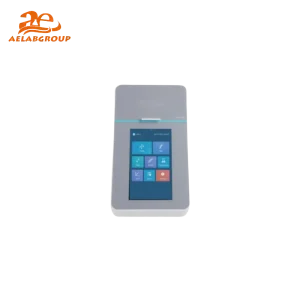
AELAB | Analytical Equipment | Fluorometer
Fluorometer
Introduction
A fluorometer is a highly sensitive analytical instrument used across biotechnology, pharmaceuticals, environmental testing, and materials science. Modern fluorometers provide rapid, precise fluorescence measurements for trace-level detection. This guide explains the principles, applications, and key features of a fluorometer to help you choose the best model for your laboratory.
What Is a Fluorometer?
A fluorometer measures the intensity of fluorescence emitted by a sample when illuminated with a specific excitation wavelength. It detects trace fluorescent compounds in liquids or solids with exceptional sensitivity, making it ideal for research, diagnostics, and industrial applications.
Devices in This Category
Filter-based fluorometers
Spectrofluorometers
Handheld fluorometers
Microplate fluorometers
Benchtop fluorometers
Portable field fluorometers
Technical Features and Specifications
Feature
Details
Excitation Source
LED or xenon lamp depending on model
Detection Range
Trace-level ppb to ppt sensitivity
Optical System
Filters or monochromators for wavelength selection
Detector Type
Photodiode or PMT for high sensitivity
Sample Formats
Cuvettes, vials, microplates, microtubes
Wavelength Range
Covers common excitation/emission wavelengths for dyes and biomolecules
Data Output
Real-time intensity, concentration, and calibration curves
Connectivity
USB, WiFi, and software integration for data export
Benefits
Ultra-high sensitivity for trace-level detection
Fast measurement and data output
Simple and user-friendly operation
Non-destructive testing of samples
Low operational costs with minimal reagent use
Applications and Tests
🔬 Molecular Biology
DNA and RNA quantification
Protein fluorescence assays
Enzyme kinetics measurements
Fluorescent labeling validation
🧪 Clinical Diagnostics
Biomarker detection
Fluorescent immunoassays
Drug level monitoring
Metabolite analysis
🏭 Industrial & Food Testing
Food freshness analysis
Detection of adulterants
Polymer and material fluorescence
Quality control testing
🌱 Environmental & Agricultural Labs
Water quality assessment
Chlorophyll and algae fluorescence
Pollutant detection
Soil and nutrient analysis
Fluorometer vs. Fluorescence Spectrometer
Aspect
Fluorometer
Fluorescence Spectrometer
Function
Fluorescence intensity measurement
Full excitation/emission spectral analysis
Complexity
Simple
Advanced
Sensitivity
High
Very high
Cost
Lower
Higher
Best Use
Routine quantification
Research & structural analysis
Expert Tips for Choosing the Right Fluorometer
Determine required sensitivity for your specific assays.
Check compatibility with dyes and excitation/emission wavelengths.
Select the appropriate detector type (photodiode vs PMT).
Ensure the instrument supports your sample format (cuvettes, microplates, etc.).
Evaluate software capabilities for data processing and export.
Maintenance Best Practices
Clean cuvettes and sample holders regularly.
Inspect and clean optical paths to avoid signal loss.
Replace aging light sources according to manufacturer guidelines.
Keep the sample chamber free from dust and spills.
Perform periodic calibration to ensure accuracy.
FAQ
Q: What types of samples can a fluorometer analyze?
A: It can test water samples, biological materials, polymers, chemicals, food extracts, and nucleic acids.
Q: How sensitive is a fluorometer?
A: Modern fluorometers detect concentrations down to low ppb or ppt levels.
Q: Can a fluorometer quantify DNA and RNA?
A: Yes, especially when used with appropriate fluorescent dyes.
Q: Do fluorometers require special training?
A: Most models are user-friendly and require minimal training to operate.