AELAB | Analytical Equipment | ICP Emission Spectrometer(ICP-AES/OES/MS)
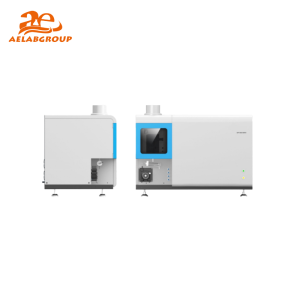
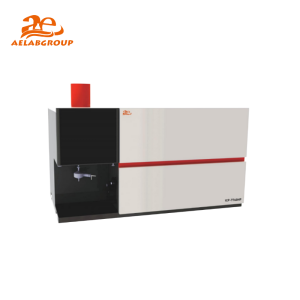
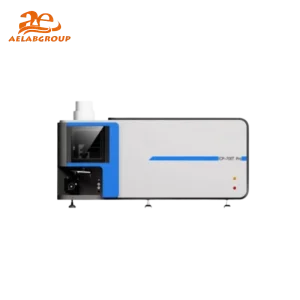
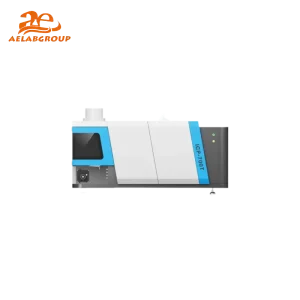
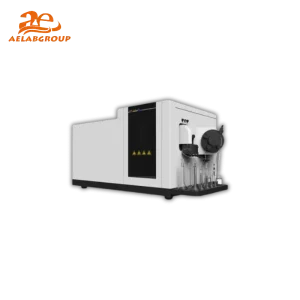
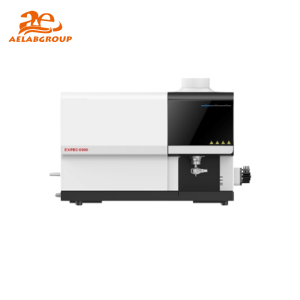
Laboratory ICP Spectrometer
Introduction
The Laboratory ICP Spectrometer is a critical instrument for precise elemental analysis across research and industry. It enables multi-element detection at trace levels with high sensitivity and throughput. From environmental monitoring to pharmaceuticals, it ensures confident, regulatory-ready results.
What Is Laboratory ICP Spectrometer?
A Laboratory ICP Spectrometer uses Inductively Coupled Plasma to atomize and excite samples for elemental analysis via optical emission (ICP-OES) or mass spectrometry (ICP-MS). The plasma’s high temperature ionizes atoms; emitted light (OES) or ion mass-to-charge signals (MS) are measured to identify and quantify elements—metals, non-metals, and trace species—with high precision and low detection limits.
Devices in This Category
ICP-OES Spectrometer (Optical Emission)
ICP-MS Spectrometer (Mass Spectrometry)
Sample Introduction System (nebulizer & spray chamber)
RF Plasma Generator & Torch Assembly
Autosampler for high-throughput workflows
Collision/Reaction Cell (ICP-MS) for interference reduction
Technical Features and Specifications
FeatureDetails
Analytical TechniqueICP-OES (optical emission) and ICP-MS (mass spectrometry)
Wavelength / Mass RangeICP-OES ~160–800 nm; ICP-MS measures ions by m/z with broad elemental coverage
Sensitivity & Detection LimitsICP-MS to ppt levels; ICP-OES suitable for low ppb to high ppm
Plasma SourceInductively Coupled Plasma (RF-driven) providing stable, high-temperature ionization
Sample IntroductionNebulizer + spray chamber; solid samples require digestion/prep
Interference ManagementSpectral correction (OES); collision/reaction cell & mathematical corrections (MS)
ThroughputRapid, multi-element analysis with autosampler support for high sample volumes
Software & DataIntegrated calibration, quantification, libraries for element ID, and QA/QC reporting
Benefits
Very high sensitivity for trace and ultra-trace elements (especially ICP-MS).
True multi-element capability across the periodic table in a single run.
Rapid analysis and high throughput with autosampler integration.
Versatile for liquids, solids (after digestion), and diverse matrices.
Robust plasma source delivers reproducible, precise quantification.
Advanced software streamlines calibration, QC, and data reporting.
Applications and Tests
🔬 Molecular Biology
Trace metal profiling in buffers and reagentsElemental impurities in biomaterialsNanoparticle elemental characterization
🧪 Clinical Diagnostics
Biomarker and trace element analysis in blood/urine (ICP-MS)Forensic toxicology for heavy metalsNutritional element monitoring in clinical studies
🏭 Industrial & Food Testing
Alloy composition and material certificationFood & beverage contaminant screening (Pb, As, Hg, etc.)Nutritional mineral quantification for labeling compliance
🌱 Environmental & Agricultural Labs
Water quality testing for trace metalsSoil composition and heavy metal assessmentMonitoring of pollutants in environmental samples
Laboratory ICP Spectrometer vs. AAS
AspectLaboratory ICP SpectrometerAAS (Atomic Absorption Spectroscopy)
Element DetectionSimultaneous multi-element (metals & some non-metals)Primarily single-element (metals)
SensitivityVery high; ICP-MS to pptModerate to high; typically ppb
Speed & ThroughputFast, high throughputModerate; often sequential
Sample TypesLiquids; solids after digestion; gases (specialized)Liquids and digested solids
CostHigh capital; low per-element cost when multi-elementModerate capital; per-element runs add time/cost
Expert Tips for Choosing the Right Laboratory ICP Spectrometer
Select ICP-MS for ultra-trace (ppt) work and complex matrices; ICP-OES for routine multi-element ppb–ppm analysis.
Match sample introduction (nebulizer, spray chamber) to matrix viscosity, TDS, and required sensitivity.
Consider collision/reaction cell capability if spectral interferences are expected (e.g., environmental or clinical samples).
Evaluate autosampler capacity and software features (calibration, QC templates, LIMS export) for throughput needs.
Check service support, consumable availability, and training to ensure reliable operation over time.
Maintenance Best Practices
Routinely clean nebulizer, spray chamber, and torch; replace worn liners and O-rings.
For ICP-MS, inspect and clean interface cones and ion optics; monitor vacuum performance.
Use high-purity gases and reagents; filter and acid-clean labware to minimize contamination.
Perform regular calibration checks, drift corrections, and verify detection limits with standards.
Document maintenance and run logs; schedule preventive service per manufacturer guidance.
FAQ
Q: What is the difference between ICP-OES and ICP-MS?
A: ICP-OES measures light emitted by excited atoms/ions for robust multi-element analysis at ppb–ppm levels, while ICP-MS measures mass-to-charge of ions and achieves ultra-trace (ppt) detection with broader dynamic range.
Q: What sample types can be analyzed?
A: Most liquid samples directly; solids typically require digestion. Specialized setups can handle gases or nanoparticles depending on the method.
Q: How are interferences managed?
A: ICP-OES uses spectral correction and optimized wavelength selection; ICP-MS employs collision/reaction cells and mathematical corrections to reduce polyatomic and matrix interferences.
Q: What are typical detection limits?
A: ICP-MS reaches parts-per-trillion for many elements; ICP-OES typically achieves low ppb and is ideal for routine multi-element work.
Q: Why choose ICP over AAS or XRF?
A: ICP offers simultaneous multi-element capability, faster throughput, and significantly lower detection limits (with ICP-MS), making it preferred for trace analysis and complex matrices.