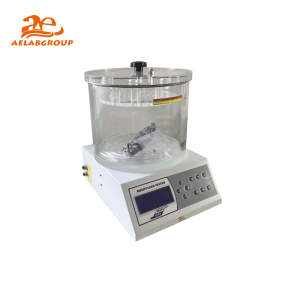
AELAB | Pharmaceutical Equipments | Leak Tester
Leak Tester
Introduction
A Leak Tester is essential for verifying the airtight or watertight integrity of components across high-stakes industries. Use a Leak Tester to detect and quantify even tiny leaks, preventing costly failures while boosting safety, performance, and compliance.
What Is Leak Tester?
A Leak Tester is a device that identifies and measures gas or liquid escape from sealed parts and systems. It evaluates seal integrity using test methods that monitor pressure, vacuum, mass flow, or tracer gas signals to deliver quantitative leak-rate results for quality assurance and regulatory compliance.
Devices in This Category
Pressure Decay Leak Tester (high-volume production)
Vacuum Decay Leak Tester (small/sensitive parts)
Mass Flow Leak Tester (quantitative leakage rate)
Tracer Gas Leak Detector (Helium/Hydrogen, ultra-sensitive)
Bubble (Water Immersion) Leak Test System (visual, budget-friendly)
Inline/Robotic Automated Leak Test Stations (PLC integrated)
Technical Features and Specifications
FeatureDetails
Test MethodPressure Decay / Vacuum Decay / Mass Flow / Tracer Gas / Bubble
Leak Rate SensitivityUp to ~1×10⁻⁶ mbar·L/s (Helium typical); specialized systems detect lower
Cycle Time< 30 seconds depending on volume and method
Interface & ControlTouchscreen HMI; PLC/fieldbus integration for automation
Data LoggingOnboard storage with exportable formats; LIMS/MES connectivity
ComplianceSupports ISO 9001 programs; methods aligned with ASTM F2338, FDA, USP
Automation SupportRobotic handlers, inline fixtures, quick-connect manifolds
CalibrationRegular verification using certified leak standards or master parts
Benefits
Increases product reliability and end-user safety
Ensures early defect detection and lowers scrap/returns
Delivers quantitative, auditable results for QA/QC
Meets global standards and regulatory expectations
Supports high-speed, automated manufacturing lines
Applications and Tests
🔬 Molecular Biology
Integrity checks of microfluidic cartridges and lab-on-chip devicesLeak testing of sealed reaction vessels and PCR consumablesValidation of biocontainment seals in small assemblies
🧪 Clinical Diagnostics
Pharmaceutical blister packs, IV bags, inhalersMedical device housings, catheters, and connectorsSterile barrier package verification (non-destructive methods)
🏭 Industrial & Food Testing
Automotive fuel/cooling systems and EV battery enclosuresFood cans and vacuum-sealed pouchesConsumer electronics enclosures and sensors (IP ratings)
🌱 Environmental & Agricultural Labs
Leak integrity of environmental sampling containersTesting irrigation valves, tubing, and fittingsVerification of gas-control systems in greenhouse research
Leak Tester vs. Visual Inspection
AspectLeak TesterVisual Inspection
Detection AccuracyHigh; detects micro-leaks via pressure/flow/gas signalsLow; only obvious defects visible
Quantitative ResultsYes; leak rate reported (e.g., mbar·L/s)No; subjective pass/fail
SpeedFast; cycle times < 30 s typicalSlow for thorough checks
Cost per TestLow–MediumLow but high labor burden
Automation ReadyYes; PLC/robotic integrationNo; limited automation
Best UseHigh-volume, regulated applications needing traceable dataQuick visual scans for obvious defects
Expert Tips for Choosing the Right Leak Tester
Select sensitivity and test method to match maximum allowable leak rate (MALR).
Calibrate routinely and verify with certified leak standards or master parts.
Automate handling/fixturing for repeatability on high-throughput lines.
Match fixtures and seals to part geometry; consider wet vs. dry, rigid vs. flexible.
Enable robust data logging, review trends, and set alarms for drift or anomalies.
Maintenance Best Practices
Inspect and replace O-rings, seals, and hoses to prevent false failures.
Perform scheduled calibration and leak-standard checks (6–12 months typical).
Verify fixture alignment and eliminate trapped volumes or dead legs.
Keep sensors and filters clean; prevent contamination of tracer-gas lines.
Maintain complete test and maintenance logs for audits and troubleshooting.
FAQ
Q: What’s the smallest leak a tester can detect?
A: High-end helium systems can detect extremely small leaks, with sensitivities commonly around 1×10⁻⁶ mbar·L/s and specialized models reaching even lower.
Q: Is leak testing destructive?
A: Most industrial methods (pressure decay, mass flow, vacuum decay) are non-destructive; bubble tests are typically non-destructive as well.
Q: Can leak testers be integrated into production lines?
A: Yes—modern systems offer PLC connectivity, robotic handling, and inline stations for automated pass/fail decisions and data capture.
Q: How often should a leak tester be calibrated?
A: Typically every 6–12 months, adjusted for usage intensity and regulatory requirements; always verify with certified leak standards.