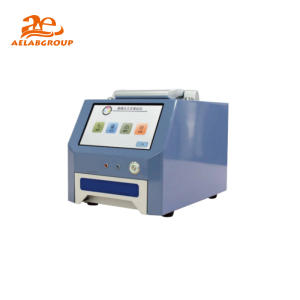
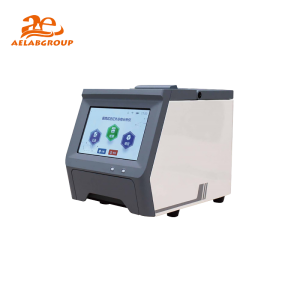
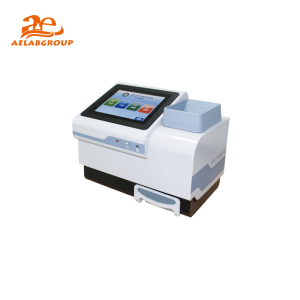
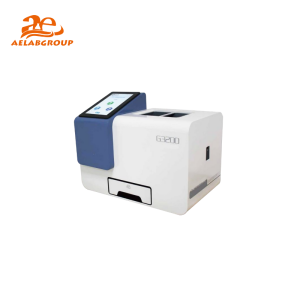
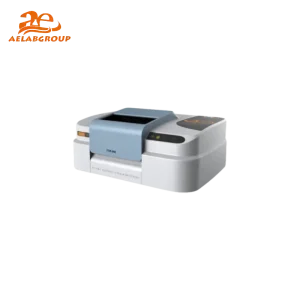
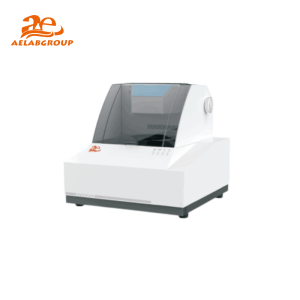
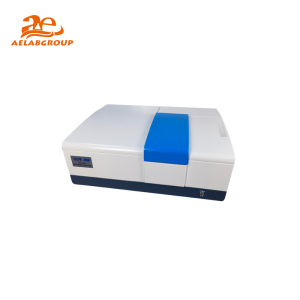
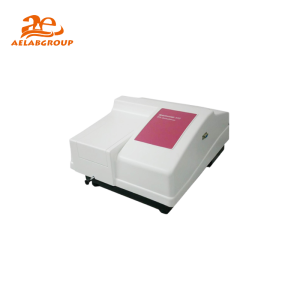
NIR Spectrophotometer
Introduction
The NIR spectrophotometer is widely used for rapid, accurate, and non-destructive analysis across laboratories and industries. This powerful Near-Infrared technology enables fast measurement of moisture, protein, fat, fiber, and chemical composition. Its versatility makes the NIR spectrophotometer a key instrument for quality control and research applications.
What Is NIR Spectrophotometer?
An NIR spectrophotometer measures how a sample absorbs or reflects near-infrared light (780–2500 nm) to determine its chemical and physical properties. It supports rapid, non-destructive analysis and is essential for composition testing, moisture analysis, raw material identification, and real-time process monitoring across various industries.
Devices in This Category
Benchtop NIR Spectrophotometer
Portable/Handheld NIR Analyzer
Online/Inline NIR Process Analyzer
Diffuse Reflectance NIR Instruments
Transmission-Mode NIR Spectrometers
Transflectance NIR Systems
Technical Features and Specifications
Feature
Details
Spectral Range
780–2500 nm typical; common ranges include 900–1700 nm or 1100–2500 nm
Detector Types
Silicon, InGaAs, PbS/PbSe
Measurement Modes
Reflectance, transmission, transflectance
Calibration Models
Pre-built libraries, custom model creation, chemometric tools (PLS, PCA, ANN)
Speed
1–10 seconds per test
Software Features
Real-time analytics, SQC, cloud storage, multi-parameter display
Sample Types
Solids, powders, grains, tablets, liquids, pastes
Stability & Repeatability
Designed for long-term industrial use and consistent performance
Benefits
Rapid measurement with results in seconds
Non-destructive testing with minimal sample preparation
Highly accurate and repeatable analytical performance
Environmentally friendly with no reagents required
Versatile sample compatibility (solids, powders, liquids)
User-friendly operation with advanced software automation
Applications and Tests
🔬 Molecular Biology
Rapid material screening for biomolecules
Moisture and solvent residue measurement
Chemical structure and composition estimation
🧪 Clinical Diagnostics
Raw material identification for pharmaceuticals
Tablet uniformity and coating evaluation
Real-time PAT monitoring of formulations
🏭 Industrial & Food Testing
Moisture, protein, fat, and fiber analysis in foods
Polymer and resin composition control
Blending and mixing uniformity assessment
Detection of adulteration in raw materials
🌱 Environmental & Agricultural Labs
Grain quality testing (protein, oil, moisture)
Soil composition estimation
Plant tissue moisture and chemical analysis
Quality assessment of agricultural products
NIR Spectrophotometer vs. UV-Vis Spectrophotometer
Aspect
NIR Spectrophotometer
UV-Vis Spectrophotometer
Wavelength Range
780–2500 nm
190–1100 nm
Primary Use
Composition and structure analysis
Concentration and absorbance measurement
Sample Preparation
Minimal
Sometimes required
Analysis Type
Quantitative modeling with chemometrics
Absorbance-based measurement
Industries
Food, agriculture, pharma, chemicals
Chemistry, biology, clinical labs
Expert Tips for Choosing the Right NIR Spectrophotometer
Select a spectral range that matches your sample chemistry.
Choose detector types (InGaAs, PbS) based on sensitivity needs.
Ensure the system offers robust chemometric tools.
Evaluate stability, repeatability, and long-term maintenance demands.
Check for advanced software features such as cloud connectivity and real-time analytics.
Maintenance Best Practices
Clean optical windows and sample surfaces regularly.
Monitor and replace lamps or detectors as needed.
Update calibration models using fresh, representative samples.
Protect the instrument from dust, humidity, and vibration.
Verify performance periodically using reference standards.
FAQ
Q: What materials can an NIR spectrophotometer analyze?
A: It can analyze solids, powders, grains, tablets, slurries, pastes, and liquids with minimal preparation.
Q: How long does an NIR measurement take?
A: Most tests are completed within 1–10 seconds, depending on the instrument and sample.
Q: Do NIR instruments require calibration?
A: Yes. Calibration models are essential for accurate quantitative analysis and should be updated periodically.
Q: Is NIR suitable for industrial quality control?
A: Absolutely. With proper calibration and maintenance, NIR provides highly reliable, real-time quality control data.