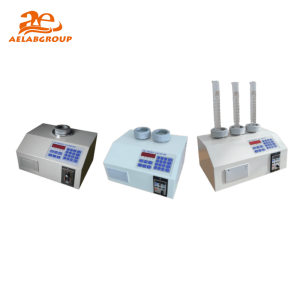
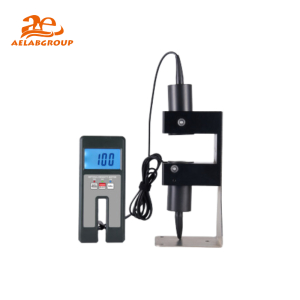
AELAB | Pharmaceutical Equipments | Density Meter
Density Meter
Introduction
A Density Meter (densitometer) is an essential instrument for precise density measurement in labs and process environments. From petrochemicals to food and beverage, density meters improve accuracy, efficiency, and compliance with industry standards. Mastering this tool helps teams optimize quality control and product development workflows.
What Is Density Meter?
A density meter is a laboratory or industrial device used to determine the density of liquids or gases. Modern digital units typically employ the oscillating U-tube principle—measuring a tube’s vibration frequency change when filled with a sample—to calculate density with high precision, often with automatic temperature compensation for consistent results.
Devices in This Category
Digital Density Meter (oscillating U-tube)
Portable Density Meter for field testing
Inline/Process Density Meter for pipelines
Gas Density Meter/Vibrating sensor
Benchtop Density Meter with temperature control
Hygienic/Sanitary process densitometer for food & pharma
Technical Features and Specifications
FeatureDetails
Measurement PrincipleOscillating U-tube/vibrating sensor calculates density from frequency shift
Accuracy & RepeatabilityUp to ±0.0001 g/cm³ with high repeatability (model-dependent)
Measurement RangeLiquids and gases; choose range to match application
Temperature CompensationAutomatic correction; density normalized to set temperatures
Sample VolumeTypically 1–3 mL; low volume for expensive/rare samples
Data ConnectivityUSB, Bluetooth, Wi-Fi, or Ethernet for logging/export
ComplianceMeets ASTM D4052, ISO 15212-1; OIML support where applicable
Sample HandlingDegassing/filtration recommended; options for viscous or corrosive fluids
Benefits
High accuracy with rapid results in seconds.
Minimal sample volume and streamlined workflows.
Automated data logging for traceability and compliance.
User-friendly interfaces with programmable methods.
Robust temperature control for consistent measurements.
Applications and Tests
🔬 Molecular Biology
Density checks of buffers and media for cell cultureVerification of gradient solutions for separations
🧪 Clinical Diagnostics
Formulation control for reagents and calibratorsRaw material verification in pharmaceutical workflows
🏭 Industrial & Food Testing
Fuel and lubricant quality in petrochemicalsSugar/alcohol measurement in beverages; concentration controlChemical mixture monitoring and purity validation
🌱 Environmental & Agricultural Labs
Wastewater density trending for process controlSoil extract and eluate characterization
Density Meter vs. Hydrometer
AspectDensity MeterHydrometer
TechnologyOscillating sensor (digital)Buoyancy-based float
AccuracyHigh (≈±0.0001 g/cm³)Moderate (≈±0.001 g/cm³)
AutomationDigital, automatic readoutManual reading
Sample VolumeLow (≈1–3 mL)Higher (≈100 mL+)
CostHigher upfront, robust dataLower cost, less precise
Expert Tips for Choosing the Right Density Meter
Match measurement range and chemical compatibility to your samples (consider Hastelloy/PTFE options for corrosives).
Prioritize accuracy/repeatability specs and built-in temperature control or compensation.
Minimize sample needs with low-volume cells if working with costly materials.
Ensure connectivity (USB/Bluetooth/Wi-Fi/Ethernet) for audit-ready data logging.
Verify compliance with relevant standards (ASTM D4052, ISO 15212-1) for your industry.
Maintenance Best Practices
Calibrate routinely using certified density standards.
Clean the measuring cell after each run; avoid incompatible solvents.
Degas/filter samples to prevent bubbles that distort results.
Store the instrument in a dust-free, temperature-controlled area.
Train users on correct injection techniques and SOPs.
FAQ
Q: What accuracy can I expect from a digital density meter?
A: High-end models achieve approximately ±0.0001 g/cm³ or better under controlled temperature and proper calibration.
Q: Can density meters handle corrosive chemicals?
A: Yes—select models use corrosion-resistant wetted materials such as Hastelloy or PTFE; verify compatibility with your solvents.
Q: Do I need temperature control for accurate measurements?
A: Absolutely. Temperature directly impacts density; choose instruments with automatic temperature compensation or integrated control.
Q: What standards do density meters comply with?
A: Common standards include ASTM D4052 and ISO 15212-1; some applications also reference OIML guidelines.