AELAB | Environmental Testing Equipment | Laser Particle Counter
Laser Particle Counter
Introduction
A laser particle counter is a precision instrument used to detect and count airborne particles using laser light scattering, essential for cleanrooms, laboratories, and controlled environments. Monitoring airborne particles is critical to prevent contamination, maintain product quality, and ensure human health safety. This guide explains how a laser particle counter works, its key features, and best practices for deployment.
What Is a Laser Particle Counter?
A laser particle counter is an air-monitoring device that draws in ambient air, passes the particles through a laser beam, and uses light scattering to detect, size, and count particles. These devices typically measure particles in the 0.1 µm to 10 µm range, are used in cleanrooms (ISO classes 1–9), pharmaceutical production, semiconductor manufacturing, hospitals, and other precision environments, and support regulatory compliance and contamination control.
Devices in This Category
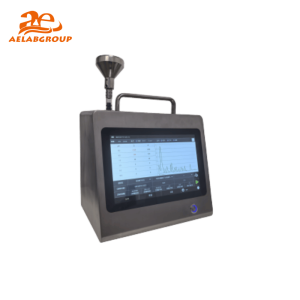
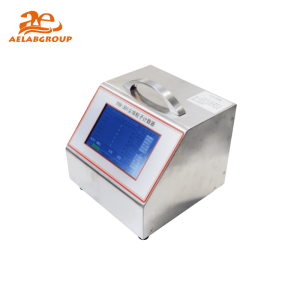
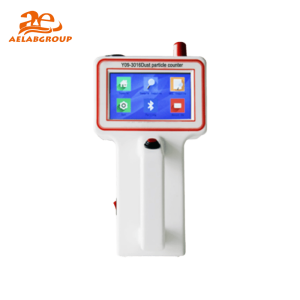
Handheld / portable laser particle counter
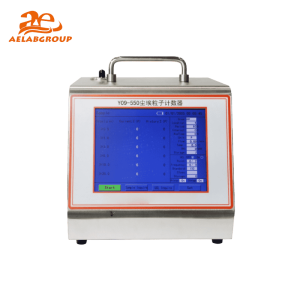
Fixed-site / benchtop laser particle counter
Battery-operated field laser particle detector
High-flow or high-volume laser particle counters for large rooms
Multi-channel size-bin laser particle counters (0.1–10 μm)
Data-logging and network-enabled (USB, SD, Ethernet, cloud) laser particle counters
Technical Features and Specifications
FeatureDetails
Particle Size RangeTypically 0.1 µm to 10 µm (common bins: 0.3, 0.5, 1.0, 5.0 µm)
Flow RateRoughly 0.1 CFM to 1.0 CFM (or equivalent metric sampling volume)
Detection PrincipleLaser diode + photodetector; light scattering; signal proportional to particle size/number
Display & InterfaceTouchscreen or LED; real-time counts; alerts; sampling logs
Data Logging & ExportUSB, SD card, cloud, Ethernet; supports regulatory record keeping
PortabilityHandheld models battery-powered; fixed models for continuous monitoring
Compliance & StandardsSupports ISO 14644 cleanroom class verification; used in GMP environments, HEPA/ULPA filter testing
LimitationsCannot determine chemical composition of particles; requires regular calibration and cleaning
Benefits
High precision detection of very small particles (down to ~0.1 µm).
Real-time particle counts enable immediate action when contamination spikes occur.
Helps maintain regulatory compliance (cleanroom ISO classes, GMP, medical, pharmaceutical, hospitals, etc.).
Versatile across many sectors: cleanrooms, laboratories, manufacturing, aerospace, healthcare, etc.
User-friendly with intuitive interfaces and sampling programs, even on portable models.
Applications and Tests
🔬 Cleanroom & Controlled Environment Monitoring
Confirming ISO classification (e.g. ISO 5, ISO 7, ISO 8) at critical points.
Mapping particle concentration over time to detect contamination trends.
Monitoring critical workstations, pass-throughs, airlocks, and filters.
🧪 Pharmaceutical & Medical Use
Monitoring operating theatres, sterile filling lines, or clean benches.
Verifying HEPA/ULPA filter performance and replacements.
Investigating contamination events or deviations in production areas.
🏭 Industrial & Manufacturing
Assessing dust or particulates in manufacturing or processing zones (electronics, semiconductors, optics, etc.).
Preventive maintenance: detecting early airborne debris that could signal equipment wear or malfunction.
Environmental monitoring around critical production areas and clean utilities.
🌱 Healthcare & Research Facilities
Monitoring intensive care units (ICUs) or operating rooms for airborne particulate levels.
Research labs studying airborne contamination, aerosol generation, or air handling performance.
Validating air quality control systems in hospital buildings or HVAC systems.
Laser Particle Counter vs. Other Air Monitoring Tools
AspectLaser Particle CounterOptical Dust Sensor / General Dust MeterMass-based Sampler (filter + weighting)
Precision / Size rangeHigh; covers ~0.1-10 µm and multiple channelsModerate; often limited to >1 µm and fewer channelsDepends; good for mass concentration but slower and not real-time
Real-time dataYesYes (often less precise)No — post-sample analysis needed
CostRelatively high (especially for multi-channel, high-accuracy models)LowerModerate; depends on sample throughput and analysis lab costs
Sampling speedFast; counts as sampling happensVariableSlow; needs subsequent weighing or analysis
Composition specificityNo — counts size & number, not chemical natureNoNo (unless further chemical analysis done)
Expert Tips for Using Laser Particle Counters Effectively
Clean the inlet port regularly to prevent dust accumulation and maintain accurate sampling.
Calibrate the instrument annually (or more frequently if required by your facility) and follow manufacturer calibration protocols.
Conduct sampling at multiple times of day to track fluctuations and understand contamination patterns.
Use multiple sampling points to map contamination zones in a room or clean area (not just one location).
Integrate with facility’s BMS (Building Management Systems) or environmental monitoring systems for automated alerts and data logging workflows.
Maintenance Best Practices
Perform regular calibration and validation checks to confirm counting accuracy.
Keep sampling ports and optical windows clean; avoid contamination from handling.
Ensure battery (if portable) is maintained and the instrument is stored properly when not in use.
Log and review sampling data over time to detect trends or recurring contamination events.
Follow manufacturer guidelines for flow-rate verification, leak checks, and maintenance schedules.
FAQ
Q: What sizes of airborne particles can a laser particle counter detect?
A: Most can detect from ~0.1 µm (or sometimes ~0.3 µm) up to ~10 µm, often in multiple size bins (e.g. 0.3, 0.5, 1.0, 5.0 µm).
Q: Is real-time data provided by a laser particle counter useful for regulatory compliance?
A: Yes — many cleanroom and GMP requirements call for continuous or periodic airborne particle monitoring; real-time alerts help catch deviations quickly.
Q: Can a laser particle counter tell me what the particles are made of?
A: No — it counts and sizes particles, but does not identify chemical composition. Additional analysis (e.g. microscopy, spectroscopy) is needed if composition is required.
Q: How often should a laser particle counter be calibrated?
A: Calibration frequency depends on usage, environment, and regulatory requirement; typically annually or more often—recommend following manufacturer guidelines and facility protocols.