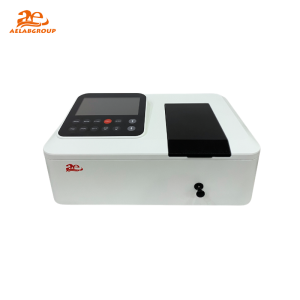
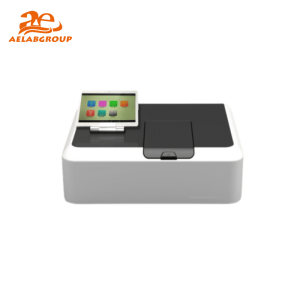
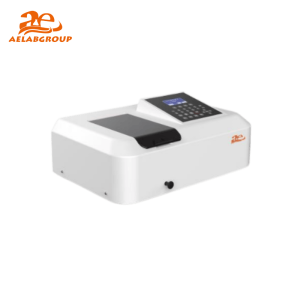
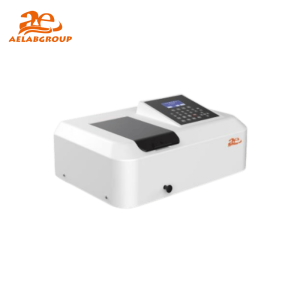
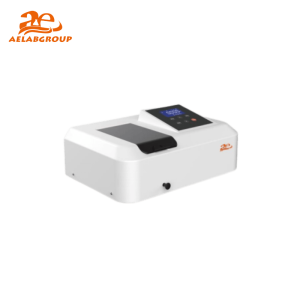
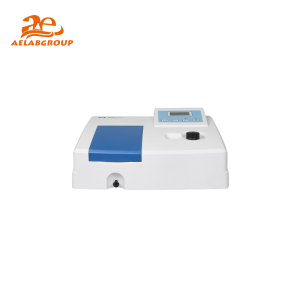
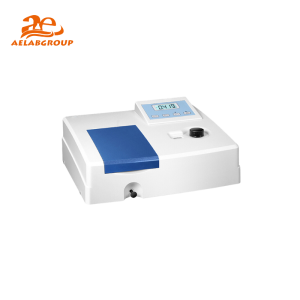
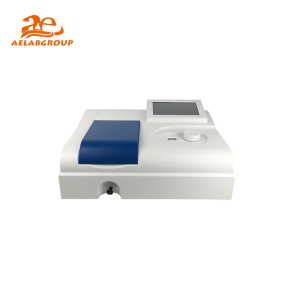
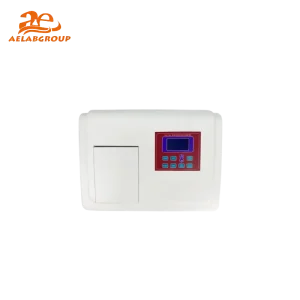
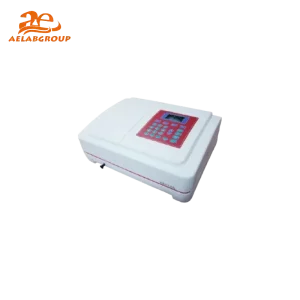
AELAB | Analytical Equipment | UV-VIS Spectrophotometer
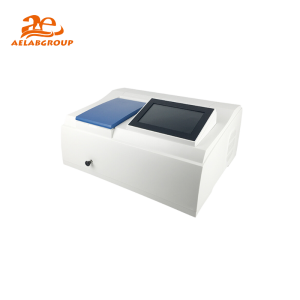
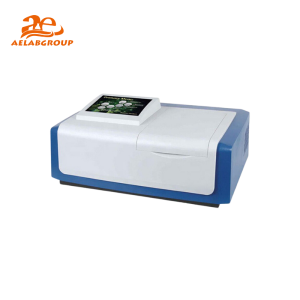
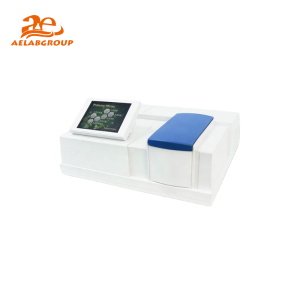
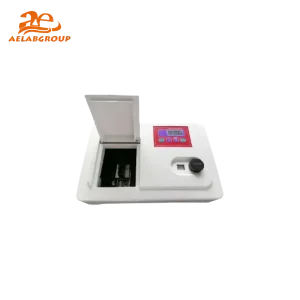
Laboratory UV-VIS Spectrophotometer
Introduction
A UV-VIS spectrophotometer measures absorbance and transmittance in the ultraviolet and visible ranges to support qualitative and quantitative analysis. It is widely used across pharmaceuticals, environmental science, chemistry, and life sciences for rapid, non-destructive measurements. This guide outlines fundamentals, key specifications, advantages, limitations, and expert usage tips.
What Is a Laboratory UV-VIS Spectrophotometer?
A UV-VIS spectrophotometer quantifies how much light a sample absorbs across 190–700 nm (and in some models up to ~1100 nm). Operating under Beer–Lambert’s law, it correlates absorbance to concentration, enabling routine assays, reaction monitoring, and material characterization with minimal sample preparation.
Devices in This Category
Single-beam UV-VIS spectrophotometer
Double-beam UV-VIS spectrophotometer
Photodiode array (PDA) / diode-array UV-VIS
Scanning UV-VIS spectrophotometer
Microvolume / cuvette-based UV-VIS systems
Portable / field UV-VIS units (basic screening)
Technical Features and Specifications
FeatureDetails
Wavelength RangeUV: 190–400 nm; VIS: 400–700 nm; some models extend to NIR ~700–1100 nm
Light SourceDeuterium (UV), Tungsten-Halogen (VIS/NIR), or Xenon for broad spectrum/longer life
Spectral BandwidthTypical options: 0.5 nm, 1 nm, 2 nm (resolution trade-off vs. throughput)
DetectorsPhotodiode Array (fast scanning), Silicon photodiodes, CCD in high-end systems
Stray LightLow stray light (4000 nm/min (supports high-throughput workflows)
Sample InterfaceStandard 10 mm cuvettes; microvolume, flow cells, or temperature-controlled holders as options
Photometric Range/LinearitySupports typical 0–3 A with linear response within instrument limits
Benefits
High sensitivity for trace analytes with minimal sample preparation
Fast, non-destructive measurements for routine and research workflows
Versatile across pharmaceuticals, biology, environmental, and food testing
More affordable than many alternative spectroscopic techniques
Supports reliable quantitative methods using Beer–Lambert’s law
Applications and Tests
🔬 Molecular Biology
DNA, RNA, and protein quantification (A260/A280/A230 ratios)
Enzyme kinetics and reaction rate monitoring
Label-free concentration measurements using absorbance peaks
🧪 Clinical Diagnostics
Assay development and validation (calibration curves)
Drug and metabolite quantitation in clear matrices
Quality control of reagents and buffers
🏭 Industrial & Food Testing
Colorimetric testing for additives and colorants
Nutritional component estimation via absorbance methods
Reaction monitoring and release testing in manufacturing
🌱 Environmental & Agricultural Labs
Pollutant detection in water and air (e.g., nitrate, phosphate)
Pesticide or dye analysis using UV-active chromophores
Turbidity-controlled absorbance assays for field samples
Laboratory UV-VIS Spectrophotometer vs. FT-IR Spectrometer
AspectLaboratory UV-VIS SpectrophotometerFT-IR Spectrometer
PrincipleAbsorbance of UV/VIS photons; Beer–Lambert’s lawMolecular vibrations; IR absorption fingerprints
Best UseQuantitation, kinetics, colorimetric assaysIdentification of functional groups/materials
Sample PrepLiquids/solutions in cuvettes; minimal prepATR/transmission; solids, liquids, gases; minimal prep
SpeedFast scanning; high throughputRapid spectra (~1–2 min) for ID
CostModerateHigher
Expert Tips for Choosing the Right UV-VIS Spectrophotometer
Match bandwidth and resolution (e.g., 0.5–2 nm) to assay requirements and spectral peak separation.
Select the appropriate detector (PDA/CCD for speed vs. single photodiode for cost-effective routine work).
Evaluate light source options: deuterium/tungsten-halogen vs. xenon for lamp life and stability.
Confirm scanning speed, wavelength accuracy, and software features for kinetics and multi-wavelength methods.
Consider accessories: temperature-controlled cuvette holders, microvolume modules, flow cells, and sippers for throughput.
Maintenance Best Practices
Calibrate regularly with certified standards; verify wavelength accuracy and baseline.
Use high-purity solvents and keep cuvettes impeccably clean to minimize scattering and stray absorbance.
Protect and manage lamp life: power down when idle and track lamp hours.
Inspect for stray light increases and re-validate after lamp or accessory changes.
Maintain a controlled environment (dust-free, stable temperature) and document routine checks.
FAQ
Q: What wavelength range do most UV-VIS spectrophotometers cover?
A: Typically 190–700 nm, with some models extending into the near-infrared up to ~1100 nm.
Q: How does stray light affect results?
A: Excess stray light reduces accuracy at high absorbance values; choosing instruments with