AELAB | Agricultural Testing Instruments | Chlorophyll Meter
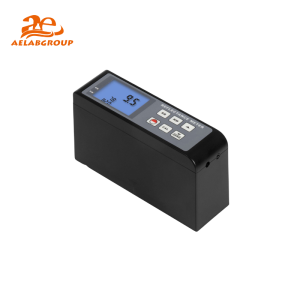
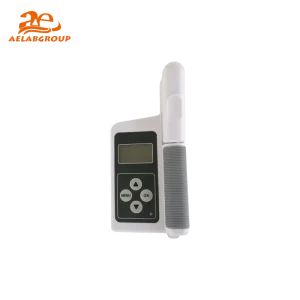
Laboratory Chlorophyll Meter
Introduction
The Laboratory Chlorophyll Meter is an essential instrument for measuring plant health through precise chlorophyll analysis. Chlorophyll, the pigment behind photosynthesis, also reflects a plant’s nitrogen status and overall vigor. In agricultural research, this meter provides real-time, non-destructive insight into plant nutrition, stress response, and growth efficiency — making it indispensable for precision agriculture and plant physiology studies.
What Is a Laboratory Chlorophyll Meter?
A Laboratory Chlorophyll Meter is a scientific device that quantifies the relative chlorophyll content in plant leaves using optical sensors. By analyzing light transmission and reflection at specific wavelengths, it helps researchers assess plant health quickly and accurately. Laboratory-grade models provide enhanced calibration, better repeatability, and compatibility with data systems — ideal for controlled research environments.
Devices in This Category
Laboratory Chlorophyll Meter (Optical Reflectance Type)
SPAD-Based Chlorophyll Analyzer
Fluorometric Chlorophyll Content Meter
Portable Leaf Chlorophyll Scanner
Data-Logging Chlorophyll Measurement System
Multi-Wavelength Chlorophyll Spectrometer
Technical Features and Specifications
FeatureDetails
Measurement PrincipleOptical sensing via red/red-edge and infrared wavelengths
Measured ParameterRelative chlorophyll index (e.g., SPAD value)
AccuracyHigh precision with calibration and consistent leaf positioning
Light SourceLED emitters at multiple wavelengths
Data InterfaceUSB, Wi-Fi, or Bluetooth for data transfer
Power SupplyRechargeable battery or AC adapter
CalibrationSpecies- and experiment-specific calibration support
ConstructionCompact, portable, lab-grade housing with ergonomic design
Benefits
Non-destructive, real-time measurement of chlorophyll content
High precision suitable for laboratory research and modeling
Compact and user-friendly for greenhouse or indoor lab use
Fast results ideal for large-scale phenotyping or trials
Enhanced data reliability and experimental accuracy
Applications and Tests
🔬 Molecular Biology
Assess photosynthetic efficiency in transgenic plant researchMonitor chlorophyll degradation under stress-induced conditionsCorrelate chlorophyll with gene expression in photosynthesis pathways
🧪 Clinical Diagnostics
Study chlorophyll-related bioassays in plant-based nutraceuticalsAnalyze pigment retention for plant-derived pharmaceutical research
🏭 Industrial & Food Testing
Quality control in agricultural production and crop gradingAssess pigment concentration in leafy greens for processingEvaluate fertilizer efficiency through chlorophyll monitoring
🌱 Environmental & Agricultural Labs
Study crop stress responses to drought, salinity, and temperatureMonitor nitrogen uptake efficiency in different soil typesSupport sustainable agriculture through precision nutrient mapping
Laboratory vs. Field Chlorophyll Meters
FeatureLaboratory Chlorophyll MeterField Chlorophyll Meter
PrecisionHigh, suitable for controlled experimentsModerate, for quick field checks
EnvironmentIndoor labs and greenhousesOutdoor agricultural fields
Data IntegrationAdvanced digital logging and exportBasic or manual data recording
CalibrationFlexible; species- and experiment-specificSimplified; generalized for field crops
Primary UseResearch, modeling, academic studiesFarm management, quick diagnostics
Expert Tips for Accurate Readings
Clean the sensor window before every session to prevent light distortion.
Take multiple readings from different leaf sections for consistency.
Calibrate by plant species and growth stage to enhance accuracy.
Maintain consistent ambient lighting during measurement.
Log and average readings across replicates for robust data analysis.
Maintenance Best Practices
Wipe sensors gently with lint-free cloth after each use.
Recharge or replace batteries regularly to prevent data loss.
Update software/firmware for compatible data logging performance.
Store in a dry, dust-free case to protect optical components.
Recalibrate periodically or after moving between different environments.
FAQ
Q: What does a Laboratory Chlorophyll Meter measure?
A: It measures the relative chlorophyll content in plant leaves, providing an index correlated with plant health and nitrogen status.
Q: How is chlorophyll measurement useful in research?
A: It helps monitor nutrient uptake, detect plant stress, and assess photosynthetic activity without destroying the sample.
Q: Can a Laboratory Chlorophyll Meter measure absolute chlorophyll concentration?
A: Not directly — it provides relative indices that can be calibrated against lab chemical assays for absolute values.
Q: What affects chlorophyll readings?
A: Leaf thickness, species differences, surface moisture, and calibration quality all influence accuracy. Consistent methods minimize variation.
Q: How is a lab-grade chlorophyll meter different from a field model?
A: Lab versions offer higher precision, data connectivity, and calibration flexibility, making them suitable for controlled experiments rather than rapid field scouting.