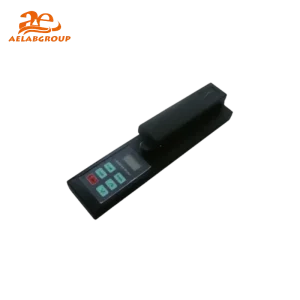
AELAB | Agricultural Testing Instruments | Portable-Leaf-Area-Meter
Portable Leaf Area Meter
Introduction
A Portable Leaf Area Meter delivers fast, accurate measurements of leaf surface area directly in the field or greenhouse. By quantifying leaf size without detaching tissue, researchers and agronomists can track growth, photosynthesis efficiency, and plant health in real time. Use a Portable Leaf Area Meter to streamline phenotyping, improve data quality, and accelerate decision-making.
What Is a Portable Leaf Area Meter?
A Portable Leaf Area Meter is a handheld or compact electronic device that measures the surface area of leaves in situ. Using optical scanning, digital imaging, or laser-based sensing, the meter computes leaf area—and often length, width, and shape metrics—within seconds. Many models pair on-board processing with data export options (USB/Bluetooth/Wi-Fi) for rapid field-to-lab workflows.
Devices in This Category
Handheld optical leaf area meter (slot/strip scanner)
Camera-based portable leaf area analyzer with onboard image processing
Laser triangulation leaf mapper for high-precision contours
Clamp-on in situ meter for non-destructive field readings
Mobile-imaging kit (device + calibration card) for rapid surveys
Portable meter with integrated GPS and Bluetooth for geo-tagged datasets
Technical Features and Specifications
FeatureDetails
Measurement PrincipleOptical scanning, digital imaging with edge detection, or laser triangulation
Accuracy & ResolutionHigh precision suitable for scientific research; user calibration recommended for best results
Measurement RangeSupports small to large leaves; check model-specific minimum/maximum area
Display & InterfaceReal-time readout; intuitive controls; multilingual menus (model dependent)
Data ConnectivityUSB, Bluetooth, or Wi-Fi; export to CSV/Excel or proprietary apps
Power & Battery LifeRechargeable battery designed for extended field sessions
Portability & BuildLightweight, rugged housings for outdoor environments
Software CompatibilityIntegrates with analysis platforms (e.g., Excel, R, GIS) for downstream processing
Benefits
Non-destructive, in situ measurements—no need to remove leaves
Rapid, repeatable readings ideal for large trials and surveys
High accuracy with consistent protocols and calibration
Field-ready design with fast data transfer and logging
Improves phenotyping throughput and research efficiency
Applications and Tests
🔬 Molecular Biology
Phenotyping leaf expansion in gene-expression and mutant studiesLinking leaf area to photosynthetic capacity and transcriptomic dataQuantifying growth responses in controlled-environment assays
🧪 Clinical Diagnostics
Education and training in plant-based assay development (non-diagnostic)Standardizing botanical materials for nutraceutical R&D
🏭 Industrial & Food Testing
Screening crop vigor for supply-chain quality programsCorrelating leaf area with yield components in breeding pipelinesSupporting greenhouse production and fertigation optimization
🌱 Environmental & Agricultural Labs
Drought/salinity trials tracking leaf area reductionCanopy and LAI-related studies via leaf-level ground truthingHorticulture growth monitoring and vigor indices
Portable Leaf Area Meter vs. Desktop Leaf Area Meter
AspectPortable Leaf Area MeterDesktop Leaf Area Meter
PortabilityLightweight, field-readyStationary, lab-only
Real-Time UseYes, in situNo—samples transported to lab
AccuracyHigh (field-calibrated)Very high (reference-grade)
ThroughputRapid surveys and large plotsBatch processing with higher control
CostModerate to highHigh
Expert Tips for Choosing the Right Portable Leaf Area Meter
Match the measurement range and slot size to your target species and leaf sizes.
Prioritize models with robust field calibration and clear uncertainty specs.
Check battery life and swappable packs for long survey days.
Ensure seamless data export (CSV/API) to your analysis pipeline (Excel, R, GIS).
Evaluate ergonomics and weight—comfort matters in high-throughput campaigns.
Maintenance Best Practices
Calibrate routinely and verify against a known reference template.
Keep optical windows/cameras clean; avoid scratches and dust.
Shade the sensor during measurements to minimize glare artifacts.
Update firmware/software and back up datasets after each session.
Store in a dry, padded case; recharge batteries before field deployment.
FAQ
Q: Do I need to cut the leaf to measure it?
A: Not necessarily. Many portable meters support non-destructive in situ measurements; only complex shapes or overlapping leaves may require repositioning or manual separation.
Q: How accurate are portable leaf area meters?
A: Modern devices achieve high accuracy (often within research-grade thresholds) when properly calibrated and used with clean optics and consistent lighting.
Q: Can I connect the meter to my phone or PC?
A: Yes. Many models provide USB, Bluetooth, or Wi-Fi for real-time syncing and export to spreadsheets or analysis software.
Q: What are common limitations in the field?
A: Upfront cost, the need for periodic calibration, and challenges with shaded/overlapping leaves. Following best practices mitigates most issues.