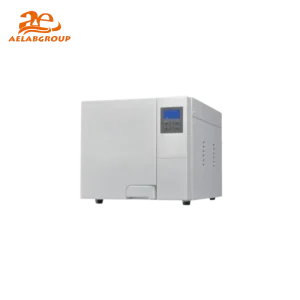
AELAB | Laboratory Equipment | Sterilizer/Autoclave | Class B Sterilizer
Class B Sterilizer
Introduction
The Class B Sterilizer is a high-performance autoclave engineered to handle the most demanding sterilization tasks in medical, dental, and laboratory environments. Using saturated steam under high pressure and temperature, it ensures complete microbial destruction—even in porous and complex instruments. This makes it the preferred choice for facilities requiring reliable and validated sterilization outcomes.
What Is a Class B Sterilizer?
A Class B Sterilizer is a vacuum-assisted autoclave that uses pre-vacuum and post-vacuum cycles to remove air before steam injection and to ensure complete drying afterward. This allows steam to fully penetrate porous loads, wrapped instruments, and hollow materials—something standard gravity or Class N autoclaves cannot achieve. It operates at 121–134°C, delivering high-pressure steam to guarantee complete sterilization of medical and laboratory tools.
Devices in This Category
Tabletop Class B Autoclave
Dental Class B Sterilizer
Medical Pre-Vacuum Autoclave
Laboratory Class B Steam Sterilizer
Portable Class B Autoclave with Drying Cycle
Automatic Class B Sterilizer with Touchscreen Control
Technical Features and Specifications
FeatureDetails
Sterilization Temperature121–134 °C depending on cycle
Pressure Range15–30 psi during sterilization
Air Removal SystemPre-vacuum pump for complete air evacuation
Drying CyclePost-vacuum drying for wrapped and porous loads
Capacity OptionsFrom 8 L to 60 L chamber sizes
Control InterfaceDigital or touchscreen control with pre-set programs
Safety FeaturesDoor interlock, temperature and pressure sensors, auto shut-off
StandardsComplies with EN 13060 and ISO 13485
Benefits
Achieves complete sterilization for all load types—solid, wrapped, and porous.
Pre-vacuum and drying cycles ensure consistent, moisture-free instruments.
Safe, automated operation minimizes user error.
Complies with medical and laboratory safety regulations.
Compact, user-friendly design suitable for clinics and research facilities.
Applications and Tests
🔬 Molecular Biology
Sterilization of glassware, pipette tips, and culture media
Decontamination of biological waste
Ensuring sterile instruments for molecular assays
🧪 Clinical Diagnostics
Sterilization of wrapped and porous medical instruments
Dental tool sterilization in clinics
Compliance with infection-control standards
🏭 Industrial & Food Testing
Quality assurance in pharmaceutical production
Decontamination of reusable test equipment
Sterilization for microbial load testing setups
🌱 Environmental & Agricultural Labs
Sterilization of soil and plant culture media
Deactivation of environmental samples post-analysis
Cleaning of sampling tools and lab containers
Class B Sterilizer vs. Class N Autoclave
AspectClass B SterilizerClass N Autoclave
Air RemovalVacuum-assisted (pre- and post-vacuum)Gravity displacement only
Load TypePorous, wrapped, and hollow instrumentsSolid, unwrapped instruments
Drying CapabilityYes (vacuum drying)No
Cycle TimeFast and programmableSlower and less efficient
Typical UseHospitals, dental clinics, research labsBasic lab or small clinic applications
Expert Tips for Choosing the Right Class B Sterilizer
Select chamber capacity based on daily instrument volume.
Check for validated cycles for wrapped and porous materials.
Opt for models with automatic water filling and drying systems.
Ensure compliance with EN 13060 and ISO standards.
Look for service accessibility and reliable technical support.
Maintenance Best Practices
Perform routine cleaning of the chamber and trays after each cycle.
Descale the water system regularly to prevent mineral buildup.
Inspect gaskets, door seals, and filters monthly.
Use only distilled or deionized water for steam generation.
Schedule professional calibration and validation annually.
FAQ
Q: What makes a Class B Sterilizer different from other autoclaves?
A: It uses a vacuum pump for air removal and drying, enabling complete sterilization of porous and wrapped loads, unlike Class N or S autoclaves.
Q: Where is a Class B Sterilizer typically used?
A: In hospitals, dental practices, laboratories, and any facility requiring sterilization of complex instruments.
Q: How long does a typical Class B sterilization cycle take?
A: Depending on load and program, full cycles usually last between 20 and 45 minutes, including drying.
Q: What maintenance does a Class B Sterilizer need?
A: Regular cleaning, descaling, seal inspection, and annual validation are essential for optimal performance and safety compliance.