AELAB | Analytical Equipment | Sample Preparation Instruments
Sample Preparation Instruments
Introduction
Sample Preparation Instruments ensure raw materials are processed into analysis-ready form, safeguarding accuracy and reproducibility across methods. Investing in reliable sample preparation instruments reduces contamination risk, protects analytical systems, and streamlines laboratory workflows.
What Is Sample Preparation Instruments?
Sample preparation instruments are devices used to convert raw samples into a suitable state for analysis through grinding/milling, homogenization, digestion, filtration, drying, and related steps. The required process depends on sample type, analytical technique (e.g., spectroscopy, chromatography), and the precision needed.
Devices in This Category
Planetary ball mills
Jaw crushers
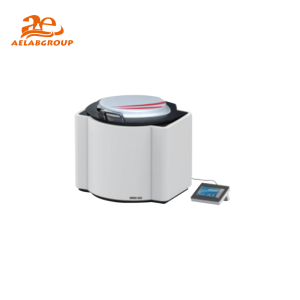
Disc mills
Cutting mills
Bead mills
Ultrasonic homogenizers
Rotor–stator homogenizers
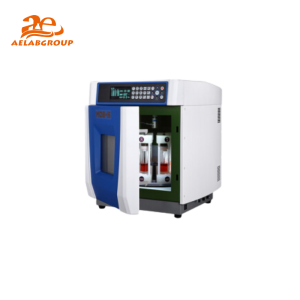
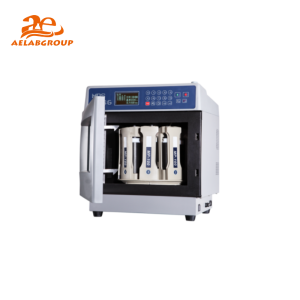
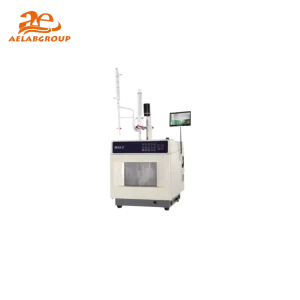
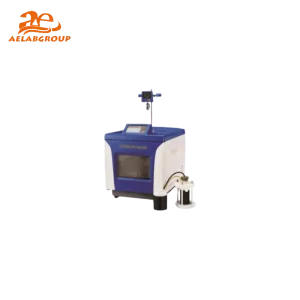
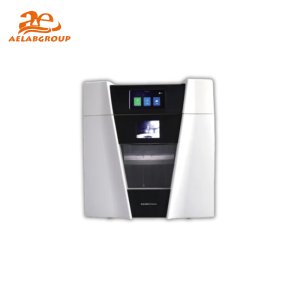
Microwave digestion systems
Acid digestion blocks
Freeze dryers (lyophilizers)
Vacuum ovens
Rotary evaporators
Vacuum filtration stations
Centrifuges
Syringe filters
Technical Features and Specifications
FeatureDetails
Process CapabilitiesGrinding/milling, homogenization, digestion, drying/evaporation, filtration, centrifugation
ThroughputSingle-sample to batch processing; manual, semi-automated, or fully automated options
Particle Size/UniformityFrom coarse crushing to fine milling for uniform, analysis-ready particles
Temperature ControlCryogenic or cooled milling; controlled heating for ovens, blocks, and microwave digestion
Materials & CompatibilityContact parts in steel, PTFE, glass, ceramics; compatible with acids/solvents as required
Safety FeaturesClosed systems, venting/pressure monitoring (microwave), interlocks, splash/aerosol control
Control & DataDigital timers, setpoints/recipes, run logs for traceability and method compliance
UtilitiesElectric power standard; some devices require vacuum, cooling water, or compressed air
Benefits
Improved accuracy by minimizing contamination and human error.
Time efficiency with automated and batch-processing capability.
High reproducibility across multiple samples and runs.
Versatility for metals, pharmaceuticals, food, and environmental matrices.
Enhanced safety through closed-system digestion and controlled handling.
Applications and Tests
🔬 Molecular Biology
Tissue homogenization for nucleic acid/protein extraction
Sample clarification prior to chromatography steps
Temperature-controlled processing to preserve analytes
🧪 Clinical Diagnostics
Serum/plasma preparation via centrifugation and filtration
Digestion for elemental analysis in trace-metal testing
Evaporation/concentration for LC/GC workflows
🏭 Industrial & Food Testing
Milling of tablets, plastics, and food matrices for uniform particle size
Rotary evaporation and vacuum ovens for solvent removal
Filtration prior to HPLC or ICP analyses in QA/QC labs
🌱 Environmental & Agricultural Labs
Microwave digestion of soils, sediments, and plant tissue
Filtration and centrifugation for water quality testing
Freeze drying for stability and long-term storage studies
Sample Preparation Instruments vs. Manual Preparation
AspectSample Preparation InstrumentsManual Preparation
Time EfficiencyHigh throughput; minimal supervisionTime-consuming
Operator DependenceConsistent regardless of operatorSkill-sensitive
ReproducibilityHighly consistentVariable
Initial CostHigher investment upfrontLow
Long-Term CostLower with volume processingHigher due to labor
Expert Tips for Choosing the Right Sample Preparation Device
Match the instrument to the sample matrix (solid, liquid, biological, composite).
Size equipment to expected throughput and batch frequency.
Select automation level (manual, semi-automated, automated) based on staffing and reproducibility needs.
Verify compatibility with downstream methods (ICP-MS, GC-MS, HPLC) and solvent/acid exposure.
Assess safety/compliance requirements, especially for chemical digestion and biohazards.
Maintenance Best Practices
Clean contact parts thoroughly after each run to prevent carryover.
Schedule regular calibration and verification; document settings and results.
Inspect seals, vessels, and moving parts; replace worn consumables promptly.
Control temperature during grinding/digestion to protect heat-sensitive analytes.
Maintain SOPs and safety checks for acids, pressure vessels, and vacuum systems.
FAQ
Q: What are sample preparation instruments used for?
A: They process raw samples—via grinding, digestion, drying, filtration, or homogenization—so the material is uniform, stable, and ready for accurate analytical measurement.
Q: Which instrument should I use for trace metal analysis?
A: Microwave digestion systems or acid digestion blocks are commonly used to dissolve samples for ICP-MS/ICP-OES, delivering clean matrices and controlled conditions.
Q: How can I avoid cross-contamination during sample prep?
A: Use dedicated tools/consumables per matrix, clean equipment thoroughly after each run, and document each step for traceability.
Q: Is automated sample preparation worth the investment?
A: For moderate to high throughput, automation reduces labor, improves reproducibility, and lowers long-term cost, though it requires higher initial capital and training.