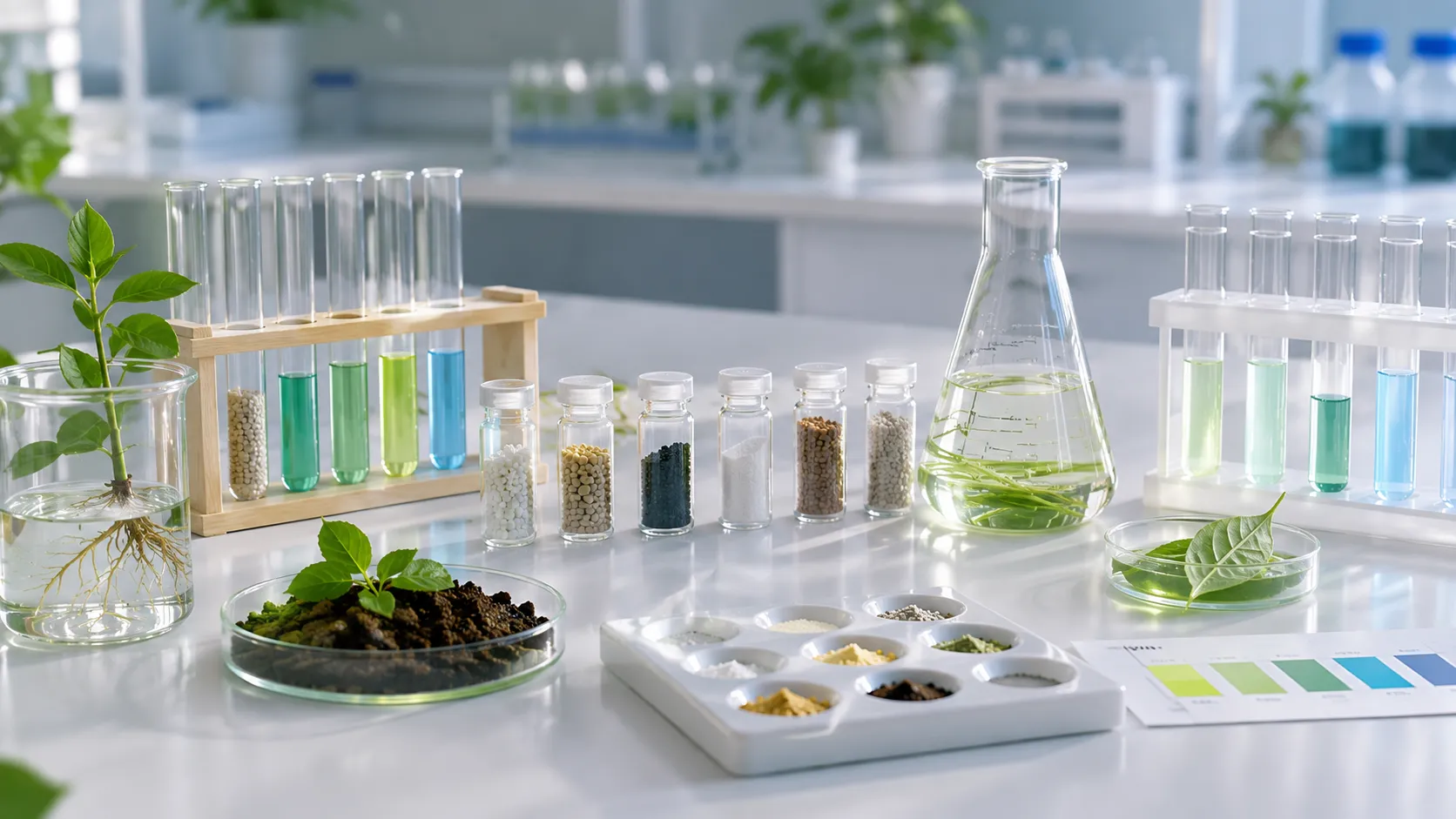
Plant Nutrient Analysis Laboratory Equipment Guide Overview
Plant nutrient analysis laboratories measure nitrogen, phosphorus, potassium, micronutrients, moisture, pH, and other relevant properties in fertilizers, soils, growing media, and plant tissue. The equipment required depends on the sample matrix and whether the laboratory needs total nutrient content, extractable or plant-available nutrients, or routine fertilizer quality control.
For routine NPK analysis, laboratories commonly combine sample preparation equipment with nitrogen analysis, UV-Vis spectrophotometry for suitable phosphorus methods, and flame photometry or another appropriate elemental technique for potassium. Laboratories handling broader micronutrient panels may add ICP-OES or AAS. Reliable results also depend on representative sampling, controlled preparation, appropriate digestion or extraction, calibration, quality-control samples, and traceable reporting.
This guide helps technical buyers, QC managers, and laboratory professionals connect the main plant nutrient tests with their purpose, analytical workflow, and required laboratory equipment.
Main Products and Applications
Plant nutrient analysis spans several sample types within agriculture and fertilizer testing. Each matrix can require different preparation, extraction, digestion, and measurement procedures:
- Solid granular NPK fertilizers – blended or complex fertilizers tested to verify nutrient composition and production consistency.
- Liquid and foliar fertilizers – solutions requiring appropriate dilution, preparation, and elemental analysis.
- Soil and growing media – samples tested for relevant nutrient fractions and supporting properties such as pH to guide fertility assessment.
- Plant tissue samples – leaves, stems, grains, and other plant materials analyzed to assess nutrient uptake and investigate possible deficiencies or imbalances.
- Organic fertilizers and soil amendments – composts, manures, bio-fertilizers, and related materials evaluated for nutrient composition and other relevant quality parameters.
The analytical objective should be defined before selecting equipment. Total elemental analysis, extractable nutrient testing, routine fertilizer grade verification, and plant tissue analysis can involve different sample-preparation and analytical procedures even when the target element is the same.
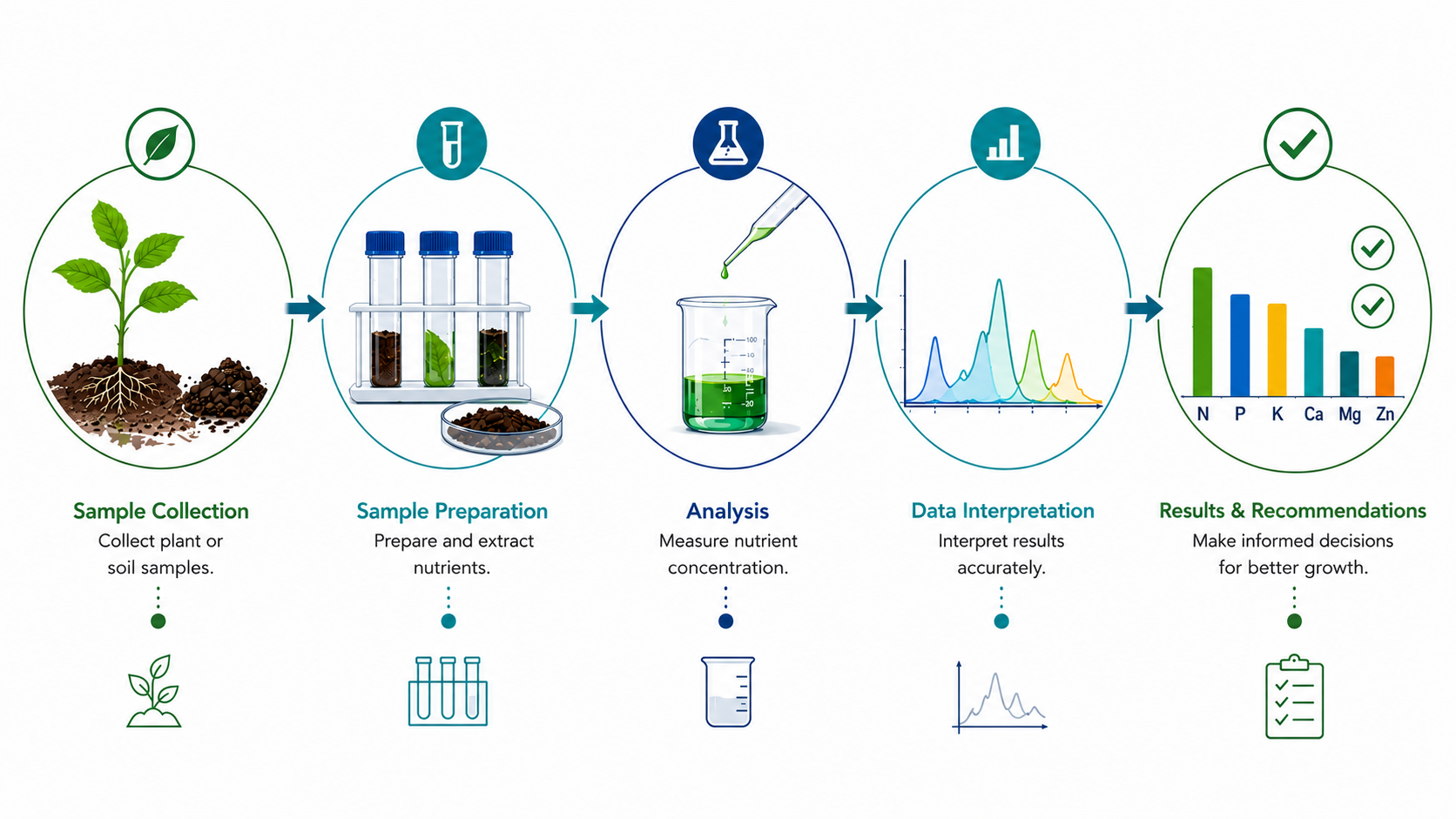
Plant Nutrient Analysis Quality Control Workflow
Sample Collection and Preparation
Representative sampling is the foundation of reliable nutrient analysis. A precise analytical instrument cannot compensate for a sample that does not represent the original fertilizer, soil, or plant material.
Where the method requires dry material, samples may be dried and then ground or homogenized before a test portion is taken. Moisture determination is also important when results must be expressed or corrected on a dry-weight basis. The main equipment at this stage can include forced-air ovens, analytical balances, and laboratory grinding mills.
The relationship is straightforward: representative sample → controlled drying and homogenization → consistent test portion → more reliable analytical results.


Sample Digestion and Extraction
The preparation step depends on what the laboratory intends to measure. Total or near-total elemental analysis may require digestion to transfer target elements into a measurable solution, while soil nutrient testing may instead use an extraction procedure designed for a particular nutrient fraction.
Incomplete or inconsistent preparation can cause analytical bias even when the final instrument is operating correctly. Depending on the method and analyte, laboratories may use Kjeldahl digestion systems, block digesters, microwave digestion systems, and appropriate fume-handling equipment.
For buyers, the key distinction is total nutrient analysis versus method-specific extraction. The digestion or extraction system should be selected around the required method, sample matrix, batch size, and analytical workload rather than as a standalone instrument purchase.


Nutrient Elemental Analysis
After appropriate preparation, the laboratory measures the target macro- or micronutrients. Instrument selection depends on the analyte, method, concentration range, number of elements required, and expected sample throughput.
For nitrogen methods based on Kjeldahl digestion, a Kjeldahl analysis system provides the required digestion and determination workflow. Suitable phosphorus methods can use color development followed by UV-Vis spectrophotometric measurement. Potassium in prepared samples or extracts can be measured by flame photometry where the method and matrix are appropriate.
For laboratories that need multi-element analysis, ICP-OES can provide simultaneous or sequential measurement of multiple elements from prepared solutions. AAS may also be appropriate for laboratories with a more limited elemental testing scope.
In practical equipment-selection terms:
- Nitrogen → Kjeldahl analysis system when the required method is Kjeldahl-based.
- Phosphorus → UV-Vis spectrophotometer for suitable colorimetric methods.
- Potassium → flame photometer for suitable routine applications, or multi-element instrumentation where broader capability is required.
- Micronutrients → ICP-OES or AAS depending on analytical scope, method requirements, and laboratory workload.


Data Interpretation and Reporting
Analytical results must be calculated and reported using the basis required by the laboratory method, product specification, or reporting program. Where dry-weight correction is required, moisture data must be incorporated consistently.
Quality assurance can include calibration standards, blanks, duplicate samples, reference materials, and spike or recovery checks where appropriate to the analytical method. Laboratories should define acceptance criteria and QC frequency within their validated or documented procedures rather than relying on instrument measurement alone.
A LIMS or controlled calculation template can help manage calculations, sample identification, QC records, and result traceability, particularly as sample volume increases.
Common Quality Control Challenges in Fertilizer and Plant Nutrient Analysis
Several recurring problems can affect nutrient-analysis reliability before, during, and after instrumental measurement:
- Non-representative sampling: heterogeneous fertilizers, soils, and organic materials can produce different results depending on where the test portion is taken.
- Moisture variability: inconsistent moisture basis can distort comparisons between samples or reported nutrient percentages.
- Incomplete digestion or extraction: insufficient preparation can prevent the target nutrient from being measured consistently.
- Matrix and spectral effects: co-existing substances or elements can affect analytical response and must be managed according to the selected method.
- Calibration drift: analytical response should be checked with suitable standards and QC procedures during routine operation.
- Cross-contamination: residues from high-concentration samples can affect subsequent low-level measurements if preparation equipment and laboratory ware are not adequately controlled.
- Data-handling errors: dilution factors, moisture corrections, units, and calculation errors can invalidate otherwise sound analytical measurements.
Key Quality Control Tests for Plant Nutrient Analysis
The following table connects common analytical needs with the corresponding test approach and laboratory equipment.
| Quality Challenge | Quality Control Test | Recommended Laboratory Equipment | Application |
|---|---|---|---|
| Nutrient content variability | Total nitrogen (Kjeldahl method) | Kjeldahl analyzer | Verifying nitrogen content where a Kjeldahl-based method is applicable |
| Phosphorus quantification | Spectrophotometric phosphorus | UV-Vis spectrophotometer | Phosphorus measurement using an appropriate colorimetric preparation and method |
| Potassium accuracy | Flame emission photometry | Flame photometer | Potassium measurement in suitable fertilizer or soil extracts |
| Micronutrient deficiency or excess | Multi-element analysis | ICP-OES | Elements such as Zn, Fe, Mn, and Cu in appropriately prepared samples |
| Moisture interference | Loss on drying / moisture determination | Halogen moisture analyzer or laboratory oven | Moisture control and dry-weight correction where required |
| Organic matter assessment | Loss on ignition | Muffle furnace | Organic matter assessment where the selected method uses loss on ignition |
| Sample pH affecting nutrient behavior | pH measurement | Benchtop pH meter | Soil, extract, or fertilizer-solution pH measurement using the applicable preparation method |
Laboratory Equipment Required for Fertilizer and Plant Nutrient Quality Control
A plant nutrient analysis laboratory normally combines sample preparation, wet-chemistry equipment, analytical instruments, and supporting quality-control tools. The required configuration should be based on the tests the laboratory actually intends to perform rather than purchasing every available analytical technology.
| Testing Requirement | Laboratory Equipment | Why the Laboratory Needs It |
|---|---|---|
| Total nitrogen content | Kjeldahl analyzer with appropriate digestion equipment | Supports routine nitrogen determination when a Kjeldahl-based method is specified for the sample and reporting requirement |
| Phosphorus by colorimetric analysis | UV-Vis spectrophotometer | Measures developed color for suitable phosphorus methods and supports routine batch comparison |
| Potassium determination | Flame photometer | Provides a dedicated approach to potassium measurement in suitable prepared samples and extracts |
| Micronutrient profiling | ICP-OES or AAS | Extends the laboratory beyond routine NPK testing to elemental analysis of relevant micronutrients |
| Sample preparation | Forced-air oven and laboratory mill | Supports controlled drying and homogenization before representative test portions are prepared |
| Rapid moisture checks | Halogen moisture analyzer | Provides rapid moisture measurement for suitable samples where faster routine checks are useful |
These instruments can form the core of a fertilizer or plant nutrient QC laboratory, but not every facility needs the same configuration. A laboratory performing only routine fertilizer checks may require a different instrument set from a contract laboratory analyzing fertilizers, soils, plant tissue, and micronutrient panels.
Basic Laboratory Setup for Fertilizer Manufacturers
Laboratory configuration is easier when equipment is divided by analytical scope rather than simply by facility size.
| Laboratory Level | Recommended Equipment | Suitable For |
|---|---|---|
| Basic QC Laboratory | Moisture analyzer, analytical balance, pH meter, drying oven, and the analyte-specific instruments required for the plant’s routine tests | Routine production checks where the manufacturer performs a limited test panel in-house and outsources analyses requiring more advanced instrumentation |
| Full Routine NPK Laboratory | Kjeldahl analysis system, UV-Vis spectrophotometer, flame photometer, analytical balance, drying oven, laboratory mill, and appropriate sample-preparation equipment | Manufacturers performing routine nitrogen, phosphorus, and potassium analysis in-house using applicable methods |
| Advanced Analysis Laboratory | ICP-OES or other appropriate elemental instrumentation, advanced digestion equipment, LIMS, and additional method-specific analytical systems | Large production facilities, R&D centers, and contract laboratories requiring broader elemental panels, higher sample throughput, or more extensive analytical capability |
A staged approach can prevent overinvestment. The laboratory should first define which tests must be performed internally, which can be outsourced, how many samples will be analyzed, and whether future products will require broader elemental capability.
How to Choose Laboratory Equipment for Plant Nutrient Analysis
Start with the sample matrix and required result. Solid fertilizers, liquids, soils, plant tissues, and organic amendments can require different preparation procedures. Likewise, total nutrient content and extractable nutrient testing are different analytical objectives and should not automatically be assigned the same preparation method.
Next, map every required test to an instrument:
- Routine Kjeldahl-based nitrogen analysis: select the digestion and determination system around the required method and expected batch size.
- Colorimetric phosphorus analysis: select a UV-Vis spectrophotometer suitable for the laboratory’s validated phosphorus procedure and workload.
- Routine potassium analysis: a flame photometer can be practical when potassium is a major recurring target and the method and sample matrix are suitable.
- Broader micronutrient or multi-element testing: ICP-OES or AAS may be justified when the laboratory needs additional elemental capability beyond routine NPK measurements.
Sample throughput is another major selection factor. A laboratory processing occasional QC samples has different requirements from a contract laboratory handling repeated batches every day. Digestion capacity, sample handling, automation, data transfer, cleaning requirements, and operator workload should therefore be evaluated together.
Quality assurance and maintenance also affect the real cost of ownership. Buyers should consider calibration procedures, availability of standards and consumables, routine maintenance requirements, service support, operator training, and the laboratory’s ability to document QC checks.
Finally, avoid choosing advanced equipment only because it offers more analytical capability. A dedicated instrument can be the more practical choice for a narrow, repetitive test, while multi-element instrumentation becomes more attractive when the testing scope, sample volume, or number of target elements justifies the additional laboratory infrastructure and operating requirements.
Who Needs Laboratory Testing Solutions for This Industry?
- Fertilizer manufacturing plants performing incoming-material, production, or finished-product nutrient checks.
- Agricultural extension services and soil testing laboratories providing nutrient-analysis data for fertility assessment.
- Quality control departments in agrochemical companies working with fertilizers, biostimulants, and soil amendments.
- Research institutes and universities studying plant nutrition, crop response, soil fertility, and fertilization practices.
- Contract analytical laboratories providing third-party fertilizer, soil, plant tissue, or related agricultural testing.
Frequently Asked Questions
What is the most important equipment for analyzing NPK in fertilizers?
For a laboratory using conventional separate methods, the core equipment can include a Kjeldahl analysis system for nitrogen, a UV-Vis spectrophotometer for suitable colorimetric phosphorus methods, and a flame photometer for suitable potassium analysis. The exact configuration should follow the required analytical methods, fertilizer matrix, reporting requirements, and expected sample throughput.
How can I ensure accurate phosphorus measurement in soil samples?
Start with the correct extraction and phosphorus method for the analytical objective. Sample preparation, extraction conditions, reagent preparation, color development, calibration standards, blanks, and suitable QC samples all influence the result. The UV-Vis spectrophotometer is only one part of the workflow; the extraction and colorimetric procedure must also be controlled consistently.
What is the difference between using a flame photometer and ICP for potassium analysis?
A flame photometer is a dedicated instrument that can be practical for routine potassium measurement in suitable prepared samples. ICP-OES is a multi-element technique that can measure potassium together with other elements when the analytical method and concentration range are appropriate. The choice depends on testing scope, sample matrix, throughput, required elements, laboratory infrastructure, and operating budget rather than sensitivity alone.
How often should laboratory equipment for plant nutrient analysis be calibrated?
Calibration and verification frequency should follow the analytical method, instrument manufacturer’s procedure, laboratory quality system, and applicable accreditation or regulatory requirements. Routine analytical batches commonly include appropriate standards and QC checks, while recalibration or additional verification may be required after maintenance, reagent changes, failed QC, or other conditions defined by the laboratory procedure.
Conclusion
A reliable plant nutrient analysis laboratory is built around the tests it must perform, not simply a list of instruments. Buyers should first define the sample types, target nutrients, analytical methods, reporting requirements, and expected throughput, then map each requirement to the appropriate preparation and measurement equipment.
For routine fertilizer QC, dedicated nitrogen, phosphorus, potassium, moisture, and pH equipment may provide an efficient starting point. Laboratories handling broader micronutrient panels, multiple sample matrices, or higher analytical workloads can add advanced digestion and multi-element instrumentation as justified by their testing scope.
Laboratory Equipment Solutions for the Agriculture and Fertilizer Industry
AELAB supplies laboratory instruments used across plant nutrient and fertilizer testing workflows, including spectrophotometers, flame photometers, Kjeldahl systems, and sample preparation equipment. Technical buyers can evaluate equipment according to sample type, required tests, laboratory throughput, and the analytical methods used by their facility.