Fertilizer Quality Control Testing Overview
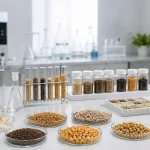
Fertilizer quality control testing verifies nutrient composition, moisture, physical properties, and relevant contaminants throughout fertilizer production. A fertilizer QC laboratory typically combines sample preparation equipment with instruments for nitrogen, phosphorus, potassium, moisture, pH, particle-size, and trace-element analysis. The exact laboratory configuration depends on the fertilizer types produced, required test methods, sample volume, and target quality or regulatory requirements.
For manufacturers serving agricultural markets, quality control connects raw material acceptance, process monitoring, and finished-product verification. The goal is not simply to generate laboratory results, but to detect material variation and process drift early enough to support consistent formulation, production, and product release.
Fertilizer laboratories also handle very different sample matrices, including hygroscopic materials, powders, granules, liquids, phosphate-based materials, and compound NPK products. This makes representative sampling, homogenization, appropriate method selection, calibration, and contamination control important parts of the overall QC workflow.
Main Fertilizer Products and Their Testing Needs
Fertilizer manufacturing covers a broad spectrum of products, and each category creates different analytical priorities:
- Nitrogen-based fertilizers – including urea, ammonium nitrate, and ammonium sulfate. Common QC priorities include nitrogen content, moisture, and product-specific parameters such as biuret in urea.
- Phosphatic fertilizers – including single super phosphate (SSP), triple super phosphate (TSP), and diammonium phosphate (DAP). Phosphorus determination and relevant physical-quality checks are important laboratory tasks.
- Potassic fertilizers – including potassium chloride (MOP) and potassium sulfate (SOP). Potassium determination is a primary compositional test.
- Compound NPK fertilizers – blended or granulated products that require verification of multiple primary nutrients together with moisture and physical uniformity.
- Micronutrient and specialty fertilizers – products containing zinc, boron, chelated nutrients, or other specialty components may require additional elemental or formulation-specific analysis.
The laboratory should therefore be configured around the actual product portfolio rather than a universal equipment list. A urea-focused plant, for example, has different analytical priorities from a multi-product NPK or phosphate fertilizer facility.
Fertilizer Quality Control Workflow
Raw Material Inspection
Quality control begins when raw materials arrive. Incoming phosphate materials, potash, nitrogen sources, and other formulation components can vary between suppliers or shipments. Representative sampling followed by appropriate chemical and physical testing helps determine whether materials meet the manufacturer’s purchasing and production specifications.
An analytical balance supports accurate sample and reagent preparation, while instruments such as UV-Vis spectrophotometers or flame photometers can be used for applicable nutrient determinations when supported by the selected analytical method. Moisture testing and other material-specific checks may also be required before a raw material is released to production.


Reaction and Granulation Process Monitoring
During reaction, formulation, or granulation, laboratory testing helps operators monitor whether the process is remaining within established production targets. Depending on the process, important checks can include pH, moisture, and nutrient uniformity.
A benchtop pH meter provides rapid pH measurements, while prepared or digested samples can be analyzed using the appropriate nutrient-analysis method. Laboratory results can then be compared with production targets so operators can identify process drift before it affects a larger quantity of material.

Drying, Cooling, and Screening
After granulation, moisture and particle-size distribution become important physical quality parameters. Excess or inconsistent moisture can contribute to storage and handling problems, while unsuitable particle-size distribution can affect product uniformity and segregation.
Moisture can be evaluated using an appropriate laboratory drying method or a moisture analyzer where suitable for the intended QC purpose. Sieve shakers used with appropriate test sieves allow laboratories to determine particle-size distribution and monitor changes in granulation or screening performance.

Finished Product Verification
Before product release or bagging, representative finished-product samples can undergo a broader set of tests based on the fertilizer specification. Typical analytical requirements may include total nitrogen, phosphorus, potassium, moisture, particle-size distribution, and relevant trace elements or contaminants.
Nitrogen can be determined using an applicable Kjeldahl or combustion-based method. Phosphorus may be measured spectrophotometrically where the selected method calls for it, while potassium can be measured using an appropriate elemental-analysis technique such as flame photometry. For trace-element analysis, AAS or ICP-OES may be appropriate depending on the required method, elements, detection requirements, and laboratory workload.
Maintaining traceability between the production batch, sample, analytical method, instrument, calibration records, and reported result helps make the QC system more reliable and easier to investigate when results fall outside internal specifications.


Common Quality Control Challenges in Fertilizer Manufacturing
Fertilizer producers commonly face analytical and operational challenges that influence both laboratory design and instrument selection:
- Raw material variability: Nutrient content and physical properties can vary between suppliers, sources, or shipments, increasing the importance of representative sampling and incoming inspection.
- Moisture control: Moisture changes can affect handling, storage behavior, and granulation performance, making reliable moisture measurement important during production and final QC.
- Representative sampling: Heterogeneous or blended fertilizers require careful sampling, grinding, and homogenization so the laboratory portion accurately represents the production batch.
- Laboratory expertise: Digestion systems, spectroscopic instruments, and elemental analyzers require appropriate method knowledge, calibration procedures, maintenance, and operator training.
- Different method requirements: Test procedures may vary by fertilizer type, customer specification, market, or applicable standard, so laboratories should confirm the required method before selecting equipment.
- Throughput versus method requirements: Production laboratories often need fast results, but reference or certification methods may require more sample preparation and analysis time than routine process-control measurements.
- Cross-contamination: Shared grinding, digestion, glassware, or sample-handling equipment can introduce contamination between samples unless appropriate cleaning and laboratory procedures are followed.
These challenges make laboratory planning more than an equipment-purchasing exercise. Sample preparation, workflow, test frequency, analytical method, operator capability, and maintenance support should all be considered together.
Key Fertilizer Quality Control Tests and Equipment
| Quality Control Need | Test or Measurement | Typical Laboratory Equipment | Common Application |
|---|---|---|---|
| Verify nitrogen content | Total nitrogen determination | Kjeldahl digestion/distillation system or Dumas analyzer, depending on the applicable method | Nitrogen fertilizers and NPK products |
| Verify phosphorus content | Phosphorus analysis | UV-Vis spectrophotometer and required sample-preparation equipment where applicable | SSP, TSP, DAP, and compound fertilizers |
| Verify potassium content | Potassium determination | Flame photometer or other appropriate elemental-analysis instrument | MOP, SOP, and compound fertilizers |
| Control moisture | Moisture determination | Moisture analyzer or laboratory oven, balance, and desiccator as required by the method | Granular and powdered fertilizers |
| Monitor acidity or alkalinity | pH measurement | Benchtop pH meter | Applicable raw materials, process samples, liquids, suspensions, and finished products |
| Monitor granule uniformity | Particle-size distribution | Test sieve shaker and appropriate test sieves | Granulated NPK, urea, DAP, and other granular fertilizers |
| Evaluate relevant trace elements or contaminants | Elemental analysis | Atomic absorption spectrometer (AAS) or ICP-OES, depending on analytical requirements | Products requiring trace-element or contaminant verification |
| Verify urea-specific quality | Biuret analysis | UV-Vis spectrophotometer where required by the selected colorimetric method | Urea products |
The applicable sample preparation, analytical procedure, calibration approach, and reporting basis should be established from the method or specification governing the product. The instrument alone does not determine whether a result is suitable for regulatory, contractual, or certification purposes.
Laboratory Equipment Required for Fertilizer Industry Quality Control
A fertilizer QC laboratory generally needs equipment for representative sample preparation, accurate weighing, chemical analysis, and physical testing. The appropriate configuration depends on which fertilizers are manufactured and which results the laboratory must report.
| Testing Requirement | Laboratory Equipment | Why It Matters |
|---|---|---|
| Sample and reagent weighing | Analytical balance | Supports accurate sample preparation, standard preparation, and quantitative analytical procedures. |
| Sample homogenization | Laboratory mill or grinder | Helps produce representative laboratory portions from granular or heterogeneous fertilizer samples. |
| Nitrogen analysis | Kjeldahl digestion and distillation system or Dumas analyzer | Supports total nitrogen determination when compatible with the required analytical method. |
| Phosphorus and colorimetric analysis | UV-Vis spectrophotometer | Supports applicable colorimetric methods used for phosphorus, biuret, or other analytes. |
| Potassium analysis | Flame photometer | Provides a practical approach to potassium measurement for laboratories using compatible methods. |
| Moisture testing | Moisture analyzer or laboratory oven | Supports process monitoring and finished-product moisture determination using the appropriate procedure. |
| pH testing | Benchtop pH meter | Provides routine pH measurement for applicable raw materials, process samples, and fertilizer products. |
| Particle-size testing | Sieve shaker and test sieves | Helps monitor granulation, screening performance, and finished-product particle-size distribution. |
| Trace-element analysis | AAS or ICP-OES | Supports multi-element or trace-element testing when required by the product specification or analytical program. |
These instruments form the analytical core of many fertilizer QC laboratories, but they should be supported by appropriate glassware, sample-preparation tools, calibration materials, ventilation, laboratory furniture, and documented QC procedures. Laboratories with higher sample volumes may also benefit from data-management or automation systems where they fit the workflow.
Basic and Advanced Fertilizer QC Laboratory Setup
The most efficient laboratory is not necessarily the one with the largest number of instruments. Equipment should match the required tests, expected sample throughput, analytical methods, and level of reporting.
| Laboratory Level | Typical Equipment | Suitable Application |
|---|---|---|
| Basic QC Laboratory | Analytical balance, moisture analyzer or oven, pH meter, Kjeldahl setup, flame photometer, sample-preparation tools, basic glassware | Plants performing routine incoming, process, and finished-product checks for a defined fertilizer range |
| Advanced QC Laboratory | UV-Vis spectrophotometer, AAS, sieve shaker, laboratory oven, desiccator, laboratory mill, fume hood, plus core QC equipment | Manufacturers with broader product portfolios, additional elemental testing, or more demanding analytical workloads |
| Advanced Analysis Laboratory | ICP-OES, Dumas nitrogen analyzer, automatic titrator, NIR analyzer, LIMS, plus appropriate sample-preparation systems | High-throughput laboratories, R&D facilities, multi-product manufacturers, and contract laboratories where the analytical workload justifies advanced instrumentation |
A practical approach is to begin with the tests that are essential for the actual product specification and then add advanced instrumentation when sample volume, additional analytes, method requirements, or turnaround needs justify the investment.
How to Choose Laboratory Equipment for Fertilizer Quality Control Testing
Start equipment selection by defining four factors: fertilizer type, required tests, applicable methods, and expected sample volume. These determine which instruments are essential and which are optional upgrades.
For a plant focused primarily on urea, nitrogen and product-specific testing may dominate the laboratory workload. A compound fertilizer manufacturer may require a broader combination of nitrogen, phosphorus, potassium, moisture, and particle-size testing. A facility producing multiple fertilizer types may need more flexible sample-preparation and analytical systems.
Next, separate routine process-control testing from reference, contractual, or certification testing. A rapid instrument can be valuable for production decisions, but the required reporting method may specify a different procedure. Equipment should therefore be selected against the actual method requirements rather than speed alone.
Sample throughput is another important decision factor. A laboratory analyzing occasional production samples may be well served by manual or semi-automatic equipment. Higher-volume laboratories should evaluate whether automation, faster analysis, autosampling, or centralized data management would meaningfully reduce operator workload and turnaround time.
Also consider the complete operating lifecycle. Sample-preparation accessories, calibration materials, reagents, consumables, ventilation requirements, operator training, maintenance, and local technical support can be as important as the initial instrument purchase.
Before purchasing, prepare a simple test-to-equipment matrix:
| Decision Question | What to Define | Why It Affects Equipment Selection |
|---|---|---|
| What fertilizers will be tested? | Urea, NPK, phosphate, potash, micronutrient, liquid, or specialty products | Different products require different analytical priorities and sample preparation. |
| Which results are required? | Nitrogen, phosphorus, potassium, moisture, pH, particle size, biuret, trace elements, or other specified parameters | Defines the core instrument families needed. |
| Which method must be followed? | Internal QC procedure, customer specification, or applicable standard method | Determines whether a particular instrument or analytical approach is acceptable. |
| How many samples will be tested? | Expected samples per shift, day, or batch | Helps determine whether manual, automated, or higher-throughput equipment is justified. |
| What level of reporting is required? | Process monitoring, internal release, contractual testing, or other formal reporting | Influences method control, traceability, calibration, and documentation requirements. |
At AELAB, equipment selection can be approached from this application-first perspective: define the fertilizer, tests, methods, and workload first, then build the laboratory configuration around those requirements.
Who Needs Fertilizer Laboratory Testing Solutions?
- Fertilizer manufacturers that need routine raw material, in-process, and finished-product quality control.
- Agricultural input distributors that perform incoming inspection or independent checks on bulk fertilizer products.
- Contract testing laboratories performing fertilizer analysis for manufacturers, distributors, or other clients.
- R&D departments developing or evaluating new fertilizer formulations and production processes.
- Multi-product laboratories that require flexible analytical equipment for different nutrient and elemental testing programs.
Frequently Asked Questions
What is the minimum equipment needed to start a fertilizer quality control laboratory?
A basic fertilizer QC laboratory typically starts with equipment for accurate weighing, moisture measurement, pH testing, sample preparation, and the main nutrient analyses required for the products being manufactured. Depending on the fertilizer range and required methods, this may include an analytical balance, moisture analyzer or oven, pH meter, Kjeldahl system, flame photometer, laboratory glassware, and sample-preparation equipment.
How can I ensure accurate nitrogen results in fertilizer testing?
Accurate nitrogen testing requires representative sampling, correct sample preparation, use of an appropriate validated or specified method, proper instrument operation, calibration or quality-control checks, and trained laboratory personnel. For Kjeldahl or combustion-based analysis, laboratories should follow the procedure and quality-control requirements applicable to the fertilizer product and reporting purpose.
How often should fertilizer laboratory instruments be calibrated?
Calibration and verification frequency should be based on the analytical method, instrument manufacturer’s instructions, laboratory quality procedures, usage frequency, and the importance of the reported result. Rather than applying one universal schedule to every instrument, laboratories should document an appropriate calibration and performance-check program for balances, pH meters, spectrophotometers, elemental analyzers, moisture equipment, and other critical instruments.
Can a single laboratory handle testing for multiple fertilizer types such as urea and NPK?
Yes. A laboratory can support multiple fertilizer types when its sample-preparation procedures and analytical equipment cover the required tests. For example, a combination of nitrogen-analysis equipment, UV-Vis spectrophotometry, potassium analysis, moisture testing, pH measurement, and particle-size equipment can support a broad fertilizer portfolio. Laboratories should also use suitable cleaning and sample-handling procedures to reduce cross-contamination between different sample matrices.
Conclusion
A fertilizer quality control laboratory should be designed around the relationship between product → required test → analytical method → laboratory equipment. Raw material inspection, process monitoring, and finished-product verification each create different testing needs, and the most suitable laboratory configuration depends on the fertilizer portfolio and required level of analysis.
For many manufacturers, the practical starting point is a core laboratory covering weighing, sample preparation, moisture, pH, primary nutrient analysis, and relevant physical tests. More advanced techniques such as AAS, ICP-OES, combustion nitrogen analysis, automation, or laboratory data systems can then be added when the analytical requirements and sample workload justify them.
Laboratory Equipment Solutions for Fertilizer Industry
Building a reliable fertilizer quality control laboratory requires more than selecting individual instruments. The equipment must work together with representative sampling, appropriate analytical methods, calibration procedures, trained operators, and a practical sample workflow.
AELAB supports fertilizer manufacturers and testing laboratories with equipment for sample preparation, nutrient analysis, moisture determination, physical testing, and elemental analysis. Defining the fertilizer products, required tests, applicable methods, and expected sample volume before equipment selection helps create a laboratory configuration that matches the real QC workload.