Learn how cosmetic manufacturers test incoming raw materials for identity, physical properties, purity, moisture, microbiological quality, and stability, and which laboratory instruments support each stage of quality control.
Learn how cosmetic stability testing evaluates physical, chemical, and microbiological changes and which laboratory equipment supports each stage, from formulation development to long-term monitoring.
Learn which quality control tests and laboratory instruments support soap manufacturing, from raw material inspection and saponification monitoring to finished-product, microbiological, and stability testing.
Learn how aluminum manufacturers use chemical analysis, melt-quality testing, mechanical testing, metallography, NDT, and dimensional inspection to control alloy quality from incoming materials through final release.
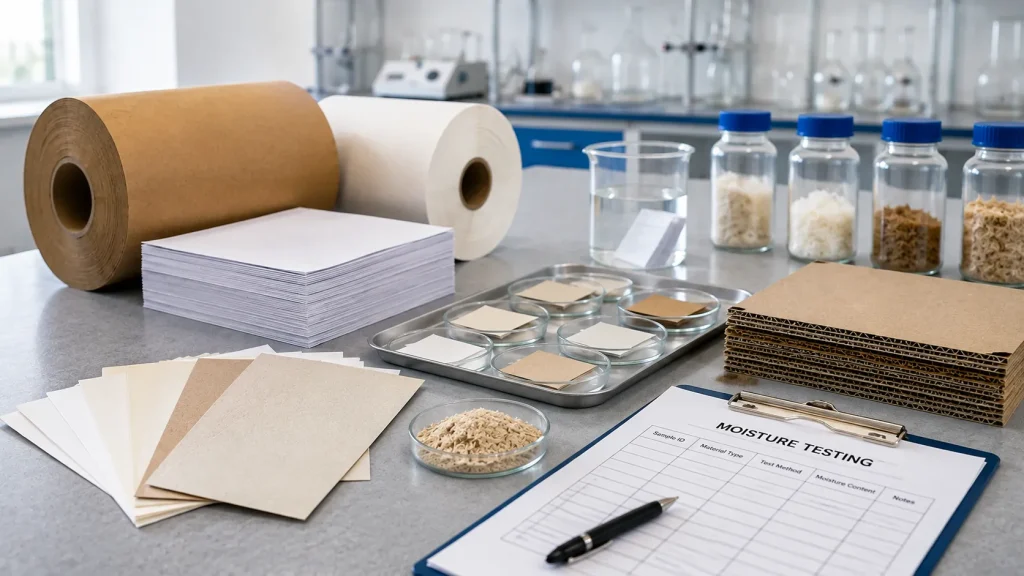
Learn how paper manufacturers test moisture from incoming pulp through converting and final shipment, including key methods, QC stages, and laboratory equipment for reliable moisture control.
Learn which laboratory equipment is used for heat treatment quality control, from alloy verification and hardness testing to metallography, case depth measurement, mechanical testing, and final inspection.
Learn how medical laboratory sample preparation equipment supports centrifugation, homogenization, liquid handling, incubation, filtration, and quality control in clinical diagnostics and medical device manufacturing.
Learn which laboratory equipment is used to evaluate DNA extraction yield, purity, integrity, contamination, and downstream amplifiability, with practical QC workflows and laboratory setup guidance.
Learn how wood fiber and wood-based panel manufacturers use laboratory testing to control raw materials, fiber properties, moisture, resin blending, mat formation, mechanical performance, dimensional stability, and emissions.
Learn how MDF and particleboard manufacturers organize quality control from raw-material inspection through finished-panel testing, including the key tests, laboratory equipment, and practical lab setup considerations.
Learn how meat manufacturers can organize quality control from raw material inspection through processing, packaging, finished-product testing, and sensory evaluation, with practical guidance on the laboratory equipment used for each test.