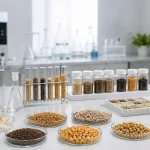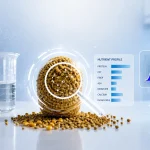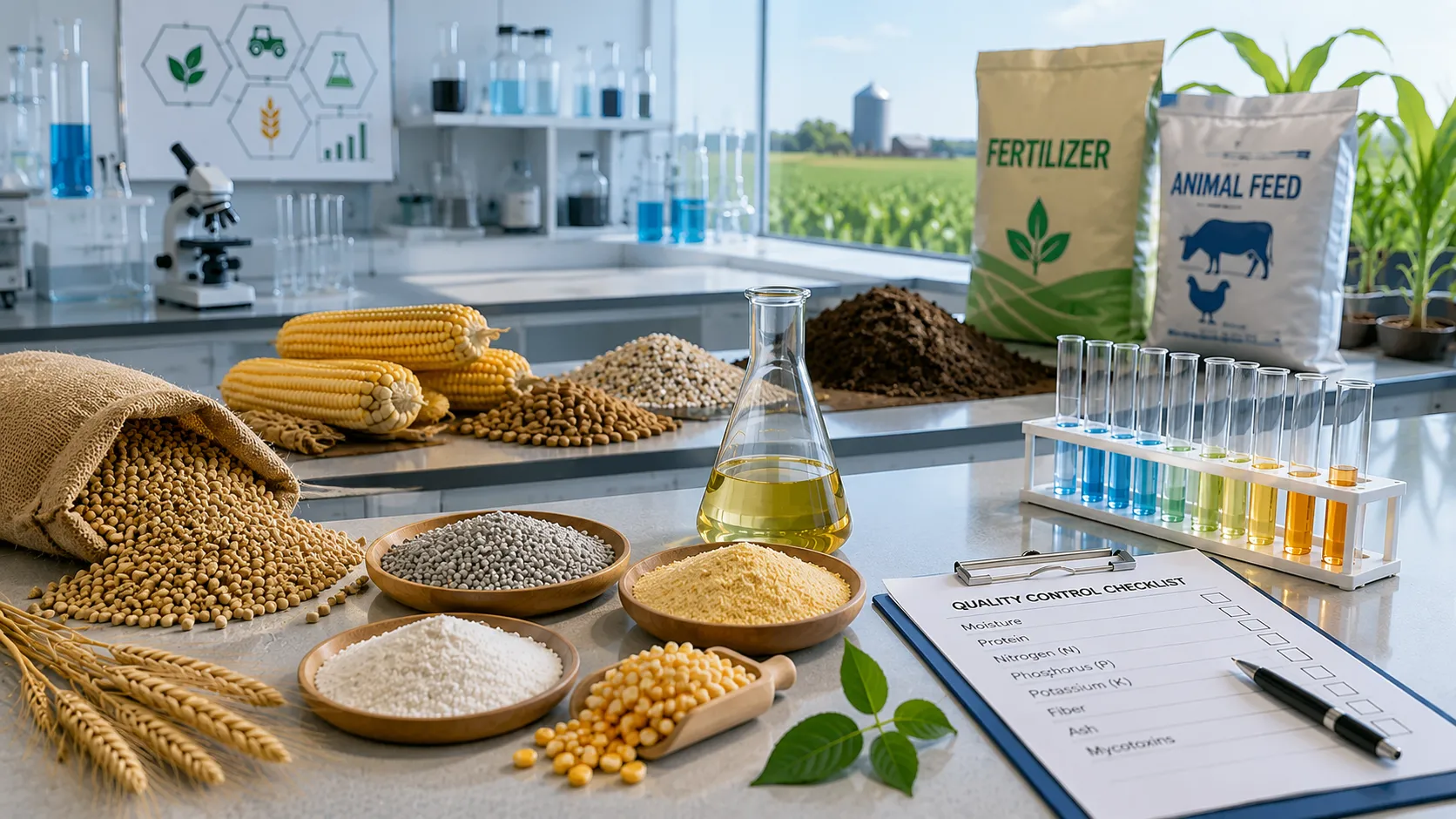
Agricultural Product Quality Testing Laboratory Setup Overview
An agricultural product quality testing laboratory supports manufacturers of fertilizers, animal feed, feed ingredients, and soil amendments by verifying raw materials, monitoring production, and checking finished-product quality. The laboratory configuration should be based on the products being manufactured, the parameters that must be measured, the required methods, sample volume, and the level of analysis that needs to remain in-house.
For most agricultural product manufacturers, the core testing requirements include moisture and basic physical measurements, nutrient or protein analysis, particle-size control, and selected contaminant testing. Common laboratory equipment ranges from moisture analyzers, balances, pH meters, muffle furnaces, and sieve shakers to UV-Vis spectrophotometers, Kjeldahl or Dumas systems, NIR analyzers, flame photometers, ELISA readers, and advanced elemental analysis instruments.
The most practical way to plan the laboratory is to connect each production stage to a defined quality-control requirement: raw material → test → method → equipment → acceptance decision. This approach helps manufacturers avoid buying instruments that do not match their actual product matrices or testing workload.
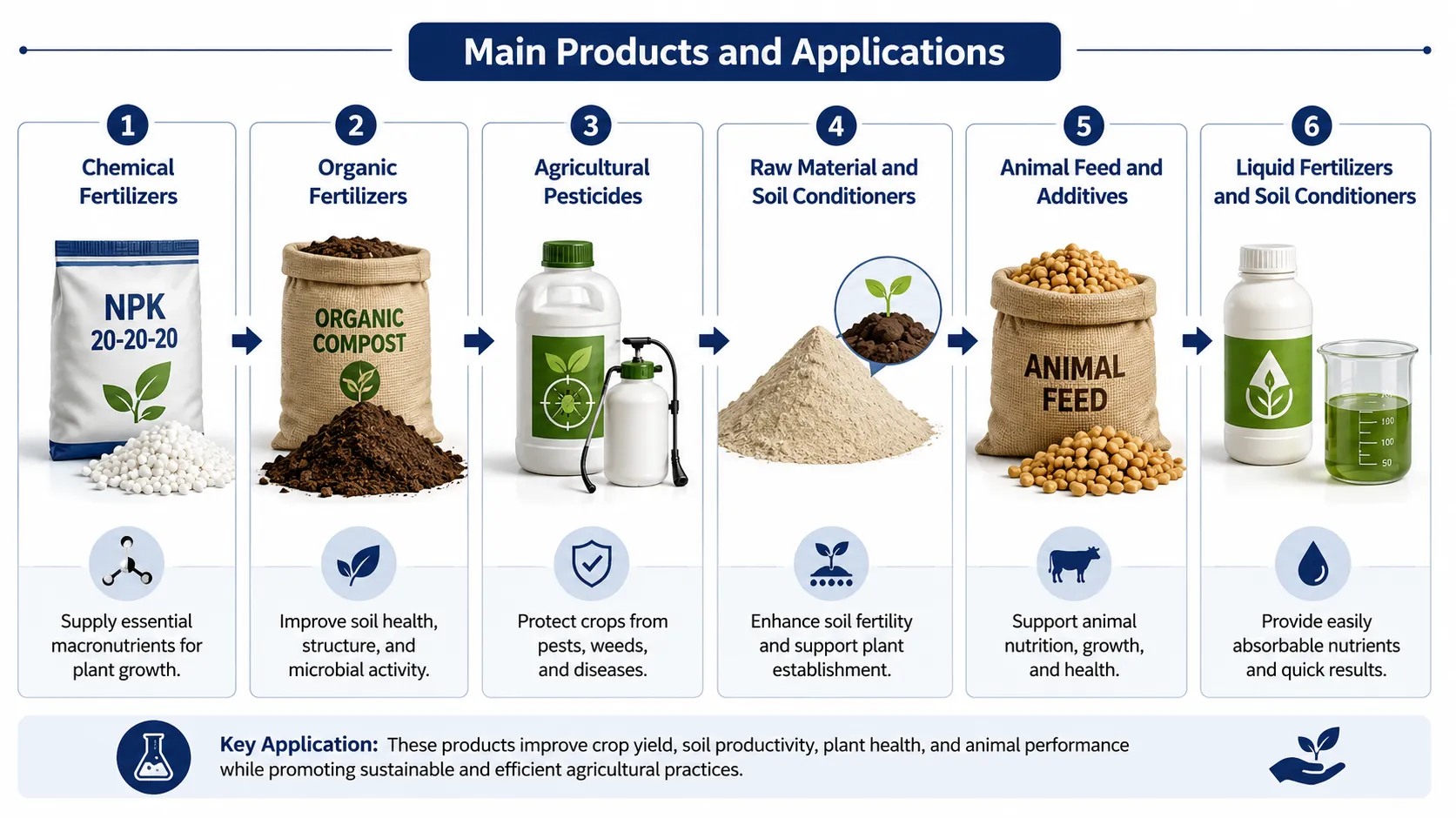
Main Products and Applications
Agricultural product testing laboratories commonly support the following categories, each with different analytical priorities:
- Chemical fertilizers – Urea, DAP, MOP, NPK blends, and micronutrient mixes may require nutrient, moisture, particle-size, and contaminant testing.
- Organic fertilizers and soil conditioners – Compost, manure, biochar, and humic substances may require moisture, pH, ash, nutrient, and selected contaminant analysis.
- Animal feed and feed additives – Compound feed, premixes, protein concentrates, and mineral supplements commonly require nutritional and contaminant testing.
- Raw feed ingredients – Soybean meal, corn, grain by-products, and fishmeal may be screened for moisture, protein, fiber, and relevant contaminants.
- Liquid fertilizers and foliar nutrients – Solutions and suspensions commonly require measurements such as pH, density, and nutrient analysis.
Quality Control Workflow in Agricultural Product Manufacturing
A useful agricultural QC laboratory should support decisions throughout production rather than testing only the finished product. Incoming inspection identifies unsuitable materials before processing, in-process testing detects blending or moisture problems early, final verification checks product quality before release, and storage monitoring helps identify changes that may occur over time.
Raw Material Inspection
Incoming ingredients such as urea prills, phosphate rock, protein meals, and grains should be sampled according to the manufacturer’s quality plan before they enter production. Important concerns can include incorrect nutrient composition, excess moisture, variable protein content, and contaminants relevant to the particular raw material.
For feed ingredients, a near-infrared (NIR) analyzer can provide rapid screening of parameters such as moisture, protein, and fiber when suitable calibrations are available for the material being tested. Wet-chemistry or spectrophotometric methods can be used where appropriate for fertilizer nutrient analysis. Moisture analyzers or oven-based gravimetric methods provide a practical check of moisture before raw materials enter the production process.
In this stage, the laboratory decision is straightforward: incoming material → identity or composition risk → appropriate screening or reference method → accept, investigate, or reject according to the manufacturer’s quality system.


In-Process Monitoring
During blending, granulation, pelletizing, or mixing, samples taken from the process help determine whether production remains consistent. In fertilizer manufacturing, particle segregation or non-uniform blending can contribute to inconsistent nutrient distribution. In feed production, poor mixing can result in uneven distribution of ingredients or premixes.
Sieve shakers are useful for monitoring particle-size distribution in granulated materials. NIR or benchtop spectrophotometric methods may provide faster intermediate composition checks where validated methods are available. Moisture testing can also be used to monitor drying or conditioning steps.
The value of in-process testing is speed: measurements should provide information early enough for production personnel to respond before a complete batch becomes off-target.

Final Product Verification
Finished fertilizers, feeds, and agricultural amendments are tested against the manufacturer’s product specifications and any applicable market or regulatory requirements before release. Depending on the product and required method, relevant measurements can include nitrogen, phosphorus, potassium, moisture, ash, crude protein, fiber, fat, pH, or physical characteristics.
Nitrogen or protein analysis may use Kjeldahl or Dumas methods. Phosphorus may be measured using an appropriate spectrophotometric method, while potassium analysis may require flame photometry or another suitable elemental technique. More advanced elemental analysis can be performed when the required analytes, sensitivity, method, and regulatory context justify it.
Physical tests may also be important. For example, particle-size distribution affects granulated fertilizer consistency, while pellet quality measurements can be relevant to feed production.
The exact final-release test panel should therefore be defined by product type + label or specification requirements + applicable analytical method + required decision limit, rather than by purchasing a universal set of instruments for every agricultural product.


Stability and Storage Monitoring
Agricultural products may change during storage. Fertilizers can absorb moisture and cake, while feed materials can be affected by moisture, oxidation, or fungal contamination depending on the product and storage conditions.
A storage or stability program can retain samples under defined conditions and re-test selected quality parameters at planned intervals. Controlled temperature or humidity chambers may be useful where a formal controlled-condition study is required. When mycotoxin risk is relevant, screening approaches such as ELISA or lateral-flow methods may be used, while more advanced instrumental analysis may be appropriate when confirmation or broader analytical capability is required.
The storage program should focus on parameters that can realistically change during the intended storage period rather than simply repeating every release test.


Common Quality Control Challenges in Agriculture and Feed Industries
Manufacturers commonly build laboratory capability around recurring production and raw-material risks such as:
- Batch-to-batch nutrient variation – inconsistent raw materials, weighing, or blending can affect fertilizer or feed composition.
- Excess moisture – can contribute to fertilizer caking, reduced flowability, or deterioration of moisture-sensitive feed materials.
- Mycotoxin risk – relevant to susceptible grains and feed ingredients where fungal contamination may occur.
- Heavy metal contamination – may require monitoring in selected mineral raw materials, fertilizers, or premixes depending on the product and applicable requirements.
- Label or specification deviations – protein, nitrogen, or other nutrient results can move off target because of raw-material variability or inaccurate formulation and mixing.
- Particle-size variation – can affect fertilizer handling and application characteristics or feed mixing and pellet consistency.
These challenges should determine the laboratory test plan. A manufacturer with frequent moisture and blending problems may gain more from reliable routine moisture and composition testing than from immediately investing in advanced trace-analysis equipment that is used only occasionally.
Key Quality Control Tests for Agricultural Products
The table below links common quality problems to the analytical test and instrument family normally considered for that task. The final method and equipment configuration should be confirmed against the actual sample matrix and applicable test requirements.
| Quality Challenge | Quality Control Test | Recommended Laboratory Equipment | Application |
|---|---|---|---|
| High moisture risk | Gravimetric moisture analysis | Halogen moisture analyzer or oven balance | Raw materials, finished fertilizer/feed |
| Unverified protein content | Kjeldahl nitrogen or Dumas combustion | Kjeldahl digestion/steam distillation unit or protein analyzer | Animal feed, oilseed meals |
| Off-target NPK in fertilizers | Spectrophotometric and flame photometric analysis | UV-Visible spectrophotometer, flame photometer, digestion block | Chemical and blended fertilizers |
| Suspected mycotoxin presence | ELISA or lateral flow strip testing | Microplate reader or lateral flow reader | Feed grains and finished feed |
| Heavy metal contamination | Acid digestion + AAS/ICP | Atomic absorption spectrometer (AAS) or ICP-OES | Phosphate fertilizers, mineral premixes |
| Incorrect particle size | Sieve analysis | Sieve shaker with test sieves | Granulated fertilizers, pellets |
| Unstable pH in soil amendments | Electrometric pH measurement | Benchtop pH meter with combined electrode | Soil conditioners, liquid fertilizers |
| Excess ash or filler | Ashing gravimetric test | Muffle furnace, analytical balance | Feed, organic fertilizers |
Laboratory Equipment Required for Agricultural Quality Control
A reliable testing laboratory starts with instruments selected for the actual materials, analytical methods, and production decisions the laboratory must support. Routine QC equipment should normally address frequent measurements first, while advanced instruments should be justified by analyte requirements, sensitivity, workload, or the cost and turnaround time of external testing.
| Testing Requirement | Laboratory Equipment | Why Manufacturers Need It |
|---|---|---|
| Rapid moisture determination | Moisture analyzer | Provides fast moisture checks for receiving, processing, and finished-product QC |
| Protein quantification | Kjeldahl system or Dumas analyzer | Supports protein or nitrogen determination where these parameters form part of the product specification |
| Nutrient profiling (NPK) | UV-Vis spectrophotometer, flame photometer | Supports fertilizer nutrient analysis using appropriate validated methods |
| Mycotoxin screening | ELISA reader | Provides screening capability where susceptible feed materials require routine mycotoxin monitoring |
| Heavy metal monitoring | AAS or ICP-OES | Provides elemental analysis capability when trace or multi-element testing is required |
| Particle size control | Sieve shaker | Measures particle-size distribution for granulated fertilizers, ingredients, and pellets |
These instruments create a practical QC chain: incoming materials are screened → production is monitored → finished products are verified → higher-risk or specialized analyses are performed when required. Not every manufacturer needs every instrument in-house. Low-frequency or highly specialized analyses may be candidates for external testing, while frequent release tests are stronger candidates for internal laboratory capability.
Basic Laboratory Setup for Agricultural Product Manufacturers
The appropriate investment level depends on production volume, product range, required methods, sample throughput, and how much testing the manufacturer intends to perform internally. A useful approach is to build the laboratory progressively.
| Laboratory Level | Recommended Equipment | Suitable For |
|---|---|---|
| Basic QC Laboratory | Moisture analyzer, benchtop pH meter, analytical balance, muffle furnace, glassware, drying oven | Small feed mills, organic fertilizer producers, and operations focused on routine physical and basic gravimetric measurements |
| Advanced QC Laboratory | All Basic items plus UV-Vis spectrophotometer, Kjeldahl unit (or Dumas analyzer), flame photometer, sieve shaker, NIR analyzer | Manufacturers that require regular nutrient, protein, particle-size, or rapid composition testing in addition to basic QC |
| Advanced Analysis Laboratory | All Advanced items plus AAS or ICP-OES, ELISA reader, HPLC, sample preparation digester, controlled climate chambers | Large industrial producers, third-party laboratories, and operations that need broader contaminant, elemental, instrumental, or controlled-condition testing capability |
The laboratory levels should be treated as planning examples rather than fixed packages. A fertilizer manufacturer may prioritize nutrient and elemental analysis, while a feed mill may place greater emphasis on protein, moisture, NIR screening, and mycotoxin testing. Equipment should follow the test plan rather than the other way around.
How Equipment Needs Change by Agricultural Product Type
Different agricultural products create different laboratory priorities. Defining the product matrix before selecting instruments helps prevent both under-equipping and unnecessary capital expenditure.
| Product Type | Typical QC Priorities | Relevant Equipment Families |
|---|---|---|
| Chemical and blended fertilizers | Moisture, nutrient composition, particle size, selected elemental contaminants | Moisture analyzer, UV-Vis spectrophotometer, flame photometer, sieve shaker, AAS or ICP-OES where required |
| Organic fertilizers and soil amendments | Moisture, pH, ash, nutrient composition, selected contaminants | Moisture analyzer, pH meter, analytical balance, muffle furnace, spectrophotometer, elemental analysis where required |
| Compound feed and feed ingredients | Moisture, protein, fiber or composition screening, ash, particle size, mycotoxin risk | Moisture analyzer, Kjeldahl or Dumas system, NIR analyzer, muffle furnace, sieve shaker, ELISA or lateral-flow reader |
| Liquid fertilizers | pH, density, nutrient composition, formulation consistency | pH meter, balance or density measurement equipment, spectrophotometric or other appropriate nutrient-analysis equipment |
How to Choose Laboratory Equipment for Agricultural Product Testing
Equipment selection should begin with the required tests and decisions, not with a list of available instruments. Before purchasing equipment, define the products to be tested, parameters to be measured, required analytical methods, expected number of samples, and which analyses need to be completed internally.
Consider the following factors:
- Sample type and matrix – Powders, granules, pellets, grains, organic materials, and liquids may require different preparation procedures and instrument accessories. Confirm that the proposed method is appropriate for the actual sample matrix.
- Required test scope – Separate routine release tests from occasional contaminant or investigative testing. A feed mill focused on moisture and protein has different priorities from a fertilizer producer requiring nutrient and elemental analysis.
- Method and sensitivity requirements – Instrument choice should follow the required analytical method and the concentration range that must be measured. More advanced elemental instrumentation may be justified when simpler techniques cannot meet the required analytical task.
- Testing frequency and turnaround time – High-throughput facilities may benefit from faster screening or automated sample-preparation approaches. Lower-volume laboratories may find conventional wet chemistry more practical for some tests.
- Screening versus reference analysis – Rapid methods such as NIR can be valuable for routine screening, but they depend on suitable calibration and method control. Determine which results are used for rapid process decisions and which require a reference or confirmatory method.
- Sample preparation – Digestion, grinding, homogenization, weighing, filtration, and other preparation steps can determine analytical quality just as much as the main instrument. Include preparation equipment when planning the laboratory budget and workflow.
- Calibration, quality control, and maintenance – Confirm the required checks, reference materials, consumables, calibration approach, preventive maintenance, and local service capability before selecting an instrument.
- Laboratory capacity – Consider analyst workload, bench space, utilities, ventilation, reagent handling, and sample storage. An instrument that fits the analytical requirement still needs to fit the laboratory operation.
- In-house versus outsourced testing – Frequent, time-sensitive production tests are often stronger candidates for in-house capability. Specialized or low-frequency analyses may remain external until testing volume or turnaround requirements justify additional instrumentation.
- Technical support and training – Installation, method guidance, operator training, and after-sales support can be important when introducing a new analytical technique into a production QC laboratory.
A practical purchasing sequence is therefore: define products → define required tests → identify methods → estimate sample throughput → select equipment → plan sample preparation and QC → confirm service and training requirements.
Who Needs Laboratory Testing Solutions for This Industry?
- Fertilizer manufacturing plants – blending, granulating, and liquid fertilizer operations requiring incoming, process, and final-product QC.
- Animal feed mills and premix manufacturers – compound feed, mineral premix, and related producers requiring nutritional and contaminant testing.
- Agricultural cooperatives and input distributors – organizations that need centralized checks of agricultural inputs or incoming materials.
- Third-party contract testing laboratories – laboratories supporting multiple producers and requiring broader analytical capability.
- Agronomy research and development centers – facilities developing formulations, comparing materials, or supporting product-development testing.
Frequently Asked Questions
What basic equipment does a small fertilizer lab need?
A basic fertilizer QC laboratory can start with a moisture analyzer, analytical balance, pH meter, muffle furnace, drying oven, glassware, and the sample-preparation tools required by its methods. If the laboratory must verify NPK or other nutrient claims, additional analytical equipment such as a UV-Vis spectrophotometer, flame photometer, or other method-appropriate instrument may be required.
How often should I calibrate my NIR analyzer for feed testing?
There is no single calibration-update interval that applies to every NIR feed application. The laboratory should follow the instrument manufacturer’s performance-check procedures and the requirements of its validated calibration or analytical method. Calibration performance should also be reassessed when significant changes in raw-material type, source, composition, sample presentation, or operating conditions could affect prediction accuracy.
Can one laboratory serve both fertilizer and animal feed testing?
Yes. A combined laboratory can share general-purpose equipment such as balances, moisture analyzers, ovens, and some analytical instruments when the applicable methods allow it. The laboratory should control sample preparation, cleaning, workflow, and contamination risks, and maintain separate procedures where fertilizer and feed methods differ.
What is the most common quality failure in agricultural products?
There is no single failure that applies to every agricultural product. Common recurring problems include nutrient or protein variation, excess moisture, inconsistent particle size, and contamination risks associated with particular raw materials. The most important QC test therefore depends on the product, manufacturing process, incoming-material variability, and applicable specification.
Conclusion
An agricultural product quality testing laboratory should be designed around the manufacturer’s actual products and quality decisions. Start by identifying the parameters that must be checked at raw-material receipt, during production, at final release, and during storage. Then match each parameter to an appropriate method, sample-preparation workflow, and instrument.
For a smaller operation, routine moisture, pH, weighing, ash, and basic physical testing may form the initial laboratory. Nutrient, protein, NIR, particle-size, mycotoxin, or advanced elemental analysis can then be added when product requirements, testing frequency, turnaround time, or the cost of external testing justify the investment.
This staged approach creates a laboratory that is easier to operate and expand because every equipment purchase is connected to a defined quality-control requirement.
Laboratory Equipment Solutions for Agricultural Product Testing
For manufacturers planning an agricultural testing laboratory, AELAB provides laboratory equipment for routine QC and more advanced analytical workflows. Equipment selection can be matched to the product matrix, required tests, sample volume, and intended laboratory level so that the configuration supports the manufacturer’s actual testing priorities rather than an unnecessarily broad instrument list.