Essential Laboratory Equipment for Chemical Formulation Development and Scale-Up Overview
Chemical formulation development requires controlled sample preparation, physical-property testing, analytical characterization, stability evaluation, and scale-up monitoring. The most useful laboratory setup connects each development question to a measurable test and the appropriate instrument—from balances, stirrers, pH meters, and viscometers for routine formulation work to HPLC, GC, particle size analysis, thermal analysis, and lab reactor systems when deeper characterization or scale-up data are required.
For specialty chemical manufacturers, the goal is not simply to own more instruments. It is to build a workflow that can identify raw-material variability, confirm formulation performance, compare trial batches, and generate reproducible data before pilot or commercial production. This helps reduce avoidable plant trials and supports more confident scale-up decisions.
Quick Equipment Selection Summary
| Development Need | Typical Test | Common Equipment |
|---|---|---|
| Accurate formulation preparation | Mass, mixing, pH, viscosity | Analytical balance, stirrer, pH meter, viscometer |
| Dispersion or emulsion control | Particle size, rheology, separation tendency | Particle size analyzer, rheometer, centrifuge |
| Composition and active-content verification | Assay, residual solvent, identity screening | HPLC, GC, UV-Vis, FTIR |
| Thermal and storage evaluation | Phase transitions, thermal behavior, stability studies | DSC/TGA, stability chamber |
| Scale-up process understanding | Mixing response, temperature profile, viscosity monitoring | Lab reactor, pilot mixer, data logger, inline viscometer |
What Is Chemical Formulation Development and Scale-Up?
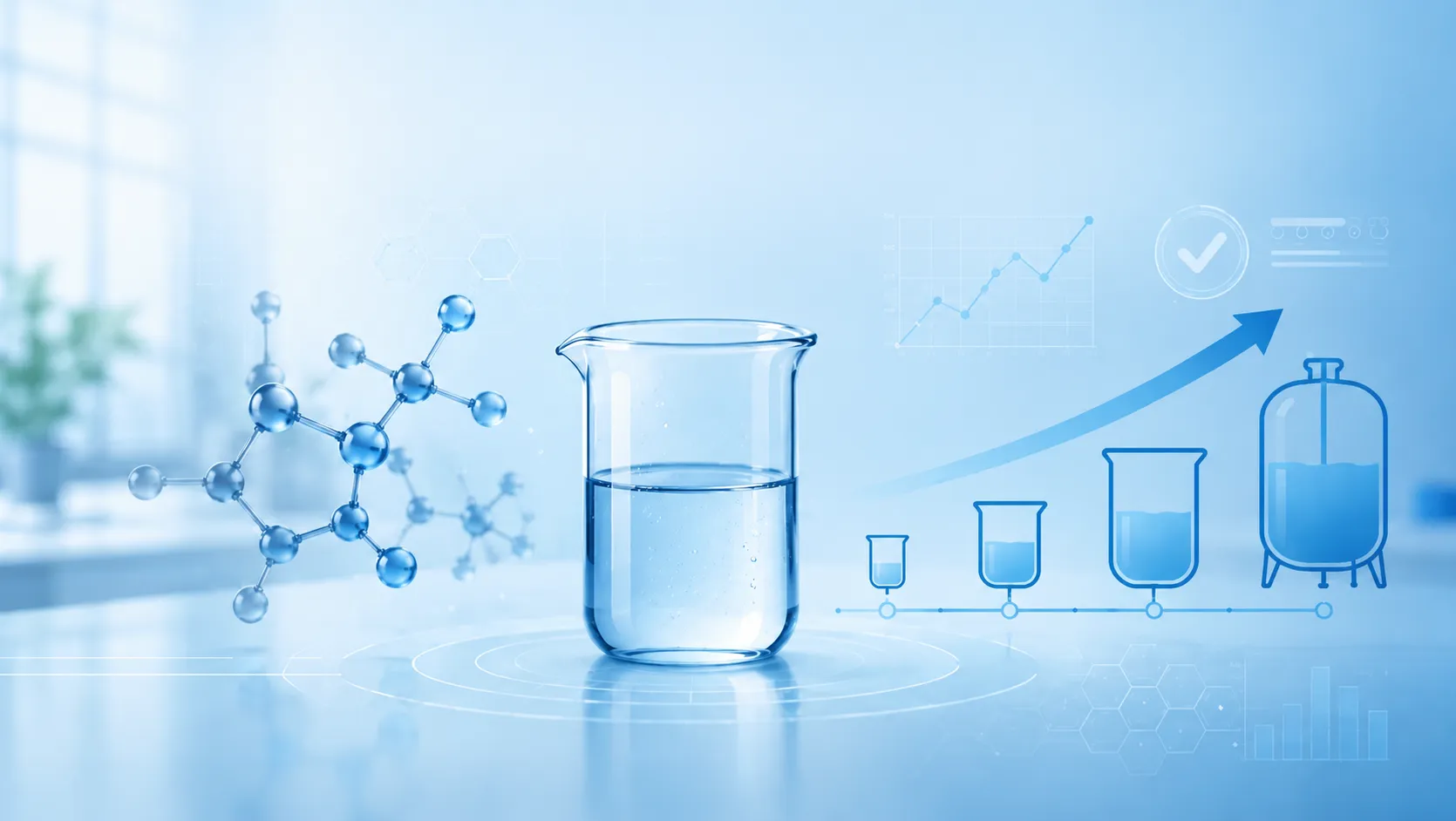
Chemical formulation development is the process of designing a mixture of chemicals (a formulation) that delivers specific functional properties. This involves selecting active ingredients, solvents, surfactants, stabilizers, and other additives in precise ratios. Scale-up refers to the transition from laboratory beakers to larger pilot batches and eventually full-scale production, where mixing, heat transfer, and kinetics change.
For specialty chemicals—such as coatings, adhesives, personal care products, and agrochemicals—formulation development is iterative. Scientists adjust composition based on performance tests, stability studies, and application requirements. The goal is a robust formulation that remains consistent under varying manufacturing conditions.
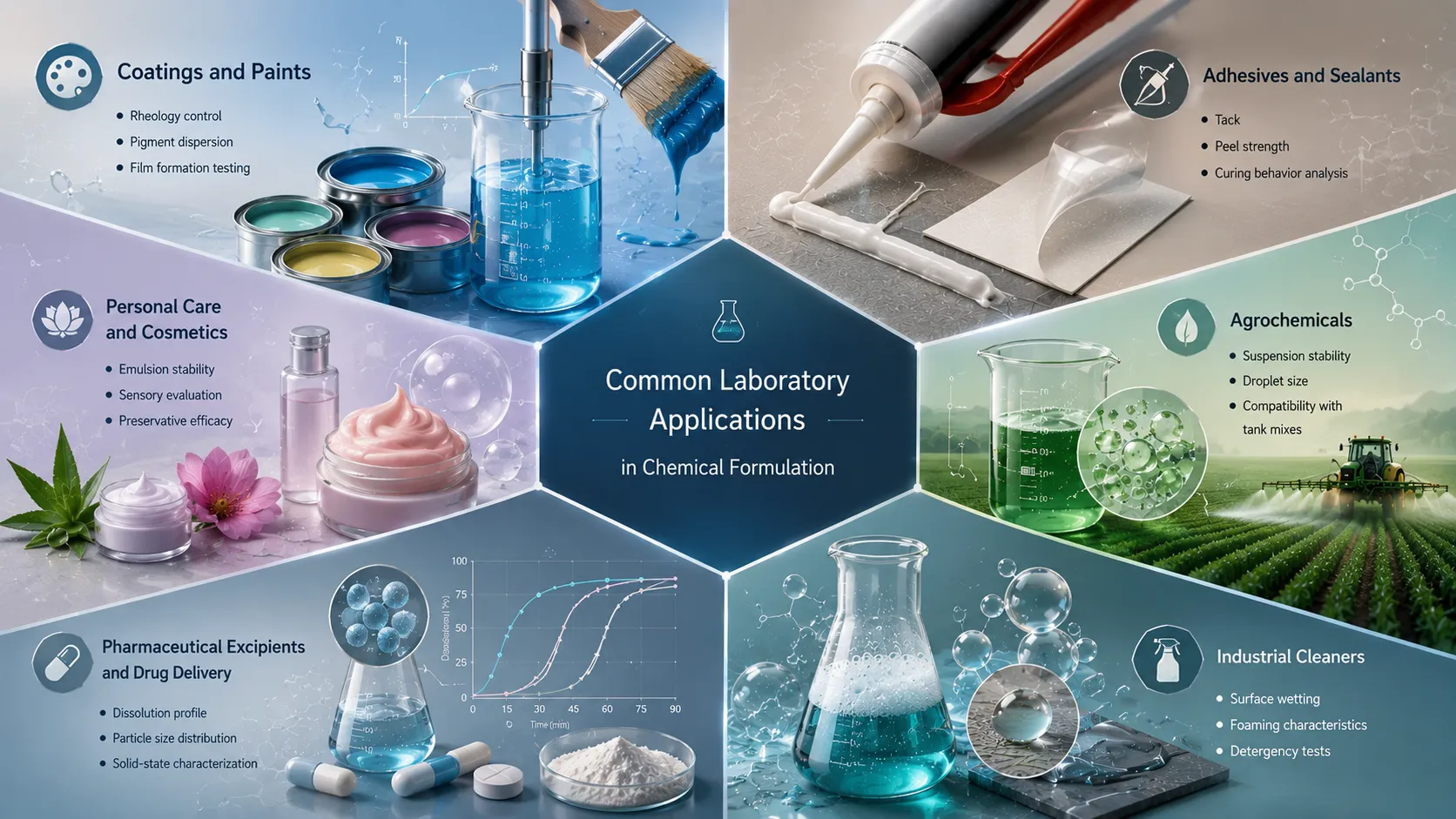
Common Laboratory Applications in Chemical Formulation
Chemical formulations are developed for a wide range of applications. Understanding the end use helps tailor the equipment needs:
- Coatings and Paints: Rheology control, pigment dispersion, film formation testing.
- Adhesives and Sealants: Tack, peel strength, curing behavior analysis.
- Personal Care and Cosmetics: Emulsion stability, sensory evaluation, preservative efficacy.
- Agrochemicals: Suspension stability, droplet size, compatibility with tank mixes.
- Pharmaceutical Excipients and Drug Delivery: Dissolution profile, particle size distribution, solid-state characterization.
- Industrial Cleaners: Surface wetting, foaming characteristics, detergency tests.
Chemical Formulation Development and Scale-Up Testing Workflow
The workflow from concept to pilot batch involves several interconnected steps. Each relies on specific laboratory instruments to generate data that guides decision-making.
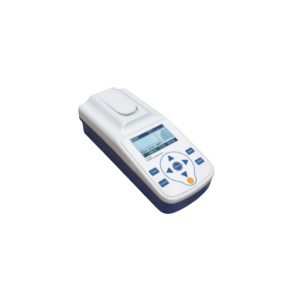
Step 1: Pre-formulation Studies
Characterize raw materials: solubility, melting point, particle size, and compatibility. This step identifies potential incompatibilities and helps select ingredient grades.
QC Checks: Purity by HPLC or GC, thermal properties by DSC, moisture content.
- Analytical balance
- Melting point apparatus
- Karl Fischer titrator
- Particle size analyzer
- Differential scanning calorimeter (DSC)




Step 2: Lab-Scale Formulation Preparation
Small batches (50–500 mL) are prepared using various mixing techniques to achieve homogeneity. Parameters like mixing speed, time, and temperature are recorded.
QC Checks: Visual appearance, pH, viscosity.
- Overhead stirrer or magnetic stirrer
- Homogenizer (rotor-stator)
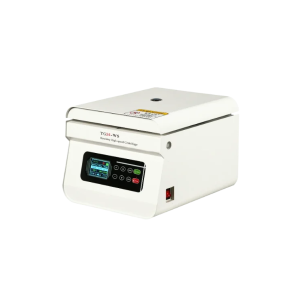
- Bench-top centrifuge (for emulsion stability screen)
- pH meter
- Viscometer


Step 3: Analytical Testing and Characterization
Formulations are analyzed to confirm composition, active content, and the absence of unwanted by-products.
QC Checks: Assay of active ingredient, residual solvents, molecular structure confirmation.
- High-performance liquid chromatograph (HPLC)
- Gas chromatograph (GC)
- UV-Vis spectrophotometer
- FTIR spectrometer


Step 4: Performance Testing
The formulation is evaluated under simulated application conditions to verify it meets specifications (e.g., adhesion, gloss, cleaning efficiency, release profile).
QC Checks: Application-specific performance tests using the company’s validated methods or relevant standards where applicable.
- Tensiometer (surface/interfacial tension)
- Contact angle goniometer
- Rheometer (for flow curve and yield stress)
- Application test panels/spray setup
Step 5: Scale-Up Pilot Trials
Successful lab formulations move to larger controlled trials using pilot-scale mixing or reactor systems selected to represent the intended production process. Mixing time, temperature profile, shear conditions, and other relevant process parameters are compared with lab-scale results to assess reproducibility before further scale-up.
QC Checks: Same as lab scale, with additional emphasis on reproducibility and process parameter monitoring.
- Pilot-scale mixer with torque measurement
- Inline viscometer
- Temperature data logger
- Lab reactor system
Step 6: Quality Control Release
Final product specifications are confirmed before the batch is approved for scale-up or dispatch.
QC Checks: Full specification testing as per product dossier.
- Density meter
- Refractometer
- Colorimeter
- Stability chambers


Key Quality Control Tests for Chemical Formulations
| Quality Control Test | Purpose | Common Laboratory Equipment | Relevant Product Types / Applications |
|---|---|---|---|
| Viscosity Measurement | Ensure flow properties match application requirements | Rotational viscometer, rheometer | Coatings, adhesives, personal care |
| pH Determination | Verify acidity/alkalinity for stability and compatibility | pH meter | All aqueous formulations |
| Particle Size Analysis | Control dispersion stability and appearance | Laser diffraction particle size analyzer | Suspensions, emulsions, agrochemicals |
| Density / Specific Gravity | Confirm formulation consistency and fill volumes | Digital density meter, pycnometer | Coatings, cleaners, lubricants |
| Active Content (Assay) | Quantify key functional ingredients | HPLC, GC, UV-Vis | Pharmaceutical, agrochemical, specialty chemicals |
| Surface Tension | Evaluate wetting, spreading, and foaming behavior | Tensiometer | Surfactant formulations, coatings, inks |
| Stability Testing | Assess shelf life under various temperature conditions | Stability chambers, incubators | All formulated products |
| Refractive Index | Quick purity check and concentration estimation | Refractometer | Solvents, fragrances, liquid concentrates |
| Color Measurement | Ensure batch-to-batch color consistency | Spectrophotometer, colorimeter | Personal care, paints, food additives |
| Emulsion / Suspension Stability | Determine phase separation tendency | Analytical centrifuge, Turbiscan | Emulsions, suspensions, agrochemicals |
Recommended Laboratory Equipment for Chemical Formulation Laboratories
| Laboratory Equipment | Main Application | Why It Matters |
|---|---|---|
| Analytical Balance | Weighing raw materials and samples | Precision in formulation affects reproducibility |
| Overhead Stirrer / Magnetic Stirrer | Mixing and dissolution | Fundamental for preparing homogeneous batches |
| High-Shear Homogenizer | Emulsification and dispersion | Creates stable fine dispersions critical for many products |
| pH Meter | Acidity/basicity measurement | Directly influences stability and performance |
| Viscometer / Rheometer | Flow behavior characterization | Essential for application and processing predictions |
| HPLC / GC System | Quantitative analysis of actives | Ensures correct dosage and regulatory compliance |
| Particle Size Analyzer | Size distribution of solids or droplets | Impacts texture, stability, and appearance |
| DSC / TGA (Thermal Analyzer) | Thermal stability and phase transitions | Identifies incompatibilities and processing limits |
| Stability Chambers | Accelerated and real-time aging | Predicts shelf life and packaging requirements |
| Benchtop Centrifuge | Separation stress testing | Quick screening for emulsion/suspension stability |
| Tensiometer / Contact Angle Goniometer | Surface and interfacial properties | Determines wetting, spreading, and adhesion potential |
| Lab Reactor System | Controlled scale-up experiments | Bridges the gap between beaker and pilot plant |
Basic vs Advanced Chemical Formulation Laboratory Setup
A basic formulation laboratory should cover the measurements needed for repeatable preparation and rapid screening. For many liquid or semi-solid formulations, this means accurate weighing, controlled mixing, pH measurement, viscosity measurement, and a practical way to screen separation or stability. These tools are often sufficient for early formulation comparison when composition is known and the main question is physical performance.
An advanced setup becomes justified when the laboratory must quantify active ingredients, identify unknowns, characterize particle or droplet distributions, investigate thermal behavior, or generate process data for scale-up. HPLC, GC, FTIR, particle size analyzers, rheometers, thermal analyzers, stability chambers, and controlled reactor systems add value when those measurements affect formulation decisions. The correct level depends on the product, risk, test frequency, and whether the analysis can reasonably be outsourced.
How to Choose Laboratory Equipment for Chemical Formulation Development
Start with the formulation types and decisions the laboratory must support. Low-viscosity liquids, viscous pastes, emulsions, suspensions, and reactive systems place different demands on mixing, temperature control, sample handling, and rheological measurement. Match instrument capability to the actual sample rather than selecting equipment only by category name.
For each instrument, define the sample volume, expected sample condition, required measurement range, accuracy or repeatability needs, and daily or weekly throughput. Early screening may use small samples, while scale-up work requires equipment that can reproduce relevant mixing and temperature conditions at larger volume. Where methods are quality-critical, also consider calibration, method control, data handling, and documentation requirements.
Maintenance, consumables, spare parts, and technical support should be part of the purchasing decision. Instruments that are difficult to clean, service, or recalibrate can become bottlenecks even when their analytical capability is suitable. Also consider future expansion: modular or upgradeable systems can be useful when new formulation types or analytical methods are expected.
A practical buying sequence is to prioritize instruments that answer frequent formulation decisions first, then add advanced analytical tools where the added data will change formulation, release, troubleshooting, or scale-up decisions. When evaluating suppliers, application support is valuable because equipment selection should fit the workflow, sample type, and testing objective.
Frequently Asked Questions
What is the minimum equipment needed to start a chemical formulation lab?
A basic setup includes an analytical balance, a stirrer, a pH meter, a viscometer, and a bench-top centrifuge. This allows for weighing, mixing, basic characterization, and stability screening. As projects advance, add analytical instruments like HPLC.
How does scale-up affect equipment selection?
Scale-up reveals mixing and heat transfer challenges not seen at small scale. A lab reactor with torque sensing and temperature control helps simulate plant conditions. Inline viscometers and particle size analyzers may be needed for process monitoring.
Why is thermal analysis important in formulation development?
DSC and TGA detect incompatibilities, melting points, and decomposition temperatures. This prevents formulation failures during manufacturing or storage, especially for products that undergo temperature changes.
Can one HPLC system handle all formulation analyses?
HPLC is versatile but may require different columns, mobile phases, and detectors for various analytes. For complex mixtures or volatile compounds, GC or combined techniques may be necessary. Choose a system that allows easy method switching.
How often should laboratory equipment be calibrated?
Calibration frequency should be defined by instrument criticality, method requirements, usage, quality procedures, and manufacturer guidance. Routine performance checks may be more frequent than formal calibration. Maintain documented calibration and verification records appropriate to the laboratory’s quality system.
What maintenance is critical for formulation lab instruments?
Routine cleaning of mixing tools, sample-contact parts, detector cells, and liquid lines helps reduce contamination and carryover. Homogenizers and other mechanical equipment should be inspected according to their operating and maintenance instructions. Preventive service intervals for complex systems should follow manufacturer guidance, usage, and laboratory quality procedures.
Conclusion
A capable chemical formulation laboratory is built around decisions, not instrument count. Map each development stage to the tests needed to control composition, physical properties, performance, stability, and scale-up, then select equipment that can generate reproducible data for those decisions. Start with high-frequency routine tools and add advanced analytical or pilot-scale systems when they provide information that materially improves formulation development, troubleshooting, release, or process transfer. Reliability, serviceability, method control, and application support should remain part of the equipment-selection process.