Food Shelf-Life Testing Laboratory Equipment Overview
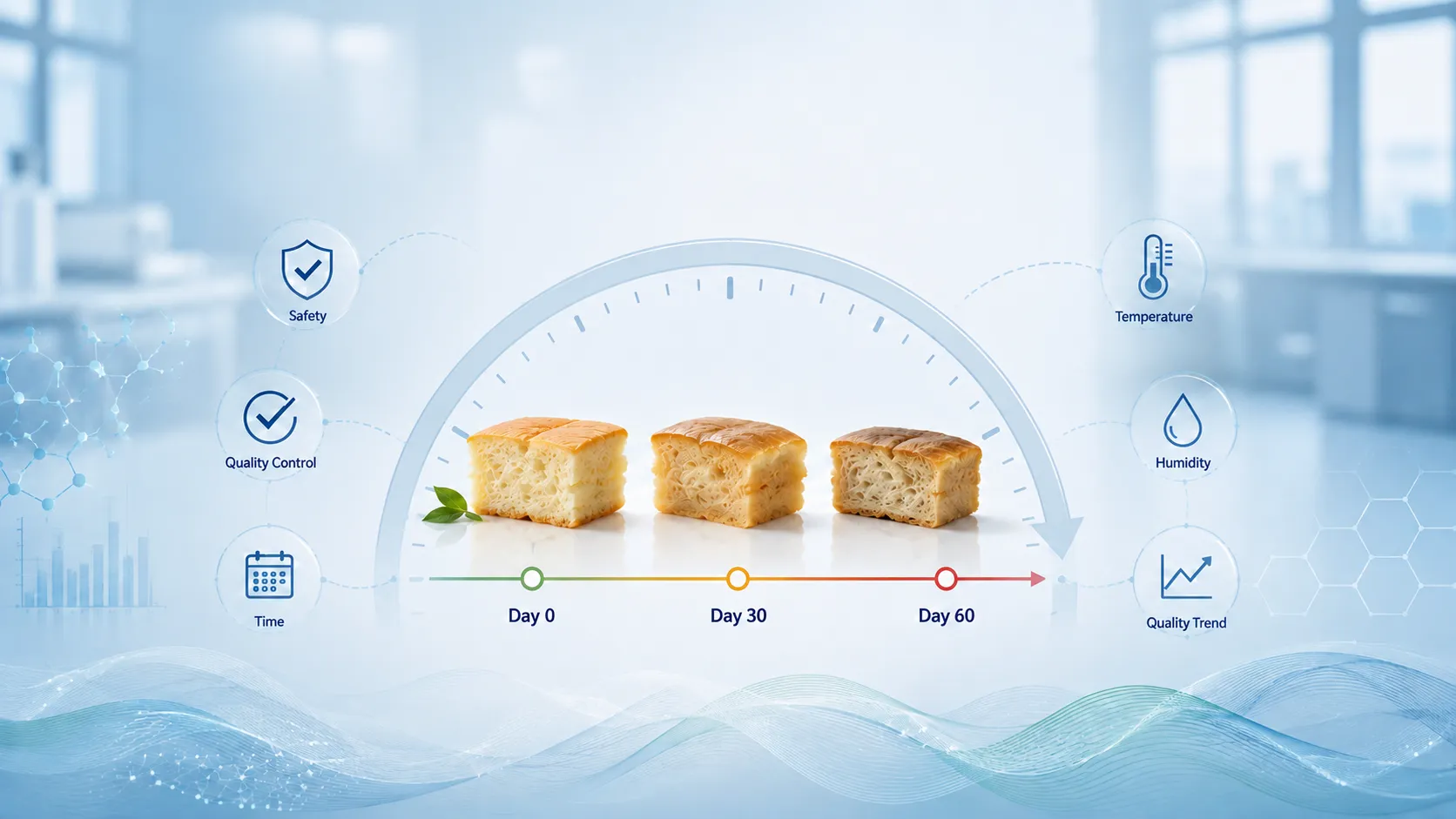
Ensuring product stability, safety, and quality over time is a core responsibility of food manufacturers and contract testing laboratories. Food shelf-life testing equipment supports controlled storage studies and the physical, chemical, microbiological, sensory, and packaging measurements used to determine how a product changes throughout its intended storage period.
The equipment required depends on the product and its likely shelf-life failure modes. A dry snack may require close monitoring of water activity, texture, and lipid oxidation, while a refrigerated dairy product may place greater emphasis on pH, microbiological stability, texture, and storage-temperature control. Defining these critical quality attributes first helps laboratories select instruments that generate useful shelf-life data rather than simply assembling a broad list of equipment.
In practical terms, a food shelf-life testing laboratory typically combines controlled storage equipment with instruments for water activity, pH, texture, color, chemical analysis, microbiology, and environmental monitoring. Packaging and sensory evaluation equipment may also be required depending on the product and study objectives.
Shelf-life testing goes beyond simple expiration date estimation. It encompasses physical, chemical, microbiological, sensory, and packaging evaluations conducted at defined intervals under controlled storage conditions. A structured program links each potential failure mode to an appropriate test method and instrument so that shelf-life decisions are supported by reproducible data.
What Is Food Shelf-Life Testing?
Food shelf-life testing is the systematic evaluation of how product quality, safety, and sensory attributes change over time under defined storage conditions. The objective is to determine how long a product continues to meet its established safety and quality criteria when stored as intended.
Testing may be conducted as a real-time study, where products are stored under their normal recommended conditions and evaluated periodically, or as an accelerated study, where selected environmental conditions are adjusted to increase the rate of relevant changes. Accelerated studies can support earlier product-development decisions, but the conditions and predictive model should be appropriate to the product and the degradation mechanism being evaluated. Real-time data remains important for confirming actual product behavior under intended storage conditions.
The testing scope may include microbial stability, chemical stability, physical stability, sensory quality, and packaging performance. The relevant combination depends on the formulation, processing method, packaging system, storage conditions, and quality attributes that define product acceptability.
Main Testing Requirements for Food Shelf-Life
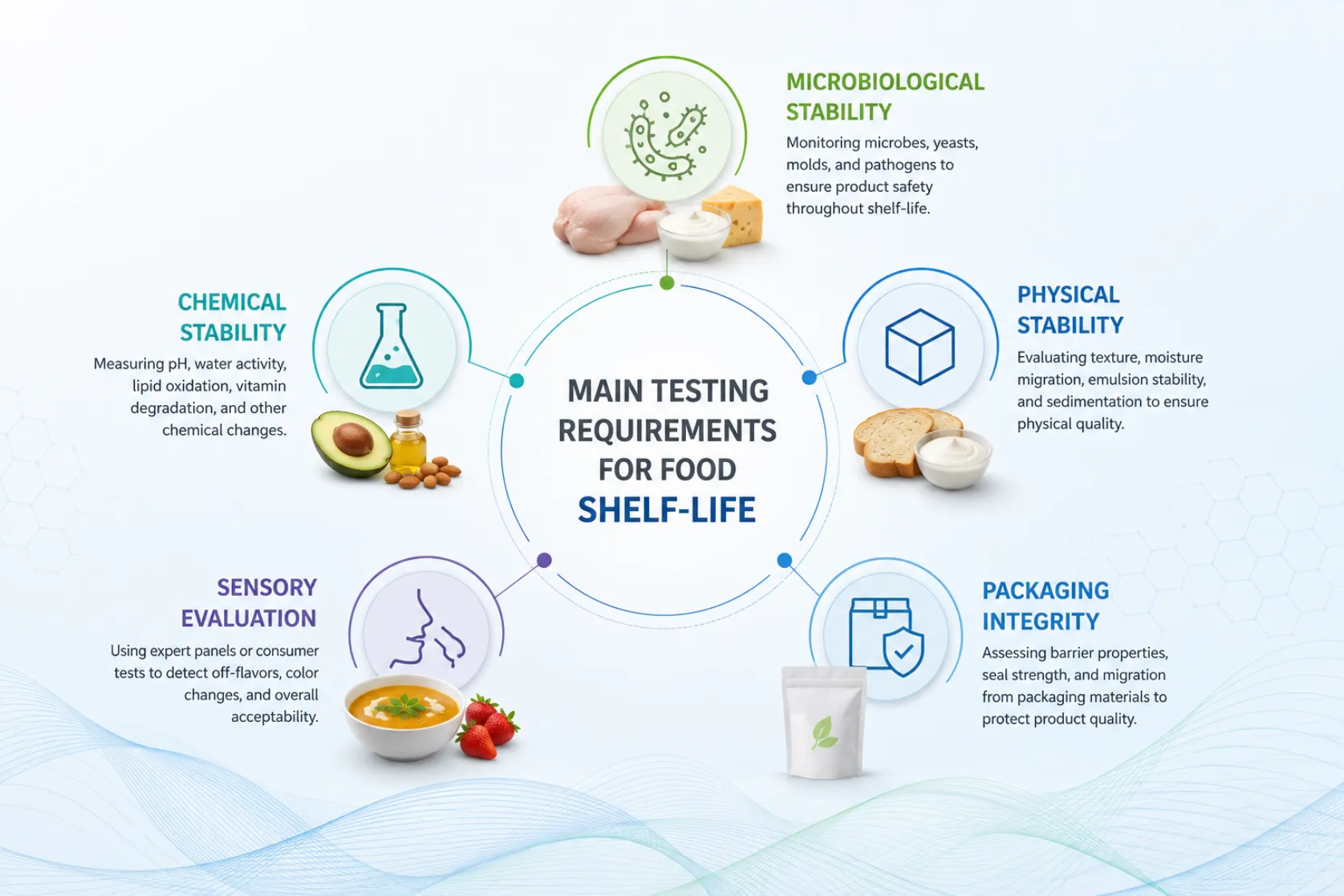
Food shelf-life testing demands a multidisciplinary approach. Depending on the product type, laboratories may need to address several key testing categories:
- Microbiological Stability: Monitoring relevant microbial populations or organisms throughout storage to identify microbiological changes that may affect product safety or quality.
- Chemical Stability: Measuring parameters such as pH, water activity (aw), lipid oxidation indicators, or nutrient-related changes when these are relevant to the formulation and shelf-life endpoint.
- Physical Stability: Assessing texture, moisture-related changes, viscosity, emulsion stability, phase separation, sedimentation, or other physical attributes that influence product performance and consumer acceptance.
- Sensory Evaluation: Using controlled sensory assessment to identify changes in appearance, aroma, flavor, texture, and overall acceptability that instrumental measurements alone may not fully describe.
- Packaging Integrity: Evaluating whether the package continues to provide the protection required by the product, including seal performance and other relevant package-integrity characteristics.
Food Shelf-Life Testing Workflow
A structured workflow helps laboratories generate consistent and defensible shelf-life data. The exact protocol should be defined around the product, packaging, intended storage conditions, sampling intervals, test methods, and acceptance criteria before the study begins.
1. Sample Preparation and Storage Setup
Representative product batches are divided into sample units for the planned testing intervals. Samples are placed under the defined storage conditions, with enough units available for each scheduled evaluation and any required replicates or controls. Accelerated studies may use elevated or otherwise modified environmental conditions, but these conditions should be selected for the specific product and study objective rather than applied as a universal protocol. Real-time samples remain under the product’s intended or recommended storage conditions.
Proper sample identification and traceability are essential because each result must be linked to the correct batch, package, storage condition, and testing interval.
QC checks: Verify chamber or storage-condition monitoring, sample identity, representative sampling, packaging integrity, and the study schedule before placement.
Recommended laboratory equipment:
- Stability chambers or controlled storage systems appropriate to the required environmental conditions
- Temperature and humidity data loggers for continuous or scheduled environmental monitoring
- Sample management software or controlled records for interval scheduling and traceability

2. Periodic Sampling and Sensory Screening
At predetermined time points, samples are removed for evaluation according to the study protocol. Sensory evaluation can be performed under controlled conditions to detect changes in appearance, aroma, flavor, texture, or overall acceptability. The sensory protocol should define the attributes being assessed, scoring method, sample presentation, and decision criteria.
When sensory changes appear earlier than expected, the study team can compare them with physical, chemical, microbiological, or packaging results to determine the likely cause.
QC checks: Panel preparation or calibration where applicable, controlled evaluation conditions, consistent sample presentation, and adherence to the defined sensory protocol.
Recommended laboratory equipment:
- Sensory evaluation booths or controlled evaluation areas
- Standardized rating scales and data-collection tools
- Reference sample storage where reference samples are part of the sensory protocol
3. Physical and Textural Analysis
Physical measurements convert visible or sensory changes into quantitative data. The required tests depend strongly on the product. A texture analyzer can track changes in firmness, springiness, cohesiveness, or other defined texture parameters. A water activity meter helps evaluate changes in available water that can influence microbial, chemical, and physical stability. Color spectrophotometers provide objective color measurements, while viscometers or rheometers can monitor flow-related changes in liquid and semi-solid products.
The most useful measurements are those tied to an established quality attribute or likely failure mode. A laboratory does not need every physical-testing instrument for every product.
QC checks: Instrument calibration or verification as required by the method, consistent sample preparation, sample temperature control where relevant, appropriate fixtures or measurement geometry, and replicate measurements where required.
Recommended laboratory equipment:
- Texture analyzer with probes or fixtures suitable for the product and test method
- Water activity meter suitable for the laboratory’s method and sample types
- Color spectrophotometer for objective color measurements such as CIE L*a*b*
- Viscometer or rheometer when flow behavior or consistency is a shelf-life attribute


4. Chemical and Microbiological Analysis
Chemical testing targets degradation indicators that are relevant to the product formulation. Examples may include pH changes and lipid-oxidation indicators. Depending on the analytical method, measurements may use pH meters, UV-Vis spectrophotometers, titration equipment, or other laboratory instrumentation.
Microbiological testing evaluates changes in relevant microbial populations or target organisms according to the product, process, study objective, and applicable test method. The microbiology workflow also requires controlled incubation, aseptic handling, media preparation, sterilization, and appropriate laboratory records.
QC checks: Method-appropriate controls, media quality control, incubation-condition verification, instrument calibration or verification, aseptic handling, and documented sample traceability.
Recommended laboratory equipment:
- pH meter for acidity and alkalinity monitoring
- UV-Vis spectrophotometer where the selected chemical method uses absorbance measurement
- Microbiological incubators for controlled incubation conditions
- Laminar flow cabinet where the laboratory procedure requires a controlled working area for aseptic handling
- Autoclave for applicable media preparation, sterilization, and waste-treatment procedures


5. Data Analysis and Shelf-Life Determination
Results from each testing interval are reviewed together rather than as isolated measurements. The laboratory should compare changes in critical quality attributes against the predefined criteria used for the study.
Statistical or kinetic models may be useful when the data and degradation mechanism support their use. Examples can include regression-based approaches or other shelf-life models selected for the study design. Model selection should follow the behavior of the measured attribute rather than assuming that one model is appropriate for every food product.
The practical shelf-life decision is based on the attribute or combination of attributes that first reaches the defined safety, quality, sensory, or packaging endpoint under the relevant storage conditions.
QC checks: Review data completeness, traceability, deviations, analytical variability, model assumptions, and consistency with the predefined study protocol.
Recommended laboratory equipment and systems:
- Statistical software appropriate to the study design and analysis method
- Data management system for controlled records, traceability, and result review
Food Product, Shelf-Life Risk, Test, and Equipment Mapping
The most efficient laboratory configuration starts with the product’s likely failure mechanisms. The table below illustrates how product characteristics can guide testing priorities without implying that every test is required for every product.
| Product / Characteristic | Potential Shelf-Life Concern | Relevant Test Area | Typical Equipment Family |
|---|---|---|---|
| Dry snacks and baked products | Moisture-related texture change or oxidation | Water activity, texture, oxidation, sensory evaluation | Water activity meter, texture analyzer, chemical-analysis equipment |
| Liquid and semi-solid foods | Flow-property, pH, color, or physical stability changes | Viscosity/rheology, pH, color, sensory evaluation | Viscometer/rheometer, pH meter, color spectrophotometer |
| Dairy and other perishable products | Microbiological, acidity, texture, or sensory changes | Microbiology, pH, texture, sensory evaluation | Microbiological incubator, pH meter, texture analyzer |
| Fat-containing foods | Oxidative deterioration | Lipid-oxidation indicators and sensory evaluation | Method-appropriate chemical-analysis equipment |
| Barrier-packaged products | Loss of package protection | Package integrity and relevant product-quality tests | Seal strength or leak-testing equipment as required by the package |
Key Quality Control Tests for Food Shelf-Life
| Quality Control Test | Purpose | Common Laboratory Equipment | Relevant Product Types / Applications |
|---|---|---|---|
| Water Activity (aw) | Evaluate available water related to microbial, chemical, and physical stability | Water activity meter | Dry goods, snacks, baked goods, and other products where moisture availability affects stability |
| pH Measurement | Track acidity or alkalinity changes during storage | pH meter with suitable probe | Dairy, sauces, beverages, fermented products, and other pH-sensitive foods |
| Lipid Oxidation Testing | Monitor oxidative changes where fats and oils influence shelf life | Method-appropriate spectrophotometric or titration equipment | Oils, fried snacks, nuts, and other fat-containing foods |
| Texture Analysis | Measure changes in defined texture attributes | Texture analyzer | Bakery products, snacks, confectionery, meat products, and other texture-sensitive foods |
| Microbiological Enumeration | Monitor relevant microbial changes during storage | Microbiological incubator, colony-counting equipment, autoclave, and supporting microbiology equipment | Products requiring microbiological shelf-life assessment |
| Yeast and Mold Testing | Evaluate fungal spoilage where relevant | Incubator and supporting microbiology equipment | Bakery, dairy, fruit products, beverages, and other applicable foods |
| Color Measurement | Quantify discoloration, browning, fading, or other defined color changes | Color spectrophotometer | Products where appearance is a critical shelf-life attribute |
| Package Integrity / Seal Strength | Evaluate whether packaging continues to provide the required physical protection | Seal strength tester, leak tester, or other package-specific test equipment | Packaged foods, pouches, and products using protective packaging systems |
| Sensory Evaluation | Determine changes in human-perceived product quality and acceptability | Sensory evaluation area, standardized evaluation tools, reference samples where applicable | Products where sensory characteristics contribute to the shelf-life endpoint |
Recommended Laboratory Equipment for Food Shelf-Life Testing Laboratories
Not every shelf-life laboratory requires the same instrument list. Controlled storage and reliable environmental monitoring form the foundation of the study, while analytical equipment should be selected according to the product’s critical quality attributes and the methods the laboratory intends to perform.
| Laboratory Equipment | Main Application | Why It Matters |
|---|---|---|
| Stability Chambers | Provide defined storage environments for real-time or accelerated studies | Supports reproducible exposure to the environmental conditions specified by the study protocol |
| Water Activity Meter | Measure aw | Useful when available water is related to the product’s microbial, chemical, or physical stability |
| Texture Analyzer | Quantify defined physical texture changes | Converts texture attributes into repeatable instrumental measurements when texture is a shelf-life criterion |
| pH Meter | Measure acidity or alkalinity | Tracks pH changes where they are relevant to formulation or product stability |
| UV-Vis Spectrophotometer | Absorbance-based chemical analysis | Supports shelf-life assays that use validated or established spectrophotometric methods |
| Microbiological Incubator | Provide controlled incubation conditions | Supports microbiological methods used to monitor relevant organisms during shelf-life studies |
| Color Spectrophotometer | Record objective color data | Allows color changes to be quantified instead of relying only on visual assessment |
| Viscometer / Rheometer | Measure flow behavior of liquids and semi-solids | Useful when viscosity, consistency, or rheological behavior is a critical quality attribute |
| Seal Strength / Leak Tester | Evaluate packaging integrity | Supports investigation of package performance when packaging is part of the product’s shelf-life protection system |
| Data Loggers and Monitoring Systems | Record storage conditions | Provides traceable environmental records and helps identify storage deviations during the study |
Essential vs Application-Dependent Shelf-Life Laboratory Equipment
A practical equipment plan separates the systems needed to control and document the study from instruments required only for particular products or failure mechanisms.
| Equipment Level | Typical Role | Selection Logic |
|---|---|---|
| Core study infrastructure | Controlled storage, environmental monitoring, sample tracking, and basic measurement | Select according to required storage conditions, study capacity, traceability needs, and routine test methods |
| Product-specific physical testing | Water activity, texture, color, viscosity, or other physical measurements | Add when the measured attribute is relevant to the product’s expected shelf-life failure mode or specification |
| Microbiology capability | Microbiological shelf-life assessment | Configure according to the microbiological methods the laboratory will perform and the required sample throughput |
| Chemical analysis capability | Oxidation or other chemistry-based stability measurements | Select instrumentation according to the analytical methods required for the product rather than purchasing analytical equipment without a defined method |
| Packaging testing capability | Seal, leak, or other package-performance evaluation | Add when package integrity is a significant contributor to product stability or a defined study requirement |
How to Choose Laboratory Equipment for Food Shelf-Life Testing
Selecting food shelf-life testing equipment starts with the product rather than the instrument catalogue. Define the critical quality attributes and likely failure modes for each product type, then identify the tests required to monitor those attributes. For a dry snack, water activity, texture, and oxidation may be important; for a fresh dairy product, microbiological testing, pH, texture, and controlled refrigerated storage may require greater attention.
Match the instrument to the test method. Before purchasing equipment, determine what the laboratory actually needs to measure and which method will be used. This prevents a technically capable instrument from being purchased without a clear role in the shelf-life program.
Consider sample type and measurement conditions. Probe type, fixture configuration, sample geometry, viscosity behavior, package format, and other sample characteristics can affect whether an instrument is appropriate. Selection should therefore be based on the actual products and methods the laboratory expects to handle.
Plan for throughput and study capacity. Shelf-life programs can create substantial sample loads because multiple batches, storage conditions, intervals, and replicate measurements may be active simultaneously. Chamber capacity and analytical throughput should be evaluated against both routine and peak workloads.
Evaluate calibration, verification, and maintenance requirements. Instruments should support the laboratory’s quality-control procedures and allow the required calibration or verification activities to be performed and documented. Availability of service, consumables, accessories, spare parts, and technical support should also be considered as part of total operating cost.
Consider data traceability. Shelf-life decisions depend on results collected over extended periods. Instruments and monitoring systems that support clear sample identification, environmental records, result export, and controlled data handling can simplify study review and investigation of deviations.
Separate essential equipment from advanced capability. A laboratory should first establish the equipment needed for its routine products and critical tests. More specialized analytical or packaging instruments can be added when the product portfolio, testing method, workload, or development program justifies the additional capability.
Finally, plan for future testing expansion without purchasing equipment solely for hypothetical applications. Versatile instruments can be valuable when they support several confirmed methods, but selection should remain tied to actual product and testing requirements.
Frequently Asked Questions
What is the difference between real-time and accelerated shelf-life testing?
Real-time testing stores products under normal recommended conditions and monitors them for the entire expected shelf-life period, providing the most accurate data but taking a long time. Accelerated testing uses elevated temperature and humidity to speed up degradation, allowing predictions in weeks rather than months. Both are often used together: accelerated tests for initial estimates and real-time for confirmation.
Which parameters most commonly indicate product spoilage?
Microbial growth, oxidation, moisture gain/loss, and texture breakdown are leading indicators. Specifically, elevated total viable counts, increased peroxide values, unacceptable aw changes, and loss of crispness or firmness all signal spoilage. The key is identifying which attribute changes first and violates the quality standard.
How do I select a stability chamber for food testing?
Choose a chamber that can maintain the required temperature and humidity ranges with tight tolerances (±0.5°C, ±2% RH is common). Consider internal volume, uniformity, and data logging capabilities. For photostability studies, chambers with light control are necessary. Verify that the manufacturer provides IQ/OQ/PQ documentation for regulatory compliance.
Can sensory evaluation be replaced by instrumental methods?
Instrumental methods like texture analysis and color measurement provide objective, repeatable data, but they cannot fully capture consumer perception. Sensory evaluation by trained panels remains essential for determining the actual end of shelf-life because it directly reflects the human response to off-flavors, appearance changes, and mouthfeel defects. An integrated approach using both is best practice.
What is the role of water activity in shelf-life testing?
Water activity (aw) measures the energy status of water in a product, which directly influences microbial growth, chemical reactions, and physical stability. Many spoilage organisms cannot grow below aw 0.85, and molds generally require aw > 0.70. By monitoring aw throughout storage, you can predict safety risks and decide if a product requires humectants or improved packaging.
How often should equipment be calibrated in a shelf-life lab?
Calibration frequency depends on instrument type and usage. Stability chambers and temperature loggers may require quarterly calibration checks, while pH meters and water activity meters often need daily or before-use calibration with standard buffers or salts. Following the manufacturer’s recommendations and maintaining a calibration log ensures data integrity for audits.
Conclusion
A reliable food shelf-life testing laboratory is built around the product’s critical quality attributes and likely failure modes. Controlled storage establishes the study environment, while physical, chemical, microbiological, sensory, and packaging tests provide the evidence needed to understand how the product changes over time.
The most effective equipment strategy is therefore not to purchase every available shelf-life instrument. It is to map each important shelf-life risk to a defined test, select equipment capable of performing that test consistently, and ensure that storage conditions, sample identity, calibration or verification activities, and results remain traceable throughout the study.
For laboratories handling multiple product types, equipment planning should also account for sample throughput, future confirmed test methods, maintenance requirements, accessories, and data management. This test-to-instrument approach creates a more practical foundation for product development, routine stability studies, and ongoing food quality control.