Laboratory Equipment for Solvent Quality Testing and Analysis Overview
The chemicals and specialty chemicals industry uses solvents as cleaning agents, reaction media, extraction fluids, formulation carriers, and analytical materials. Solvent quality control is important because contamination, excess water, incorrect identity, residual matter, or changes in composition can affect manufacturing consistency, downstream reactions, product performance, and safe handling.
For most solvent QC laboratories, the core testing requirements are identity, purity, moisture, acidity or alkalinity, non-volatile residue, and appearance. Common laboratory equipment therefore includes refractometers and density meters for rapid screening, FTIR for identity confirmation, gas chromatography (GC) or HPLC where chromatographic purity analysis is required, Karl Fischer titrators for water determination, automatic titrators for acidity or alkalinity, and analytical balances and ovens for gravimetric residue testing. Advanced laboratories may add GC-MS, LC-MS, stability chambers, or other analytical systems when trace impurity investigation, method development, or stability studies justify them.
The correct laboratory configuration depends on the solvents being tested, the required test methods and specifications, expected sample volume, and whether the laboratory is performing routine batch release or advanced analytical investigation.
Main Products and Applications
Solvents serve diverse roles across industries. Typical products and applications include:
- Industrial cleaning solvents – acetone, isopropyl alcohol, and hydrocarbon blends used for degreasing and surface preparation.
- Paints and coatings solvents – toluene, xylene, esters, and ketones used in formulations where solvent composition can influence application and drying behavior.
- Pharmaceutical and extraction solvents – ethanol, methanol, and specialized high-purity solvents used in synthesis, processing, and extraction applications.
- Chemical synthesis solvents – reaction media such as dichloromethane, tetrahydrofuran, and dimethylformamide used in polymer, fine chemical, and other synthesis processes.
- Laboratory and analytical solvents – HPLC-grade solvents, spectroscopy-grade solvents, and anhydrous solvents used for research and analytical work.
Different applications place different emphasis on QC. A routine industrial cleaning solvent may require rapid identity, water, residue, and purity checks, while a high-purity analytical or process solvent may require more detailed impurity profiling. The testing program should therefore be based on the actual solvent specification rather than applying the same analytical panel to every product.
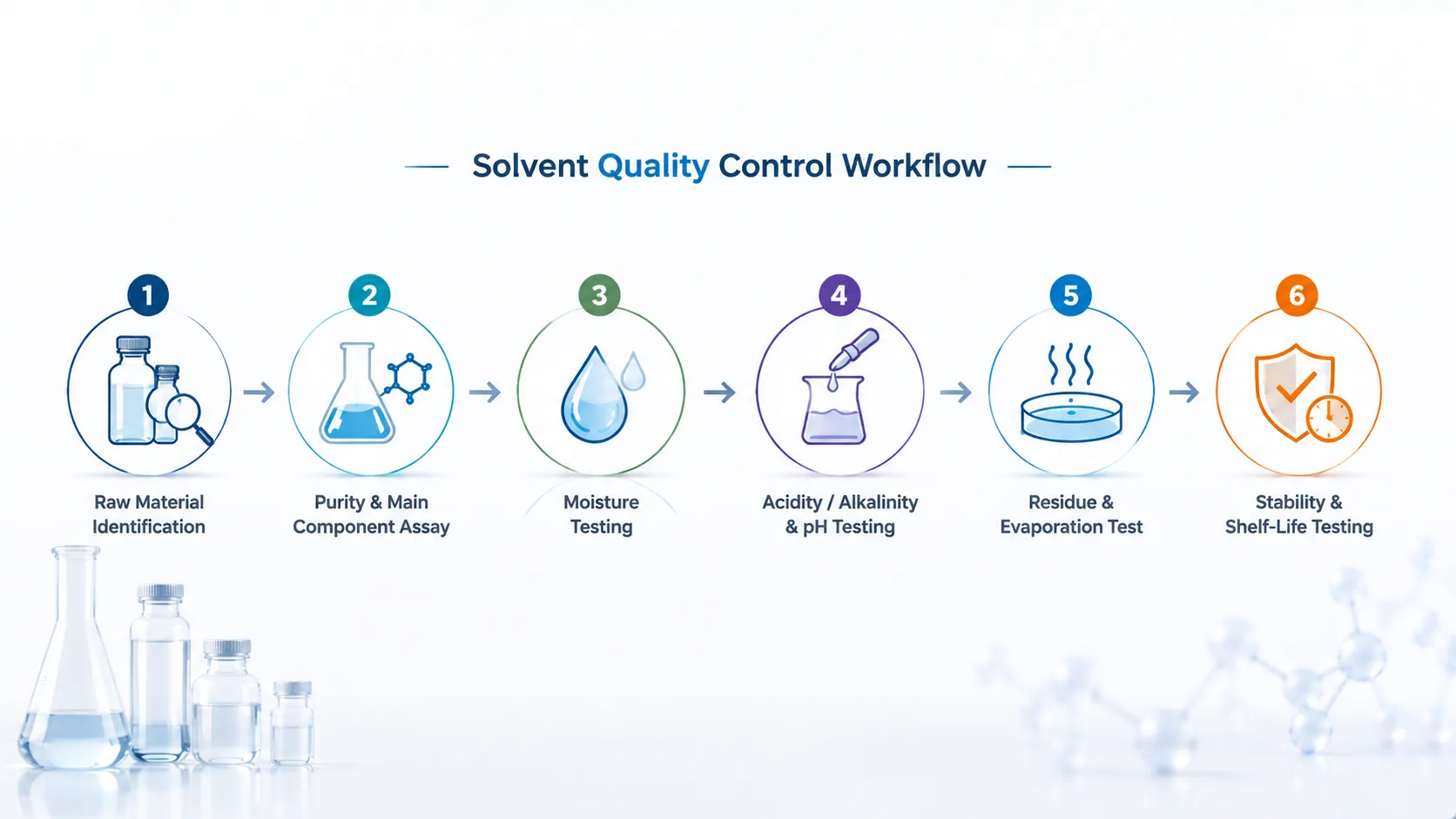
Solvent Quality Testing and Analysis Quality Control Workflow
Raw Material Reception and Identification
Incoming solvent inspection should first confirm that the received material matches the expected solvent and shows no obvious evidence of contamination or deterioration. Rapid physical measurements such as refractive index and density can help identify mismatches when compared with the applicable specification or reference data. FTIR can provide an additional chemical fingerprint for identity confirmation, while appearance and color checks can reveal visible contamination or unexpected changes.
Recommended laboratory equipment for this stage:
- Refractometer – Measures refractive index for rapid comparison with the expected solvent specification.
- Density Meter – Determines density and provides another useful physical parameter for incoming-material verification.
- Spectrophotometer (UV-Vis or FTIR) – FTIR can support chemical identity confirmation, while UV-Vis may be applicable to specific absorbance or color-related methods.
- Colorimeter / Visual Comparison Tubes – Assesses liquid color when color is part of the applicable quality specification.


Purity and Main Component Assay
Purity testing determines whether the main solvent component and relevant impurities meet the required specification. For volatile organic solvents, gas chromatography is commonly used because it separates individual components and supports quantitative purity and impurity profiling. HPLC may be appropriate when the analytes or impurities of interest are less suitable for GC analysis.
Routine QC does not necessarily require mass spectrometry. GC-MS or LC-MS becomes more useful when a laboratory needs additional information for identifying unknown or trace components, investigating recurrent off-specification results, or supporting more advanced analytical work.
Recommended laboratory equipment for this stage:
- Gas Chromatograph (GC) – Separates and quantifies volatile components for solvent purity and impurity profiling.
- High-Performance Liquid Chromatograph (HPLC) – Suitable for analytical methods involving less volatile, non-volatile, or thermally sensitive components.
- Analytical Balance – Supports accurate preparation of samples, standards, and solutions used for quantitative analysis.
- Mass Spectrometer (as GC-MS or LC-MS) – Provides additional identification capability when unknown or trace impurities require investigation.


Moisture and Water Content Determination
Water is a common solvent contaminant and can be particularly important where the solvent is used in moisture-sensitive reactions, high-purity formulations, storage systems, or processes affected by water contamination. The required water limit and analytical method should be defined by the relevant product specification and application.
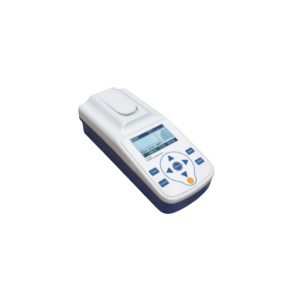
Karl Fischer titration is widely used for selective water determination. Coulometric and volumetric systems address different sample and water-content ranges, so instrument selection should consider the expected moisture level, sample behavior, required method, throughput, and compatibility with the solvent matrix.
Recommended laboratory equipment for this stage:
- Karl Fischer Titrator – Determines water content using coulometric or volumetric Karl Fischer methods, depending on the analytical requirement.
- Moisture Analyzer – May be useful for suitable samples and methods where loss-on-drying or heating-based moisture determination is appropriate, but it is not a universal substitute for selective Karl Fischer water analysis.
- Analytical Balance – Supports accurate sample and standard preparation where weighing is required by the method.

Acidity, Alkalinity, and pH Measurement
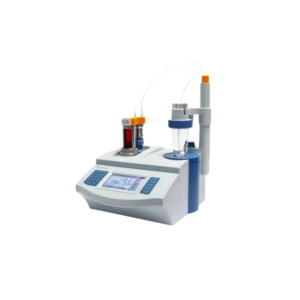
Acidic or basic impurities may affect solvent suitability, storage systems, downstream reactions, or sensitive formulations. Depending on the solvent and specification, quality control may use an acid-base titration, potentiometric titration, or another defined acidity or alkalinity method.
Direct pH measurement is not appropriate for every non-aqueous solvent. A pH meter is most relevant where the specified method involves an aqueous phase, dilution, extraction, or water-containing solvent system. For non-aqueous applications, the laboratory should follow the validated or specified analytical procedure rather than treating pH and titratable acidity as interchangeable measurements.
Recommended laboratory equipment for this stage:
- Automatic Titrator – Performs potentiometric or other applicable titrations for acidity, alkalinity, and suitable non-aqueous acid-base methods.
- pH Meter – Used where pH measurement is appropriate for the solvent system or specified sample-preparation method.
- Analytical Balance – Supports accurate sample and reagent preparation.

Non-Volatile Residue and Evaporation Testing
Non-volatile residue testing measures material remaining after the volatile solvent portion has been removed under defined conditions. Excess residue can be important in cleaning, coating, analytical, pharmaceutical, electronics, and other applications where deposits or contamination after evaporation are undesirable.
The method typically requires a defined sample quantity or volume, controlled evaporation, appropriate drying where required, and accurate gravimetric measurement. Equipment should be selected according to the actual test method and solvent-handling requirements.
Recommended laboratory equipment for this stage:
- Laboratory Oven / Muffle Furnace – Provides controlled heating or drying when required by the applicable residue method. The appropriate equipment depends on the method and residue characteristics.
- Rotary Evaporator – Can concentrate or remove solvent under reduced pressure where this approach is suitable for sample preparation or analytical investigation.
- Analytical Balance – Provides the mass measurement required for gravimetric residue determination.


Stability and Accelerated Shelf-Life Testing
Some solvent products or solvent-containing formulations require stability assessment to understand changes during storage. Potential changes may include oxidation, moisture uptake, color development, or formation of degradation products. The appropriate stability program depends on the product, packaging, storage conditions, intended shelf life, and applicable internal or customer requirements.
Where controlled aging is required, samples can be stored under defined environmental conditions and then re-tested using the same relevant QC methods. Stability chambers provide controlled temperature and humidity, while chromatographic, moisture, or spectroscopic instruments can be used to compare aged samples with their initial condition.
Recommended laboratory equipment for this stage:
- Stability Chamber – Provides controlled environmental conditions for defined storage or accelerated-aging studies.
- UV Weathering Chamber – May be applicable when light exposure or photostability is specifically part of the study design.
- Gas Chromatograph – Compares composition and impurity profiles before and after storage when GC is the relevant analytical method.
- Karl Fischer Titrator – Measures changes in water content where moisture uptake is a stability concern.
- Spectrophotometer – Monitors applicable absorbance or color changes where these are relevant stability indicators.


Common Quality Control Challenges in Chemicals & Specialty Chemicals
Manufacturers and solvent users may encounter quality problems at incoming inspection, during storage, or at final batch release. Common examples include:
- Variation in solvent composition or purity between batches.
- Elevated water content affecting moisture-sensitive processes or formulations.
- Non-volatile contamination leaving unwanted residue after evaporation.
- Color or other appearance changes indicating possible contamination or degradation.
- Acidity or alkalinity outside the required product specification.
- Unknown impurities that cannot be adequately investigated using routine physical tests alone.
- Using an analytical method that is poorly matched to the solvent matrix or expected impurity profile.
A practical QC program should therefore separate routine release tests from advanced troubleshooting tests. Routine testing should cover the parameters required for normal batch acceptance, while advanced analytical instruments should be added when the application, specification, or recurring quality problem justifies the additional capability.
Key Quality Control Tests for Solvent Quality Testing and Analysis
| Quality Challenge | Quality Control Test | Recommended Laboratory Equipment | Application |
|---|---|---|---|
| Identity verification of incoming solvent | Refractive index and density measurement; FTIR identification | Refractometer, Density Meter, Spectrophotometer (FTIR) | Supports incoming-material identity verification |
| Purity below specification | GC or HPLC purity profile, depending on the analytes and method | Gas Chromatograph, HPLC | Quantifies the main component and relevant impurities |
| Excess water content | Karl Fischer titration | Karl Fischer Titrator | Determines water where moisture is a controlled specification |
| Acidity or alkalinity out of limits | Applicable acid-base titration or pH method | Automatic Titrator, pH Meter | Checks acidic or basic characteristics against the required method |
| High non-volatile residue | Evaporation and gravimetric residue test | Laboratory Oven, Rotary Evaporator, Analytical Balance | Evaluates material remaining after solvent removal |
| Quality changes during storage | Controlled storage or accelerated aging followed by re-testing | Stability Chamber, Spectrophotometer and relevant analytical instruments | Evaluates stability-related changes over time |
| Unknown or trace impurity investigation | GC-MS or LC-MS analysis where appropriate | GC-MS or LC-MS system | Supports identification of components not resolved by routine QC alone |
| Overall batch acceptance | Defined QC panel based on the product specification | Integrated set of required routine instruments | Supports documented final release decisions |
Laboratory Equipment Required for Chemicals & Specialty Chemicals Quality Control
A solvent QC laboratory does not need every available analytical instrument. The most appropriate equipment set is determined by the tests required for routine acceptance and the complexity of the solvents being handled.
For many laboratories, the core setup begins with physical identity and routine chemical measurements: a refractometer, density meter, analytical balance, Karl Fischer titrator, suitable titration equipment, and equipment for residue testing. Where chromatographic purity or impurity profiling is part of the specification, GC becomes a major analytical platform for volatile organic solvents. HPLC should be added when the required analytical methods involve components that are better suited to liquid chromatography.
Advanced systems such as GC-MS, LC-MS, ion chromatography, or elemental-analysis instruments should normally be justified by a defined analytical need rather than purchased simply because they represent a higher laboratory tier. They are most valuable when routine QC cannot answer the laboratory’s impurity, contamination, troubleshooting, or method-development questions.
| Testing Requirement | Laboratory Equipment | Why Manufacturers Need It |
|---|---|---|
| Purity and impurity profiling | Gas Chromatograph, HPLC | Quantifies the main component and relevant contaminants using the appropriate chromatographic method. |
| Moisture content | Karl Fischer Titrator | Provides selective water determination where moisture is a controlled quality parameter. |
| Identity and gross contamination check | Refractometer, Density Meter, FTIR Spectrophotometer | Provides rapid physical and spectroscopic information for incoming-material verification. |
| Acidity/alkalinity | Automatic Titrator, pH Meter | Measures acidic or basic characteristics according to the applicable sample and test method. |
| Non-volatile residue | Laboratory Oven, Muffle Furnace, Analytical Balance | Supports controlled gravimetric determination of material remaining after solvent removal. |
| Stability and shelf life | Stability Chamber, UV Weathering Chamber | Provides controlled exposure conditions where stability or photostability studies are required. |
| Trace or unknown impurity analysis | Gas Chromatograph-Mass Spectrometer (GC-MS) | Adds component-identification capability for appropriate advanced investigations. |
| Sample preparation | Rotary Evaporator, Hot Plate, Analytical Balance | Supports sample concentration, solvent removal, and accurate weighing where required by the analytical workflow. |
The key purchasing decision is therefore not simply which instruments are available, but which instruments correspond to the laboratory’s actual release tests and analytical problems. A laboratory performing routine incoming inspection may need a relatively compact setup, while a solvent manufacturer responsible for detailed impurity profiles and troubleshooting may require chromatography and advanced identification capability.
Basic Laboratory Setup for Chemicals & Specialty Chemicals Manufacturers
The following tiers provide a practical planning framework. The final configuration should still be based on the solvent types, required methods, and quality specifications.
| Laboratory Level | Recommended Equipment | Suitable For |
|---|---|---|
| Basic QC Laboratory | Refractometer, Density Meter, pH Meter, Moisture Analyzer, Karl Fischer Titrator, Basic Oven, Analytical Balance | Routine physical checks, moisture testing, and suitable gravimetric or basic QC methods |
| Advanced QC Laboratory | All basic equipment plus Gas Chromatograph, HPLC, Automatic Titrator, UV-Vis Spectrophotometer, Stability Chamber | Laboratories requiring chromatographic analysis, automated titration, or controlled stability testing |
| Advanced Analysis Laboratory | All advanced equipment plus GC-MS, Ion Chromatograph, ICP-OES, advanced sample preparation devices | Large producers and contract testing laboratories with defined trace-analysis, contamination-investigation, or method-development requirements |
The table should be treated as a planning framework rather than a universal purchasing list. For example, a laboratory may require GC but not HPLC, or Karl Fischer titration but not a general moisture analyzer. Equipment should be selected test by test according to the analytical methods the laboratory actually needs to perform.
How to Choose Laboratory Equipment for Solvent Quality Testing and Analysis
Selecting solvent testing equipment should begin with the required tests rather than with an instrument catalogue. A practical sequence is to define the solvents and specifications, map each required test to an analytical method, identify the instrument needed for that method, and then evaluate throughput, laboratory infrastructure, operator requirements, and long-term support.
Define the Testing Scope
List the solvents the laboratory must test and the quality parameters required for each one. Separate routine release tests from occasional troubleshooting or research methods. Then identify the expected sample characteristics and the analytical method used for each parameter.
This prevents two common purchasing problems: under-equipping, where the laboratory cannot perform a required test, and over-equipping, where advanced instruments are purchased without a defined routine application.
A useful equipment-selection matrix can be built around:
- Solvent or product type
- Required quality parameter
- Applicable analytical method
- Expected sample characteristics
- Routine or advanced testing status
- Required sample throughput
- Instrument and sample-preparation requirements
Evaluate Laboratory Workflow Requirements
Consider how many samples are tested per day or per batch and how quickly results are needed. Higher-throughput laboratories may benefit from autosamplers, automated titration, structured sample preparation, and data-management features. Lower-volume laboratories may be better served by simpler equipment if it still meets the required analytical method.
Laboratory infrastructure also matters. Chromatographic and solvent-handling workflows may require appropriate ventilation, gases, electrical supply, solvent storage, waste handling, and bench space. These requirements should be evaluated before equipment is purchased and installed.
Operator capability is another selection factor. Instrument complexity should match the laboratory’s analytical workload, training resources, maintenance capacity, and method-development needs.
Match Instrument Capability to the Required Method
Do not select an instrument based only on the name of the test. Confirm that the proposed configuration is suitable for the actual analytical procedure and sample matrix.
For example:
- Identity testing may require a refractometer and density meter for rapid screening, with FTIR where spectroscopic confirmation is needed.
- Volatile solvent purity may justify GC when chromatographic separation and quantification are required.
- Water determination may require coulometric or volumetric Karl Fischer equipment depending on the analytical method and expected water level.
- Unknown impurity investigation may justify GC-MS or LC-MS when routine chromatographic data are insufficient for identification.
This method-first approach makes the equipment recommendation easier to justify and reduces the risk of purchasing an instrument that does not fit the laboratory’s actual QC procedure.
Compare Long-Term Equipment Support
Instrument selection should also account for the cost and availability of columns, reagents, electrodes, standards, consumables, replacement parts, preventive maintenance, calibration or performance checks, software support, and operator training.
For chromatographic and titration systems in particular, long-term operating capability can be as important as the initial instrument purchase. A laboratory should understand how routine maintenance will be handled and whether the required consumables and technical support will remain available.
AELAB works with manufacturers to match testing requirements with appropriate laboratory equipment categories and to develop practical laboratory configurations based on the tests, sample types, and expected workload.
Who Needs Laboratory Testing Solutions for This Industry?
- Solvent manufacturers and blenders that need defined QC testing before batch release or shipment.
- Paint, ink, and coatings producers that monitor solvent properties as part of formulation and incoming-material control.
- Pharmaceutical and nutraceutical companies using solvents for extraction, synthesis, processing, or analytical applications.
- Electronics manufacturers using cleaning solvents where contamination and residue control are important.
- Chemical and specialty chemical manufacturers using solvents as reaction media or process materials.
- Third-party testing laboratories performing solvent identity, purity, moisture, residue, and advanced analytical investigations.
Frequently Asked Questions
What is the most important instrument for solvent purity testing?
The gas chromatograph (GC) is typically the most critical instrument because it can separate, identify, and quantify both the main solvent and organic impurities in a single run. For non-volatile or thermally sensitive solvents, a high-performance liquid chromatograph (HPLC) may be more appropriate.
How often should Karl Fischer titrators be calibrated?
Calibration frequency depends on the instrument type, usage intensity, and manufacturer recommendations. Many laboratories perform a daily system check using a water standard, with full calibration weekly or monthly, but always follow your internal quality procedures and the instrument manual.
Can one laboratory setup handle multiple solvent types?
Yes, a well-designed QC lab can test a wide range of solvents by using versatile instruments like a GC with a suitable column, a universal Karl Fischer titrator, and multi-parameter analytical balances. The key is to define the most stringent requirements and select instruments with flexible detection ranges.
What is the difference between coulometric and volumetric Karl Fischer titration?
Coulometric titration is best for samples with very low water content (typically below 1%) because it generates iodine electrochemically, offering high sensitivity. Volumetric titration directly adds the titrant and is suited for samples with higher water levels, from about 0.1% to 100%.
Conclusion
A practical solvent quality control laboratory should be designed around the tests required for the solvents being manufactured, purchased, or used. Routine laboratories commonly need capabilities for identity verification, water determination, acidity or alkalinity testing, residue measurement, and—where required—chromatographic purity analysis.
The most effective purchasing approach is to map each solvent → quality requirement → analytical method → laboratory instrument before selecting equipment. Basic physical and chemical instruments can cover many routine QC tasks, while GC, HPLC, mass spectrometry, and stability systems should be added when the required methods or analytical problems justify them.
This approach creates a laboratory configuration that is easier to operate, maintain, and expand while keeping investment focused on the measurements that actually support solvent quality decisions.
Laboratory Equipment Solutions for Chemicals & Specialty Chemicals
AELAB understands that solvent testing requirements vary according to the material, application, analytical method, and required level of quality control. A laboratory handling routine incoming inspection may need a different equipment configuration from a solvent producer performing chromatographic batch release or a contract laboratory investigating unknown contaminants.
When planning a new laboratory or upgrading an existing one, define the products or samples being tested, required test methods, expected sample volume, routine versus advanced analytical needs, and the quality problems the laboratory must investigate. These details make it possible to compare equipment categories based on the actual QC workflow rather than purchasing instruments in isolation.
AELAB can use this information to help identify an appropriate combination of instruments for identity testing, chromatographic analysis, water determination, titration, residue testing, stability work, and sample preparation.