Viscosity Testing in Adhesives, Paints, Coatings, Inks, and Resins Overview
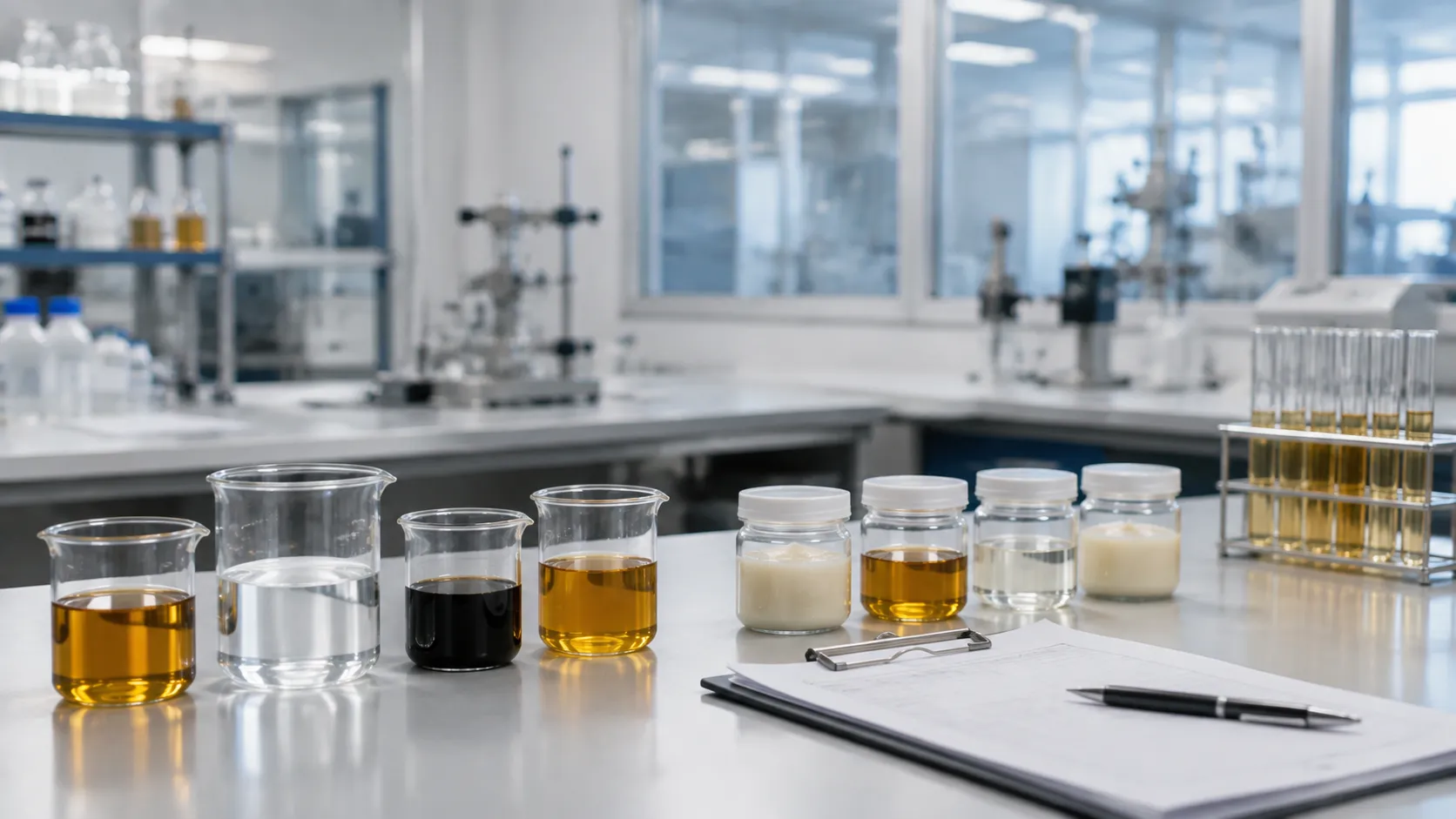
In adhesives, paints, coatings, inks, and resins manufacturing, viscosity is a critical physical property because it influences processing, application behavior, appearance, and batch consistency. Reliable viscosity testing helps manufacturers identify variation before it becomes a production, packaging, or end-use problem.
For routine QC, manufacturers commonly use flow cups, rotational viscometers, and controlled-temperature accessories. More complex non-Newtonian materials and formulation work may require rheometers that characterize viscosity across changing shear conditions.
Quick equipment selection summary:
- Flow cup viscometer: best suited to fast comparative checks on appropriate low-viscosity, free-flowing materials.
- Rotational viscometer: a practical choice for routine incoming, in-process, and final-product viscosity control across many coatings, inks, adhesives, and resins.
- Rheometer: used when a single viscosity value is not enough and shear-dependent or viscoelastic behavior must be characterized.
- Temperature control: essential when repeatability depends on conditioning and measuring samples at a defined temperature.
Laboratory viscosity measurement therefore goes beyond simple flow time. The method, sample preparation, temperature, spindle or geometry, measurement conditions, and reporting procedure must be controlled so that results can be compared meaningfully between batches.
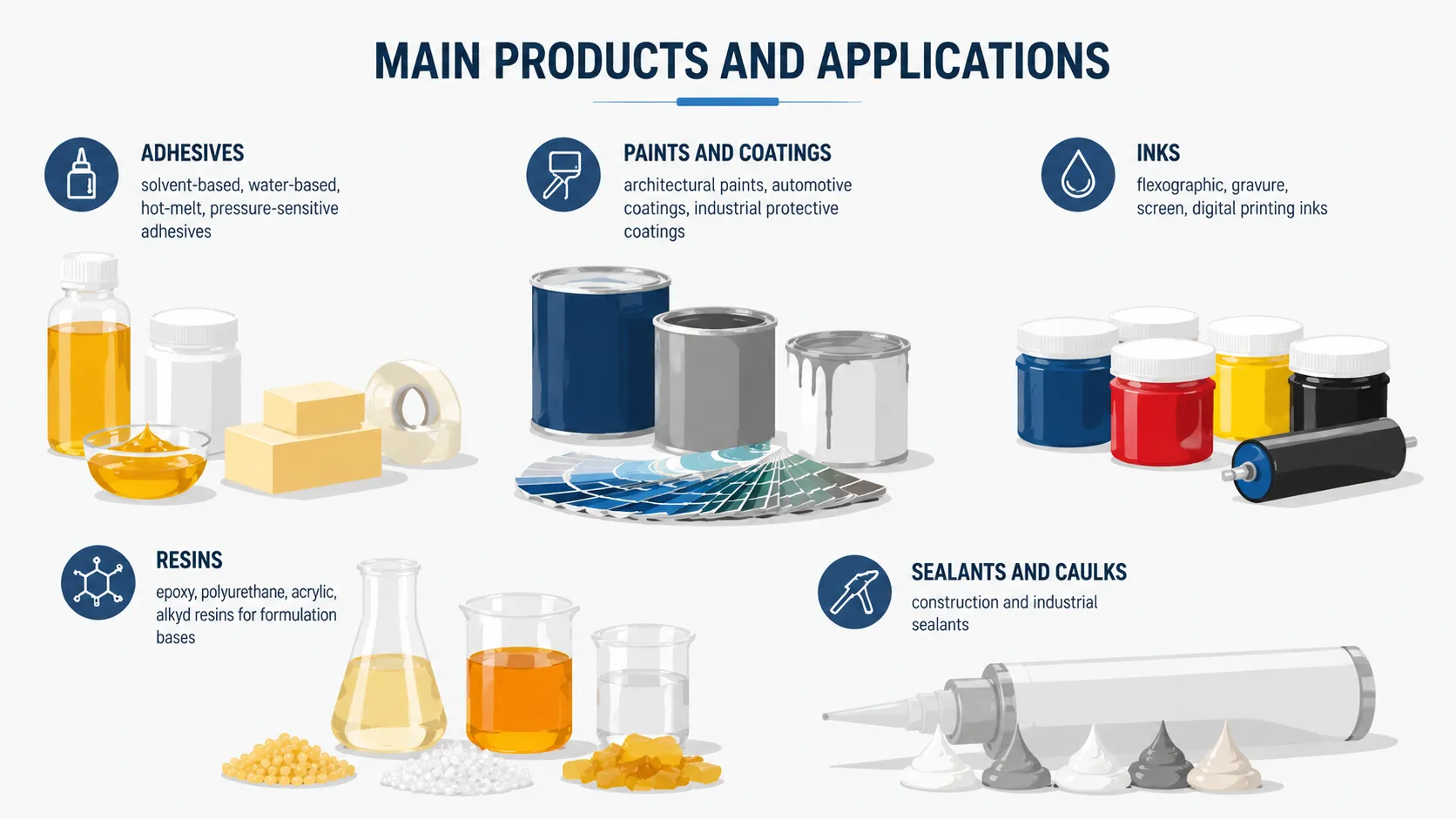
Main Products and Applications
- Adhesives: solvent-based, water-based, hot-melt, pressure-sensitive adhesives
- Paints and Coatings: architectural paints, automotive coatings, industrial protective coatings
- Inks: flexographic, gravure, screen, digital printing inks
- Resins: epoxy, polyurethane, acrylic, alkyd resins for formulation bases
- Sealants and caulks: construction and industrial sealants
Viscosity Testing Quality Control Workflow
Raw Material Viscosity Incoming Inspection
When raw materials such as solvents, resins, or pigment dispersions arrive, their viscosity must be verified against supplier specifications. Variations in incoming material viscosity can throw off the entire formulation, leading to batch failures or the need for costly reformulation adjustments. Testing at this stage ensures that only materials within the specified viscosity range enter production, protecting the integrity of the manufacturing process.
Simple flow cup viscometers or rotational viscometers fitted with a small sample adapter are commonly used. Temperature-controlled measurement eliminates seasonal variation effects. Documented results from incoming inspection provide a traceable quality record and support supplier qualification programs.
Recommended laboratory equipment for this stage:
- Flow Cup Viscometers – For quick viscosity checks of low-viscosity resins and solvents using standard orifice cups.
- Rotational Viscometer with Small Sample Adapter – For accurate, temperature-conditioned viscosity measurement of small sample volumes.
- Temperature-Controlled Water Bath – To condition samples and flow cups to a constant temperature before testing.
- Digital Stopwatch – For precise timing of flow time measurements.
- Analytical Balance – For verifying sample weight and density if needed for conversion to kinematic viscosity.


In-Process Viscosity Monitoring During Mixing
During the manufacturing of paints, adhesives, or inks, viscosity must be monitored during mixing, dispersion, and thinning steps. Incorrect viscosity at intermediate stages can indicate incomplete pigment dispersion, solvent loss, or improper resin dissolution. In-process checks allow operators to adjust batch composition before proceeding to the next step, reducing rework and off-spec material.
Portable rotational viscometers or at-line viscometers are ideal for quick checks without stopping production. Some processes use in-line viscometers for continuous monitoring and automatic solvent addition.
Recommended laboratory equipment for this stage:
- Portable Rotational Viscometer – For on-the-floor viscosity checks of paint or adhesive batches during manufacturing.
- Inline Viscometer – For real-time viscosity monitoring in pipes or tanks during continuous processes.
- Thermometer or Temperature Probe – To record the sample temperature at the time of measurement for correction purposes.
- Sample Preparation Tools – Beakers, spatulas, and screens to remove any agglomerates before testing.

Final Product Viscosity Verification
Before packaging and shipment, the finished product must meet the target viscosity specification. This is typically the last QC gate. Testing at this stage confirms that the product will perform as intended by the end user, whether that means proper brushability for paint, consistent dot size for inkjet ink, or correct flow characteristics for an adhesive bead.
Standard operating procedures often dictate a specific rotational viscometer method with defined spindle, speed, and temperature. Results are compared against control limits, and any deviations trigger an investigation.
Recommended laboratory equipment for this stage:
- Digital Rotational Viscometer with Programmable Methods – For automated, operator-independent measurements with data logging.
- Peltier-Based Temperature Control Unit – For precise sample temperature conditioning without a water bath.
- Density Meter – To convert dynamic viscosity to kinematic viscosity if required by specifications.
- Sample Homogenizer – To ensure uniform dispersion in paints or filled systems before measurement.


Application-Specific Viscosity Testing
Many products must simulate application conditions to truly predict performance. For example, automotive paints undergo high-shear spraying, screen printing inks experience squeeze flow, and adhesives may be applied by nozzle. Standard low-shear viscometry often fails to capture these application-relevant viscosities.
Rheometers with high-shear accessories or custom fixtures can replicate application shear rates. Gel time and tack measurements are important for reactive adhesives. This testing supports formulation optimization and troubleshooting of customer complaints.
Recommended laboratory equipment for this stage:
- Rheometer with Cone-Plate or Parallel-Plate Geometry – For measuring viscosity over a wide shear rate range.
- High-Shear Viscometer – To simulate brush, roller, or spray application conditions.
- Gel Timer – For determining the working time of two-component adhesives and resins.
- Tack Tester – To evaluate the initial stickiness or green strength of adhesives.
Accelerated Stability and Shelf-Life Viscosity Testing
Manufacturers must predict how viscosity changes during storage and transportation. Temperature cycling or oven aging tests are used to accelerate these changes. Samples are stored at elevated temperatures and retested periodically for viscosity, which can reveal issues like settling, syneresis, or chemical degradation.
These studies help set realistic use-by dates and ensure the product remains usable after sitting in a warehouse or in extreme climates. Stability testing is a key part of new product development and ongoing quality assurance.
Recommended laboratory equipment for this stage:
- Stability Chamber – For controlled temperature and humidity storage of samples over time.
- Rotational Viscometer or Rheometer – To retest aged samples and compare viscosity to initial values.
- Analytical Balance – To monitor weight loss or gain due to solvent evaporation or water absorption.
- pH Meter – To check for any chemical changes that could affect viscosity stability in water-based systems.


Common Quality Control Challenges in Adhesives, Paints, Coatings, Inks, and Resins
- Inconsistent viscosity causing poor application properties like sagging or brush drag.
- Temperature fluctuations in the plant leading to variable viscosity readings.
- Thixotropic materials that change viscosity during handling and testing.
- Short pot life of reactive formulations requiring rapid testing.
- Poor correlation between flow cup seconds and actual rheological performance.
- Operator-dependent variation in manual viscosity measurement methods.
Key Quality Control Tests for Viscosity Testing
| Quality Challenge | Quality Control Test | Recommended Laboratory Equipment | Application |
|---|---|---|---|
| Inconsistent application viscosity | Rotational viscometer at controlled shear | Rotational viscometer with temperature probe | Final product QA |
| Sagging or leveling issues | Rheological profile (viscosity vs. shear rate) | Rheometer with cone-plate geometry | R&D formulation |
| Temperature-dependent viscosity drift | Viscosity vs. temperature scan | Viscometer with Peltier temperature control | Stability studies |
| Rapid reactivity in two-component systems | Gel time and viscosity build-up measurement | Gel timer and rotational viscometer | Adhesive setting evaluation |
| Inaccurate flow cup measurements | Calibrated flow cup with stopwatch and temperature control | Flow cup viscometer and water bath | Incoming raw material check |
| Thixotropic recovery assessment | Step rate or hysteresis loop test | Rheometer with software analysis | Paint or coating formulation |
| Poor batch-to-batch consistency | Standardized QC viscosity procedure | Digital rotational viscometer with programmable methods | Production batch release |
| Viscosity of filled or abrasive materials | Spiral or special geometry viscometer | Helipath stand with T-bar spindle | Adhesive and paste testing |
Laboratory Equipment Required for Adhesives, Paints, Coatings, Inks, and Resins Quality Control
In a typical QC laboratory for this industry, viscosity testing equipment is the backbone, but it must be supported by ancillary instruments that ensure accurate and reproducible measurements. Core viscosity instruments include flow cups for simple Newtonian fluids, rotational viscometers for wider viscosity ranges and non-Newtonian fluids, and rheometers for full characterization of viscoelastic behavior. Temperature control is critical, so water baths or Peltier temperature devices are necessary to maintain sample temperature within tight tolerances.
Secondary equipment such as analytical balances, stopwatches, and density meters help convert between dynamic and kinematic viscosity. For shelf-life studies, stability chambers that control temperature and humidity are used to evaluate viscosity changes over time. Together, these instruments form a complete viscosity testing solution that addresses raw material acceptance, in-process monitoring, final product verification, and R&D support.
| Testing Requirement | Laboratory Equipment | Why Manufacturers Need It |
|---|---|---|
| Quick viscosity check of incoming low-viscosity raw materials | Flow cup viscometer and stopwatch | Rapid pass/fail decisions to prevent off-spec materials |
| Accurate viscosity of finished coatings, inks, or adhesives | Rotational viscometer with standard spindles | Ensures compliance with product specifications |
| Complete rheological profile for formulation development | Rheometer with multiple measuring geometries | Optimizes flow, leveling, and storage stability |
| Temperature-dependent viscosity analysis | Temperature-controlled viscometer or bath | Corrects for plant temperature variations |
| Viscosity of pastes, fillers, and highly filled systems | Helipath stand with T-bar spindle viscometer | Measures materials that would otherwise channel |
| Determining kinematic viscosity for QC or specification sheets | Capillary viscometer with temperature bath | Standard method for many resin and solvent applications |
| Monitoring viscosity during resin synthesis or blending | In-line or at-line viscometer | Real-time process control and endpoint detection |
| Shelf-life and accelerated aging viscosity tests | Stability chamber with temperature and humidity control | Predicts product performance over time |
These instruments, when properly selected, cover the key viscosity testing needs of any adhesives, paints, coatings, inks, or resins manufacturer, from simple QC checks to advanced R&D rheology studies.
Basic Laboratory Setup for Adhesives, Paints, Coatings, Inks, and Resins Manufacturers
| Laboratory Level | Recommended Equipment | Suitable For |
|---|---|---|
| Basic QC Laboratory | Flow cup set, digital stopwatch, rotational viscometer, temperature bath, analytical balance | Small to medium manufacturers needing routine batch release |
| Advanced QC Laboratory | Programmable digital viscometer, Peltier temperature control, density meter, stability chamber, rheometer | Manufacturers with multiple product lines and stringent specs |
| Advanced Analysis Laboratory | Research-grade rheometer, dynamic mechanical analyzer, in-line viscometer, automated sample preparation robots | R&D centers and large companies developing new formulations |
How to Choose Laboratory Equipment for Viscosity Testing
Selecting viscosity testing equipment starts with the material and the decision the measurement must support. A routine batch-release check may need a different instrument from formulation development or application-simulation work. The most useful selection process considers the sample’s flow behavior, required method, temperature control, throughput, operator workflow, and long-term support.
Define the Testing Scope
Begin by identifying your sample types: low-viscosity solvents, medium-viscosity paints, high-viscosity pastes, thixotropic or filled materials. Determine whether you need a single-point viscosity check or a full flow curve. Consider the measurement range and any standard methods you must follow. Also, decide if you need to report dynamic, kinematic, or relative viscosity, as this influences equipment choice.
Evaluate Laboratory Workflow Requirements
Assess how many samples you test per day and the required turnaround time. High throughput may justify automated viscometers with auto-samplers and data management software. Consider operator skill level: simple push-button instruments reduce training and errors, while advanced rheometers require specialist knowledge. Think about space constraints and whether you need portable units for at-line testing.
Compare Long-Term Equipment Support
Look beyond the initial purchase. Calibration support, suitable viscosity reference materials, replacement accessories, training, and access to service can affect long-term measurement consistency. Also confirm that the selected instrument can support the laboratory’s documented method and routine verification practices.
Common selection mistakes to avoid:
- Choosing an instrument only by a nominal viscosity range without considering sample behavior and measurement method.
- Comparing results taken at different temperatures, speeds, spindles, geometries, or sample preparation conditions.
- Using a simple flow-time method when the real QC problem is shear-dependent behavior.
- Buying advanced rheology capability when routine single-condition QC is the actual requirement.
- Ignoring sample throughput, cleaning time, operator training, and data-recording needs.
Who Needs Laboratory Testing Solutions for This Industry?
- Adhesive and sealant manufacturers
- Paint and coating production companies
- Printing ink and graphic arts suppliers
- Resin and polymer synthesis facilities
- Contract testing laboratories serving the chemical industry
Frequently Asked Questions
What is the difference between a viscometer and a rheometer?
A viscometer measures viscosity at a single shear rate or a few fixed speeds, making it ideal for routine QC checks where a material is expected to have a consistent flow behavior. A rheometer can vary shear rate, temperature, and oscillation to fully characterize viscoelastic properties, making it essential for R&D and complex non-Newtonian materials.
How do I choose the correct spindle for my rotational viscometer?
Spindle selection depends on the expected viscosity range, sample volume, and whether the fluid is Newtonian. Use the largest spindle and slowest speed that can produce a torque reading within the instrument’s recommended range. For non-Newtonian fluids, standardize on a specific spindle and speed combination to obtain comparable results.
Why is temperature control so important in viscosity testing?
Viscosity is highly temperature-dependent; even a few degrees change can significantly alter the result. Laboratory temperature control ensures measurements are repeatable and correspond to the product’s behavior at the intended application temperature. Many industry methods require reporting viscosity at a constant temperature, such as 25°C.
Can I use a flow cup for all my viscosity measurements?
Flow cups are quick and convenient for Newtonian or near-Newtonian low-viscosity liquids, but they are not suitable for non-Newtonian materials like many paints and adhesives. The flow time depends on gravity and does not reflect application shear rates, which can lead to poor correlation with real-world performance. For non-Newtonian fluids, a rotational viscometer or rheometer is necessary.
Conclusion
Reliable viscosity testing is not just about meeting a number; it is about understanding the flow behavior that directly impacts product application, performance, and customer satisfaction. By selecting the appropriate laboratory equipment and establishing robust QC workflows, manufacturers in this industry can reduce waste, avoid rework, and deliver consistent quality.