Beverage Testing Laboratory Equipment and Quality Control Methods Overview
Beverage manufacturing relies on structured quality control to deliver safe, consistent, and appealing products. Laboratory testing supports quality assurance by checking whether raw materials, in-process samples, finished beverages, and packaging meet the manufacturer’s defined requirements.
For most beverage QC laboratories, the core testing needs include pH and acidity measurement, concentration or Brix testing, carbonation control where applicable, clarity and color evaluation, microbiological screening, packaging integrity checks, and stability monitoring. The exact beverage testing laboratory equipment required depends on the product type, production process, test method, sample volume, and release criteria.
From pH control in soft drinks to microbial screening in bottled water, each product category requires a different combination of tests and instruments. A structured approach to equipment selection helps manufacturers detect deviations earlier, reduce avoidable rework, investigate quality problems, and build a laboratory configuration that matches actual production needs.
Main Products and Applications
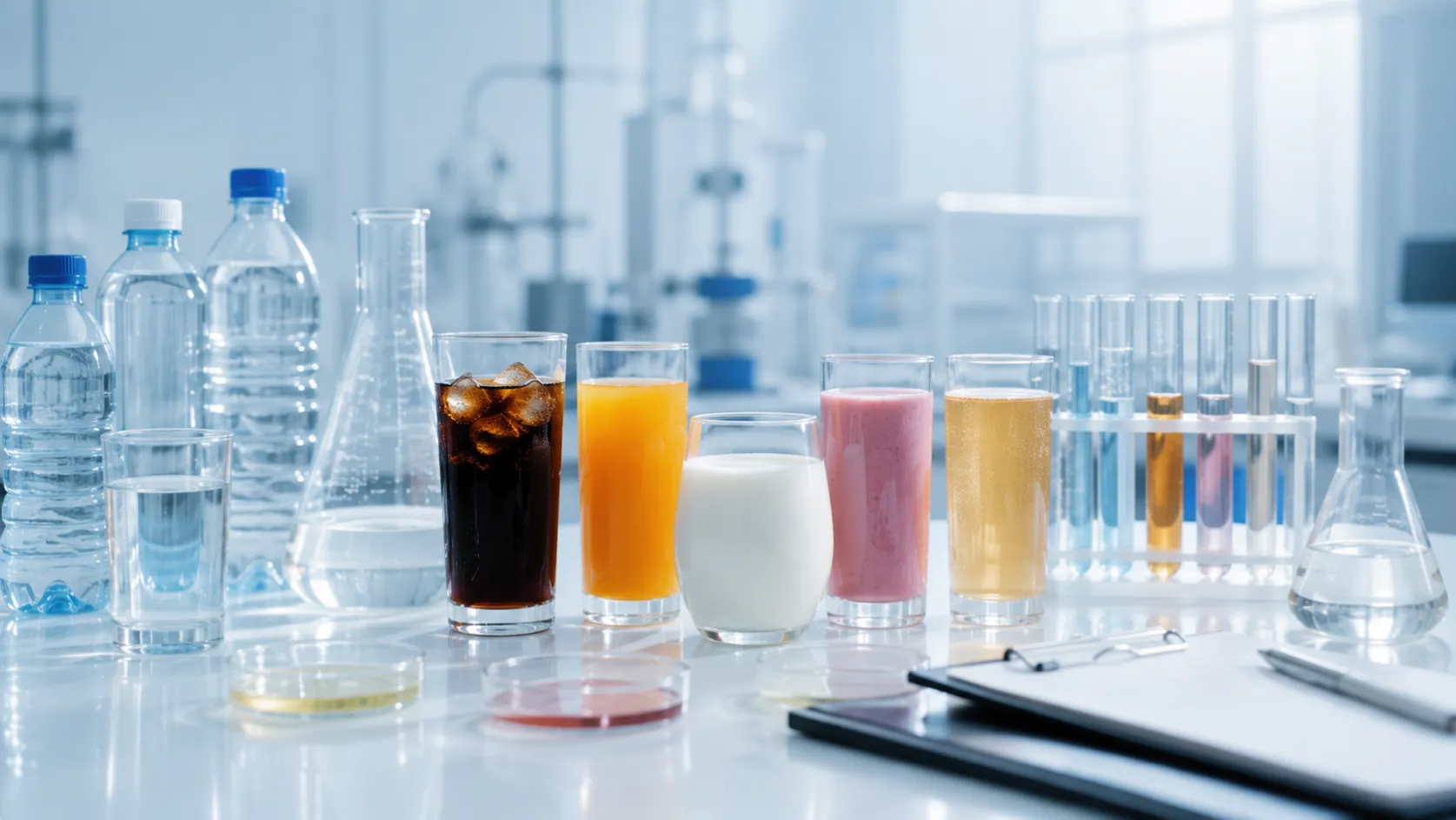
Beverage manufacturing encompasses a wide range of liquid consumer products, each with different composition, processing conditions, and quality attributes. Common categories include:
- Carbonated soft drinks – sugar-sweetened or diet beverages where carbonation, Brix or concentration, acidity, and package integrity may be important routine controls.
- Fruit juices and nectars – products where acidity, soluble solids, color, turbidity or pulp characteristics, selected nutrients, and process effectiveness may need evaluation.
- Bottled water – still or sparkling water requiring appropriate chemical, physical, and microbiological quality checks, including clarity and water-quality measurements.
- Alcoholic beverages – beer, wine, and spirits where alcohol content, density, acidity, clarity, and sensory or volatile-compound analysis may be relevant depending on the product and method.
- Dairy and plant-based beverages – products that may require compositional, physical, stability, and microbiological testing appropriate to their formulation and processing conditions.
Beverage Testing Quality Control Workflow
Raw Material Receiving and Ingredient Testing
Incoming water, sweeteners, acids, flavors, carbon dioxide, and other ingredients should be checked against the manufacturer’s purchasing and formulation requirements before production use. Water quality can influence beverage flavor, appearance, processing performance, and product stability, while variation in syrups, concentrates, acids, or additives can shift the finished formulation away from its target.
Routine incoming inspection may therefore combine physical observations with pH, conductivity, refractometric concentration, color, and accurate weighing. The required tests should be selected according to the ingredient specification rather than applying the same test panel to every raw material.
Recommended laboratory equipment for this stage:
- pH Meter – Measures acidity or alkalinity of water and liquid ingredients where pH is part of the incoming-material specification.
- Conductivity Meter – Measures electrical conductivity and is useful for monitoring ionic content and consistency of process or ingredient water. Where conductivity is used to estimate dissolved solids, the relationship should be defined by the applicable laboratory method.
- Refractometer – Determines refractometric concentration, commonly reported as Brix for appropriate syrups, concentrates, and beverage samples.
- Spectrophotometer – Supports absorbance or color-related measurements when the ingredient or method has a defined spectrophotometric test.
- Analytical Balance – Provides accurate weighing for ingredient checks, reagent preparation, and laboratory sample preparation.


In-Process Control During Mixing and Carbonation
During blending, carbonation, and thermal processing, rapid measurements help operators determine whether the beverage remains within its defined process and formulation targets. Variation in ingredient dosing, dilution, mixing, CO₂ addition, or processing conditions can affect sweetness, acidity, carbonation, and final product consistency.
Common in-process checks include Brix or concentration, pH, titratable acidity, density, and carbon dioxide measurement where applicable. Fast results are particularly valuable before filling because an out-of-target batch may still be investigated or adjusted according to the manufacturer’s approved production procedure.
Recommended laboratory equipment for this stage:
- Carbonation Tester – Measures carbonation in applicable carbonated beverages and can be used to compare production samples with the manufacturer’s target.
- Density Meter – Measures liquid density or specific gravity for formulation, concentration, or fermentation-related applications where density is part of the control method.
- Titrator – Supports titratable acidity measurements and can improve repeatability and throughput when the laboratory performs frequent titrations.
- Portable pH Meter – Enables rapid production-area pH measurements when portable testing is appropriate for the laboratory workflow.
- Refractometer (inline or benchtop digital) – Provides rapid refractometric concentration measurements for syrups, concentrates, and appropriate finished beverage formulations.

Finished Product Release Testing
Finished-product testing determines whether packaged or pre-release beverage samples meet the manufacturer’s defined release criteria. The test panel should reflect the beverage formulation and its critical quality attributes rather than relying on a single universal set of tests.
Typical measurements may include pH, Brix or concentration, titratable acidity, carbonation, density, color, turbidity, net content, and microbiological parameters. Alcoholic beverages or fortified products may also require application-specific compositional analysis. Sensory evaluation can complement instrumental measurements by identifying appearance, aroma, or flavor changes that routine analytical measurements may not fully describe.
Recommended laboratory equipment for this stage:
- pH Meter and Titration System – Measure pH and titratable acidity as separate but complementary formulation and quality parameters.
- Spectrophotometer – Supports defined color, absorbance, or analyte methods where spectrophotometric measurement is appropriate.
- Turbidity Meter – Quantifies haze or suspended-particle effects in products where clarity is an important quality attribute.
- Alcohol Meter, Density Meter, or Other Appropriate Alcohol Analysis System – Supports alcohol-related measurements when suitable for the beverage matrix and required method.
- Microbiological Testing Media and Incubator – Support microbiological screening using the laboratory’s defined sampling, culture, incubation, and interpretation procedures.


Packaging Integrity and Seal Testing
Beverage quality depends on both the liquid and the container-closure system. Closure or seam problems can contribute to leakage, loss of carbonation, oxygen exposure, or contamination risk, so packaging checks should be matched to the package format and filling process.
Depending on whether the product is packaged in bottles, cans, jars, or cartons, manufacturers may evaluate closure torque, leak integrity, pressure or vacuum behavior, seal strength, and package resistance. The appropriate instrument depends on the container material, closure design, filling conditions, and failure mode being investigated.
Recommended laboratory equipment for this stage:
- Secure Seal Tester or Closure Torque Meter – Evaluates applicable closure performance parameters such as removal torque or seal behavior on compatible packages.
- Carbonation Tester (piercing type) – Measures carbonation in packaged carbonated beverages to evaluate the filled product.
- Vacuum/Pressure Decay Tester – Detects package leakage using pressure- or vacuum-based test methods where compatible with the container system.
- Burst Tester – Evaluates package resistance to internal pressure for applications where burst performance is a relevant package parameter.
- Water Vapor Transmission Rate Tester – Evaluates water-vapor barrier performance of applicable packaging materials when moisture transmission is relevant to the package study.

Shelf-life and Accelerated Stability Testing
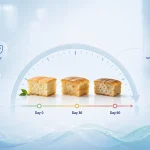
Shelf-life studies evaluate whether a beverage maintains acceptable quality and safety characteristics throughout its intended storage period. Temperature, light exposure, oxygen, formulation interactions, and packaging can contribute to changes in flavor, color, clarity, nutrient content, carbonation, or microbiological condition.
Real-time studies provide direct information under defined storage conditions. Accelerated or stress studies can help compare formulations, packaging systems, or degradation behavior over shorter periods, but the relationship between accelerated conditions and actual shelf life must be established through an appropriate study design rather than assumed automatically.
Samples may be evaluated periodically for parameters such as pH, color, turbidity, microbiological condition, package performance, and sensory changes according to the study objective.
Recommended laboratory equipment for this stage:
- Stability Chamber or Environmental Test Chamber – Maintains defined environmental conditions for controlled storage, comparative stability work, or accelerated studies.
- Spectrophotometer – Tracks defined absorbance or color changes during storage studies.
- Turbidity Meter – Monitors changes in haze or clarity that may indicate physical instability.
- pH Meter – Tracks pH changes as one component of stability monitoring and investigation.
- Sensory Evaluation Setup (glassware, controlled lighting) – Provides more consistent conditions for comparative assessment of appearance, aroma, and flavor.

Common Quality Control Challenges in Beverage Manufacturing
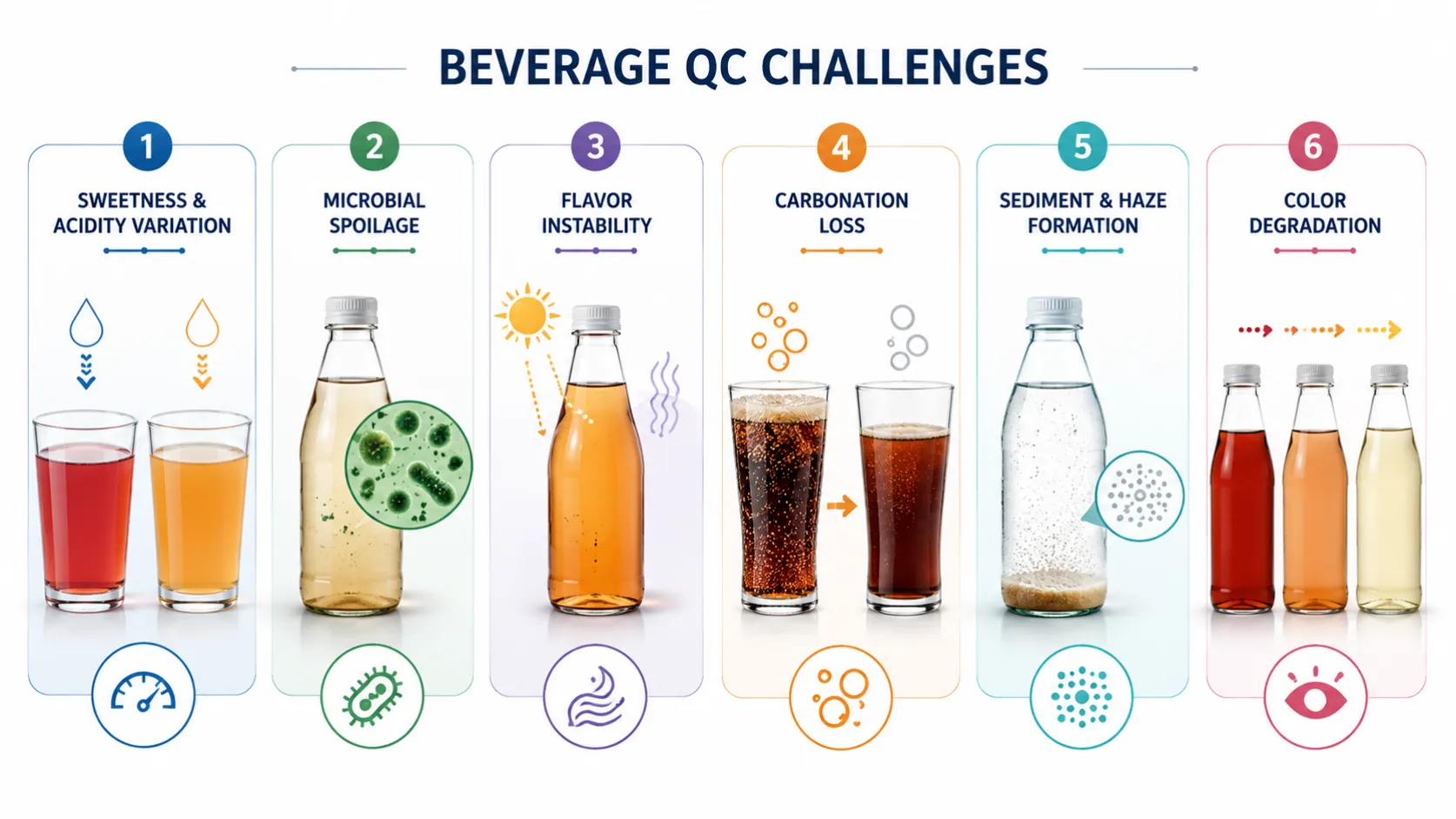
Manufacturers frequently encounter quality problems that require a combination of process review and laboratory testing to identify the cause:
- Inconsistent sweetness or acidity associated with formulation, dilution, ingredient variability, or mixing errors.
- Microbial spoilage associated with raw materials, processing conditions, sanitation, handling, or package integrity.
- Flavor instability caused by oxidation, light exposure, storage conditions, or interactions among ingredients and packaging.
- Carbonation loss associated with filling conditions, product temperature, package closure performance, or storage.
- Sediment and haze formation caused by physical instability, precipitation, ingredient interactions, or microbial activity depending on the beverage.
- Color degradation caused by formulation changes, oxidation, light exposure, temperature, or other storage-related effects.
Key Quality Control Tests for Beverage Testing
The most useful QC test depends on the failure mode being controlled. The following relationships provide a practical starting point for matching a beverage quality problem with an appropriate test and instrument category.
| Quality Challenge | Quality Control Test | Recommended Laboratory Equipment | Application |
|---|---|---|---|
| Variable sweetness or concentration | Brix or refractometric concentration measurement | Digital Refractometer | Syrup, juice, concentrate, and appropriate soft drink blending |
| Acid imbalance or tartness drift | Titratable acidity and pH | Automatic Titrator, pH Meter | Carbonated drinks, fruit beverages, and other acidified formulations |
| Carbonation level fluctuation | CO₂ or carbonation measurement | Carbonation Tester | Soft drinks, beer, sparkling water |
| Microbial contamination risk | Applicable microbiological culture and screening methods | Incubator, Autoclave, Laminar Flow Hood | Beverages requiring microbiological QC according to the laboratory method |
| Haze or sediment in final product | Turbidity analysis | Turbidity Meter | Bottled water, beer, white wine, and clear beverages |
| Color variation or fading | Absorbance/transmittance spectrophotometry | UV-Vis Spectrophotometer | Colored beverages, fruit drinks, teas |
| Off-flavors and aroma defects requiring advanced investigation | Volatile-compound analysis | GC-MS System | Advanced beverage investigation and volatile profiling where an appropriate analytical method is available |
| Packaging seal failure | Torque and seal integrity testing | Torque Meter, Leak Tester | Applicable bottles, jars, cans, and closure systems |
Laboratory Equipment Required for Food & Beverage Quality Control
A beverage QC laboratory usually starts with instruments that support frequent production and release decisions. pH meters, refractometers, balances, and appropriate titration equipment cover many routine formulation checks, while turbidity meters and spectrophotometers support clarity and optical measurements. Where microbiological testing is performed internally, the laboratory also needs appropriate incubation, sterilization, sample-handling, and media-preparation capability.
Additional equipment should be driven by the beverage portfolio and testing responsibility. Carbonated-drink producers may require dedicated carbonation measurement. Breweries, wineries, and other alcoholic-beverage laboratories may require density or alcohol-analysis equipment appropriate to their methods. Package-testing instruments become more important when closure or container performance is a significant quality risk. Stability chambers are useful when controlled storage studies are part of product development, packaging evaluation, or shelf-life programs.
| Testing Requirement | Laboratory Equipment | Why Manufacturers Need It |
|---|---|---|
| Sweetness and concentration control | Digital Refractometer | Supports consistent syrup, concentrate, and beverage formulation through rapid refractometric measurements. |
| Acidity control | pH Meter and Automatic Titrator | Measures pH and titratable acidity for formulation, process monitoring, troubleshooting, and release testing. |
| Carbonation monitoring | Carbonation Tester | Measures carbonation in applicable beverages during process control or finished-package evaluation. |
| Microbiological quality control | Incubator and Autoclave | Support defined microbiological culture workflows, media preparation, and sterilization procedures. |
| Clarity and visual quality | Turbidity Meter and Spectrophotometer | Quantify haze, clarity, absorbance, or color-related changes using appropriate test methods. |
| Alcohol-related analysis | Alcohol Meter or Densitometer | Supports alcohol or density measurements when the instrument and method are suitable for the beverage matrix and required result. |
| Package integrity | Leak Tester and Torque Meter | Helps investigate closure performance and package leakage as part of packaging quality control. |
| Product stability | Stability Chamber | Provides controlled storage conditions for stability studies, formulation comparisons, and packaging evaluations. |
These instruments cover many of the most common beverage QC requirements, but not every manufacturer needs every instrument. Equipment should be selected from the actual product specifications, test methods, production risks, sample throughput, and decisions the laboratory is expected to make.
Basic Laboratory Setup for Beverage Manufacturers
A practical laboratory can be developed in levels. Routine production measurements should normally be established first, while specialized analytical systems are added when the product portfolio, testing responsibility, or investigation requirements justify them.
| Laboratory Level | Recommended Equipment | Suitable For |
|---|---|---|
| Basic QC Laboratory | pH Meter, Refractometer, Turbidity Meter, Basic Microbiological Setup (incubator, media), Carbonation Tester | Small to medium beverage producers performing routine process and release checks appropriate to their products |
| Advanced QC Laboratory | Automatic Titrator, Spectrophotometer, Densitometer, Leak Tester, Stability Chamber | Facilities requiring greater automation, broader analytical coverage, packaging evaluation, or controlled stability studies |
| Advanced Analysis Laboratory | GC-MS System, HPLC, Atomic Absorption Spectrometer, Advanced Package Testing Instruments | Large manufacturers or testing laboratories conducting specialized compositional analysis, contaminant investigation, research, or method-based advanced testing |
The appropriate level is determined by the tests that must actually be performed in-house. Specialized analyses can require more than the instrument itself, including validated methods, trained personnel, sample preparation, reference materials, gases or reagents, maintenance, and suitable laboratory infrastructure.
How to Choose Laboratory Equipment for Beverage Testing
Selecting the right instruments requires a clear understanding of the products being manufactured, the measurements needed for production and release, and the laboratory’s expected workload. Equipment should be selected around the test method and decision requirement rather than purchasing the most advanced instrument available.
Define the Testing Scope
Start by listing each beverage type and the quality parameters that must be measured at incoming inspection, during production, at release, and during stability or troubleshooting work. A bottled-water laboratory may emphasize water-quality, clarity, and microbiological measurements, while a carbonated soft-drink laboratory may place greater emphasis on Brix or concentration, pH, acidity, carbonation, and packaging.
For each parameter, identify the required method, sample type, measurement range, required result quality, and whether the test is for screening, process adjustment, final release, or advanced investigation. These requirements provide a more reliable basis for equipment selection than choosing instruments by category name alone.
Evaluate Laboratory Workflow Requirements
Consider the number of samples and tests performed per shift or per day, the time available before production or release decisions, and the skill level of the laboratory team. Higher-throughput laboratories may benefit from automation where it reduces repetitive manual work and improves consistency.
Also consider sample preparation, instrument footprint, utilities, environmental conditions, data recording, cleaning, and the possibility of multiple product matrices being tested on the same instrument. A technically suitable instrument can still create a workflow bottleneck if sample preparation or measurement time does not match production demand.
Compare Long-Term Equipment Support
Purchase price is only one part of instrument selection. Laboratories should also consider calibration and verification requirements, consumables, electrodes or other replaceable components, preventive maintenance, spare-parts availability, operator training, and technical support.
For advanced analytical equipment, the laboratory should additionally evaluate whether it has the methods, trained personnel, sample-preparation capability, utilities, and maintenance resources needed to operate the system effectively. If those requirements are not justified by routine testing volume, outsourcing specialized analyses while maintaining core QC measurements in-house may be more practical.
AELAB can assist in matching beverage types and testing requirements with appropriate instrument categories so manufacturers can compare practical laboratory configurations without unnecessarily over-specifying the setup.
Who Needs Laboratory Testing Solutions for This Industry?
- Beverage manufacturers operating in-house quality control laboratories for production and finished-product testing.
- Contract packers and co-packers managing test requirements across multiple beverage products or customer specifications.
- R&D departments developing formulations, comparing ingredients, investigating stability, or evaluating packaging.
- Third-party testing laboratories providing physical, chemical, microbiological, or advanced analytical services to beverage producers.
- Quality and technical teams defining laboratory capabilities, troubleshooting production problems, or evaluating new test equipment.
Frequently Asked Questions
What are the most important routine tests for carbonated soft drinks?
Common routine controls include carbonation, Brix or refractometric concentration, pH, and titratable acidity. The exact release panel depends on the formulation and the manufacturer’s specifications. A carbonation tester, refractometer, pH meter, and titration equipment therefore form a practical core instrument group for many carbonated-beverage QC laboratories.
How often should beverage testing laboratory instruments be calibrated?
There is no single calibration frequency that applies to every beverage laboratory instrument. Frequency should be defined according to the test method, instrument manufacturer’s instructions, laboratory quality procedure, frequency of use, measurement risk, and instrument performance. Routine checks with appropriate standards or reference materials can also help identify drift between formal calibration activities.
Can one laboratory setup handle both alcoholic and non-alcoholic beverage testing?
Yes, many core instruments such as pH meters, refractometers, turbidity meters, balances, and titration systems can support both product groups when their measurement ranges and methods are suitable. Alcoholic beverages may require additional density or alcohol-analysis methods, while microbiological, sample-preparation, and advanced analytical requirements can differ according to the beverage matrix.
What is the minimum equipment for a small craft brewery laboratory?
A practical brewery QC laboratory can start with equipment for pH, extract or density measurements, yeast or fermentation monitoring, and the microbiological checks the brewery intends to perform in-house. Depending on the testing program, this may include a pH meter, refractometer or density meter, microscope or yeast-counting setup, incubator, sterilization equipment, and appropriate microbiological supplies. Additional instruments should be added according to the brewery’s actual process-control and finished-product requirements.
Conclusion
Beverage quality control is not based on one universal instrument list. The laboratory configuration should follow the beverage type, production stages, critical quality attributes, test methods, sample throughput, packaging system, and release decisions the manufacturer needs to support.
For many facilities, the most effective approach is to establish reliable routine measurements such as pH, concentration, acidity, carbonation, clarity, and relevant microbiological checks first, then add package testing, stability equipment, automation, or advanced analytical systems as the testing responsibility expands. This test-driven approach helps avoid both missing critical QC capability and purchasing analytical equipment that the laboratory is not prepared to use effectively.