Environmental Monitoring Laboratory Setup Guide Overview
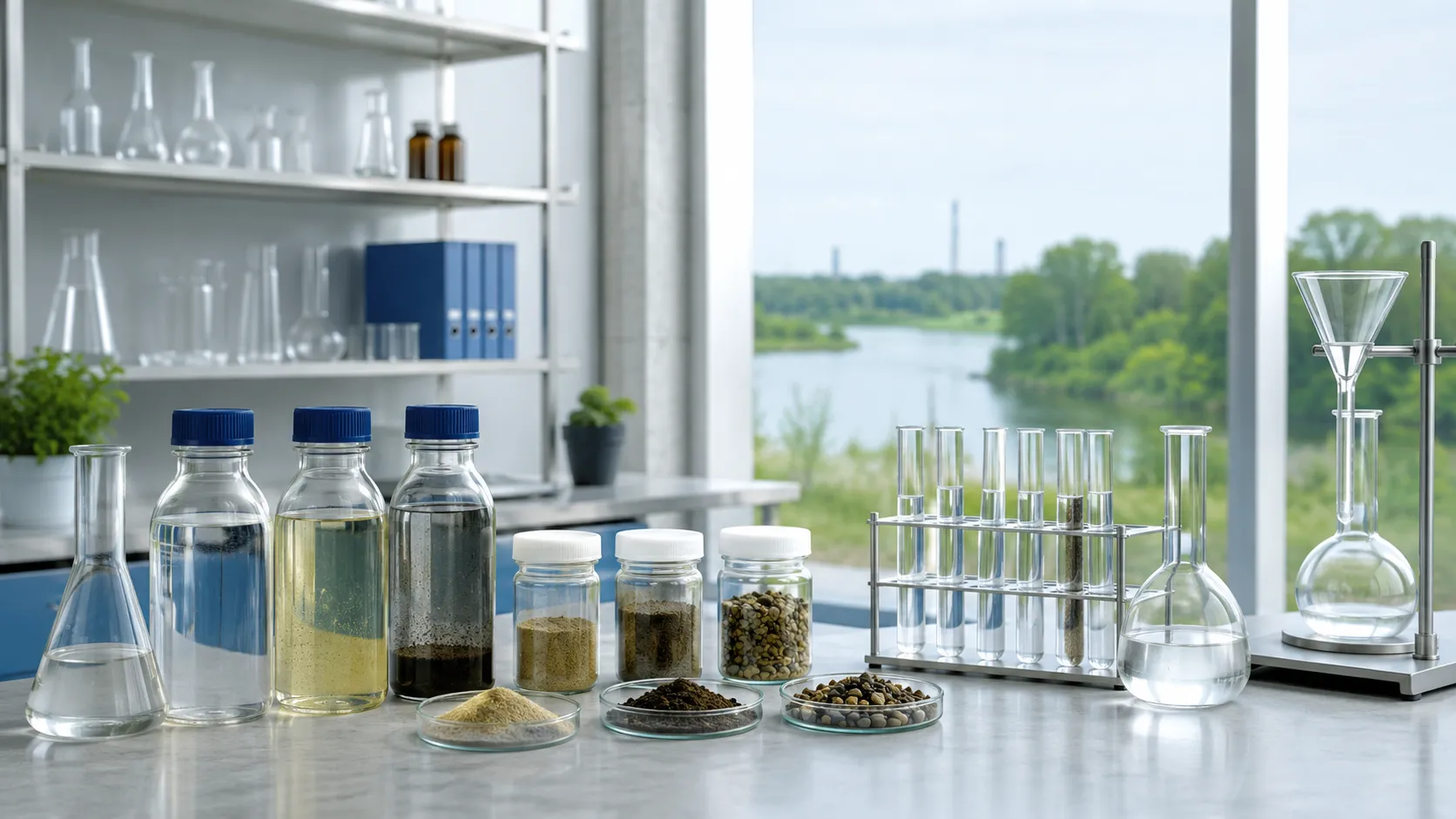
Environmental monitoring laboratories support the assessment of water, wastewater, air, soil, sediment, waste streams, and biological samples for process control, environmental assessment, and applicable compliance programs. A well-planned environmental monitoring laboratory setup connects each sample type and target parameter with an appropriate test method, instrument, quality control procedure, and reporting workflow.
In practical terms, an environmental monitoring laboratory typically needs equipment for field and sample-condition checks, physical measurements, chemical analysis, microbiological testing, sample preparation, and data quality control. Core instruments may include pH and conductivity meters, turbidimeters, balances, ovens, spectrophotometers, and microbiology equipment. More advanced laboratories may add elemental analyzers, TOC systems, chromatography, and automated data-management tools according to their matrices, target analytes, required methods, and sample throughput.
From verifying drinking water quality to monitoring industrial effluent, environmental testing laboratories must produce results that are consistent, traceable, and suitable for their intended use. Laboratory planning therefore requires more than selecting individual instruments: the full workflow should account for sample collection and preservation, preparation, analytical testing, quality control, data review, maintenance, and reporting.
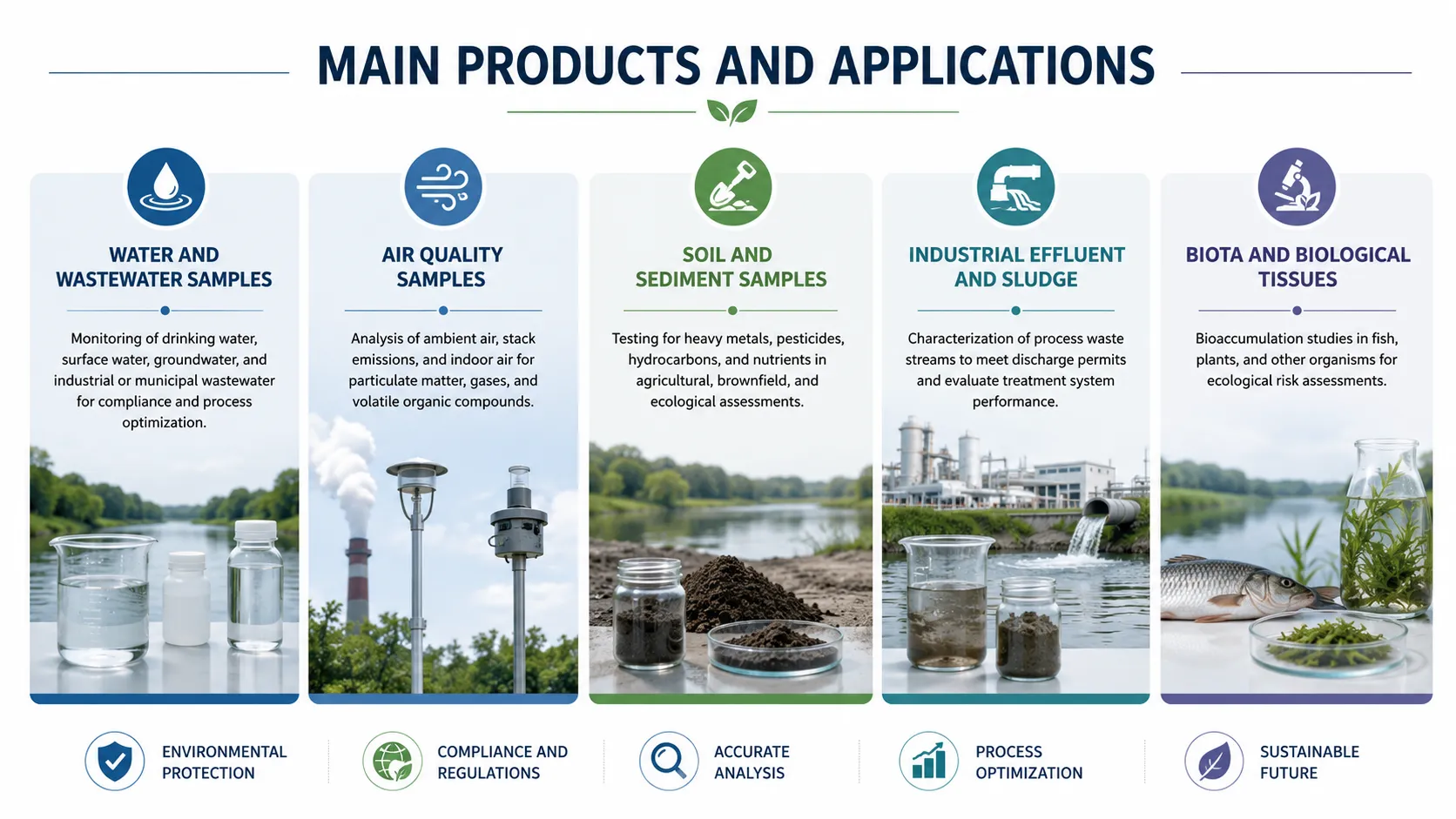
Main Products and Applications
- Water and Wastewater Samples – Monitoring of drinking water, surface water, groundwater, and industrial or municipal wastewater for quality assessment, process optimization, and applicable compliance testing.
- Air Quality Samples – Analysis of ambient air, stack emissions, and indoor air for relevant particulate, gaseous, and volatile constituents.
- Soil and Sediment Samples – Testing for parameters such as metals, pesticides, hydrocarbons, and nutrients in agricultural, brownfield, remediation, and ecological assessments.
- Industrial Effluent and Sludge – Characterization of process waste streams and treatment outputs to evaluate treatment performance and support discharge monitoring.
- Biota and Biological Tissues – Analysis used in bioaccumulation and ecological assessment programs where biological matrices are part of the monitoring scope.
Environmental Monitoring Quality Control Workflow
A useful way to plan an environmental laboratory is to map each workflow stage to the measurement or quality risk it must control. Sample integrity comes first, followed by physical screening, chemical or microbiological analysis, quality control checks, and final data review.
Sample Collection and Preservation
The integrity of environmental data begins at the point of collection. Poor sampling practices, unsuitable containers or preservation, contamination, and excessive delays before analysis can change sample composition and produce results that no longer represent the original condition. Collection procedures should therefore define the sample container, preservation approach, field measurements, transport conditions, documentation, and applicable holding-time requirements for each test method.
Recommended laboratory equipment for this stage:
- Portable pH and Conductivity Meters – For field measurements that document sample conditions and provide immediate water-quality information.
- Sample Containers and Preservatives – Bottles, vials, and preservation materials selected according to the sample matrix, analyte group, and applicable method.
- Coolers and Temperature Loggers – For samples requiring controlled transport conditions and documentation of sample temperature.
- Autosamplers – Useful where automated or composite water sampling is required to improve consistency and representativeness.
- Sampling Decontamination Supplies – Cleaning and decontamination materials appropriate to reusable sampling equipment to reduce cross-contamination between sampling locations.

Physical Parameter Testing
Upon arrival in the laboratory, samples may be screened for physical characteristics that provide immediate information about sample condition or treatment performance. Parameters such as turbidity, total suspended solids (TSS), conductivity, and color can indicate particulate loading, dissolved ionic content, treatment changes, or other water-quality conditions.
Physical tests are often relatively rapid and can complement more detailed chemical and microbiological analyses. The exact tests required should be selected according to the sample matrix, monitoring objective, and applicable analytical method.
Recommended laboratory equipment for this stage:
- Turbidimeter – Measures light scattering associated with suspended particles and is widely used in water-quality monitoring.
- Gravimetric Filtration Apparatus – Supports filtration-based determination of suspended solids when used with appropriate filters, drying equipment, and weighing procedures.
- Laboratory Oven – Provides controlled drying for gravimetric solids measurements and related sample-preparation procedures.
- Analytical Balance – Provides the precision weighing required for gravimetric measurements and preparation of standards or reagents.
- Conductivity Meter – Measures electrical conductivity as an indicator of dissolved ionic content in water samples.


Chemical Parameter Testing
Chemical analysis forms a major part of environmental monitoring. Depending on the laboratory scope, target parameters may include nutrients, metals, organic matter indicators, inorganic ions, and organic contaminants. The appropriate technique depends on the analyte, matrix, expected concentration, required method, sensitivity needs, and sample throughput.
A laboratory should therefore select analytical equipment from the required test list rather than purchasing advanced instruments without a defined application. Routine colorimetric measurements, elemental analysis, organic-load measurements, and chromatography each address different analytical needs.
Recommended laboratory equipment for this stage:
- UV-Vis Spectrophotometer – Supports colorimetric analysis of parameters such as ammonia, nitrate, phosphate, and other analytes when required by the selected analytical method.
- Atomic Absorption Spectrometer (AAS) or Inductively Coupled Plasma Optical Emission Spectrometer (ICP-OES) – Used for elemental analysis in matrices such as water, soil digests, and sludge digests. Technique selection depends on the required elements, concentration range, throughput, and method.
- Total Organic Carbon Analyzer – Measures total organic carbon and can support assessment of organic content in suitable water and wastewater applications.
- BOD Incubator and Dissolved Oxygen Meter – Used together for biochemical oxygen demand testing where BOD is part of the laboratory’s required analytical program.
- COD Reactor and Titration Setup – Supports chemical oxygen demand testing using the applicable digestion and measurement procedure.
- Ion Chromatograph – Used for analysis of selected ionic species when ion chromatography is required by the laboratory’s test scope.


Microbiological Testing
Microbiological testing is important where the monitoring program includes sanitary or microbial water-quality parameters. Applications can include drinking water, recreational water, wastewater, and treatment-process monitoring. Because microbiological results are sensitive to sample handling and laboratory contamination, aseptic technique, appropriate culture conditions, sterilization, and method-specific quality controls are essential.
The microbiological setup should be designed around the organisms or indicator groups being measured and the selected analytical methods. Culture-based membrane filtration and other microbiological techniques may require different supporting equipment.
Recommended laboratory equipment for this stage:
- Laminar Flow Hood – Provides a controlled clean work area for appropriate microbiological preparation and handling procedures.
- Autoclave – Used for sterilization of suitable media, glassware, equipment, and microbiological waste according to laboratory procedures.
- Incubator (Temperature-Controlled) – Maintains controlled incubation conditions required by the selected microbiological method.
- Membrane Filtration Apparatus – Used in membrane-filtration methods to capture microorganisms from measured volumes of water for subsequent culture and enumeration.
- Microscope – Supports microscopy where organism morphology, staining, or other visual examination forms part of the laboratory method.
- pH Meter and Top-Loading Balance – Support preparation and quality control of microbiological media and reagents.


Data Analysis and Reporting
The final workflow stage converts instrument readings and observations into reviewed laboratory results. Data review should include the quality-control checks required by the laboratory’s methods and quality system, which may include calibration verification, blanks, spikes, reference materials, duplicate measurements, dilution calculations, and other method-specific controls.
Data-management systems can reduce transcription and sample-tracking errors, but electronic workflows also need appropriate configuration, access control, review procedures, and validation according to the laboratory’s requirements.
Recommended laboratory equipment for this stage:
- Laboratory Information Management System (LIMS) – Supports sample tracking, data management, calculations, reporting, and traceability in laboratories that require centralized workflow control.
- Statistical Software or QC Charting Tools – Useful for trend analysis, control charts, quality-control review, and longer-term monitoring of analytical performance.
- Certified Reference Materials (CRMs) – Support calibration or method-performance checks where suitable reference materials are available and required.
- Bench-Top Computer and Printers – Support data processing, documentation, and reporting as part of the broader laboratory infrastructure.
Common Quality Control Challenges in Environmental Monitoring
- Sample integrity changes – Sample composition can change between collection and analysis if preservation, transport, storage, or timing is unsuitable for the target parameter.
- Matrix interference – Complex water, wastewater, soil, sludge, and biological matrices can affect analytical response and may require suitable preparation, dilution, cleanup, or method-specific correction.
- Insufficient analytical sensitivity – The selected technique must be capable of meeting the laboratory’s required reporting or detection needs for the target analytes.
- Cross-contamination – Shared glassware, sampling equipment, reagents, preparation areas, or high-concentration samples can introduce contamination if workflow controls are inadequate.
- Holding-time management – Parameters with method-defined sample handling and analysis windows require effective scheduling from collection through laboratory processing.
- Data integrity – Manual transcription, calculation, sample-identification, and reporting errors become increasingly important as laboratory throughput grows.
Key Quality Control Tests for Environmental Monitoring Laboratory Setup
| Quality Challenge | Quality Control Approach | Recommended Laboratory Equipment | Application |
|---|---|---|---|
| Sample preservation uncertainty | Field blanks and sample-condition checks | Portable pH meter, thermometer, coolers | Support verification of sample condition during collection and transport |
| Particulate interference in colorimetric tests | Method-appropriate sample preparation and blank correction | Filtration apparatus, UV-Vis Spectrophotometer | Support reliable colorimetric analysis where particulate interference is relevant |
| Potential metal contamination during sampling or preparation | Equipment blanks and appropriate sample preparation | ICP-OES, AAS | Elemental analysis of environmental samples |
| Microbiological sample integrity | Sample handling controls and method-specific positive/negative controls | Incubator, autoclave, membrane filtration | Support reliable microbiological water testing |
| Loss or bias during organic compound analysis | Method-specific surrogates, internal standards, blanks, and sample handling controls | Gas Chromatograph-Mass Spectrometer (GC-MS) | Organic contaminant analysis where GC-MS methods are applicable |
| Calibration bias | Calibration and verification using suitable standards or reference materials | Analytical instruments paired with appropriate standards or CRMs | Support measurement accuracy across the analytical workflow |
| Suspended material affecting a dissolved-fraction measurement | Method-defined separation or sample preparation | Filtration or centrifugation equipment, appropriate analytical instrument | Prepare samples for dissolved-fraction analysis where required by the method |
Laboratory Equipment Required for Environmental Monitoring Quality Control
An environmental monitoring laboratory normally combines field-measurement tools, sample-preparation equipment, physical and chemical instruments, microbiological systems, and data-management resources. The exact configuration depends on what the laboratory must measure. A facility focused on routine wastewater process control, for example, will have different requirements from a commercial laboratory performing trace elemental and organic contaminant analysis across multiple environmental matrices.
For equipment planning, it is useful to map each testing requirement to its purpose and instrument family. This prevents gaps in the analytical workflow while also helping laboratories avoid purchasing advanced systems that are not justified by their test scope.
| Testing Requirement | Laboratory Equipment | Why It Is Needed |
|---|---|---|
| pH and conductivity screening | pH Meter, Conductivity Meter | Rapid assessment of sample and water-quality conditions |
| Total suspended solids measurement | Filtration Apparatus, Analytical Balance, Oven | Supports gravimetric suspended-solids testing and process monitoring |
| Biochemical oxygen demand | BOD Incubator, Dissolved Oxygen Meter | Supports BOD testing for wastewater and treatment-performance applications |
| Nutrient analysis | UV-Vis Spectrophotometer, Digestion Equipment where required | Supports colorimetric nutrient testing according to the selected methods |
| Elemental analysis | ICP-OES or AAS | Measures selected elements in appropriately prepared environmental samples |
| Microbial contamination | Autoclave, Incubator, Membrane Filtration | Supports culture-based microbiological testing and associated preparation |
| Organic analysis | TOC Analyzer, GC-MS | Provides different analytical approaches for organic content or selected organic compounds |
| Data quality and reporting | LIMS, Certified Reference Materials | Supports traceability, quality-control review, sample management, and reporting |
When configured around a defined testing scope, these equipment families can support environmental monitoring from initial sample checks through physical, chemical, and microbiological analysis. The important planning step is to connect each instrument to a required parameter and method rather than treating every listed instrument as mandatory for every laboratory.
Basic Laboratory Setup for Environmental Monitoring
Not every environmental laboratory requires advanced chromatography or elemental analysis on site. A basic laboratory can focus on routine physical, chemical, and microbiological measurements, while more advanced facilities can add analytical systems as their test scope, reporting requirements, and sample volume expand.
| Laboratory Level | Recommended Equipment | Suitable For |
|---|---|---|
| Basic QC Laboratory | pH meter, conductivity meter, turbidimeter, spectrophotometer, analytical balance, oven, basic microbiological setup (autoclave, incubator) | Routine in-house water or wastewater monitoring and operational checks where these methods match the required test scope |
| Advanced QC Laboratory | All Basic plus ICP-OES or AAS, TOC analyzer, BOD/COD systems, LIMS, membrane filtration setup | Facilities or laboratories requiring broader chemical, elemental, microbiological, and data-management capability |
| Advanced Analysis Laboratory | All Advanced plus GC-MS, ion chromatograph, automated sample preparation, advanced data management | Laboratories performing broader instrumental analysis, lower-level measurements, complex matrices, or higher-throughput environmental testing |
These levels are planning frameworks rather than fixed equipment packages. The final configuration should be based on required parameters, analytical methods, sample matrices, expected workload, available staff, and whether specialized analyses will be performed internally or outsourced.
How to Choose Laboratory Equipment for Environmental Monitoring
Selecting environmental laboratory equipment starts with the testing scope, not with an instrument list. Define the sample matrices and required parameters first, identify the analytical methods and performance needs, and then select equipment that can support the expected workload and laboratory operating conditions.
Define the Testing Scope
Begin by listing the matrices the laboratory will receive, such as drinking water, wastewater, groundwater, soil, sediment, sludge, or air-related samples. For each matrix, identify the parameters to be measured and the analytical method that will be used.
Expected concentration levels and required reporting capability also affect instrument selection. Routine process-control measurements may be handled by relatively simple benchtop instruments, while lower-level elemental or organic analysis may justify more advanced analytical systems. Method requirements should guide the choice between techniques such as colorimetry, atomic spectroscopy, chromatography, or electrochemical measurement.
Evaluate Laboratory Workflow Requirements
Testing frequency and daily sample volume influence the required level of automation. A laboratory processing a large number of samples may benefit from automated sampling, preparation, data transfer, or higher-throughput analytical systems, while a lower-volume facility may be adequately served by manual methods and general-purpose benchtop equipment.
Operator skill level should also be considered. Advanced analytical instruments normally require more method development, calibration, maintenance, troubleshooting, and data interpretation than routine meters or spectrophotometers. Laboratory space, ventilation, utilities, environmental conditions, waste handling, and power stability should also be evaluated before equipment is selected.
Compare Long-Term Equipment Support
Purchase price is only one part of equipment selection. Laboratories should also consider calibration requirements, preventive maintenance, consumables, spare parts, service availability, staff training, software needs, and expected instrument utilization.
The most suitable configuration is therefore the one that matches the laboratory’s actual analytical workload and method requirements while remaining practical to operate and maintain. AELAB can help match sample types, required tests, expected throughput, and analytical needs with suitable laboratory equipment categories.
Who Needs Environmental Laboratory Testing Solutions?
- Industrial Facilities – Organizations conducting on-site wastewater, process-water, waste-stream, or emissions-related monitoring.
- Municipal Water and Wastewater Treatment Plants – Facilities performing operational monitoring and applicable water-quality testing.
- Contract Environmental Testing Laboratories – Laboratories providing analytical services across multiple environmental sample types.
- Regulatory and Environmental Organizations – Organizations conducting environmental surveillance, assessment, or monitoring programs.
- Research Institutions and Environmental Engineering Firms – Teams conducting field studies, environmental characterization, treatment studies, and remediation projects.
Frequently Asked Questions
What basic equipment is needed to start an environmental water testing lab?
A minimal setup requires a pH meter, conductivity meter, turbidimeter, UV-Vis spectrophotometer, analytical balance, laboratory oven, autoclave, and incubator for microbiological work, along with standard glassware and reagents.
How can I ensure my laboratory data meets regulatory requirements?
Following standard methods, using certified reference materials, implementing a quality assurance plan, and maintaining rigorous calibration and documentation practices help demonstrate data defensibility.
Is a TOC analyzer necessary for all environmental labs?
Not always, but it is highly valuable for wastewater treatment plants and drinking water facilities needing fast organic load assessment. Labs focusing only on metals or physical parameters may not require one.
What are common mistakes when setting up an environmental lab?
Underestimating sample throughput needs, neglecting proper ventilation for chemical handling, overlooking data management solutions, and failing to plan for instrument maintenance and calibration are frequent pitfalls.
Conclusion
Building an environmental monitoring laboratory requires more than assembling a list of instruments. The strongest laboratory setup begins with the sample matrices and required parameters, maps those requirements to appropriate analytical methods, and then selects equipment that fits the expected throughput, quality-control needs, operator capability, and long-term maintenance resources.
A basic environmental laboratory may cover routine physical measurements, spectrophotometric testing, and microbiological work, while advanced laboratories can add elemental analysis, TOC measurement, chromatography, automation, and integrated data management when the analytical scope justifies them. This test-to-equipment approach helps create a laboratory that is practical to operate while supporting consistent environmental monitoring.
Laboratory Equipment Solutions for Environmental Monitoring
Whether you are testing drinking water, industrial effluent, soil, sludge, or other environmental samples, AELAB can help connect your sample types and quality control requirements with appropriate laboratory instrument categories. Defining the required test methods, expected throughput, target parameters, and analytical needs first makes it easier to identify an equipment configuration that supports the complete workflow.
For a new laboratory or an existing laboratory upgrade, useful planning information includes the sample matrices you test, target parameters, expected daily sample volume, analytical methods, current equipment, and any workflow or quality-control challenges. These details provide a practical basis for selecting suitable laboratory equipment without adding unnecessary analytical capability.