


Introduction
Choosing a gas chromatograph (GC) for a petrochemical or environmental testing laboratory is not a one-size-fits-all decision. The wrong detector combination, insufficient temperature control, or a system that cannot handle your sample matrix can lead to unreliable data, regulatory non-compliance, and costly re-runs. This guide helps laboratory managers and technical staff navigate the key factors—from required detectors and sensitivity to oven performance and automation—to match a GC system to typical testing workloads and method requirements.
Whether you are setting up a new refinery QC lab, expanding an environmental monitoring station, or upgrading a contract testing facility, understanding the practical demands of your analyses will drive a better instrument selection.
Quick Selection Summary
Before diving into details, here is a high-level decision framework:
- Routine hydrocarbon analysis (e.g., gasoline range organics, total petroleum hydrocarbons): A flame ionization detector (FID) with a basic multi-ramp oven and manual pneumatics often meets requirements. The AELAB GC1120 is a capable, cost-effective choice here.
- Trace-level environmental detection (pesticides, PCBs, halogenated compounds): An electron capture detector (ECD) or nitrogen-phosphorus detector (NPD) is essential. Consider the higher sensitivity and electronic pneumatic control (EPC) of the GC1290 for demanding EPA methods.
- Comprehensive petrochemical profiling including sulfur and nitrogen compounds: A multi-detector system with FID, FPD, and NPD, plus flexible temperature programming, is ideal. Both GC1120 and GC1290 support multiple detectors, but the GC1290 offers faster heating and more ramps for complex separations.
- Laboratories requiring strict automation and method development: Choose a system with EPC, a touch screen, and extensive program ramps—the GC1290 is built for this.
Understanding the Analytical Demands

Gas chromatography separates volatile and semi-volatile compounds based on their distribution between a stationary phase and a carrier gas. The resulting chromatogram provides qualitative and quantitative information. In petrochemical and environmental labs, the types of samples dictate which detectors and oven capabilities are needed.
Petrochemical analysis often targets hydrocarbons from C1 to C40+, requiring a wide temperature range and rapid heating to elute heavy fractions. Environmental samples—water, soil, air—typically contain trace levels of pollutants that demand high sensitivity and selective detection. Many methods (e.g., EPA 502.1, 524.2, 8015, 8260) specify detector types and performance criteria, so the GC must be configurable to meet those requirements.
-
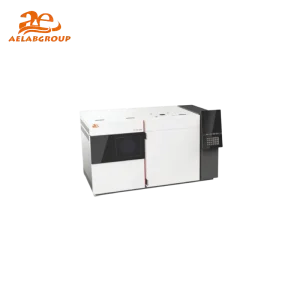 AELAB GC-MS 3200 Gas Chromatograph–Mass Spectrometer (Quadrupole)Read more
-
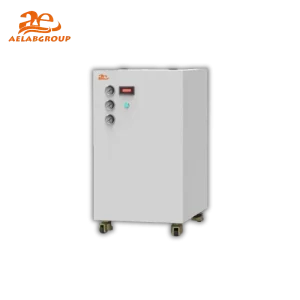 AELAB AE-NGSS / AE-NGDS Nitrogen Generator for Laboratory Gas SupplyRead more
-
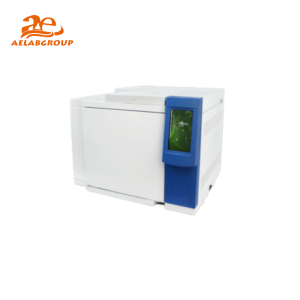 AELAB GC126N Gas Chromatograph – High-Precision Multi-Detector Analytical SystemRead more
-
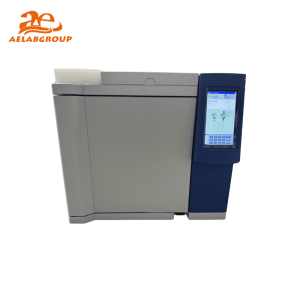 AELAB GC112N Gas Chromatograph | High-Precision Laboratory GC SystemRead more
-
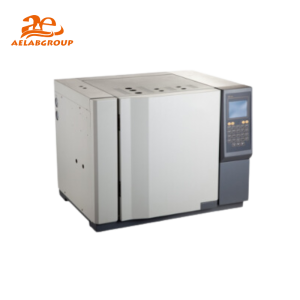 AELAB GC1120 Gas Chromatograph – High-Performance Multi-Detector SystemRead more
-
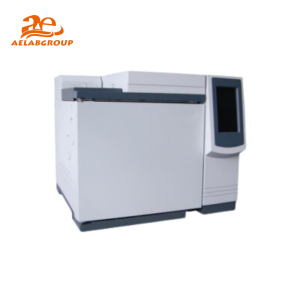 AELAB GC1290 Gas Chromatograph – High-Precision Temperature-Controlled GC SystemRead more
What to Check Before Buying
Before comparing models, list your laboratory’s must-have capabilities:
- Compounds of interest and their concentration ranges: Will you be measuring percent-level components or parts-per-billion contaminants? This dictates detector sensitivity.
- Regulatory method compliance: Which EPA, ASTM, or ISO methods will you follow? Do they require specific detectors, column phases, or performance checks?
- Sample matrix and preparation: Natural gas, gasoline, soil extracts, or purge‑and‑trap water samples each have different injection and separation needs.
- Throughput expectations: How many samples per day? Faster oven cooling and automated injection can increase productivity.
- Lab environment and support: Are you equipped to handle multiple gases, high-purity carrier gases, and regular detector maintenance?
Key Selection Factors
1. Detectors and Their Role
The detector is the heart of a GC. No single detector excels at every compound class, so the ability to add multiple detectors to a single system—as both the GC1120 and GC1290 allow—is a major advantage.
- Flame Ionization Detector (FID): Universal for hydrocarbons. Essential for petrochemical labs. Detection limits are typically in the low picogram-per-second range. The GC1120 FID offers ≤3×10⁻¹² g/s; the GC1290 FID ≤8×10⁻¹² g/s (both using n‑hexadecane). Both are well suited for routine hydrocarbon work.
- Thermal Conductivity Detector (TCD): Non‑destructive, used for permanent gases and high‑concentration components. The GC1290 TCD provides higher sensitivity (≥10000 mV·ml/mg vs ≥5000 mV·ml/mg for GC1120) and better temperature control (±0.1°C). For trace gas analysis or when higher response is needed, the GC1290’s TCD may be preferable.
- Flame Photometric Detector (FPD): Selective for sulfur and phosphorus compounds. Petrochemical labs analyzing sulfur in fuels or environmental labs measuring organophosphorus pesticides rely on FPD. Both models offer comparable phosphorus detection limits, but the GC1290’s overall drift and noise are slightly lower.
- Nitrogen‑Phosphorus Detector (NPD): Sensitive to nitrogen‑ and phosphorus‑containing organics. Used in pesticide and pharmaceutical analysis. The GC1290 NPD specifies a detection limit of ≤5×10⁻¹² g/s for nitrogen (azobenzene), while the GC1120’s NPD limit is not specified for nitrogen in the provided data, only for phosphorus (≤5×10⁻¹³ g/s). Verify these values with AELAB if nitrogen sensitivity is critical.
- Electron Capture Detector (ECD): Extremely sensitive to halogenated compounds, widely used in environmental labs for PCBs, pesticides, and trihalomethanes. The GC1290 ECD offers detection ≤3×10⁻¹⁴ g/ml, significantly better than GC1120’s ≤2×10⁻¹³ g/ml. For ultra‑trace environmental work, the GC1290’s ECD is the stronger choice.
2. Oven Performance and Temperature Programming
Separation of complex mixtures demands precise oven control and rapid temperature ramps. Both models achieve ±0.02°C accuracy. The GC1290, however, offers a higher maximum temperature (420°C vs 400°C) and a faster maximum heating rate (80°C/min vs 40°C/min). This becomes important when analyzing high‑boiling petroleum fractions or when you need shorter run times for high‑throughput labs.
Cooling time is similar: from 400°C to 50°C in 8–10 minutes for both. The GC1290 also cools faster from 350°C to 100°C in ≤3 minutes, which can reduce cycle time when running multiple temperature programs.
3. Automation and Control
The GC1290 features electronic pneumatic control (EPC) and a 7‑inch touch screen, while the GC1120 uses manual pneumatics and a standard interface. EPC ensures consistent gas flows run‑to‑run and simplifies method setup—a significant advantage in laboratories needing high reproducibility and audit trails. For labs adhering to GLP/FDA requirements, the GC1290’s digital documentation is beneficial.
Program ramps also differ: GC1120 has 7 built‑in ramps (10 via workstation), while GC1290 has 20 built‑in (99 via workstation). Complex methods with multiple small temperature steps are easier to program on the GC1290.
AELAB GC1120 and GC1290: Application Fit
Both instruments support multiple detectors and up to three injectors, making them flexible platforms. Here is how they tend to align with typical lab profiles:
- Petrochemical QC labs performing routine gasoline, diesel, or naphtha analysis: The GC1120 with FID and optional TCD or FPD will cover most hydrocarbon and sulfur methods. Its 400°C limit and 40°C/min ramp are sufficient for standard ASTM D2887, D3710, or D4815 methods. Cost‑effectiveness may be a deciding factor for labs running repetitive analyses without frequent method changes.
- Environmental contract labs running EPA 8000 series methods for volatile organics, semi‑volatiles, and pesticides: The GC1290’s superior ECD sensitivity, EPC, and extensive ramps provide the performance headroom needed for methods like EPA 8260 (VOCs by purge‑and‑trap GC/MS or GC/FID) or 8081/8082 (organochlorine pesticides/PCBs). The ability to document gas flows digitally supports audit readiness.
- R&D or method development groups: The GC1290’s 20 native ramps and 99 via workstation, combined with 80°C/min heating, give more flexibility to optimize separations. EPC allows rapid scouting of carrier gas flow rates.
- Labs with mixed workloads (petrochemical + environmental): The choice may come down to budget and the required sensitivity for the most demanding environmental methods. If ultra‑trace ECD work is not needed, the GC1120 can serve both sectors adequately.
Product Comparison

| Feature | GC1120 | GC1290 |
|---|---|---|
| Oven Temp Range | Ambient +7°C to 400°C | Ambient +7°C to 420°C |
| Temperature Accuracy | ±0.02°C | ±0.02°C |
| Max Heating Rate | 40°C/min | 80°C/min |
| Built‑in Program Ramps | 7 (10 via workstation) | 20 (99 via workstation) |
| Pneumatic Control | Manual | Electronic (EPC) |
| Display | Standard | 7″ touch screen |
| FID Detection Limit | ≤3×10⁻¹² g/s | ≤8×10⁻¹² g/s |
| TCD Sensitivity | ≥5000 mV·ml/mg | ≥10000 mV·ml/mg |
| ECD Detection Limit | ≤2×10⁻¹³ g/ml | ≤3×10⁻¹⁴ g/ml |
Note: Product-specific values are based only on the provided product data and should be confirmed with AELAB before purchase. Some detector specifications may rely on different test compounds; always verify method compatibility.
Need help choosing the right configuration?
Send AELAB your sample types, target analytes, required detection limits, daily workload, and any regulatory methods you follow. Our team can help match the right detectors, injectors, and accessories before you request a quote.
Conclusion
Selecting a gas chromatograph for petrochemical and environmental testing comes down to aligning detector sensitivity, oven capability, and automation with your specific methods and throughput. The AELAB GC1120 is a reliable workhorse for routine hydrocarbon and moderate environmental analysis, while the GC1290 steps up to ultra-trace detection, faster heating, and digital flow control for demanding regulatory work. Both systems allow multi-detector configurations that can grow with your lab’s needs.
Do this next: List the three most challenging compounds you need to quantify, their target detection limits, and the standard methods you must follow; then share that shortlist with AELAB to receive a focused configuration recommendation and quote.
Frequently Asked Questions
Which gas chromatograph is better for EPA environmental methods?
For methods requiring low‑level detection of halogenated compounds (e.g., EPA 8081/8082), the GC1290’s ECD (≤3×10⁻¹⁴ g/ml) offers better sensitivity than the GC1120’s ECD (≤2×10⁻¹³ g/ml). Additionally, the GC1290’s EPC and extensive program ramps support complex EPA temperature profiles. For methods that only need FID or TCD, the GC1120 may be sufficient.
Can I use one GC for both petrochemical and environmental samples?
Yes, both the GC1120 and GC1290 support multiple detectors and injectors. You can switch between applications by installing the appropriate column and detector combination. However, cross‑contamination must be managed, especially when moving from high‑concentration petrochemical samples to trace environmental analysis.
What is the advantage of electronic pneumatic control (EPC)?
EPC provides precise, digital control of carrier gas and detector gas flows, improving retention time reproducibility. It also enables automated leak checks and documentation of pressure settings for audit trails. The GC1290 includes EPC as part of its standard design; the GC1120 uses manual regulators.
How many detectors can I install on the AELAB GCs?
Both the GC1120 and GC1290 are designed to accommodate up to three detectors simultaneously, depending on the configuration. This allows you to, for example, run FID, FPD, and ECD together if your workflow demands multi‑compound screening.
Do these GCs meet GLP/FDA requirements?
Both instruments are described as GLP/FDA compliant in the provided product data, but the specific compliance features (such as audit trails, electronic signatures, or software validation) are not detailed. The GC1290’s EPC and digital interface are more naturally suited to electronic documentation. Confirm the exact compliance package with AELAB before purchasing.
