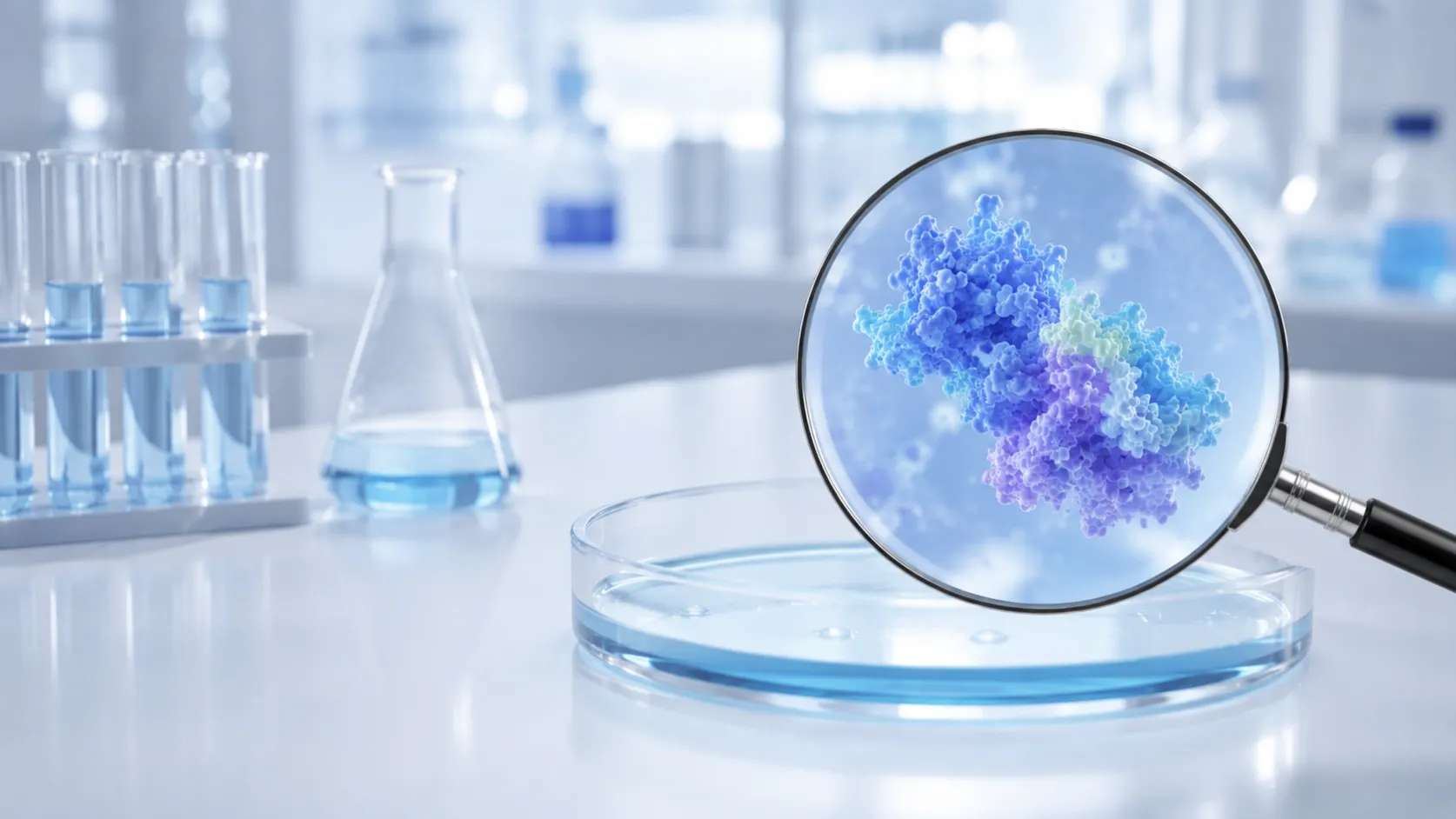
Protein Analysis Laboratory Equipment Overview
In the life science, biotechnology, and research industries, accurate protein analysis is a cornerstone of product quality and regulatory compliance. Protein-based products—from therapeutic monoclonal antibodies to nutritional supplements—rely on rigorous laboratory testing to verify concentration, purity, structural integrity, and biological activity. Without reliable protein analysis laboratory equipment, manufacturers risk product inconsistency, batch failures, and compromised safety.
This laboratory equipment guide connects common protein manufacturing and QC stages with the tests and instrument families used to evaluate concentration, purity, identity, aggregation, formulation condition, and stability. It is designed to help QC managers, R&D teams, and technical buyers decide which protein analysis tools are essential for routine testing and when more advanced analytical equipment is justified.
Quick answer: A practical protein analysis laboratory typically starts with UV-Vis spectrophotometry, a microplate reader, electrophoresis, a centrifuge, an analytical balance, and pH measurement. More advanced QC programs may add HPLC, dynamic light scattering, stability chambers, Karl Fischer titration, and mass spectrometry depending on the product, test method, sensitivity required, and stage of development.
Main Products and Applications
Protein analysis serves many industrial sectors where protein-based materials are developed or manufactured. Common product categories include:
- Therapeutic Proteins and Biologics – Monoclonal antibodies, recombinant proteins, vaccines, and gene therapy vectors.
- Nutritional Proteins – Protein isolates, concentrates, and hydrolysates for sports nutrition, clinical foods, and infant formula.
- Industrial Enzymes – Enzymes for food processing, detergents, textiles, and biofuels.
- Diagnostic Reagents – Purified proteins used in immunoassays, biosensors, and clinical test kits.
- Research-Grade Proteins – Cytokines, growth factors, and other biologically active molecules for laboratory studies.
Each product type demands specific quality attributes such as purity, potency, solubility, and stability, which must be verified through systematic protein analysis.
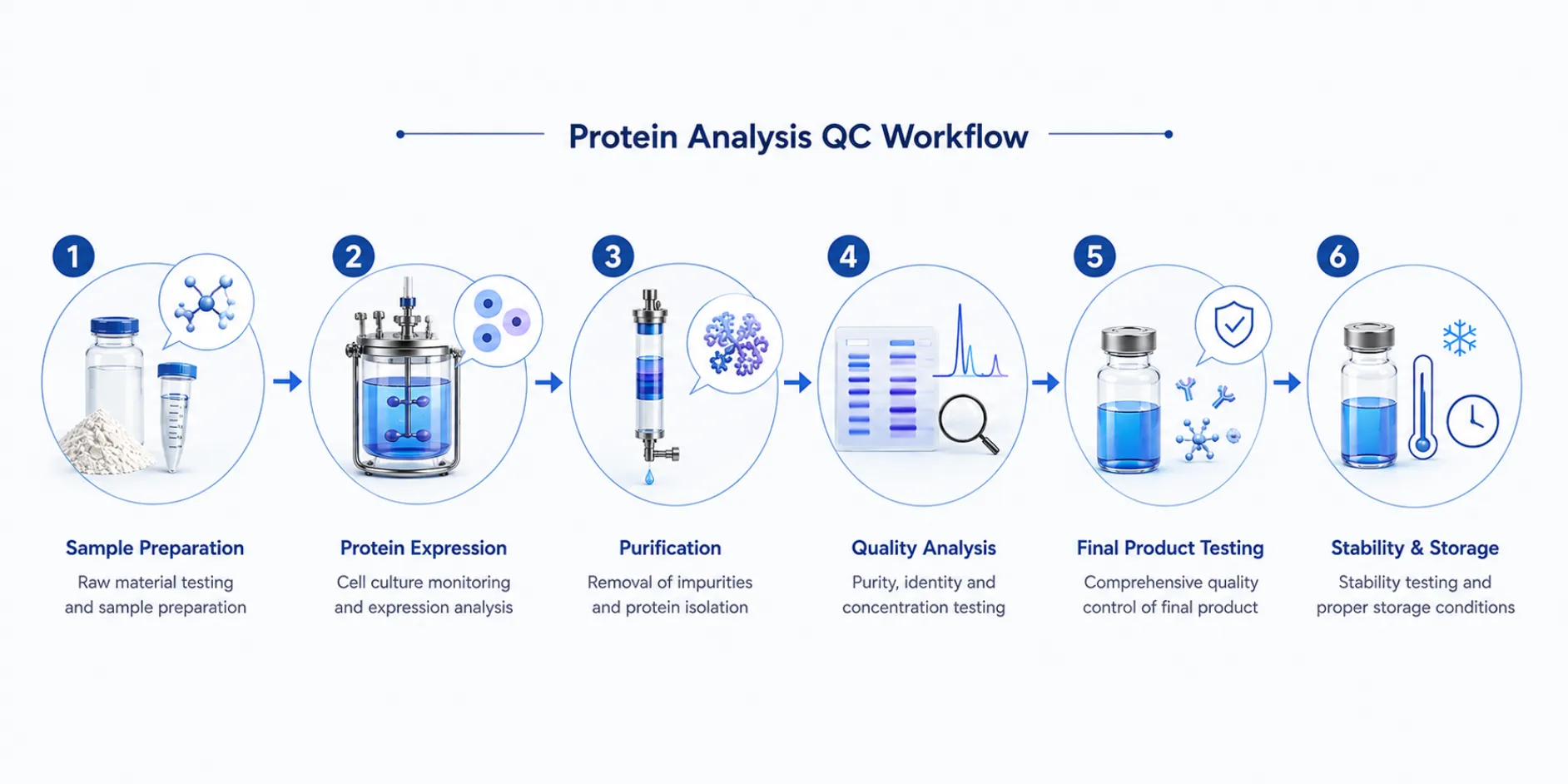
Protein Analysis Quality Control Workflow
A typical protein manufacturing process includes several stages where quality testing is critical. The following sections outline key workflow steps and the laboratory equipment needed at each.
Raw Material and Sample Preparation
Before processing, raw materials—whether cell culture media, biological tissues, or protein powders—must be tested for identity, potency, and contamination. Inadequate raw material quality can introduce impurities that affect downstream purification efficiency and final product safety. Key parameters include pH, moisture content, and microbiological loads.
Testing at this stage ensures that only qualified materials enter production, reducing the risk of batch rejection later. Sample preparation often involves homogenization, dilution, and filtration, requiring precise weighing and liquid handling.
Recommended laboratory equipment for this stage:
- Analytical Balance – Accurately weighs raw materials and reagents for sample preparation.
- pH Meter – Measures the acidity or alkalinity of buffers and solutions used in extraction.
- Moisture Analyzer – Determines water content in protein powders to ensure formulation accuracy.
- Autoclave or Sterilizer – Prepares sterile media and glassware to prevent microbial contamination.
- Homogenizer – Disrupts tissue or cell samples to release proteins for initial analysis.


Protein Expression and Fermentation Monitoring
For biotechnological protein production, monitoring cell growth and protein expression in bioreactors is essential. Parameters such as dissolved oxygen, nutrient levels, and cell density must be controlled to optimize yield and prevent metabolic stress that can lead to protein misfolding or aggregation. Off-line sampling and rapid testing help adjust fermentation conditions in real time.
Quality failures at this stage—like low expression levels or incorrect post-translational modifications—can render entire batches unusable. Immediate feedback from analytical instruments supports decisions on induction timing, temperature shifts, or nutrient feeding.
Recommended laboratory equipment for this stage:
- UV-Vis Spectrophotometer – Measures cell density (OD600) and crude protein concentration.
- Microplate Reader – Performs rapid colorimetric assays for protein titer and metabolite analysis.
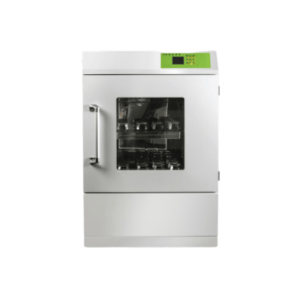
- Incubator Shaker – Generates controlled cultures for process development and quality testing.
- Centrifuge – Separates cells from culture broth for supernatant or pellet analysis.



Downstream Processing and Purification
After harvesting, proteins are purified through chromatography, filtration, or precipitation. The presence of host cell proteins, DNA, endotoxins, or degraded product fragments can compromise efficacy and safety. Rigorous in-process testing verifies that each purification step achieves the required clearance of impurities while maintaining protein integrity.
Analytical techniques such as HPLC and SDS-PAGE provide detailed profiles of purity and size variants. Real-time monitoring of UV absorbance at 280 nm during chromatography guides fraction collection, ensuring only high-purity peaks are pooled.
Recommended laboratory equipment for this stage:
- HPLC System – Separates and quantifies protein variants, aggregates, and impurities using size-exclusion, ion-exchange, or reversed-phase methods.
- Gel Electrophoresis Unit – Resolves proteins by molecular weight for qualitative purity assessment.
- Fraction Collector – Automates elution collection during preparative chromatography.
- Conductivity Meter – Monitors buffer salt concentrations for consistent elution conditions.
- Refrigerated Centrifuge – Handles temperature-sensitive samples during clarification steps.


Final Product Quality Testing
Before release, the final protein product must undergo comprehensive quality control to confirm identity, purity, concentration, potency, and safety. Testing often includes multiple orthogonal methods to ensure that the protein meets predefined specifications. For biopharmaceuticals, this stage is highly regulated and requires well-characterized reference standards.
Common release tests include protein concentration by UV-Vis or Bradford assay, purity by SEC-HPLC or CE-SDS, endotoxin by LAL assay, and biological activity by cell-based or immunoassay. Only results within specifications authorize batch disposition.
Recommended laboratory equipment for this stage:
- Spectrophotometer (UV-Vis) – Measures protein concentration at 280 nm, corrected for scatter.
- Microplate Reader – Runs ELISA, Bradford, or BCA assays for concentration and potency.
- Fluorescence Spectrometer – Detects intrinsic tryptophan fluorescence to assess folding and stability.
- pH Meter and Osmometer – Verify formulation buffers and tonicity of injectable products.
- Particulate Analyzer – Counts sub-visible particles in parenteral protein solutions.

Stability and Storage Testing
Protein products degrade over time through aggregation, oxidation, deamidation, or fragmentation. Accelerated and long-term stability studies under controlled conditions are used to support shelf-life evaluation and storage recommendations. Testing at multiple time points evaluates physical and chemical stability.
Stability-indicating methods must be sensitive enough to detect small changes early. Equipment capable of precise environmental control and high-resolution analysis is critical to predict product behavior under real-world conditions.
Recommended laboratory equipment for this stage:
- Stability Chamber – Maintains constant temperature and humidity for long-term or accelerated studies.
- HPLC System – Tracks degradation peaks and main peak purity over time.
- Dynamic Light Scattering (DLS) Instrument – Monitors aggregation by measuring particle size distribution.
- Karl Fischer Titrator – Determines residual moisture in lyophilized protein cakes.
- Visual Inspection Station – Enables manual inspection for color, clarity, and particulates.


Common Quality Control Challenges in Protein Manufacturing
Manufacturers of protein-based products frequently encounter technical obstacles that can impact quality and yield. Addressing these challenges requires robust laboratory methods and the right instrumentation:
- Protein Aggregation – Aggregates reduce efficacy and may trigger immunogenicity; detection requires size-sensitive techniques.
- Inconsistent Concentration Results – Variability in spectrophotometric readings due to interfering substances or improper blanking.
- Host Cell Protein (HCP) Contamination – Residual HCPs must be quantified by sensitive ELISA to ensure purification efficiency.
- Endotoxin Presence – Gram-negative bacterial endotoxins pose safety risks and require LAL testing for parenteral products.
- Method Transfer Difficulties – Scaling up analytical methods from R&D to QC while maintaining accuracy and precision.
- Equipment Calibration Drift – Instruments like spectrophotometers and HPLC detectors need frequent verification to avoid measurement errors.
Key Quality Control Tests for Protein Analysis
The table below maps typical quality challenges to recommended tests and equipment:
| Quality Challenge | Quality Control Test | Recommended Laboratory Equipment | Application |
|---|---|---|---|
| Protein aggregation | Size-exclusion HPLC (SEC-HPLC) | HPLC System with UV detector | Quantifies aggregates and fragments |
| Inaccurate protein concentration | Bradford or BCA assay | Microplate Reader | Rapid concentration measurement |
| Host cell protein impurities | HCP ELISA | Microplate Reader | Detects residual process impurities |
| Endotoxin contamination | LAL assay | Incubator, Plate Reader | Ensures pyrogen safety limits |
| Incorrect protein identity | Western blot or mass spectrometry | Gel Electrophoresis, Imager | Confirms target protein presence |
| Poor stability | Accelerated stability study | Stability Chamber, DLS | Monitors aggregation over time |
| Particulate matter | Light obscuration particle count | Particulate Analyzer | Counts sub-visible particles |
| Inconsistent post-translational modifications | Peptide mapping by LC-MS | HPLC System, Mass Spectrometer | Analyzes modifications and variants |
Laboratory Equipment Required for Protein Industry Quality Control
A well-equipped protein analysis laboratory integrates several instrument categories to cover the full range of physical, chemical, and biological testing. Core equipment includes spectrophotometers for concentration, HPLC systems for purity and stability, and microplate readers for ELISA-based assays and colorimetric tests. These instruments work together to provide a complete picture of protein quality from raw material to final product.
In addition to analytical instruments, supporting equipment such as analytical balances, pH meters, centrifuges, and stability chambers are essential for sample preparation and controlled testing. Proper selection depends on the specific protein product, required sensitivity, and throughput demands. The table below highlights key testing requirements and the corresponding equipment that manufacturers should consider.
| Testing Requirement | Laboratory Equipment | Why Manufacturers Need It |
|---|---|---|
| Protein concentration measurement | UV-Vis Spectrophotometer | Quick, accurate quantification for in-process and release testing |
| Purity analysis | HPLC System | Separates and quantifies product-related impurities and variants |
| Identity confirmation | Gel Electrophoresis Unit | Visual confirmation of molecular weight and purity patterns |
| Biological activity / potency | Microplate Reader | Runs ELISA or cell-based assays for functional testing |
| Aggregation monitoring | Dynamic Light Scattering Instrument | Detects early aggregation in solutions |
| Moisture content (lyophilized products) | Karl Fischer Titrator | Ensures low water content for product stability |
| Environmental stability | Stability Chamber | Simulates storage conditions for shelf-life studies |
| Sample preparation | Centrifuge, Analytical Balance | Essential for accurate sample processing |
Collectively, these instruments enable a practical and thorough quality control program that supports batch release, regulatory compliance, and continuous process improvement.
Basic Laboratory Setup for Protein Analysis Laboratories
The required instrumentation depends on the laboratory’s role—ranging from simple in-process checks to advanced characterization. The following table suggests typical equipment configurations.
| Laboratory Level | Recommended Equipment | Suitable For |
|---|---|---|
| Basic QC Laboratory | UV-Vis Spectrophotometer, Analytical Balance, pH Meter, Microplate Reader, Gel Electrophoresis Unit, Centrifuge | Routine concentration, purity by SDS-PAGE, and simple ELISA tests |
| Advanced QC Laboratory | All Basic plus: HPLC System, DLS Instrument, Stability Chamber, Karl Fischer Titrator | Full release testing including purity by HPLC, aggregation, and stability |
| Advanced Analysis Laboratory | All Advanced plus: Mass Spectrometer, Peptide Mapping System, Circular Dichroism Spectrometer | In-depth characterization, higher-order structure, and comparability studies |
How to Choose Laboratory Equipment for Protein Analysis
Selecting the right protein analysis instruments involves aligning technical specifications with operational needs. The following considerations guide manufacturers toward practical, cost-effective decisions.
Define the Testing Scope
Start by identifying the proteins to be analyzed, the expected concentration range, and the critical quality attributes relevant to the product. Therapeutic proteins may require detailed impurity and variant characterization, while nutritional proteins may place greater emphasis on routine concentration or total-protein measurements. Match the method and instrument category to the required sensitivity, selectivity, and type of information needed rather than choosing equipment only by analytical sophistication.
Evaluate Laboratory Workflow Requirements
Consider daily sample throughput, the number of operators, and their technical expertise. A high-volume QC lab may benefit from an automated microplate reader with software integration, while a small R&D team might prioritize flexible, manual systems. Assess laboratory space, environmental conditions (temperature, humidity), and the need for data connectivity to your existing LIMS.
Compare Long-Term Equipment Support
Beyond the initial purchase, factor in calibration requirements, maintenance schedules, consumable costs, and availability of spare parts. Reliable technical support and training resources are essential to minimize downtime. Companies like AELAB can help match your testing requirements with appropriate instrument categories, ensuring that you receive guidance on equipment that fits your laboratory workflow and quality objectives.
Match Equipment to the Decision You Need to Make
| Laboratory Decision | Typical Test Approach | Equipment Category | When It Adds Value |
|---|---|---|---|
| Is protein concentration within the expected range? | UV absorbance or colorimetric assay | UV-Vis Spectrophotometer or Microplate Reader | Routine in-process checks and concentration testing |
| Are major size variants or aggregates present? | Size-based separation or particle-size assessment | HPLC System or DLS Instrument | Purity, aggregation, and stability investigations |
| Does the sample show the expected protein band pattern? | Gel electrophoresis | Gel Electrophoresis Unit and Imager | Identity-supporting and qualitative purity checks |
| Does the protein retain measurable biological function? | Immunoassay or suitable activity assay | Microplate Reader and assay-specific supporting equipment | Potency or functional testing where the method is appropriate |
| Is the product changing during storage? | Stability-indicating analytical testing | Stability Chamber with appropriate analytical instruments | Comparing results across defined storage time points |
Who Needs Laboratory Testing Solutions for This Industry?
- Biopharmaceutical Manufacturers – Companies developing protein therapeutics, vaccines, or cell therapies that require strict QC.
- Food and Beverage Producers – Firms making protein supplements, functional foods, or infant formula that must verify nutritional claims.
- Industrial Enzyme Producers – Manufacturers needing to measure enzyme activity and purity for consistent product performance.
- Contract Testing Laboratories – Service providers that run protein analysis for multiple clients and need versatile, high-throughput equipment.
- Academic Core Facilities – Shared research facilities supporting diverse protein characterization needs for multiple research groups.
Frequently Asked Questions
What is the most commonly used equipment for protein concentration measurement?
A UV-Vis spectrophotometer is the workhorse for measuring protein concentration via absorbance at 280 nm. For samples with interfering substances, colorimetric assays like Bradford or BCA read on a microplate reader are preferred.
How do I select the right HPLC system for protein purity analysis?
Choose a system based on the separation mode required: size-exclusion for aggregates, ion-exchange for charge variants, or reversed-phase for peptide mapping. Ensure the detector sensitivity matches your expected impurity levels.
Why is a stability chamber necessary for protein products?
Stability chambers provide controlled temperature and humidity conditions to simulate long-term storage and accelerate degradation studies. This data is essential to define shelf life and storage instructions.
How can I reduce variability in protein analysis results?
Standardize protocols, calibrate instruments regularly, use validated analytical methods, and train operators thoroughly. Implementing system suitability tests before each run also helps control variability.
Conclusion
Effective protein analysis depends on matching each quality question to an appropriate method and instrument. A basic laboratory can cover routine concentration, sample preparation, electrophoresis, and assay work, while HPLC, DLS, stability chambers, Karl Fischer titration, or mass spectrometry can be added when the product and analytical objective require deeper characterization. Building the laboratory around defined tests, sample throughput, and decision needs helps avoid both capability gaps and unnecessary equipment complexity.
Laboratory Equipment Solutions for Protein Analysis
AELAB understands that protein manufacturers face diverse testing requirements depending on their product type and production scale. Whether you need a basic UV-Vis spectrophotometer for routine concentration checks or a complete HPLC setup for advanced purity analysis, AELAB can help translate your testing needs into practical equipment categories. By analyzing your sample types, critical quality attributes, and throughput demands, we can narrow down the instrument configurations that align with your operational goals.
To receive a tailored recommendation, share details about your protein products, required test methods, expected testing volume, and any existing laboratory equipment. This information allows us to suggest a configuration that balances performance, footprint, and budget—helping you establish or upgrade your protein analysis laboratory efficiently.