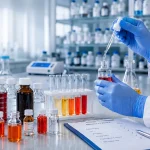
Raw Material Testing in Pharmaceutical Manufacturing Overview
Raw material testing in pharmaceutical manufacturing verifies that incoming APIs, excipients, solvents, process materials, and relevant packaging components meet defined quality requirements before they are approved for use. Depending on the material and specification, testing may include identity, purity, assay, moisture, physical properties, microbiological quality, residual solvents, or trace-element analysis.
For QC laboratories, the core requirement is to match each material specification with an appropriate test method and laboratory instrument. Typical equipment families include FTIR and UV-Vis spectrometers for identity testing, HPLC and GC systems for assay and impurity analysis, Karl Fischer titrators and moisture analyzers for water determination, particle size analyzers for powder characterization, and microbiology equipment for materials subject to microbial limits.
A robust raw material testing program helps manufacturers verify supplier documentation, detect unsuitable or contaminated materials, and determine whether incoming materials are suitable for formulation and processing. The exact testing scope should be based on the material type, applicable pharmacopeial monograph or approved internal specification, intended use, and the manufacturer’s quality procedures.
Main Products and Applications
Pharmaceutical raw material testing covers a broad spectrum of materials that serve as building blocks for finished dosage forms. The main categories include:
- Active Pharmaceutical Ingredients (APIs) – The therapeutically active components that produce the intended medical effect.
- Excipients – Inactive substances such as binders, fillers, disintegrants, lubricants, and preservatives that aid in drug formulation and delivery.
- Packaging Materials – Primary materials such as bottles and blister packs and secondary materials such as cartons and labels that protect, contain, or identify the product.
- Process Aids – Solvents, reagents, water, cleaning agents, and other processing materials used during manufacturing.
- Intermediate and In-Process Materials – Partially processed materials that are later used for formulation or synthesis.
Each material type has different critical quality attributes. The required tests should therefore be determined from the applicable pharmacopeial monograph, approved specification, intended application, and internal quality procedures rather than applying the same test package to every incoming material.

Raw Material Testing Quality Control Workflow
Incoming Material Receiving and Sampling
When raw materials arrive at the pharmaceutical facility, receiving personnel first verify that the shipment corresponds with the required documentation and that containers are intact, properly labeled, and free from visible damage. Receiving inspection may include seal checks, documentation review, and evaluation of temperature records for materials with defined transport conditions.
Representative samples are then collected according to the manufacturer’s approved sampling procedure. Sampling is a critical part of raw material QC because laboratory results are meaningful only when the sample adequately represents the material being evaluated. Sampling procedures should also control contamination, mix-ups, and sample deterioration during collection, subdivision, storage, and transport.
Recommended laboratory equipment for this stage:
- Analytical Balance – For precise weighing of sample portions to be submitted for testing.
- Sample Splitters or Rifflers – To reduce bulk powder samples while maintaining representative portions where the sampling procedure permits their use.
- Laminar Flow Hood – Provides a controlled clean work area for sampling activities that require protection from environmental contamination.
- Borescope or Container Inspection Mirror – Enables inspection of hard-to-see areas inside drums or large containers.
- Temperature Data Loggers or Indicators – Supports review of transport conditions for temperature-sensitive materials.


Identity Verification
Once samples are received by the laboratory, identity testing confirms that the material corresponds to the substance stated on its label and documentation. This is a fundamental control against material mix-ups, incorrect deliveries, and other supply-chain errors.
The appropriate identity method depends on the material and its specification. FTIR spectroscopy can compare a sample spectrum with an appropriate reference, while UV-Vis spectroscopy, melting behavior, optical rotation, refractive index, pH, or other specified tests may provide additional identity information for suitable materials. Identity acceptance should be based on the approved test method and specification rather than on a single universal technique.
Recommended laboratory equipment for this stage:
- Fourier-Transform Infrared Spectrometer (FTIR) – Obtains molecular absorption spectra for material identification where infrared spectroscopy is an appropriate specified method.
- UV-Vis Spectrophotometer – Measures ultraviolet and visible absorption characteristics for materials and methods where UV-Vis analysis is applicable.
- Melting Point Apparatus – Determines the melting range of suitable solid materials as an identification or characterization parameter.
- pH Meter – Measures acidity or alkalinity of aqueous samples and materials where pH forms part of the specification.
- Polarimeter – Measures optical rotation of optically active substances when specified.
- Refractometer – Measures refractive index for liquids and other materials where refractive index is a specified quality parameter.


Purity and Impurity Profiling
Purity testing evaluates whether a raw material contains acceptable levels of specified impurities, degradation products, residual solvents, water, elemental contaminants, or other unwanted components relevant to its specification. The required impurity profile differs substantially between APIs, excipients, solvents, and other pharmaceutical materials.
High-performance liquid chromatography (HPLC) is widely used for related-substance and impurity methods involving non-volatile compounds, while gas chromatography (GC) is commonly applied to volatile components such as residual solvents. Karl Fischer titration provides specific water determination for appropriate materials, while elemental analysis may require techniques such as ICP-MS when justified by the applicable method and required analytical performance.
Recommended laboratory equipment for this stage:
- High-Performance Liquid Chromatograph (HPLC) System – Separates and quantifies components for related-substance, impurity, and purity methods where liquid chromatography is specified.
- Gas Chromatograph (GC) System – Analyzes volatile components and residual solvents using an appropriate validated or compendial method.
- Karl Fischer Titrator – Determines water content in materials for which Karl Fischer analysis is appropriate.
- Inductively Coupled Plasma Mass Spectrometer (ICP-MS) – Supports sensitive multi-element analysis where trace elemental determination is required.
- Potentiometric Titrator – Performs quantitative titrations for materials and methods suited to potentiometric endpoint determination.
- Spectrofluorometer – Measures fluorescence for analytical methods involving fluorescent compounds or derivatives.


Physical Property Testing
Physical characteristics can influence how pharmaceutical raw materials behave during storage, dispensing, blending, granulation, compression, filling, and other manufacturing operations. The relevant properties depend on the material and dosage form.
For powders, particle size distribution, bulk or tapped density, flow behavior, and morphology can affect processing consistency. For liquid raw materials, viscosity, density, refractive index, or other physical properties may be important. Monitoring these attributes helps manufacturers identify material variability that could affect downstream processing or finished-product performance.
Recommended laboratory equipment for this stage:
- Laser Diffraction Particle Size Analyzer – Determines particle size distribution for powders and dispersions where particle size is a critical quality or processing attribute.
- Tap Density Tester – Measures tapped density and supports evaluation of powder packing and related flow characteristics.
- Powder Flow Tester or Angle of Repose Apparatus – Assesses powder flow behavior relevant to handling, filling, and blending operations.
- Viscometer – Measures viscosity of liquid or semi-liquid raw materials where rheological behavior affects processing or specification compliance.
- Polarizing Microscope – Supports examination of crystal morphology, particles, and other microscopic characteristics.
- Moisture Analyzer – Provides rapid loss-on-drying measurements where this method is appropriate for routine moisture evaluation.


Potency and Assay
Assay determines the amount of the principal active or functional component in a raw material. For APIs, accurate assay results are important because the measured content may be used in material release decisions and formulation calculations. Excipients and other functional materials may also require quantitative assays depending on their specification.
The appropriate technique depends on the substance and approved method. HPLC with a suitable detector, UV-Vis spectrophotometry, and potentiometric titration are common quantitative approaches. Water or loss-on-drying results may also be required when the specification expresses assay on a dried or anhydrous basis.
Recommended laboratory equipment for this stage:
- High-Performance Liquid Chromatograph (HPLC) System – Provides quantitative separation and measurement for APIs and other materials where an HPLC assay is specified.
- UV-Vis Spectrophotometer – Supports quantitative assays for suitable substances when the analytical method provides adequate selectivity.
- Potentiometric Titrator – Provides automated endpoint determination for appropriate acid-base, redox, precipitation, or other titration methods.
- Karl Fischer Titrator – Determines water when moisture correction is required for reporting an assay result on the specified basis.
- Analytical Balance – Provides accurate weighing for sample preparation, reference-standard preparation, and quantitative analysis.
Microbiological Examination
Microbiological testing is required for raw materials whose specifications include microbial quality attributes. Depending on the material and intended use, testing may include total aerobic microbial count (TAMC), total yeast and mold count (TYMC), tests for specified microorganisms, or other microbiological examinations defined by the applicable specification.
Materials intended for applications with endotoxin requirements may also require bacterial endotoxin testing using an appropriate method. The microbiological testing program should therefore be based on the material, its intended use, applicable specification, and the contamination risks that need to be controlled.
Recommended laboratory equipment for this stage:
- Laminar Airflow Cabinet – Provides a controlled clean work area for microbiological sample and media handling where appropriate.
- Autoclave – Sterilizes suitable media, glassware, equipment, and laboratory waste.
- Incubator – Maintains controlled temperature conditions for microbiological incubation.
- Colony Counter – Supports enumeration of colonies on culture plates.
- Endotoxin Test System (LAL) – Supports bacterial endotoxin testing using Limulus Amebocyte Lysate-based methods where applicable.
- Microscope – Supports morphological examination and selected microbiological laboratory procedures.


Common Quality Control Challenges in Pharmaceuticals
- Sourcing Variability: Different suppliers or batches can introduce variations in chemical or physical properties, making supplier qualification and incoming quality control important.
- Trace Impurities and Cross-Contamination: Low-level impurities or contamination may require selective analytical methods and appropriate detection capability.
- Stability and Degradation During Transport: Temperature, humidity, light, or other transport conditions can affect sensitive raw materials before they reach the manufacturing facility.
- Changing Specifications and Compendial Requirements: Laboratories need controlled procedures for reviewing applicable monographs, specifications, and analytical methods as requirements change.
- Packaging Integrity Issues: Damaged containers, seals, or unsuitable storage conditions can compromise material quality before use.
- Global Supply Chain Risks: Complex supply chains increase the importance of supplier controls, documentation review, traceability, and reliable identity testing.
Key Quality Control Tests for Raw Material Testing
| Quality Challenge | Quality Control Test | Recommended Laboratory Equipment | Application |
|---|---|---|---|
| Wrong material identity | Infrared spectroscopy | FTIR Spectrometer | Compare the material with the applicable reference or identification criteria |
| Unknown or unacceptable impurity profile | Related substances by HPLC | HPLC System with suitable detector | Separate and quantify relevant organic impurities |
| High moisture content | Loss on drying / Karl Fischer titration | Moisture Analyzer / Karl Fischer Titrator | Determine whether moisture or water content meets the material specification |
| Elemental contamination | Trace-element analysis | ICP-MS | Quantify relevant elements when required by the analytical method |
| Incorrect particle size | Particle size distribution | Laser Diffraction Analyzer | Verify particle size characteristics relevant to formulation or processing |
| Incorrect assay | High-performance liquid chromatography assay | HPLC System with suitable detector | Determine the content of the specified component |
| Microbial contamination | Microbial enumeration and specified microorganism testing | Laminar flow hood, Incubator, Colony Counter | Evaluate microbiological quality against the applicable specification |
| Residual solvents | Gas chromatography | GC System with suitable detector | Determine relevant volatile organic components |
Laboratory Equipment Required for Pharmaceuticals Quality Control
A pharmaceutical raw material testing laboratory normally combines physical testing, spectroscopy, chromatography, titration, and—where required—microbiological and elemental-analysis capabilities. The correct configuration should be built from the actual material specifications rather than from a generic instrument list.
Routine physical and general laboratory equipment can include analytical balances, pH meters, moisture analyzers, melting point apparatus, and instruments for powder or liquid characterization. Spectroscopic instruments such as FTIR and UV-Vis systems support identity and quantitative methods. Chromatographic systems such as HPLC and GC are used when separation is required for assay, related substances, residual solvents, or other multi-component analyses. Karl Fischer and potentiometric titrators support water determination and quantitative chemical methods.
Microbiological laboratories may require controlled work areas, autoclaves, incubators, colony-counting equipment, and endotoxin testing systems depending on the raw materials and specifications handled. Advanced laboratories may add ICP-MS for elemental analysis, LC-MS for more complex analytical investigations, NIR spectroscopy for suitable rapid-screening applications, and specialized powder-characterization instruments.
The key purchasing question is therefore not simply which instruments are commonly found in a pharmaceutical laboratory, but which analytical methods the laboratory must perform and what level of performance, throughput, automation, and support those methods require.
| Testing Requirement | Laboratory Equipment | Why Manufacturers Need It |
|---|---|---|
| Identity confirmation | FTIR Spectrometer | Supports confirmation that incoming material corresponds to its specified identity |
| Purity and impurity analysis | HPLC System | Separates and quantifies components for applicable purity and related-substance methods |
| Residual solvent monitoring | Gas Chromatograph | Analyzes volatile components when residual-solvent testing is required |
| Water content determination | Karl Fischer Titrator | Provides specific water determination for suitable raw materials |
| Particle size distribution | Laser Diffraction Analyzer | Characterizes particle size when it affects processing or material performance |
| Trace-element analysis | ICP-MS | Provides sensitive elemental analysis when required by the testing program |
| Microbiological quality | Incubator, Laminar Hood, Autoclave | Supports microbiological testing and controlled sample or media handling |
| Assay/Potency | HPLC or UV-Vis Spectrophotometer | Provides quantitative measurement using the method specified for the material |
A practical equipment plan should distinguish between instruments needed for routine release testing and advanced systems justified by the material portfolio or analytical workload. This helps manufacturers avoid both capability gaps and unnecessary investment.
Basic Laboratory Setup for Pharmaceuticals Manufacturers
The appropriate laboratory level depends on which tests are performed in-house and which are outsourced. A smaller facility may perform routine physical and basic chemical testing internally while sending complex chromatographic, elemental, or specialized microbiological analyses to a qualified external laboratory. Facilities handling a broader material portfolio generally require more analytical capability in-house.
| Laboratory Level | Recommended Equipment | Suitable For |
|---|---|---|
| Basic QC Laboratory | Analytical balance, pH meter, moisture analyzer, melting point apparatus, UV-Vis spectrophotometer, basic titrator, laminar flow hood, incubator, autoclave | Facilities performing selected routine identity, physical, moisture, chemical, and microbiological tests in-house |
| Advanced QC Laboratory | Basic equipment plus HPLC, GC, FTIR, Karl Fischer titrator, laser diffraction particle size analyzer, endotoxin test system | Facilities performing a broader range of compendial or internal raw material methods and handling multiple material types |
| Advanced Analysis Laboratory | All of the above plus ICP-MS, LC-MS, NIR spectrometer, powder flow tester, polarizing microscope | High-throughput, R&D, method-development, investigation, or specialized characterization laboratories where these analytical capabilities are justified |
How to Choose Laboratory Equipment for Raw Material Testing
Selecting laboratory equipment for pharmaceutical raw material testing starts with the methods the laboratory must perform. Instrument selection should then consider analytical performance, sample workload, automation, operator requirements, utilities, maintenance, and long-term support.
Define the Testing Scope
Start by listing the raw materials handled by the facility and the approved specifications for each one. Map every required test—such as identity, assay, related substances, water content, particle size, residual solvents, or microbiological examination—to its analytical method.
This creates a direct material → test → method → instrument map. It also identifies which capabilities must be available internally and which specialized analyses may be suitable for outsourcing.
For advanced analytical requirements, select instruments according to the performance demanded by the approved method rather than choosing equipment solely because it offers greater sensitivity or more features. A routine titration method, for example, does not automatically justify chromatography, while complex impurity analysis may require separation techniques that simpler instruments cannot provide.
Evaluate Laboratory Workflow Requirements
Consider how many raw material lots and samples the laboratory expects to process and how quickly release decisions are required. Higher-throughput laboratories may benefit from autosamplers, automated titration, efficient sample preparation, and laboratory workflows that reduce repeated manual operations.
Method complexity and operator training should also influence equipment selection. Routine QC methods generally benefit from robust, repeatable operation, while method development and investigative analysis may require more flexible instrument configurations and experienced analysts.
Laboratory infrastructure must be assessed before purchase as well. Depending on the equipment and method, requirements can include bench space, ventilation, gases, purified water, stable electrical supply, controlled environmental conditions, waste handling, and suitable sample-preparation areas.
Compare Long-Term Equipment Support
Purchase price is only one part of laboratory equipment selection. Manufacturers should also consider installation, training, consumables, calibration, preventive maintenance, spare-parts availability, software requirements, service response, and the expected operating life of the instrument.
A practical selection process compares these factors against the laboratory’s actual test methods and expected workload. AELAB can help manufacturers review their sample types, required methods, throughput, and existing laboratory capabilities to identify suitable equipment categories without unnecessarily expanding the laboratory configuration.
Who Needs Laboratory Testing Solutions for This Industry?
- Pharmaceutical Manufacturers – Producers that need to verify incoming APIs, excipients, process materials, and other materials against approved specifications.
- Biopharmaceutical Companies – Organizations handling biological or specialized raw materials that may require additional analytical and microbiological controls.
- Contract Manufacturing Organizations (CMOs) – Facilities manufacturing products for multiple customers and managing material-testing requirements across different products and specifications.
- R&D and Quality Control Laboratories – Laboratories responsible for analytical method development, material characterization, investigation, or routine material release testing.
- Quality and Compliance Teams – Teams responsible for ensuring that sampling, testing, documentation, equipment control, and material-release procedures follow applicable quality requirements.
Frequently Asked Questions
What are the most common tests performed on pharmaceutical raw materials?
Common pharmaceutical raw material tests include identity, assay or potency, purity and related substances, water or moisture content, physical-property testing, and—where applicable—residual-solvent, elemental, and microbiological testing. The exact test package depends on the material, its intended use, and the applicable pharmacopeial monograph or approved internal specification.
How often should raw material testing equipment be calibrated?
There is no single calibration interval that applies to all pharmaceutical laboratory instruments. Calibration and verification frequencies should be defined according to the instrument, its use, manufacturer guidance, applicable procedures, risk, and the laboratory’s quality system. Instruments may also require routine performance checks or system-suitability activities associated with specific analytical methods.
Can one HPLC system be used to test all raw materials?
No single HPLC configuration should be assumed to cover every pharmaceutical raw material method. Different materials can require different columns, mobile phases, detectors, sample-preparation procedures, operating conditions, or even different analytical techniques. The HPLC configuration should therefore be selected against the actual methods the laboratory needs to perform.
What is the role of pharmacopeias in raw material testing?
Pharmacopeias such as USP, EP, and JP contain monographs and general methods that can define identification tests, assays, impurity tests, and other quality requirements for applicable materials. Manufacturers must determine which monographs, specifications, methods, and acceptance criteria apply to the materials and products they handle.
Conclusion
An effective pharmaceutical raw material testing program begins with a clear map of each material, its specification, required tests, analytical methods, and laboratory equipment. Identity testing, purity and impurity analysis, assay, moisture determination, physical characterization, and microbiological examination each address different material risks, so the required laboratory configuration should be built around the actual raw material portfolio rather than a generic equipment checklist.
For manufacturers planning or upgrading a QC laboratory, the most useful approach is to separate essential routine-release capabilities from advanced analytical requirements. This makes it easier to prioritize investment, plan laboratory infrastructure, define training and maintenance needs, and decide which specialized tests should be performed internally or externally.
Laboratory Equipment Solutions for Pharmaceuticals
AELAB works with pharmaceutical manufacturers planning new raw material testing laboratories or upgrading existing QC capabilities. Equipment selection can be based on the samples being tested, required analytical methods, expected sample volume, existing instruments, laboratory infrastructure, and the level of testing that needs to remain in-house.
When planning a laboratory configuration, prepare a list of your raw materials, required tests or methods, expected daily or monthly sample workload, existing laboratory equipment, and any current testing bottlenecks. This information provides a practical basis for comparing instrument categories and developing a laboratory configuration aligned with the actual QC workflow.