Laboratory Equipment for Surfactant Manufacturing Quality Control Overview
Surfactants—surface-active agents—are essential ingredients in detergents, personal care products, industrial cleaners, and agricultural formulations. Their performance depends on precise molecular structures, consistent composition, and freedom from contaminants that could compromise end-product quality. In surfactant manufacturing, quality control (QC) is not optional; it is a production necessity that directly impacts functionality, stability, and regulatory compliance. Laboratory equipment plays a central role in verifying that each batch meets chemical, physical, and application-specific specifications before release.
Quality control in surfactant production spans the entire manufacturing chain, from incoming raw materials and in-process intermediates to finished products. Without systematic testing, manufacturers risk producing surfactants with incorrect active content, poor foaming properties, unstable emulsions, or hazardous levels of by-products. By integrating the right laboratory instruments, QC managers can detect deviations early, adjust process parameters, and ensure that every shipment delivers the expected performance.
In practical terms, a surfactant QC laboratory usually needs to cover four core test groups: composition and active content, moisture and basic physicochemical properties, impurity control, and application performance. Basic laboratories can handle routine release tests with titration, pH, moisture, viscosity, color, density, and refractive-index measurements. Chromatography, surface science instruments, rheology, and rapid spectroscopic tools become more important when product complexity, impurity control, troubleshooting, or R&D demands increase.
Main Products and Applications
Surfactant manufacturing facilities produce a wide variety of products that serve as key ingredients in countless formulations. Common surfactant types and their applications include:
- Anionic surfactants (e.g., linear alkylbenzene sulfonates, sodium lauryl sulfate) – used in laundry detergents, dishwashing liquids, and foaming agents.
- Nonionic surfactants (e.g., alcohol ethoxylates, alkyl polyglucosides) – employed in hard surface cleaners, textile processing, and personal care for mildness and wetting.
- Cationic surfactants (e.g., quaternary ammonium compounds) – serve as fabric softeners, antistatic agents, and industrial biocides.
- Amphoteric surfactants (e.g., cocamidopropyl betaine) – used in mild shampoos, baby products, and personal care for their gentle cleansing and foam boosting.
- Silicone surfactants – important for polyurethane foam manufacturing, agricultural adjuvants, and cosmetics for spreading and emulsification.
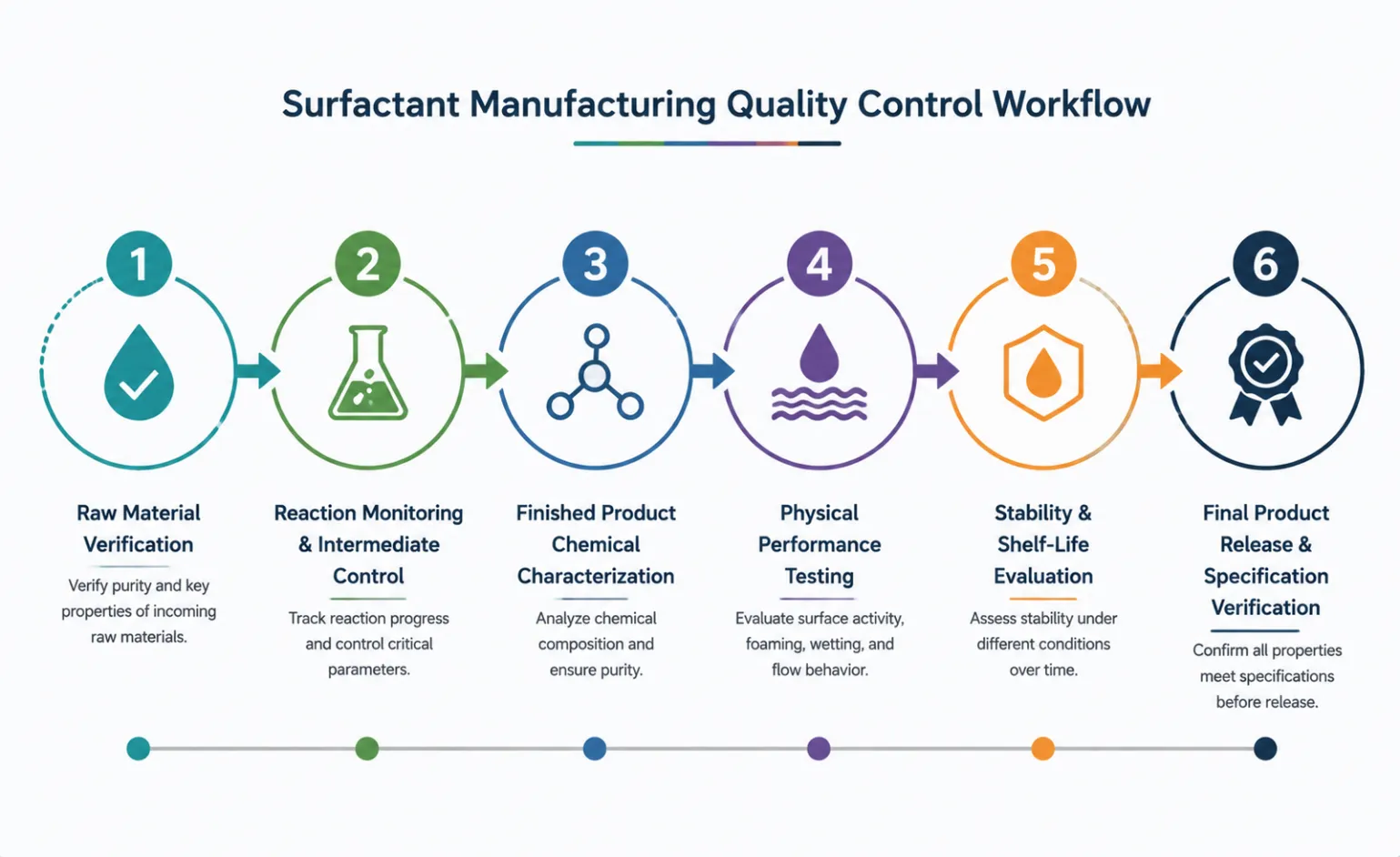
Surfactant Manufacturing Quality Control Workflow
1. Raw Material Verification
Quality begins with the raw materials: fatty alcohols, ethylene oxide, linear alkylbenzene, amines, and other feedstocks. Inconsistent raw materials can lead to off-spec surfactant batches with changed chain length distribution, unreacted contaminants, or color issues. QC must confirm the identity, purity, and key properties of incoming materials before they enter production. Gas chromatography (GC), wet chemistry assays, and physical property measurements are common at this stage.
By verifying raw material quality early, manufacturers prevent costly reprocessing and ensure that the ratio of reactants in batch recipes remains accurate. This reduces variability in the resulting surfactants and supports consistent product performance.
Recommended laboratory equipment for this stage:
- Gas Chromatograph – Identifies fatty alcohol chain lengths, residual solvents, and purity of organic raw materials.
- Karl Fischer Titrator – Measures moisture content, which can interfere with ethoxylation or sulfation reactions.
- pH Meter – Checks acidity or alkalinity of amine blends or acidic feedstock.
- Analytical Balance – Provides precise weighing for sample preparation and titer determination.
- Refractometer – Quick verification of refractive index for liquid raw materials, indicating purity.
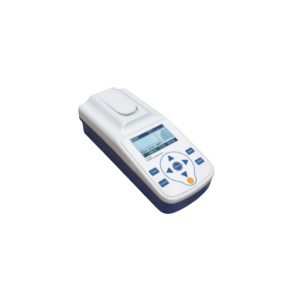
- Colorimeter or Spectrophotometer – Assesses color of raw materials (APHA/Pt-Co scale) to avoid color carryover into finished surfactant.



2. Reaction Monitoring and Intermediate Control
During surfactant synthesis—whether ethoxylation, sulfation, quaternization, or condensation—QC must track reaction progress to prevent under- or over-processing. For example, in ethoxylation, an incorrect polymerization degree alters the hydrophilic-lipophilic balance (HLB) and performance. Measuring hydroxyl value, acid value, amine value, or free alkalinity in real time allows operators to terminate reactions at the target endpoint, maintaining product consistency.
Failure to monitor intermediates often leads to batch-to-batch variation in foaming, detergency, or compatibility. In-line and off-line analytical instruments provide the data needed to make immediate adjustments.
Recommended laboratory equipment for this stage:
- Titrator (Potentiometric or Automatic) – Determines hydroxyl value, acid value, or amine value, essential for reaction endpoint control.
- Viscometer (Rotational) – Monitors viscosity changes that indicate molecular weight build-up.
- Near-Infrared (NIR) Analyzer – Fast, non-destructive measurement of hydroxyl number, water content, or EO chain length in process samples.
- pH Meter – Checks pH during neutralization or quaternization steps.
- Density Meter – Tracks density shifts that correlate with conversion.


3. Finished Product Chemical Characterization
After synthesis and any post-treatment (bleaching, neutralization, dilution), the finished surfactant must be characterized for active content, impurities, and key chemical parameters. Residual unreacted species, process by-products, or inorganic salts can undermine performance and product consistency. The analytical method should be selected for the specific surfactant chemistry and target analyte; chromatography and validated titration methods are commonly used for composition, active-content, and impurity measurements. Achieving the correct active content is critical for customers who formulate precise end-use products.
Where a product specification or applicable requirement sets limits for residuals or contaminants, chemical characterization provides the data needed to verify conformity before release.
Recommended laboratory equipment for this stage:
- High-Performance Liquid Chromatograph (HPLC) – Supports separation and quantification of suitable surfactant components, homologues, or nonionic adducts when an appropriate method is available.
- Total Organic Carbon (TOC) Analyzer – Useful for selected contamination, cleaning-validation, or water-quality applications where total organic carbon is a relevant control parameter.
- Ion Chromatograph – Measures inorganic salts (sulfate, chloride) that affect viscosity and cloud point.
- UV-Vis Spectrophotometer – Quantifies color, UV-active impurities, or specific surfactants via derivatization.
- Titrator (various modes) – Anionic surfactant content by two-phase titration; cationic surfactant content via potentiometric titration.
- Karl Fischer Titrator – Water content in finished surfactant pastes or liquids.


4. Physical Performance Testing
Surfactant performance is not defined solely by chemistry; physical properties such as surface tension, wetting ability, foam generation, and emulsification directly influence customer satisfaction. Inadequate surface activity may require higher dosages, increasing cost and environmental load. Standard tests like surface tension measurement (Du Noüy ring or Wilhelmy plate), Ross–Miles foam height, and contact angle analysis provide quantitative performance data that formulators rely on.
These tests help manufacturers verify that product modifications or scale-up do not inadvertently degrade performance. They also support R&D in developing new surfactant grades for specific applications.
Recommended laboratory equipment for this stage:
- Surface Tensiometer – Measures equilibrium and dynamic surface tension using plate or ring methods.
- Foam Analyzer (e.g., Ross–Miles apparatus) – Quantifies foam height and stability, key for detergency and personal care.
- Contact Angle Goniometer – Assesses wetting ability on various substrates, important for industrial cleaners.
- Dynamic Foam Analyzer – Monitors foam behavior over time under controlled conditions.
- Emulsification Test Apparatus – Bench-top homogenizer with evaluation protocols for emulsion stability.
- Viscometer – Measures flow behavior at different shear rates, affecting handling and formulation.
5. Stability and Shelf-Life Evaluation
Surfactants must remain homogeneous, free-flowing, and chemically stable over their intended shelf life. Phase separation, hydrolysis, discoloration, or microbial contamination can lead to customer complaints and product returns. Accelerated stability testing under controlled temperature and humidity conditions predicts long-term behavior and identifies formulation weaknesses early.
Stability studies typically involve storing samples at various temperatures (e.g., 4°C, 25°C, 40°C) and periodically retesting physical and chemical properties. This data is essential for setting proper storage recommendations and expiration dates.
Recommended laboratory equipment for this stage:
- Stability Chamber – Provides controlled temperature and humidity for long-term and accelerated stability testing.
- Laboratory Oven – Used for elevated temperature aging studies.
- Refrigerated Incubator – Conducts cold-temperature stability and freeze-thaw tests.
- Microbiological Incubator – Supports microbial challenge tests or preservation efficacy tests.
- Viscometer – Repeated viscosity checks to monitor degradation.


6. Final Product Release and Specification Verification
Before shipment, every batch must be tested against the complete product specification. This often involves a combination of the above tests, plus additional checks like color, odor, clarity, and density. A final review of the analytical data against internal limits or agreed customer specifications determines batch acceptance. Quick, reliable test methods are crucial to avoid holding inventory and to ensure just-in-time delivery.
Documenting all release tests with traceable instruments also supports ISO 9001 quality management and customer audits, reinforcing trust in the manufacturer’s consistency.
Recommended laboratory equipment for this stage:
- Analytical Balance – For density determination and sample preparation.
- pH Meter – Final pH check to specification.
- Colorimeter – APHA color or Gardner color assessment.
- Turbidity Meter – Clarity measurement for liquid surfactants.
- Abbe Refractometer – Rapid refractive index verification when correlated to composition.
- Density Meter – Confirms product density for trade and formulation calculations.

Common Quality Control Challenges in Surfactant Manufacturing
- Variation in raw material purity and composition leads to inconsistent surfactant performance.
- Incomplete reactions leave unreacted toxic monomers (e.g., ethylene oxide) or create undesirable by-products.
- Batch-to-batch differences in active content force customers to over- or under-dose in formulations.
- Color and odor problems arise from oxidation or poor process control, affecting market acceptance.
- Inadequate foam or wetting performance due to incorrect molecular structure or impurities.
- Stability issues such as hydrolysis or phase separation occur during storage, especially under temperature extremes.
Key Quality Control Tests for Surfactant Manufacturing
| Quality Challenge | Quality Control Test | Recommended Laboratory Equipment | Application |
|---|---|---|---|
| Uncertain active surfactant content | Titration (two-phase, potentiometric) | Automatic Titrator | Quantification of anionic or cationic actives |
| High levels of residual raw materials | Chromatographic impurity profiling | HPLC or GC | Detection of unreacted feedstocks |
| Process-specific trace by-products | Validated chromatographic or dedicated trace method | Appropriate chromatographic system | Verification against the applicable product specification or requirement |
| Poor foaming performance | Ross–Miles foam height and stability | Foam Tester | Personal care and detergent claims |
| Inadequate wetting or spreading | Surface tension and contact angle | Surface Tensiometer, Contact Angle Goniometer | Industrial cleaning and agricultural adjuvants |
| Unstable viscosity | Rheological measurement | Rotational Viscometer or Rheometer | Pumpability, handling, and formulation stability |
| Color deterioration | APHA/Gardner color measurement | Spectrophotometer or Colorimeter | Customer acceptance and aesthetic quality |
| Phase separation during storage | Accelerated stability and freeze-thaw cycles | Stability Chamber, Refrigerated Incubator | Shelf-life determination and packaging choice |
Laboratory Equipment Required for Surfactant Quality Control
A well-designed surfactant QC laboratory integrates instruments across several categories: chemical analysis, physical property measurement, thermal stability testing, and application-performance evaluation. The core equipment group typically includes titrators for active content, chromatographs for purity and impurity profiling, pH meters for process control, and viscometers for flow behavior. Next, surface tensiometers and foam analyzers bridge the gap between simple chemical characterization and real-world performance. Finally, stability chambers and ovens ensure that the product withstands transport and storage conditions.
For a comprehensive testing capability, manufacturers often combine these instruments into a logical workflow: raw materials are screened by gas chromatography and Karl Fischer titration, reactions are monitored by automated titration and viscosity checks, finished products are characterized by HPLC and wet chemistry, and final performance is validated by surface science instruments. This integrated approach minimizes the risk of releasing off-spec batches and provides a solid data package for customers.
| Testing Requirement | Laboratory Equipment | Why Manufacturers Need It |
|---|---|---|
| Active surfactant content | Potentiometric Titrator | Ensures correct dosage for customers and complies with trade specifications |
| Impurity and by-product control | HPLC System | Supports suitable impurity, component, or homologue analysis when matched to a validated method |
| Water content | Karl Fischer Titrator | Affects concentration, stability, and downstream formulation water balance |
| Viscosity profile | Rotational Viscometer | Guarantees consistent handling and pumping for large-scale use |
| Surface activity | Surface Tensiometer | Verifies wetting, detergency, and emulsification potential |
| Foam performance | Foam Testing Apparatus | Confirms foam height and stability claims for formulators |
| Color and clarity | Colorimeter / Turbidimeter | Meets visual acceptance criteria and indicates process consistency |
| Storage stability | Stability Chamber | Predicts shelf life and prevents customer complaints about separation |
By deploying these instruments, surfactant manufacturers can maintain tight control over product quality. The combination of chemical, physical, and performance testing provides a holistic view of product attributes, supporting both production troubleshooting and continuous improvement efforts.
Basic Laboratory Setup for Surfactant Manufacturers
| Laboratory Level | Recommended Equipment | Suitable For |
|---|---|---|
| Basic QC Laboratory | pH Meter, Analytical Balance, Karl Fischer Titrator, Manual Burette for Titration, Viscometer, Colorimeter | Small manufacturers verifying core chemical parameters and physical appearance |
| Advanced QC Laboratory | Automatic Titrator, HPLC, Surface Tensiometer, Foam Tester, Stability Chamber, Density Meter, Refractometer | Mid-size producers offering broad product lines and requiring performance validation |
| Advanced Analysis Laboratory | In addition: GC, Ion Chromatograph, Contact Angle Goniometer, Rheometer, TOC Analyzer, NIR Analyzer | Large manufacturers with R&D, custom synthesis, and high regulatory scrutiny |
How to Choose Laboratory Equipment for Surfactant Manufacturing Quality Control
Selecting the right laboratory instruments for surfactant QC requires a structured approach that balances testing needs, operational practicalities, and long-term reliability. A thoughtful evaluation ensures that investments support not only today’s specifications but also future product development.
Define the Testing Scope
Start by mapping the surfactant types your facility produces and the relevant quality attributes. Are you manufacturing standard commodity surfactants with simple active content and pH checks, or specialty amphoterics requiring detailed by-product profiling? Define the sample matrix—viscous pastes, low-viscosity liquids, or solid powders—as this influences instrument compatibility. Clarify the expected measurement range, detection limits, and any customer-specific test methods. For trace residual analysis, define the target analyte, required reporting level, sample matrix, and validated method before selecting the chromatographic configuration or sampling accessory. By precisely defining the testing scope, you avoid over-specifying expensive instruments for simple tests or under-equipping for critical analyses.
Evaluate Laboratory Workflow Requirements
Consider daily sample throughput, operator expertise, and available laboratory space. A high-volume plant with numerous batches per day may benefit from automated titration and rapid NIR analysis to reduce turnaround time. Conversely, a smaller operation can rely on manual methods with occasional use of shared instruments. Automation not only speeds up data collection but also reduces human error in repetitive tests. Ensure that chosen instruments fit within the existing bench space and meet environmental conditions (ventilation, temperature). Additionally, evaluate whether operators need extensive training or if the equipment interface is intuitive, as adoption time affects overall efficiency.
Compare Long-Term Equipment Support
Beyond purchase price, factor in calibration, maintenance, consumables, and technical support. Instruments like HPLC and GC require regular column replacements, solvents, and skilled maintenance. A robust supplier offering preventive maintenance plans, rapid spare parts delivery, and accessible application support minimizes downtime. Calibration frequency depends on instrument type, usage intensity, and internal quality procedures; confirm that local calibration services are available for required precision. Choosing equipment from a partner with strong technical backing—such as AELAB—can simplify the process by matching testing needs with appropriate instrument categories and long-term service. Reliable support helps keep the laboratory productive and analytical records consistent with the facility’s quality procedures.
Who Needs Laboratory Testing Solutions for This Industry?
- Surfactant manufacturing plants seeking to establish or upgrade in-house QC capabilities for daily batch release.
- Contract manufacturing organizations that produce surfactants for multiple clients and must meet diverse specifications.
- Specialty chemical producers developing new surfactants for high-value applications like cosmetics or agrochemicals.
- Formulators and consumer product companies that verify incoming surfactant raw materials to protect final product quality.
- Independent testing laboratories offering analytical services to surfactant producers lacking full in-house facilities.
Frequently Asked Questions
What is the most critical laboratory test for surfactant quality control?
The active content assay—whether by titration for ionic surfactants or chromatography for nonionics—is fundamental because it directly affects the economic value and performance of the surfactant. Inaccurate active levels lead to formulation failure and customer disputes.
Can a single instrument cover both quality control and R&D needs?
Many instruments, such as a surface tensiometer or HPLC, serve dual roles: routine batch release and research applications. However, R&D often requires higher sensitivity, broader method flexibility, and data management features that may exceed basic QC requirements. It’s important to assess software and hardware flexibility before purchasing.
How often should surfactant QC equipment be calibrated?
Calibration and verification intervals should follow the instrument manufacturer’s instructions, the laboratory’s quality system, method requirements, usage conditions, and risk. A documented schedule with appropriate records is essential for reliable data.
Do we need a separate instrument for each performance test (foam, wetting, emulsification)?
Often, yes. While some devices can measure multiple parameters—like a contact angle goniometer that also determines surface energy—dedicated foam testers and dynamic surface tensiometers provide reproducible data for their respective measurements. Where a customer, internal method, or applicable standard specifies a test procedure, select equipment that can perform that method under the required conditions.
Conclusion
Effective quality control in surfactant manufacturing rests on a structured combination of chemical, physical, and performance testing. From raw material verification to final product release, the right laboratory equipment ensures that each batch meets safety, stability, and application specifications. By investing in instruments tailored to your product range and testing volume, you reduce waste, build customer trust, and strengthen your competitive position.
Laboratory Equipment Solutions for Surfactant Manufacturing
Building or upgrading a surfactant QC laboratory starts with the product chemistry, required release tests, sample matrix, throughput, and the methods your customers or quality system require. A practical configuration should distinguish routine tests that every batch needs from advanced analyses used for trace impurities, troubleshooting, product development, or customer-specific specifications.
For equipment selection, prepare a short test list that identifies the surfactant type, parameter to be measured, sample form, expected sample volume, required method, and desired turnaround time. This makes it easier to determine which instruments are essential now and which advanced capabilities can be added later.