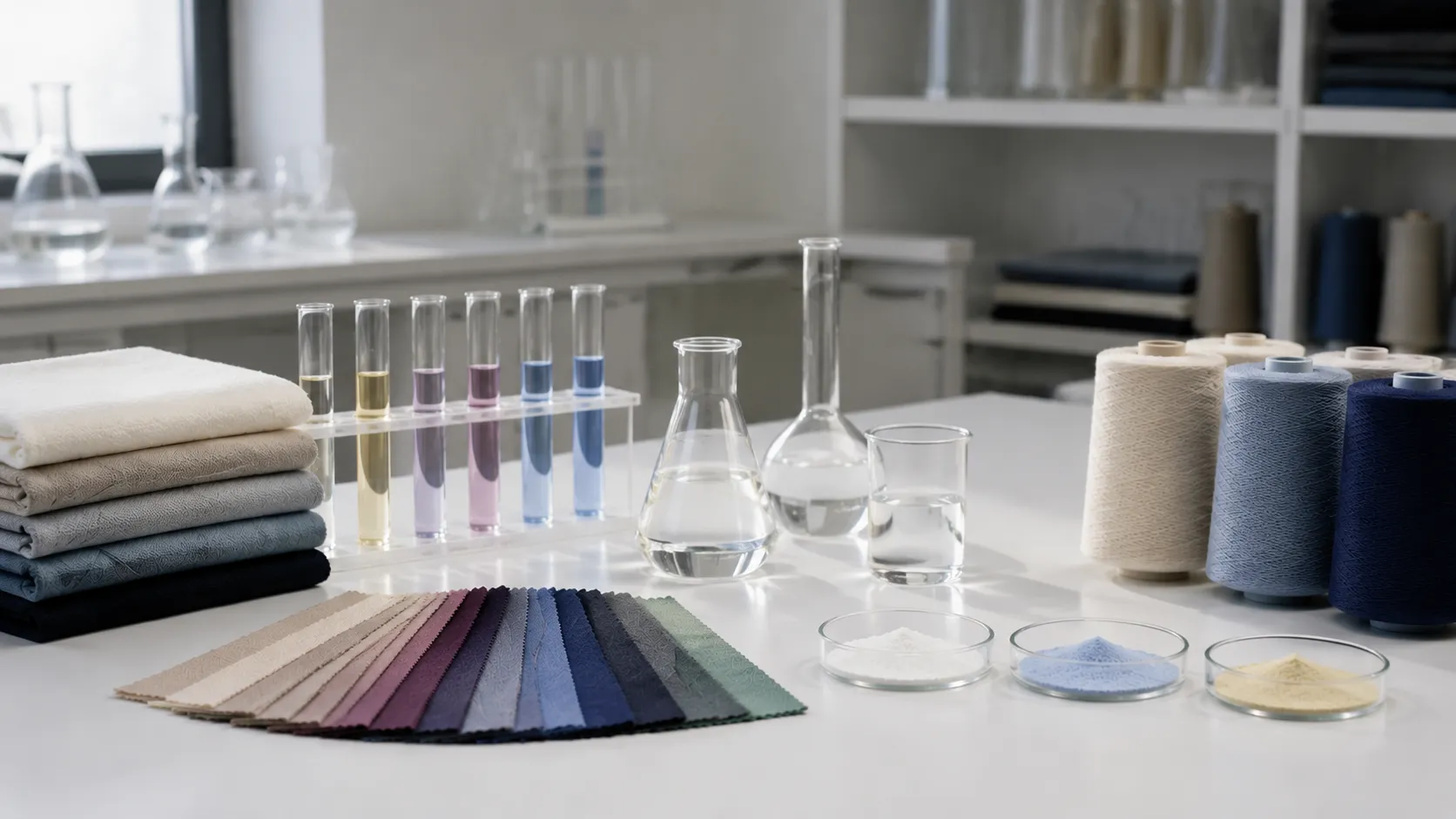
Textile Chemical Analysis Laboratory Equipment Overview
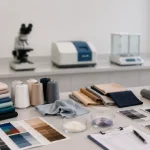
Textile chemical analysis laboratory equipment is used to verify fiber composition, evaluate textile chemistry, detect or quantify chemical residues, control color, and support finished-product quality and safety testing. Depending on the laboratory’s scope, core equipment may include analytical balances, pH meters, microscopes, ovens, spectrophotometers, and textile-specific test instruments, while advanced laboratories may add HPLC, GC-MS, digestion systems, and other analytical instruments.
Textile products undergo chemical treatments such as dyeing, finishing, and coating, so the required laboratory configuration depends on the materials being tested, the required test methods, sample throughput, and whether specialized chemical analysis is performed in-house or outsourced. A laboratory does not necessarily need every instrument listed in this guide; the objective is to match each quality-control requirement with an appropriate test and equipment category.
Effective textile analysis supports routine quality control, troubleshooting, product development, and buyer requirements. A practical workflow connects each production or quality problem to the required test, the purpose of that test, and the laboratory equipment needed to perform it.
Main Products and Applications
Textile chemical analysis laboratory equipment supports a wide range of products across the textile industry:
- Apparel fabrics and finished garments
- Home textiles such as curtains, upholstery, and bed linens
- Technical textiles for automotive, medical, and industrial use
- Yarns and fibers before weaving or knitting
- Non-woven materials for hygiene and filtration products
The exact testing program varies by product. For example, a dyeing operation may prioritize pH, color measurement, and fastness testing, while a laboratory responsible for restricted-substance analysis may require chromatographic or elemental-analysis capabilities in addition to routine textile QC instruments.
Textile Chemical Analysis Laboratory Equipment Quality Control Workflow
Raw Material Identification
Before processing, incoming fibers and yarns should be verified when composition affects labeling, dyeing behavior, processing conditions, or finished-product performance. Blended textiles such as cotton-polyester may require quantitative composition analysis rather than visual identification alone.
Laboratories can combine appropriate chemical separation or solubility methods with weighing and microscopic examination according to the material and test method being followed. Accurate identification helps production teams select suitable processing conditions and investigate discrepancies before additional manufacturing value is added.
Recommended laboratory equipment for this stage:
- Analytical Balance – Precisely weighs fiber samples for quantitative composition analysis.
- Microscope – Examines fiber morphology to support identification.
- Laboratory Oven – Supports drying procedures where controlled sample drying is required by the test method.
- Fume Hood – Provides local exhaust ventilation when chemical preparation or testing involves appropriate hazardous reagents or solvents.
- pH Meter – Measures pH when aqueous extracts or process solutions require acidity or alkalinity control.


Chemical Safety and Residue Analysis
Textile manufacturing may involve dyes, finishing agents, solvents, catalysts, and other processing chemicals. Depending on the product, destination market, buyer specification, and test program, laboratories may need to investigate substances such as formaldehyde, certain metals, restricted azo colorants, or volatile residues.
The analytical workflow normally begins with representative sampling and appropriate sample preparation or extraction, followed by a measurement technique suited to the target analyte. Advanced chemical testing therefore requires more than the analytical instrument alone: balances, extraction equipment, digestion systems, ventilation, and controlled sample preparation can be equally important to reliable results.
Recommended laboratory equipment for this stage:
- Spectrophotometer – Supports applicable colorimetric analytical methods where analyte concentration is determined from an optical response.
- High-Performance Liquid Chromatograph (HPLC) – Separates and quantifies suitable non-volatile compounds when required by the analytical method.
- Gas Chromatography-Mass Spectrometer (GC-MS) – Supports separation and identification of suitable volatile or semi-volatile compounds.
- Microwave Digestion System – Supports sample digestion for analytical workflows that require breakdown of the textile matrix before elemental analysis.
- Analytical Balance – Provides accurate sample and reagent weighing for quantitative analytical preparation.


Color Quality and Fastness Testing
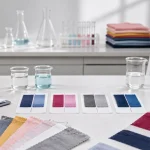
Color control requires both objective color measurement and performance testing. Instrumental color measurement helps laboratories compare batches, quantify color differences, and investigate dye-lot variation. Fastness testing addresses a different question: how well the textile retains color or resists staining under specified exposure conditions.
These functions should not be treated as interchangeable. A spectrophotometer evaluates color numerically, while wash, rubbing, and light-fastness instruments expose specimens to defined test conditions so their performance can be assessed afterward.
Recommended laboratory equipment for this stage:
- Benchtop Spectrophotometer – Provides objective instrumental color measurement and supports batch comparison.
- Color Matching Cabinet – Provides controlled viewing conditions for visual comparison under selected light sources.
- Wash Fastness Tester (Launderometer) – Supports standardized washing-related colorfastness procedures.
- Crockmeter – Evaluates transfer of color from textile surfaces during dry or wet rubbing tests.
- Light Fastness Tester (Xenon Arc Chamber) – Exposes specimens to controlled light conditions for applicable light-fastness evaluations.
Mechanical and Performance Evaluation
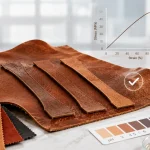
Although mechanical testing is not itself chemical analysis, it is often part of the same textile quality-control program because dyeing, finishing, coating, and other processing steps can influence fabric performance. Strength testing helps determine whether the finished material continues to meet its intended quality requirements after processing.
The required test depends on fabric construction and end use. Tensile testing, tear testing, bursting strength, and thickness measurement address different material behaviors, so laboratories should select instruments according to the properties specified for the textile rather than treating one strength test as a substitute for all others.
Recommended laboratory equipment for this stage:
- Universal Testing Machine (Tensile Tester) – Measures tensile properties such as breaking force and elongation using the applicable textile test method.
- Tearing Strength Tester (Elmendorf) – Measures tear propagation behavior for suitable textile materials and methods.
- Bursting Strength Tester – Evaluates resistance to bursting for applicable knitted, woven, or non-woven materials.
- Fabric Thickness Gauge – Measures textile thickness under defined test conditions.
- Laboratory Oven – Supports controlled drying or heat-treatment procedures when required as part of sample preparation or a specific test method.

Flammability and Safety Compliance
Flammability testing is required for some textile applications and markets, particularly where fire behavior forms part of the product specification or applicable safety requirements. Flame-retardant treatments may also need performance evaluation after defined conditioning or durability procedures.
Different flammability instruments measure different aspects of burning behavior. Laboratories should therefore select equipment according to the product type and test method rather than assuming that a single flammability tester covers every textile application.
Recommended laboratory equipment for this stage:
- Vertical Flammability Tester – Supports applicable vertical textile flammability procedures.
- Horizontal Flammability Tester – Supports applicable horizontal burn-rate procedures for suitable materials.
- Oxygen Index Apparatus – Determines the oxygen concentration associated with sustained combustion under the applicable test procedure.
- Smoke Density Chamber – Measures smoke generation characteristics where smoke-density testing is required.
- Analytical Balance – Supports mass measurements when required by the selected combustion or material-evaluation procedure.
Common Quality Control Challenges in Textiles
Manufacturers and textile laboratories may need to investigate recurring quality problems such as:
- Residual processing chemicals in finished textiles.
- Incorrect fiber blend ratios that can create labeling, processing, or buyer-specification problems.
- Color inconsistency between dye lots resulting in rejected or reworked material.
- Restricted colorants or chemical substances that require analytical verification for a specific market or buyer program.
- Metal contamination associated with raw materials, dyes, pigments, accessories, or processing inputs.
- Loss of required flame-retardant performance after processing or durability treatments.
The appropriate investigation depends on the failure mode. A color inconsistency may begin with spectrophotometric comparison, whereas a suspected chemical residue may require extraction followed by chromatographic, spectrophotometric, or elemental analysis.
Key Quality Control Tests for Textile Chemical Analysis
| Quality Challenge | Quality Control Test | Recommended Laboratory Equipment | Application |
|---|---|---|---|
| Formaldehyde release | Formaldehyde determination using the applicable test method | Spectrophotometer, Water Bath | Finished textiles where formaldehyde testing is required |
| Restricted azo colorants | Applicable chromatographic analysis | HPLC or GC-MS, depending on method | Dyed or printed textiles where restricted-substance testing is required |
| Metals | Elemental analysis after appropriate sample preparation | Atomic Absorption Spectrometer, Digestion System | Textiles, dyes, pigments, or accessories where metal analysis is required |
| pH level | Aqueous extraction pH | pH Meter, Analytical Balance, Shaking Water Bath | Textile products requiring extract-pH evaluation |
| Incorrect fiber composition | Fiber identification and blend ratio | Microscope, Analytical Balance, Oven | Incoming fibers, yarns, fabrics, and finished textiles |
| Poor color fastness | Wash, rub, or light fastness | Wash Fastness Tester, Crockmeter, Light Fastness Tester | Dyed and printed textiles |
| Low strength | Tensile and tear testing | Universal Testing Machine, Elmendorf Tear Tester | Applicable woven, non-woven, and other textile materials |
| Flammability risk | Applicable vertical or horizontal flammability test | Flammability Tester | Textile products subject to flammability requirements |
Laboratory Equipment Required for Textiles Quality Control
A textile quality-control laboratory normally combines general laboratory instruments with textile-specific and advanced analytical equipment. The correct configuration depends on which tests must be performed internally.
For routine QC, instruments such as analytical balances, pH meters, microscopes, ovens, color-measurement equipment, and fastness testers may cover many frequent checks. Laboratories responsible for restricted-substance or detailed chemical analysis may require HPLC, GC-MS, elemental-analysis equipment, digestion systems, extraction equipment, and suitable laboratory ventilation.
Mechanical and flammability instruments extend the laboratory beyond chemical analysis into finished-product performance evaluation. This modular approach allows manufacturers to build the laboratory around actual testing responsibilities rather than purchasing a complete analytical suite before the workload justifies it.
| Testing Requirement | Laboratory Equipment | Why Manufacturers Need It |
|---|---|---|
| Chemical residue analysis | Spectrophotometer, HPLC, GC-MS | To investigate and quantify applicable chemical substances using the required analytical method. |
| Color measurement and control | Benchtop Spectrophotometer, Color Matching Cabinet | To compare production batches objectively and support controlled visual color assessment. |
| Mechanical strength evaluation | Universal Testing Machine | To evaluate tensile performance where strength and elongation form part of the textile specification. |
| Fiber blend analysis | Microscope, Analytical Balance, Oven | To support fiber identification and quantitative composition testing. |
| Flammability assessment | Flammability Tester, Oxygen Index Apparatus | To evaluate fire behavior where required by the product’s test program. |
| Fastness to washing and rubbing | Wash Fastness Tester, Crockmeter | To assess resistance to color change or staining under the applicable fastness procedure. |
| pH level verification | pH Meter, Shaking Water Bath | To measure the pH of textile extracts when required by quality or buyer specifications. |
| Sample preparation | Laboratory Oven, Fume Hood, Microwave Digester | To support drying, safe chemical handling, digestion, and other preparation steps required by selected analytical methods. |
Together, these instrument groups can support a broad textile quality-control program, but not every laboratory requires every category. A manufacturer performing routine process QC has different equipment needs from a third-party laboratory responsible for advanced chemical analysis.
Basic Laboratory Setup for Textile Manufacturers
A practical way to plan investment is to separate routine QC equipment from instruments that are justified by more specialized in-house testing.
| Laboratory Level | Recommended Equipment | Suitable For |
|---|---|---|
| Basic QC Laboratory | pH Meter, Analytical Balance, Oven, Color Matching Cabinet, Wash Fastness Tester | Manufacturers performing routine incoming-material, process, color, and finished-goods checks. |
| Advanced QC Laboratory | Spectrophotometer, Universal Testing Machine, Flammability Tester, HPLC, GC-MS | Manufacturers bringing broader physical testing or advanced chemical analysis in-house where workload and test requirements justify it. |
| Advanced Analysis Laboratory | Full analytical suite including Microwave Digestion, Atomic Absorption, Oxygen Index, and automated sample prep | R&D centers, third-party testing laboratories, and large producers with extensive analytical requirements. |
The distinction is operational rather than absolute. Before investing in advanced analytical instruments, laboratories should confirm which methods must be run internally, expected sample volume, operator competence, sample-preparation requirements, and the support infrastructure required for reliable operation.
How to Choose Laboratory Equipment for Textile Chemical Analysis
Selecting textile chemical analysis equipment should begin with the required tests rather than with a list of instruments. The most useful purchasing sequence is:
Textile product → quality or compliance requirement → test method → sample preparation → measurement technique → instrument category.
This prevents a laboratory from buying equipment that does not match its actual methods or from overlooking supporting equipment needed to produce reliable results.
Define the Testing Scope
Start by identifying the samples that will be tested: fibers, yarns, fabrics, coatings, dyes, process solutions, accessories, or finished products. Then define which properties or substances must be evaluated.
A laboratory focused on routine production QC may prioritize pH, color, fastness, fiber identification, and physical performance. A laboratory responsible for advanced chemical analysis may require chromatographic or elemental-analysis capabilities. Defining the test list first makes it easier to separate essential instruments from advanced equipment.
Match the Instrument to the Test Method
The same general quality problem can require different analytical techniques depending on the substance, sample matrix, and method being followed. Equipment should therefore be selected against the actual test procedure rather than from an equipment name alone.
Confirm the required measurement technique, sample-preparation steps, expected sample types, and performance requirements before choosing a specific instrument configuration. Where a test is performed only occasionally, outsourcing may also be worth comparing with the cost and operational requirements of maintaining advanced analysis in-house.
Evaluate Laboratory Workflow Requirements
Testing frequency and sample throughput influence instrument capacity, automation needs, staffing, and workflow design. A high-volume QC laboratory may place greater emphasis on repeatable sample handling and efficient processing, while an R&D laboratory may prioritize analytical flexibility.
Laboratory planning should also account for bench space, appropriate utilities, ventilation, chemical handling, sample storage, waste handling, and the movement of samples between preparation and measurement stages.
Compare Long-Term Equipment Support
Instrument selection should include more than initial purchase cost. Calibration, preventive maintenance, consumables, operator training, spare parts, software support where applicable, and technical service can all affect long-term laboratory performance.
Before purchasing, manufacturers should determine who will operate the equipment, how often it will be used, what routine maintenance is required, and whether local or supplier support is available. AELAB can assist manufacturers in matching testing requirements with suitable instrument categories and laboratory configurations.
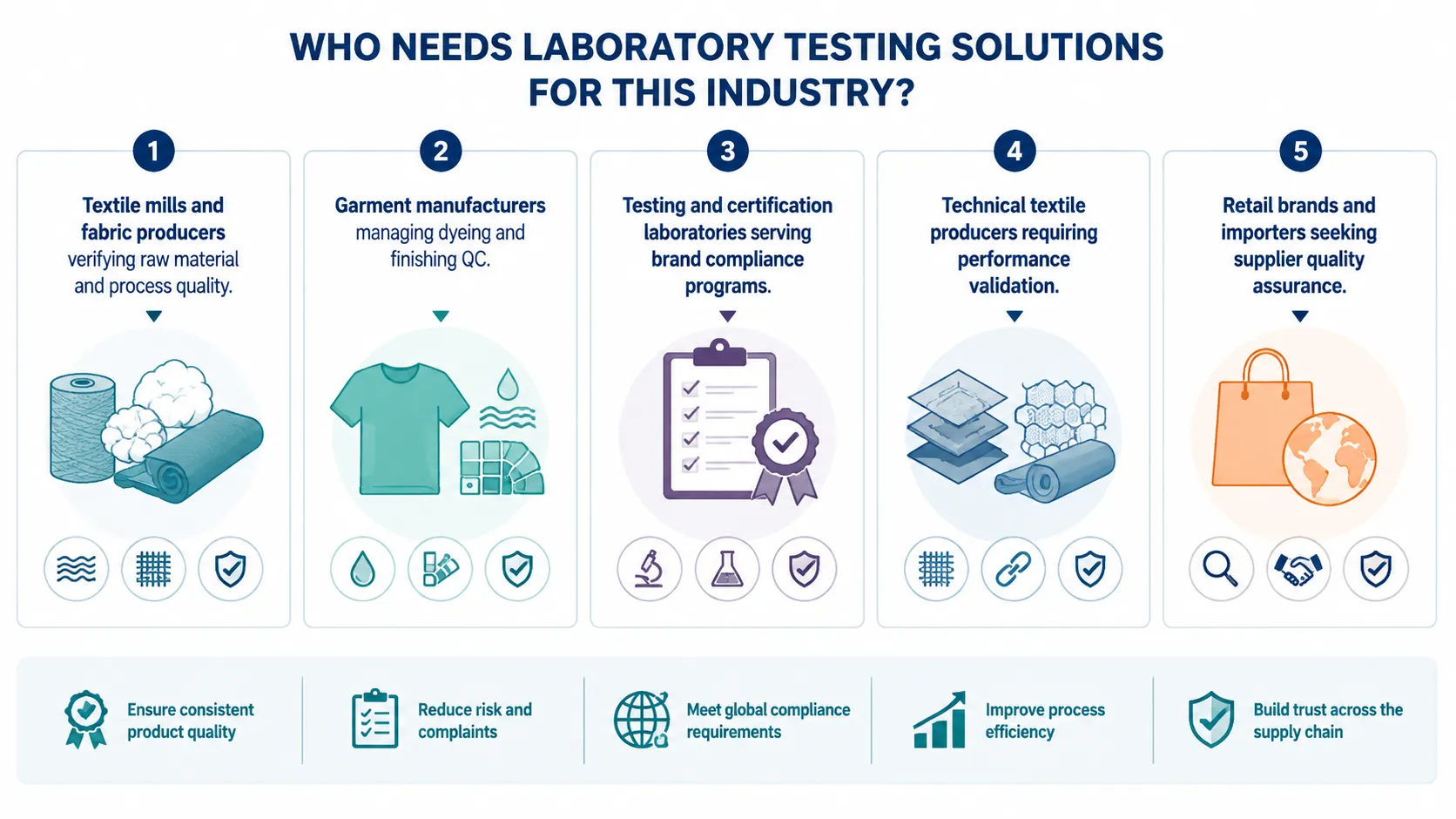
Who Needs Laboratory Testing Solutions for This Industry?
- Textile mills and fabric producers verifying raw material and process quality.
- Garment manufacturers managing dyeing and finishing QC.
- Testing and certification laboratories serving brand compliance programs.
- Technical textile producers requiring performance validation.
- Retail brands and importers seeking supplier quality assurance.
Frequently Asked Questions
What is the most essential chemical test for textile quality control?
There is no single chemical test that is essential for every textile laboratory because requirements depend on the product and testing program. pH testing is a common routine test because it is relatively straightforward and provides useful information about the acidity or alkalinity of a textile extract. Laboratories responsible for restricted-substance analysis will require additional chemical tests and more advanced equipment.
Can one laboratory handle both chemical and physical testing?
Yes. A textile laboratory can combine chemical and physical testing when it has appropriate space, equipment, sample-preparation areas, safety controls, and trained personnel. Routine instruments such as pH meters and spectrophotometers can be combined with textile fastness, tensile, and flammability equipment, while advanced chemical analysis may require additional infrastructure.
How often should textile laboratory equipment be calibrated?
Calibration frequency depends on instrument type, usage intensity, the applicable test method, manufacturer recommendations, and the laboratory’s quality procedures. Laboratories should establish documented calibration and performance-check schedules appropriate to each instrument rather than applying one interval to every device.
What is the role of a spectrophotometer in textile testing?
A spectrophotometer can support objective color measurement and, when used with an applicable analytical method, certain colorimetric chemical measurements. For textile color control, it helps laboratories quantify color and compare batches rather than relying only on visual assessment.
Conclusion
Textile chemical analysis laboratory equipment should be selected around the tests a laboratory is actually responsible for performing. Routine textile QC may begin with balances, pH measurement, microscopy, drying or preparation equipment, color measurement, and fastness testing. More specialized requirements can justify chromatographic, elemental-analysis, mechanical, or flammability instruments.
The key purchasing decision is therefore not simply which instruments are available, but which combination supports the textile products, required test methods, sample throughput, and level of analysis that must be maintained in-house. Building the laboratory in stages can help manufacturers establish essential QC capability first and add advanced analytical functions as testing responsibilities grow.
Laboratory Equipment Solutions for Textile Chemical Analysis
AELAB helps textile manufacturers connect sample types, required tests, analytical techniques, testing frequency, and laboratory workflow with suitable equipment categories. This approach can be used for anything from a basic textile QC laboratory to a broader in-house analytical facility.
For a more useful equipment recommendation, prepare the textile or product types you test, the methods or buyer requirements you follow, expected sample volume, tests currently outsourced, existing laboratory equipment, and the main quality-control problems you need to investigate. These details make it easier to identify which instruments are essential now and which advanced capabilities may be added later.