If you are planning to upgrade, replace, or add a high-performance GC or GC‑MS system in 2026, this guide is built for you. It addresses the real technical decisions that lab managers, senior analysts, and QC leads face when evaluating advanced gas chromatography platforms – not marketing feature lists, but what matters inside a working laboratory. By the end, you will have a structured way to evaluate technologies, avoid common overspecification mistakes, map validation readiness into your selection, and connect instrument choices to your actual sample workflows.
What Makes a GC/GC‑MS System “Advanced” in 2026?
An advanced GC/GC‑MS system in 2026 is not defined by a single specification. It is defined by a combination of automation maturity, data‑system integration, method‑robustness features, and the ability to handle complex sample matrices without constant operator intervention. Key trends shaping the landscape include:
- Smarter instrument control: Systems that can self‑diagnose, verify injection quality, and flag method deviations before a sequence fails.
- Multi‑detector capability: Seamless switching between FID, ECD, NPD, and mass spectrometry (quadrupole, TOF, or tandem MS) in a single analytical run or across methods.
- Lower‑bleed, high‑temperature columns: Columns that extend operating limits and reduce background, especially valuable for trace analysis.
- Sustainability designs: Reduced carrier gas consumption, smaller benchtop footprints, and energy‑efficient ovens are becoming procurement considerations.
- Data‑centric workflows: Direct integration with LIMS, CDS, and AI‑assisted peak deconvolution for faster report generation.
Quadrupole mass spectrometers remain the workhorse for routine identification and quantitation. However, the definition of “advanced” often includes fast scanning, extended mass ranges, and software that simplifies library searching and spectral interpretation – not necessarily a high‑resolution mass spectrometer that many labs do not need.
Operator Note: The most experienced GC‑MS operators often choose a system that makes maintenance predictable, not one with the highest resolution. A system that requires less frequent source cleaning and column trimming can outperform an overspecified platform in real throughput.
Critical Selection Criteria for High‑Performance GC/GC‑MS Platforms
Before comparing brochures, define your lab’s analytical workload. The same advanced instrument that excels in a pharmaceutical R&D group may be a poor fit for a high‑throughput QC environment that runs 500 pesticide residue samples per week. Use these criteria to build a shortlist:
- Detection limits and sensitivity: Not just S/N ratios but real‑world sensitivity with your typical matrices. Request matrix‑matched detection limit data, not just clean‑standard values.
- Mass range and scan speed: For volatile organic compounds, a standard mass range up to 1050 m/z is usually sufficient. Extended ranges matter for large environmental contaminants or some forensic applications.
- Chromatographic oven performance: Temperature programming precision, cooling speed, and multi‑ramp flexibility influence cycle time and resolution.
- Autosampler integration: Liquid, headspace, SPME, and thermal desorption compatibility – and whether the software can control them without manual reconfiguration.
- Software and data handling: A system that forces you into a locked data format or makes audit trail reviews difficult will cost you later in compliance hours.
- Serviceability and support: How quickly can you access spare parts, consumables, and applications support in your region? This can outweigh small differences in specification.
Building a Reliable GC/GC‑MS Workflow: From Sample to Report

Even the most advanced GC‑MS system cannot correct a poorly prepared sample or a rushed method setup. A reliable workflow controls variability at four checkpoints: sample integrity, injection, separation, and data interpretation.
- Sample preparation: Choose extraction, clean‑up, or dilution steps appropriate for the matrix. For trace work, consider matrix‑matched calibration standards from day one.
- Injection: Verify inlet condition, liner type, and split ratio. For advanced systems, use an autosampler that logs injection pressure, draw speed, and wash cycles – these records support troubleshooting later.
- Separation: Run a system suitability test (SST) at the start of each batch. The SST is not just a checkmark; it confirms that the column, flow, and oven are performing to method requirements.
- Detection and data processing: Use retention‑time locking or retention‑index calibration to ensure peak identification remains consistent across runs and instruments. Review integration parameters before releasing results.
- Reporting: Set up automated report templates that include SST results, blank evaluations, and any manual override flags – auditors will notice missing links.
Many labs start by trusting that a new system will simply “run the method.” In our experience, the first two weeks should be treated as method‑confirmation runs, not production work. Confirm retention times, linearity, and carryover across your typical concentration range before cutting over from the old system.
False Assumptions That Derail GC/GC‑MS Projects
Even experienced analytical scientists can fall into these traps when selecting or implementing advanced GC/GC‑MS systems. Recognizing them early prevents expensive project delays.
- “The instrument will immediately deliver the vendor’s detection limits on real samples.” Vendor detection limits are typically obtained on simple solvent standards. Matrix effects, column bleed, and inlet activity will degrade these numbers, often by a factor of two to ten.
- “A high‑resolution mass spectrometer is always better for my lab.” High‑resolution MS provides elemental composition data, but for targeted quantitation, a well‑tuned quadrupole often yields better sensitivity and is easier to validate. Invest in resolution only if you genuinely need unknown identification or co‑eluting isomeric differentiation.
- “We can skip full IQ/OQ because the system is new.” New instruments can arrive with shipping damage, loose connections, or factory configuration mismatches. Skipping installation qualification and operational qualification is a regulatory risk and a root cause later if baseline stability is poor.
- “Multi‑detector GC systems are plug‑and‑play.” Switching between detectors without proper dead‑volume management, column adaptation, and software configuration leads to ghost peaks and sensitivity loss. Each detector requires its own optimization and routine care.
Troubleshooting and Failure Patterns in Advanced GC/GC‑MS

Advanced systems bring more capabilities but also more points of failure. Below are common patterns seen in multi‑detector GC and quadrupole GC‑MS instruments, along with practical corrective actions.
- Symptom: Sudden loss of sensitivity across all analytes.
Likely cause: Inlet contamination, active sites in the liner, or MS source fouling.
Why it happens: High‑boiling matrix residues accumulate over time, especially with splitless injections.
Corrective action: Replace inlet liner and septum; clean or replace the ion source if the signal does not recover.
Prevention: Use a guard column or pre‑column backflush; replace consumables on a schedule, not only after failure. - Symptom: Ghost peaks appearing in blank runs.
Likely cause: Carryover from previous injection, septum bleed, or contaminated carrier gas.
Why it happens: Inadequate needle wash, high inlet temperature for decomposition residues, or gas purifier exhaustion.
Corrective action: Increase injector wash cycles, replace septum, check gas purifier indicator.
Prevention: Run solvent blanks between high‑concentration samples; verify carrier gas purity periodically. - Symptom: Retention time drift across the sequence.
Likely cause: Column degradation, flow controller instability, or small leak in the inlet.
Why it happens: Stationary phase loss or slight pressure changes alter the linear velocity.
Corrective action: Trim column inlet end, check for leaks with an electronic leak detector, verify column flow with a flow meter.
Prevention: Use retention‑time locking; monitor column outlet flow at the start of each batch. - Symptom: Mass calibration fails frequently.
Likely cause: Air leak into the mass spectrometer, contaminated calibration compound (PFTBA or equivalent), or dirty ion volume.
Why it happens: Small vacuum leaks allow air to react with calibration ions; contamination changes the tune.
Corrective action: Check vacuum integrity, replace or clean the calibration vial, clean the source.
Prevention: Perform a quick air/water check weekly; change the calibration compound according to manufacturer recommendations. - Symptom: Elevated baseline noise or wandering baseline.
Likely cause: Dirty detector (FID jet, ECD contamination), column bleed, or MS detector gain instability.
Why it happens: Combustion by‑products, high‑temperature bake of residual material, or aging electron multiplier.
Corrective action: Clean the detector, replace column if bleed is excessive, retune the MS.
Prevention: Condition new columns properly; set detector temperature high enough to avoid condensation. - Symptom: Poor library match for known compounds.
Likely cause: Ion source contamination, incorrect tune parameters, or scan speed too slow for the peak width.
Why it happens: Contamination shifts relative ion abundances or reduces high‑mass sensitivity.
Corrective action: Retune the instrument, acquire a new library, or increase scan rate.
Prevention: Run a spectral check standard after each tune; avoid prolonged exposure of the source to high‑boiling samples. - Symptom: Injector reproducibility poor for split injections.
Likely cause: Partial blockage of split vent line, incorrect split ratio setting, or liner type mismatch.
Why it happens: Split vent trap saturated or incorrectly assembled; some liners are not optimized for fast split flows.
Corrective action: Clean or replace the split vent trap, verify actual split flow with a flow meter.
Prevention: Log split vent trap changes; use the recommended liner for the injection technique.
Validation, Compliance, and Audit Readiness
Advanced GC/GC‑MS systems almost always operate in regulated environments. Validation is not a post‑purchase checkbox – it is a design‑in requirement that should be considered during selection. Look for systems that provide:
- Built‑in IQ/OQ protocols with electronic documentation.
- Software that supports comprehensive audit trails, user access levels, and electronic signatures.
- Seamless data backup and recovery procedures without proprietary lock‑in.
- Clear consumable and maintenance logs that map to regulated change control.
Method validation under ICH Q2(R1), USP <1225>, or ISO 17025 should include specificity, linearity, accuracy, precision, detection limit, quantitation limit, and robustness – not just a few repeats of a standard. For MS detectors, mass accuracy and spectral reproducibility under robustness testing are often overlooked. Include a deliberate parameter change (e.g., ±0.2 mL/min carrier flow or ±5 °C oven temperature) to demonstrate method ruggedness.
Operator Note: When migrating a validated method from one GC‑MS to another, always re‑validate the detection limit. Even subtle differences in liner geometry, source design, or column dimensions shift the lowest reliably quantifiable level.
-
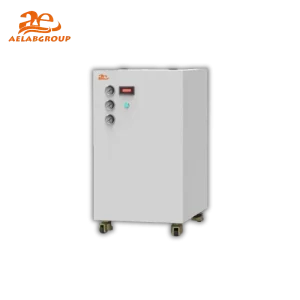 AELAB AE-NGSS / AE-NGDS Nitrogen Generator for Laboratory Gas SupplyRead more
-
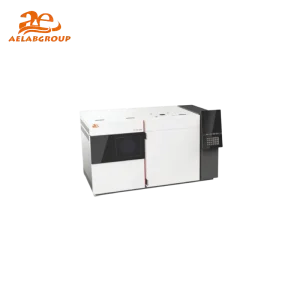 AELAB GC-MS 3200 Gas Chromatograph–Mass Spectrometer (Quadrupole)Read more
-
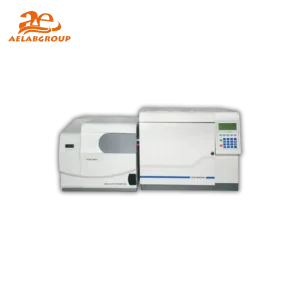 AELAB GC-MS 6800 Gas Chromatograph–Mass Spectrometer for High-Performance Analytical TestingRead more
-
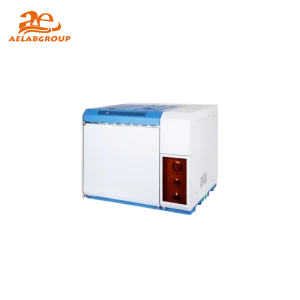 AELAB GC102AF Gas Chromatograph with FID DetectorRead more
-
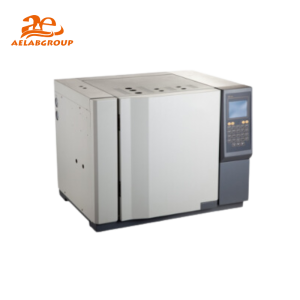 AELAB GC1120 Gas Chromatograph – High-Performance Multi-Detector SystemRead more
-
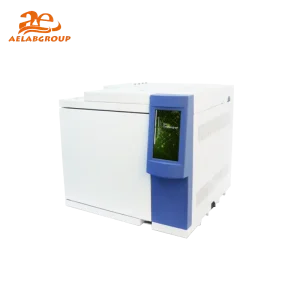 AELAB GC112A Gas Chromatograph – Advanced Laboratory Analysis SystemRead more
Advanced GC/GC‑MS System Selection: Matching Instruments to Your Lab’s Needs

With the key technical and compliance criteria in mind, the next step is matching an instrument platform to your real operational context. The range of advanced GC/GC‑MS systems today is broad, and no single model fits all labs.
For facilities that require high‑throughput routine analysis – such as environmental contract labs running EPA methods or food testing laboratories monitoring pesticide residues – a robust, serviceable platform with proven multi‑detector flexibility is often the best choice. Features like fast oven cool‑down, reliable autosampler capacity (e.g., 100+ vials), and straightforward detector interchangeability reduce downtime between batches.
Research and method‑development groups often benefit from systems that offer wider mass range, faster scan speeds, and stronger software for spectral deconvolution. However, these features also increase complexity and maintenance demands. Before selecting the most configurable system, ask whether your team has the time to maintain that flexibility.
When evaluating specific instruments, such as the GC1290, GC112N, GC1120, or GC126N series, laboratories should look beyond the datasheet numbers. These platforms likely address different throughput and detection needs, from entry‑level GC capability to fully integrated GC‑MS with quadrupole detection. AELAB application support teams can assist in mapping your sample types, anticipated throughput, and regulatory requirements to the right system architecture. Real‑world evaluation using a representative sample is far more instructive than a generic factory demo.
Operator Note: We once chose a system based on extreme sensitivity specifications, only to discover that the required source cleaning frequency under real‑world sample loads made it unusable for daily QC. A slightly less sensitive but more rugged platform would have been better. Match the system to your sample intake, not your wish list.
Another selection factor is upgradability. If you start with a single‑detector GC and may add MS detection later, confirm that the base platform supports field‑upgradable modules, shared software licensing, and consistent data‑handling formats across detector types. A fragmented system leads to higher validation burden and operator training overhead.
Conclusion: Making the Right Investment for 2026 and Beyond
Advanced GC and GC‑MS systems in 2026 are more capable than ever – but capability only translates into better data when it is aligned with your sample workload, operator skill level, and compliance obligations. The smartest selections are not driven by the highest resolution or the longest feature list; they are driven by a clear match between the technology and the daily analytical challenges your lab actually faces.
Take a method‑first approach. Define your required detection limits, matrix types, and throughput before comparing instruments. Factor validation readiness and service response into the buying decision. And whenever possible, test with your own samples. An AELAB applications specialist can help you map these real‑world requirements to a system that balances performance, reliability, and long‑term support.
Do this next: Download the technical specification sheets for the GC/GC‑MS systems that meet your basic performance profile, then book a sample‑based demonstration with application support. Use the demo to gather retention‑time precision, sensitivity in your matrix, and software usability data – these observations will ground your final selection in reality.
Frequently Asked Questions
When should I choose a quadrupole GC‑MS over a time‑of‑flight (TOF) system?
Quadrupole GC‑MS is ideal for targeted quantitation, routine screening, and validated methods that require stable, reproducible mass spectra at unit resolution. TOF instruments excel when you need fast acquisition rates for narrow chromatographic peaks or high‑resolution accurate mass for unknown identification. For most QC and environmental labs, quadrupole remains the cost‑effective and more easily maintained choice.
How do I select a GC‑MS system for food safety pesticide residue analysis?
Look for a system with sensitive detection at the low ppb level, reliable retention‑time locking, and software that supports matrix‑matched calibration. Multi‑detector capability can be valuable if you need to run both GC‑ECD and GC‑MS on the same platform. Ensure the autosampler can handle large sequences and that the system has proven robustness with fatty or high‑sugar extracts, which can rapidly contaminate the inlet and source.
What are the most important maintenance tasks for a high‑performance GC‑MS?
Regularly inspect and replace the inlet septum and liner, trim the column inlet, check vacuum pump oil (if applicable), clean or replace the ion source according to usage, and monitor the calibration compound. Daily air/water checks, weekly leak tests, and scheduled consumable swaps prevent the majority of sensitivity crises.
Do I need full IQ/OQ/PQ for a new GC‑MS system in a GMP environment?
Yes. Installation Qualification (IQ) and Operational Qualification (OQ) are expected before the system is used for regulated analysis. Performance Qualification (PQ) may be method‑specific but must demonstrate consistent suitability. Even if the vendor provides base documentation, your lab must review, approve, and maintain these records as part of the equipment history file.
How can I compare different advanced GC/GC‑MS models effectively?
Create a comparison matrix starting with your required detection limits, sample throughput, matrix types, and compliance needs. For each candidate, request a demo with a real sample, review service response data in your region, and ask for user references with a similar workload. Do not compare only brochure specifications; downtime, software pain points, and operator learning curves often have a larger impact on success.
What is the typical lifespan of a quadrupole mass spectrometer in a GC‑MS?
With proper maintenance, a quadrupole mass analyzer itself can last 10 years or more. However, components like the electron multiplier, filaments, and ion source elements are consumables that require replacement on a schedule influenced by sample load and matrix cleanliness. Planning for regular source maintenance and electronics servicing is part of a sustainable GC‑MS program.