Skin Care Product Manufacturing and Quality Control Overview
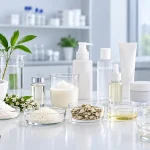
Skin care product manufacturing requires accurate formulation, controlled processing, and reliable laboratory quality control. Products such as moisturizing cream, facial serum, cleanser, toner, lotion, sunscreen, face mask, eye cream, lip balm, and anti-aging treatment must be tested during raw material inspection, formulation development, in-process control, stability testing, microbiological analysis, and finished product release.
Quick answer: Skin care quality control normally combines physical testing, chemical analysis, microbiological testing, water quality monitoring, and stability evaluation. Routine laboratories commonly rely on analytical balances, pH meters, viscometers, stirrers, homogenizers, centrifuges, conductivity meters, stability chambers, and microbiology equipment, while more advanced analytical instruments are added when a specific ingredient or test method requires them.
In the cosmetic and personal care industry, quality control laboratories help manufacturers evaluate product consistency, stability, appearance, viscosity, pH, microbial quality, color, texture, selected ingredient concentration, and packaging compatibility. Together, these controls support batch-to-batch consistency, documented quality procedures, and long-term product performance.
This guide explains the skin care product manufacturing process, the most important quality control tests, and the laboratory equipment commonly used in cosmetic manufacturing laboratories.
What Are Skin Care Products?
Skin care products are cosmetic formulations designed to cleanse, moisturize, protect, repair, nourish, soothe, or improve the appearance and condition of the skin. Unlike decorative cosmetics, skin care products are mainly developed to support skin health, maintain the skin barrier, improve hydration, and protect the skin from environmental stressors such as UV radiation, pollution, dryness, and oxidation.
Depending on the product type, a formulation may contain purified water, oils, emollients, humectants, emulsifiers, surfactants, thickeners, preservatives, antioxidants, botanical extracts, vitamins, peptides, acids, UV filters, fragrances, colorants, and functional active ingredients.
Common skin care product categories include:
- Moisturizing cream
- Face lotion
- Body lotion
- Facial serum
- Hydrating gel
- Facial cleanser
- Micellar water
- Facial toner
- Sunscreen and SPF products
- Face mask
- Eye cream
- Lip balm
- Facial oil
- Exfoliating product
- Anti-aging cream
- Brightening treatment
- Acne care product
- Sensitive skin formulation
Before reaching the market, each product should be evaluated through physical, chemical, microbiological, and stability tests to confirm that it meets the required quality specifications.
Main Raw Materials Used in Skin Care Product Manufacturing
The quality of raw materials has a direct impact on the performance, safety, texture, stability, appearance, and shelf life of the finished skin care product. For this reason, incoming raw materials should be inspected before entering the formulation and production process.
Typical raw materials used in skin care manufacturing include:
- Purified or deionized water
- Humectants such as glycerin, propylene glycol, and hyaluronic acid
- Emollients such as oils, esters, silicones, and fatty alcohols
- Emulsifiers for cream, lotion, and serum stability
- Thickeners and rheology modifiers
- Surfactants for cleansers and foaming products
- Preservatives for microbial protection
- Antioxidants and chelating agents
- Botanical extracts and functional active ingredients
- Vitamins, peptides, ceramides, and skin-conditioning agents
- Fragrances and colorants
- pH adjusters and buffering agents
Raw material testing may include appearance inspection, odor evaluation, pH measurement, conductivity testing, density measurement, refractive index measurement, moisture content determination, purity checks, and identity confirmation using analytical instruments.
Skin Care Product Manufacturing Process
The manufacturing process of skin care products includes several controlled stages. Each stage requires laboratory testing to confirm that the formulation remains within the manufacturer’s defined quality requirements from one production batch to another.
Skin Care QC Workflow at a Glance
| Production Stage | Main QC Focus | Common Laboratory Equipment |
|---|---|---|
| Incoming Raw Materials | Appearance, pH, water quality, refractive index, moisture, identity or purity checks where required | Analytical Balance, pH Meter, Conductivity Meter, Refractometer, UV-Visible Spectrophotometer where the method applies |
| Formulation and Mixing | Accurate weighing, dissolution, temperature, mixing uniformity, emulsification, pH development | Analytical Balance, Magnetic Stirrer, Hot Plate Stirrer, Homogenizer, Temperature Probe |
| In-Process Control | pH, viscosity, appearance, color, homogeneity, temperature, physical stability | pH Meter, Viscometer, Centrifuge, Refractometer where applicable |
| Finished Product Release | Appearance, pH, viscosity, microbiological quality, stability, packaging compatibility, fill verification | pH Meter, Viscometer, Stability Chamber, Incubator, Autoclave, Laminar Flow Cabinet |
Raw Material Inspection
Before production starts, all incoming raw materials should be checked against approved specifications. This step helps prevent formulation defects, contamination, instability, color variation, odor problems, viscosity deviation, and batch rejection.
Common raw material quality control tests include:
- Appearance, color, and odor inspection
- pH measurement of liquid raw materials and aqueous solutions
- Conductivity testing of purified water
- Refractive index measurement for selected liquid ingredients
- Moisture content determination of powders and hygroscopic materials
- Purity and identity testing where required
Recommended laboratory equipment for raw material inspection:
- Analytical Balance – Used for accurate weighing of raw materials, standards, and laboratory samples.
- Laboratory pH Meter – Measures the acidity or alkalinity of liquid raw materials and aqueous solutions.
- Conductivity Meter – Monitors purified water quality and ionic concentration.
- Refractometer – Measures refractive index for raw material verification and concentration control.
- UV-Visible Spectrophotometer – Supports selected raw material verification and absorbance-based analysis.


Formulation Development and Laboratory Mixing
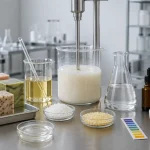
After raw materials are approved, ingredients are weighed and mixed according to the formulation. During formulation development, laboratory teams evaluate ingredient compatibility, mixing speed, heating temperature, addition sequence, hydration time, emulsification conditions, cooling profile, pH adjustment, viscosity development, and final texture.
For creams, lotions, serums, gels, masks, and cleansers, proper mixing and homogenization are essential for product uniformity, appearance, viscosity, stability, and consumer feel.
Recommended laboratory equipment for formulation development:
- Magnetic Stirrer – Used for laboratory-scale mixing, sample preparation, solution blending, and pH adjustment.
- Hot Plate Stirrer – Provides simultaneous heating and stirring during formulation trials.
- Laboratory Homogenizer – Produces uniform emulsions and improves dispersion of oils, polymers, pigments, and active ingredients.
- Laboratory Centrifuge – Helps evaluate early emulsion stability and possible phase separation during development.


Water Phase and Oil Phase Preparation
Many skin care products are emulsions made from a water phase and an oil phase. The water phase may contain purified water, humectants, water-soluble actives, stabilizers, and polymers. The oil phase may contain oils, waxes, silicones, emollients, fatty alcohols, and oil-soluble ingredients.
Both phases must be prepared under controlled temperature and mixing conditions. Poor control during this stage can cause incomplete dissolution, unstable emulsions, poor texture, viscosity variation, and separation during storage.
Common process checks include:
- Temperature monitoring
- Mixing uniformity inspection
- Ingredient dissolution check
- pH control of the aqueous phase
- Visual inspection for particles, separation, or incomplete melting
Recommended laboratory equipment:
- Hot Plate Stirrer – Supports controlled heating and mixing of water and oil phase ingredients.
- Analytical Balance – Ensures accurate weighing of phase ingredients.
- Thermometer or Temperature Probe – Monitors process temperature during heating and cooling.
- Laboratory Homogenizer – Supports emulsification and particle size reduction after phase combination.
Homogenization and Emulsification
Homogenization is one of the most important steps in cream, lotion, sunscreen, mask, and emulsion-based serum manufacturing. The prepared phases are combined and processed under controlled shear conditions to produce a stable emulsion with uniform particle distribution.
Proper homogenization improves product appearance, spreadability, consistency, viscosity, texture, and long-term physical stability.
Recommended laboratory equipment for homogenization and emulsification:
- Laboratory Homogenizer – Reduces particle size and improves emulsion uniformity.
- Laboratory Centrifuge – Accelerates phase separation to evaluate emulsion stability.
- Viscometer – Measures viscosity changes after homogenization.
- Laboratory Microscope – Supports observation of emulsion structure, particle distribution, and physical defects.
In-Process Quality Control During Production
In-process quality control is performed while the batch is being manufactured. Representative samples are collected to confirm that the product remains within the required specifications before filling and packaging.
Common in-process quality control parameters include pH, viscosity, density, appearance, odor, color, homogeneity, temperature, emulsion stability, and mixing uniformity.
Recommended laboratory equipment for in-process skin care QC:
- Laboratory pH Meter – Controls formulation pH and helps ensure product compatibility with the skin.
- Viscometer – Measures viscosity and flow behavior in creams, lotions, gels, masks, and serums.
- Refractometer – Measures refractive index for selected formulations where concentration control is required.
- UV-Visible Spectrophotometer – Supports selected concentration analysis, color evaluation, and active ingredient testing.
- Laboratory Centrifuge – Evaluates emulsion and suspension stability during production.

Cooling and Addition of Heat-Sensitive Ingredients
After homogenization, the formulation is gradually cooled before adding heat-sensitive ingredients such as fragrances, botanical extracts, vitamins, preservatives, peptides, acids, and specialty active ingredients.
This stage requires careful control because excessive temperature may degrade active ingredients, change fragrance profile, reduce preservative performance, or affect final product texture.
Common quality checks include:
- Cooling temperature verification
- pH adjustment
- Viscosity measurement
- Visual inspection
- Active ingredient compatibility check
Recommended laboratory equipment:
- pH Meter – Measures final pH after ingredient addition.
- Viscometer – Confirms final viscosity and texture.
- Magnetic Stirrer – Supports gentle mixing of heat-sensitive ingredients.
- UV-Visible Spectrophotometer – Supports selected active ingredient analysis.
Filling, Packaging, and Final Product Release
Once laboratory approval has been obtained, the finished formulation is transferred into suitable packaging under hygienic conditions. Packaging compatibility, fill weight accuracy, sealing integrity, appearance, labeling, and storage stability should be verified before product release.
Common final quality control tests include:
- Appearance, color, odor, and texture inspection
- pH measurement
- Viscosity testing
- Microbiological testing
- Accelerated and long-term stability testing
- Packaging compatibility evaluation
- Fill weight and batch documentation review
Only batches meeting predefined quality specifications should be approved for commercial distribution.
Stability Testing and Shelf Life Evaluation
Stability testing evaluates how skin care formulations respond to temperature, humidity, light exposure, storage time, transportation conditions, and packaging materials. These tests help manufacturers predict shelf life and confirm that the product remains safe, stable, and visually acceptable until the end of its intended use period.
Stability testing may include accelerated stability studies, long-term stability studies, freeze-thaw cycles, centrifuge stability testing, high-temperature storage, low-temperature storage, light exposure testing, packaging compatibility, and visual inspection over time.
Recommended laboratory equipment for stability testing:
- Stability Test Chamber – Simulates controlled temperature and humidity conditions for accelerated and long-term stability studies.
- Water Bath – Maintains stable temperatures for sample preparation, extraction, and selected accelerated tests.
- Drying Oven – Used for high-temperature stability evaluation, moisture testing, and laboratory drying applications.
- Laboratory Incubator – Provides controlled temperature conditions for microbiological testing and selected stability procedures.
- Autoclave – Sterilizes microbiology tools, glassware, and culture media to reduce contamination risk.


Microbiological Testing for Skin Care Products
Microbiological testing is one of the most important quality control steps in cosmetic and skin care product manufacturing. Products that contain water, botanical extracts, proteins, carbohydrates, or other nutrient-rich ingredients may support microbial growth if they are not properly preserved and manufactured under hygienic conditions.
Routine microbiological analysis helps verify product safety, preservative performance, hygiene control, and compliance with cosmetic microbiology requirements. Microbiological testing may include total aerobic microbial count, yeast and mold count, pathogen screening, and preservative efficacy testing.
Recommended microbiology laboratory equipment:
- Laboratory Incubator – Maintains controlled temperatures for microbial culture growth.
- Laminar Flow Cabinet – Provides a clean working area for microbiological sample preparation.
- Biosafety Cabinet – Supports safer handling of microbiological samples where additional protection is required.
- Autoclave – Sterilizes culture media, glassware, tools, and laboratory materials.
- Laboratory Refrigerator and Freezer – Stores standards, media, samples, and temperature-sensitive materials.
- Stability Test Chamber – Supports stability studies and packaging compatibility evaluation.


Active Ingredient and Preservative Analysis
Modern skin care products often contain active and functional ingredients such as hyaluronic acid, niacinamide, retinol, vitamin C derivatives, ceramides, panthenol, peptides, alpha hydroxy acids, beta hydroxy acids, botanical extracts, antioxidants, UV filters, and preservatives. Where a formulation specification requires concentration or identity testing, the analytical method should be selected for the specific ingredient and sample matrix.
Not every active ingredient can be measured with the same instrument. UV-Visible spectrophotometry can support selected absorbance-based assays, while refractive index, color measurement, and microscopy provide different types of formulation or physical quality information. More specific analytical systems may be required when the chosen test method cannot be performed with routine QC instruments.
Recommended laboratory instruments for selected analytical and formulation checks:
- UV-Visible Spectrophotometer – Supports selected absorbance-based concentration or verification methods.
- Refractometer – Measures refractive index for concentration control or raw material verification in suitable liquid samples.
- Colorimeter – Provides objective color comparison between batches or stability samples.
- Laboratory Microscope – Supports observation of emulsion structure, particles, crystals, and visible physical defects.


Key Quality Control Tests for Skin Care Products
Skin care quality control testing should cover the physical, chemical, microbiological, and stability characteristics of the product. The exact test plan depends on product type, formulation, packaging, target market, and regulatory requirements.
| Quality Control Test | Purpose | Common Laboratory Equipment | Relevant Product Types |
|---|---|---|---|
| pH Measurement | Checks acidity, skin compatibility, preservative performance, and batch consistency | Laboratory pH Meter | Cream, lotion, serum, cleanser, toner, mask |
| Viscosity Testing | Evaluates texture, flow behavior, filling performance, spreadability, and consumer feel | Viscometer | Cream, lotion, gel, mask, cleanser, serum |
| Emulsion Stability Test | Checks possible phase separation and physical instability | Laboratory Centrifuge, Stability Chamber | Cream, lotion, sunscreen, mask, emulsion serum |
| Accelerated Stability Test | Predicts product behavior under controlled stress conditions | Stability Test Chamber, Oven, Refrigerator | All skin care products |
| Microbiological Testing | Checks microbial quality and product safety | Incubator, Laminar Flow Cabinet, Autoclave | Water-based skin care products |
| Active Ingredient Analysis | Checks selected ingredient concentration or identity according to the chosen analytical method | UV-Visible Spectrophotometer for suitable absorbance-based methods; other analytical systems where required | Serum, anti-aging cream, brightening treatment, acne care product |
| Color and Appearance Evaluation | Checks visual consistency, color change, particles, and defects | Colorimeter, Laboratory Microscope | Cream, lotion, serum, mask, sunscreen |
| Water Quality Testing | Verifies purified water quality and ionic concentration | Pure Water System, Conductivity Meter | All water-based formulations |
| Storage Condition Monitoring | Records temperature and humidity during storage and testing | Temperature and Humidity Data Logger | Raw materials, samples, finished products |
Recommended Laboratory Equipment by Skin Care Product Type
Different skin care products require different testing methods. A facial cleanser laboratory may focus on pH, viscosity, foam behavior, microbial quality, and stability, while a facial serum laboratory may require active ingredient analysis, refractive index measurement, color evaluation, and packaging compatibility testing.
| Skin Care Product | Critical Quality Tests | Recommended Laboratory Equipment |
|---|---|---|
| Moisturizing Cream | pH, viscosity, emulsion stability, microbial testing, appearance, stability | pH Meter, Viscometer, Homogenizer, Centrifuge, Stability Chamber, Incubator |
| Facial Serum | pH, viscosity, active ingredient concentration, color, stability, microbial quality | pH Meter, UV-Vis Spectrophotometer, Refractometer, Colorimeter, Stability Chamber |
| Facial Cleanser | pH, viscosity, foam behavior, microbial quality, stability | pH Meter, Viscometer, Magnetic Stirrer, Incubator, Stability Chamber |
| Body Lotion | Viscosity, emulsion stability, pH, appearance, filling performance, microbial quality | Viscometer, Homogenizer, pH Meter, Centrifuge, Incubator |
| Sunscreen | Homogeneity, viscosity, stability, appearance, active ingredient consistency | Homogenizer, Viscometer, UV-Vis Spectrophotometer, Stability Chamber, Microscope |
| Face Mask | Viscosity, texture, microbial testing, stability, appearance | Viscometer, Homogenizer, Incubator, Stability Chamber, Microscope |
| Facial Toner | pH, clarity, conductivity, microbial testing, preservative performance | pH Meter, Conductivity Meter, Incubator, Laminar Flow Cabinet |
| Lip Balm | Melting behavior, texture, stability, appearance, packaging compatibility | Hot Plate Stirrer, Oven, Stability Chamber, Analytical Balance |
Essential Laboratory Equipment for Cosmetic and Skin Care QC Laboratories
A complete skin care quality control laboratory usually includes equipment for weighing, sample preparation, physical testing, chemical analysis, microbiological testing, water quality monitoring, and stability studies. The following instruments are widely used in cosmetic manufacturing and personal care laboratories.
| Laboratory Equipment | Primary Application | Why It Matters in Skin Care Manufacturing |
|---|---|---|
| Analytical Balance | Accurate weighing | Ensures formulation accuracy and repeatable batch preparation |
| Magnetic Stirrer | Solution mixing | Supports laboratory-scale formulation, pH adjustment, and sample preparation |
| Hot Plate Stirrer | Heating and stirring | Helps dissolve ingredients and prepare heated water or oil phases |
| Laboratory Homogenizer | Emulsification and dispersion | Improves uniformity in creams, lotions, sunscreens, masks, and emulsions |
| Laboratory Centrifuge | Accelerated separation testing | Detects possible phase separation and emulsion instability |
| Laboratory pH Meter | pH measurement | Controls product compatibility, preservative performance, stability, and batch consistency |
| Viscometer | Viscosity measurement | Controls texture, spreadability, flow behavior, and filling performance |
| Refractometer | Refractive index measurement | Useful for raw material verification and concentration control in selected liquids |
| UV-Visible Spectrophotometer | Absorbance-based concentration analysis | Measures selected active ingredients, preservatives, and color-related parameters |
| Water Bath | Controlled temperature treatment | Supports sample preparation, extraction, and selected accelerated tests |
| Drying Oven | High-temperature testing and drying | Supports heat stability evaluation and moisture-related laboratory procedures |
| Stability Test Chamber | Accelerated and long-term stability testing | Supports shelf life prediction and packaging compatibility evaluation |
| Laboratory Refrigerator and Freezer | Low-temperature storage | Stores standards, samples, media, and temperature-sensitive ingredients |
| Laboratory Incubator | Microbial culture incubation | Supports total count, yeast, mold, and microbial quality testing |
| Laminar Flow Cabinet | Clean sample preparation | Reduces contamination risk during microbiological testing |
| Biosafety Cabinet | Protected microbiological work | Supports safer handling of microbiological samples where required |
| Autoclave | Sterilization | Sterilizes culture media, tools, glassware, and microbiology lab materials |
| Colorimeter | Color measurement | Improves batch-to-batch color consistency and objective appearance control |
| Conductivity Meter | Water quality monitoring | Monitors purified water quality and ionic concentration |
| Pure Water System | Purified water generation | Provides consistent water quality for formulation and analytical testing |
| Laboratory Microscope | Microscopic examination | Supports particle observation, emulsion structure evaluation, and defect investigation |
| Temperature and Humidity Data Logger | Environmental monitoring | Records laboratory, warehouse, and stability storage conditions |
Basic vs Advanced Skin Care QC Laboratory Setup
A skin care QC laboratory does not need every instrument from the beginning. The right setup depends on which tests are performed in-house, the product range, the number of samples, and whether the laboratory needs only routine process/release testing or also more specific chemical analysis.
| Laboratory Level | Typical Testing Scope | Common Equipment |
|---|---|---|
| Routine / Basic QC | Weighing, pH, viscosity, mixing, physical stability checks, water quality monitoring, sample preparation | Analytical Balance, pH Meter, Viscometer, Magnetic Stirrer, Hot Plate Stirrer, Homogenizer, Centrifuge, Conductivity Meter, Pure Water System |
| In-House Stability and Microbiology | Controlled storage studies, microbial culture work, sterilization, clean sample preparation, refrigerated storage | Stability Test Chamber, Incubator, Autoclave, Laminar Flow Cabinet, Refrigerator or Freezer |
| Expanded / Advanced Analysis | Selected absorbance-based assays, objective color measurement, microscopic evaluation, method-specific ingredient analysis | UV-Visible Spectrophotometer, Colorimeter, Laboratory Microscope, and other analytical systems required by the selected method |
Quality Standards and Cosmetic GMP Considerations
Skin care product manufacturers should use validated methods, calibrated instruments, controlled production records, approved specifications, and documented quality control procedures. Cosmetic GMP principles help reduce contamination risks, improve manufacturing consistency, and support product quality throughout production, storage, and distribution.
Depending on the target market and product type, manufacturers may refer to cosmetic GMP guidelines, microbiological limits, preservative efficacy testing, stability testing protocols, water quality specifications, and internal quality standards. A well-equipped QC laboratory helps manufacturers confirm that every batch meets predefined requirements before release.
Laboratory equipment supports cosmetic quality assurance by providing accurate measurements, reproducible test results, controlled testing conditions, traceable documentation, and reliable data for batch release decisions.

How to Choose Laboratory Equipment for a Skin Care QC Laboratory
When selecting laboratory equipment for skin care product manufacturing, first define the product types, tests performed in-house, expected sample volume, measurement requirements, documentation needs, and production scale. A cream factory, a serum manufacturer, a sunscreen producer, and a facial cleanser laboratory may need different combinations of instruments because their routine QC priorities are not identical.
Important selection factors include:
- Product type and formulation complexity
- Required quality control tests
- Measurement range and accuracy
- Sample throughput and laboratory workload
- Calibration and maintenance requirements
- Compatibility with cosmetic GMP documentation
- Available laboratory space
- Operator training and ease of use
- Availability of technical support and spare parts
- Future expansion of testing capability
For routine formulation and physical QC, a practical starting set usually centers on accurate weighing, pH, viscosity, mixing, homogenization, separation screening, and water quality control. Stability chambers and microbiology equipment become essential when those studies are performed in-house. UV-Visible spectrophotometers, colorimeters, microscopes, and other analytical systems should be added when the product specifications and test methods justify them.
Frequently Asked Questions
What are the most important quality control tests for skin care products?
The most important skin care quality control tests include pH measurement, viscosity testing, appearance inspection, emulsion stability evaluation, microbiological testing, active ingredient analysis, color evaluation, and accelerated stability testing.
Which laboratory equipment is essential for a skin care quality control laboratory?
A typical skin care QC laboratory commonly includes analytical balances, pH meters, viscometers, magnetic stirrers, hot plate stirrers, laboratory homogenizers, centrifuges, stability chambers, incubators, autoclaves, laminar flow cabinets, refrigerators, microscopes, colorimeters, conductivity meters, and pure water systems.
Why is pH testing important in skin care products?
pH testing is important because it affects skin compatibility, preservative performance, formulation stability, and batch consistency. A laboratory pH meter is one of the most essential instruments in a cosmetic quality control laboratory.
Why do skin care products need microbiological testing?
Many skin care products contain water, botanical extracts, proteins, or other ingredients that may support microbial growth. Microbiological testing helps verify product safety, hygiene control, and preservative system performance.
What equipment is needed for cosmetic stability testing?
Cosmetic stability testing commonly requires a stability test chamber, laboratory oven, laboratory refrigerator, water bath, centrifuge, pH meter, viscometer, and visual inspection tools.
Which instruments are used for active ingredient testing in skin care products?
UV-Visible spectrophotometers can support selected absorbance-based assays. Refractometers, colorimeters, and microscopes provide different formulation and physical quality measurements, while more specific analytical systems may be required depending on the ingredient and test method.
Conclusion
Reliable skin care manufacturing depends on matching each production stage with the right quality checks. Raw material inspection, controlled formulation, in-process pH and viscosity testing, stability evaluation, microbiological control, and method-appropriate analytical testing together provide the data needed for consistent batch release decisions.
The laboratory setup should reflect the actual product range and test plan rather than simply include every available instrument. Routine QC can start with weighing, pH, viscosity, mixing, homogenization, water quality, and physical stability tools, then expand into in-house microbiology, stability testing, color measurement, microscopy, and more specific analytical systems as required.
A test-to-instrument approach helps manufacturers build a more practical QC laboratory, avoid unnecessary equipment purchases, and select instruments according to real formulation, sample-throughput, and documentation needs.