Overview
The inductively coupled plasma mass spectrometry platform of AELAB Technology covers single quadrupole, triple quadrupole, and time-of-flight technologies, with a series of innovative products such as ICP-MS, triple quadrupole ICP-MS, and ICP-TOF. Combined with online, mobile, automatic and other application needs, we have launched customized products such as online atmospheric monitoring, online water quality monitoring, mobile monitoring, direct solid sampling, and fully automatic analysis systems to meet the extremely stringent analysis and application requirements for performance, reliability and results in different fields such as environment, food and drug, emergency safety, materials, scientific research, nuclear industry, petrochemical industry, medical and semiconductor.
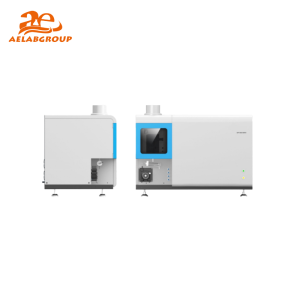
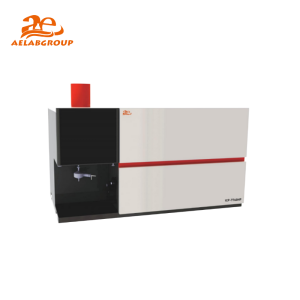
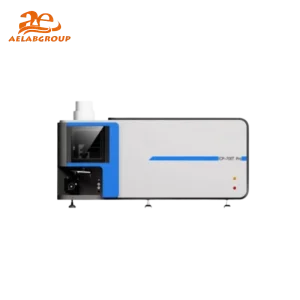
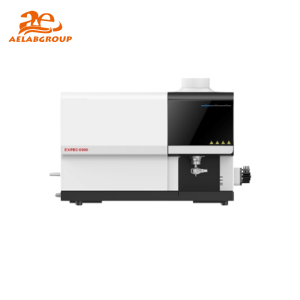
Inductively Coupled Plasma Mass Spectrometry or ICP-MS 7000H is an analytical technique used for element determination. It combines high temperature ICP (Inductively Coupled Plasma) source with a mass spectrometer. The ICP source converts the atoms of the elements in the sample to ions.These ions are then separated and detected by the mass spectrometer.
ICP-MS 7000H was created after core technical difficulties were overcome in mass spectrometry such as flow field control of high temperature gas, multistage gradient vacuum, high sensitivity ion interfaces, distributed collision reaction cells, quadrupole mass analyzer with temperature and humidity resistance, and etc., which is combined with liquid chromatography, online gas dilution system, automatic rapid injection,oxy-combustion, laser ablation, direct injection in atmosphere, organic injection, and other specialized technologies, and meets the needs of various professional applications; at the same time, the combination of Element V, a professional mass spectrometry software system, with standard methodology library, automatic tuning, guided operation mode and visualized status monitoring at any time, greatly reduces the difficulty of the operation of the mass spectrometry software system, and meets theextensive needs of laboratory applications.
Collision mode + KED to eliminate interference on mass spectrometry.
In the ICP, the polyatomic ions introduced by the solvent and sample matrix may result in serious interference in some target analytes. Therefore, the collision reaction cell (CRC) technology is used to eliminate this interference in quadrupole ICP-MS instruments. SUPEC 7000H is equipped with a new hexapole collision reaction cell system, which greatly enhances the interference elimination efficiency through collision, while maintaining the high-efficiency ion transmission capability. Combined with the ked working mode, SUPEC 7000H provides unparalleled performance in the simultaneous analysis of multiple elements in complex matrix samples. The patented waterfall flow type distributed gas injection system can achieve gas replacement in the cell most efficiently and quickly. The system can, while improving the collision effect, greatly improve the gas replacement speed, and reduce the analysis waiting time.
🔬 How It Works?
The ICP-MS 7000H uses a high-temperature plasma source to convert sample atoms into ions, which are then separated by a mass spectrometer according to their mass-to-charge ratios. Interferences from polyatomic ions are removed via a patented hexapole collision reaction cell combined with KED, ensuring highly accurate element detection even in complex sample matrices. Advanced software supports automated tuning and real-time status monitoring, simplifying operation for lab professionals.
💡 Advantages
-
Exceptional Sensitivity: Ion interface design enhances sensitivity up to 5x, enabling detection at ultra-trace ppt levels.
-
Superior Matrix Tolerance: Handles high-salt and complex samples without compromising performance.
-
Interference Elimination: Advanced collision reaction cell technology efficiently removes polyatomic ion interference.
-
Robust & Reliable: Unique onboard shock absorption design enables use in mobile or field settings.
-
Flexible Applications: Supports diverse sample introduction techniques including liquid chromatography and laser ablation.
🔍 Recommended Models by Use Case
-
Educational Labs: Basic single quadrupole ICP-MS for elemental teaching and routine analysis
-
Research Centers: Triple quadrupole ICP-MS for complex, multi-element investigations
-
Quality Control (QC): Fully automatic heavy metal analysis systems for pharmaceutical and food labs
-
Environmental Monitoring: Online atmospheric and water quality monitoring models
-
Industrial Applications: Solid direct injection and on-line impurity detection for semiconductor and petrochemical industries
🧪 Ideal For
-
Environmental testing (air, water, soil analysis)
-
Food and drug safety labs
-
Semiconductor material purity assessment
-
Nuclear and petrochemical industry quality control
-
Scientific research requiring trace element quantification
-
Emergency safety and hazardous material monitoring