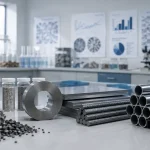
Ore Analysis Laboratory Instruments Guide Overview
Reliable ore analysis depends on more than selecting an analytical instrument. Mining laboratories need a complete workflow that produces representative samples, measures moisture and elemental composition, identifies mineral phases where necessary, evaluates relevant physical or metallurgical properties, and verifies analytical quality.
The main equipment families therefore include sample preparation instruments such as crushers, pulverizers, splitters, and sieves; balances, ovens, and furnaces for gravimetric work; XRF, ICP-OES, AAS, and fire assay equipment for chemical analysis; XRD and microscopy systems for mineralogy; and specialized instruments for comminution, flotation, leaching, and laboratory data management.
In the metals, mining, and metallurgy industry, these capabilities support resource evaluation, grade control, blending, beneficiation, metallurgical accounting, and final product verification. Instrument selection should be based on the ore type, target analytes or mineral phases, required detection capability, sample throughput, preparation method, and the decisions the laboratory must support.
Main Products and Applications
Ore analysis laboratories handle materials from exploration through mineral processing. Common sample types include:
- Run-of-mine (ROM) ore for initial grade assessment and resource modelling.
- Crushed and ground ore for grade control and evaluation of liberation or beneficiation performance.
- Mineral concentrates such as copper, zinc, lead, and iron ore fines for product quality and contract-related analysis.
- Tailings and process residues for monitoring recovery, losses, and process performance.
- Geochemical exploration samples such as drill cores, rock chips, and soils used in mineral exploration programs.
Because these materials can differ substantially in particle size, mineralogy, concentration range, and matrix, the analytical workflow should be matched to the sample type rather than relying on a single instrument or preparation method.
Ore Analysis Quality Control Workflow
1. Sampling and Sample Preparation
Representative sampling is the foundation of reliable ore analysis. Even a high-performance analytical instrument cannot correct a result obtained from a laboratory portion that does not adequately represent the bulk material. Preparation commonly involves crushing, splitting, pulverizing, and homogenizing the sample before a suitable test portion is taken for analysis.
Quality risks at this stage include segregation, contamination between samples, loss of fines, and insufficient size reduction. Particle size checks and controlled weighing can help confirm that prepared material is suitable for the selected analytical method. The required preparation sequence should reflect the ore characteristics and the test that follows.
Recommended laboratory equipment for this stage:
- Laboratory Jaw Crusher – Reduces larger ore and rock pieces to a size suitable for subsequent splitting or grinding.
- Pulverizer or Ring Mill – Produces fine material for analytical procedures that require a homogeneous powder.
- Riffle Splitter – Divides bulk or crushed material into smaller representative portions.
- Sieve Shaker and Test Sieves – Checks particle size distribution and helps verify size-reduction performance.
- Analytical Balance – Provides controlled sample and test-portion weighing for gravimetric and analytical procedures.

2. Moisture and Loss on Ignition (LOI) Determination
Moisture measurement is important when ore or concentrate grades, shipments, and process mass balances need to be considered on a dry-mass basis. Loss on ignition (LOI) provides additional information about mass changes that occur during controlled heating and can be relevant to materials containing volatile components, carbonates, hydrous phases, or other constituents that contribute to ignition loss.
Errors in moisture determination can propagate into dry-basis grade calculations and mass balances. Reliable testing therefore depends on controlled heating, weighing, cooling, and handling procedures appropriate to the material and method being used.
Recommended laboratory equipment for this stage:
- Laboratory Drying Oven – Provides controlled heating for gravimetric moisture determination and sample drying.
- Muffle Furnace – Provides higher-temperature heating for LOI and related gravimetric procedures.
- Moisture Analyzer – Supports rapid moisture measurement where its method and sample suitability meet the laboratory’s requirements.
- Desiccator – Provides a dry environment for cooling and holding heated samples before weighing.


3. Chemical Analysis and Assaying
Chemical analysis determines the concentrations of valuable metals, major constituents, and relevant impurity or penalty elements. These results can support resource evaluation, grade control, blending, concentrator operation, metallurgical accounting, and concentrate quality assessment.
No single analytical technique is ideal for every ore and concentration range. XRF is useful for rapid multi-element analysis of suitably prepared solid samples, while ICP-OES and AAS normally analyze solutions produced through an appropriate sample preparation or digestion procedure. Precious-metal workflows may use fire assay followed by a suitable measurement finish. Method choice should consider the target elements, expected concentrations, sample matrix, preparation requirements, required precision, and laboratory throughput.
Common sources of analytical error include unsuitable calibration, matrix effects or spectral interferences, incomplete sample decomposition, contamination, and results outside an instrument or method’s validated working range. Blanks, duplicates, reference materials, calibration controls, and validated preparation procedures help laboratories identify these problems.
Recommended laboratory equipment for this stage:
- X-ray Fluorescence Spectrometer (XRF) – Supports rapid multi-element analysis of appropriately prepared ore, concentrate, and related samples.
- Inductively Coupled Plasma Optical Emission Spectrometer (ICP-OES) – Measures multiple elements in prepared solutions and is useful when the required analytical method is based on sample dissolution.
- Atomic Absorption Spectrometer (AAS) – Provides element-specific measurement for metals such as Au, Ag, Cu, Pb, and Zn when used with a suitable preparation and analytical method.
- Fire Assay Furnace and Cupellation Equipment – Supports fire assay workflows used for precious-metal determination.
- Microwave Digestion System – Provides controlled sample digestion for compatible methods prior to solution-based instrumental analysis.


4. Mineralogical and Phase Analysis
Chemical assays report how much of an element is present, but they do not by themselves show which minerals contain that element or how those minerals are associated with gangue. Mineralogical information can therefore be important when evaluating beneficiation, flotation, leaching, or other processing routes.
X-ray diffraction can identify crystalline mineral phases, while optical and electron microscopy can provide information about mineral textures, grain associations, and localized elemental composition. The level of mineralogical analysis required depends on whether the laboratory is performing routine grade control, metallurgical troubleshooting, process development, or detailed geometallurgical work.
Recommended laboratory equipment for this stage:
- X-ray Diffractometer (XRD) – Identifies crystalline mineral phases in prepared samples and can support phase characterization.
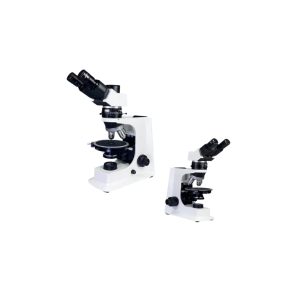
- Optical Microscope with Polarized Light – Supports mineral identification and examination of textures in appropriately prepared sections.
- Scanning Electron Microscope (SEM) with EDS – Provides high-resolution imaging together with localized elemental information for mineral grains and associations.
- Heavy Liquid Separation Setup – Separates compatible mineral fractions according to density for subsequent examination or analysis.

5. Physical and Metallurgical Performance Testing
Chemical composition alone does not determine how an ore will behave during processing. Physical and metallurgical testing can provide information relevant to comminution, density calculations, flotation response, and leaching performance.
Tests such as Bond ball mill work index testing, ore competency assessment, density measurement, batch flotation, and bottle-roll leaching are selected according to the process being evaluated. These tests are especially relevant during process development, engineering studies, plant optimization, and investigation of changing ore characteristics.
Recommended laboratory equipment for this stage:
- Bond Ball Mill Work Index Test Apparatus – Supports standardized grindability testing used in comminution evaluation and mill-design calculations.
- Autogenous Media Competency Test Equipment – Evaluates ore competency where autogenous or SAG milling behaviour is being investigated.
- Gas Pycnometer – Measures particle skeletal density for applicable density and material-characterization work.
- Laboratory Scale Flotation Machine – Conducts controlled batch flotation tests for process development and comparison of flotation conditions.
- Leaching Bottle Roll Apparatus – Supports controlled bottle-roll leaching studies using the laboratory’s selected and validated leach procedure.
6. Quality Control and Data Management
Analytical results need documented QA/QC controls before they can reliably support operational decisions. Depending on the method and laboratory program, these controls can include blanks, duplicates, certified reference materials (CRMs), calibration checks, and other control samples. Reviewing results over time can help identify analytical drift, contamination, preparation problems, or changes in precision.
Data management is also part of analytical quality. A Laboratory Information Management System (LIMS) can support sample identification, result capture, QA/QC review, reporting, and audit trails, while barcode or RFID-based tracking can improve chain-of-custody control where such systems are appropriate.
Recommended laboratory equipment for this stage:
- Laboratory Information Management System (LIMS) – Supports sample records, analytical data, QA/QC tracking, and reporting.
- Control Chart Software – Helps laboratories review QC results and identify changes in analytical performance over time.
- Sample Tracking System (barcode/RFID) – Supports sample identification, traceability, and reduction of manual transcription errors.

Common Quality Control Challenges in Mining Laboratory Operations
Mining laboratories must control both sampling and analytical sources of error. Common challenges include:
- Inhomogeneous ore samples – Poor crushing, splitting, pulverizing, or homogenization can reduce the representativeness and precision of analytical results.
- Matrix and spectral effects – Analytical methods may require suitable calibration, preparation, correction, or alternative measurement conditions for different ore matrices.
- Low analyte concentrations – Exploration and low-grade samples may require methods with appropriate detection capability and contamination control.
- Turnaround-time pressure – Production laboratories need sufficient preparation and analytical capacity to deliver useful results without compromising required QC procedures.
- Mine-site environmental conditions – Dust, vibration, temperature, utilities, and ventilation can influence instrument installation and laboratory layout.
- Operator and shift consistency – Documented preparation, calibration, QC, and maintenance procedures help reduce variation between operators and shifts.
Key Quality Control Tests for Ore Analysis
The following table links common mining laboratory problems with the test or control activity and the equipment typically involved.
| Quality Challenge | Quality Control Test | Recommended Laboratory Equipment | Application |
|---|---|---|---|
| Inhomogeneous samples | Crushing, pulverizing, and splitting | Jaw crusher, pulverizer, riffle splitter | Prepare representative laboratory portions for analysis |
| Moisture variation | Gravimetric moisture determination | Drying oven, analytical balance | Support dry-basis grade and mass calculations |
| Unknown mineral phases | X-ray diffraction (XRD) | X-ray diffractometer | Identify crystalline mineral phases relevant to process evaluation |
| Low gold concentrations | Fire assay with suitable instrumental finish | Fire assay furnace, AAS or other compatible finish | Precious-metal grade determination using the selected assay method |
| Multi-element quantification | XRF or solution-based multi-element analysis | XRF, ICP-OES, microwave digestion where applicable | Determine major, minor, or trace elements according to the selected method |
| Grinding energy evaluation | Bond ball mill work index test | Bond work index mill | Support comminution studies and mill-design calculations |
| Flotation performance | Laboratory batch flotation test | Lab flotation machine | Compare flotation conditions and metallurgical response |
| Data integrity | CRMs, blanks, duplicates, and QA/QC review | LIMS, analytical instruments, analytical balance | Monitor analytical quality and maintain traceable results |
Laboratory Equipment Required for Mining Quality Control
A mining quality-control laboratory normally combines sample preparation equipment with instruments selected for the actual analytical program. The essential configuration depends on the ore type, commodities being measured, concentration ranges, required turnaround time, and whether the laboratory performs only routine grade control or also supports exploration and metallurgical investigations.
For routine workflows, crushers, pulverizers, splitters, balances, and drying equipment establish the preparation foundation. XRF can provide rapid analysis of suitably prepared solids, while ICP-OES or AAS can support methods based on prepared solutions. Fire assay equipment may be required where precious-metal determination is part of the laboratory scope. XRD and advanced microscopy become more relevant when mineral phase or mineral-association information is required.
Physical and metallurgical equipment should likewise be selected according to the decisions the laboratory must support. A production grade-control laboratory does not necessarily require the same configuration as a metallurgical development laboratory or a central geometallurgy facility.
| Testing Requirement | Laboratory Equipment | Why the Laboratory Needs It |
|---|---|---|
| Sample size reduction | Laboratory jaw crusher, pulverizer | Prepare field or process samples for representative laboratory analysis |
| Elemental analysis | XRF, ICP-OES, AAS | Measure target elements using an analytical method suited to the sample and concentration range |
| Precious metal assaying | Fire assay furnace, cupellation equipment | Support fire assay workflows for precious-metal determination |
| Mineralogical identification | XRD diffractometer | Identify crystalline mineral phases relevant to ore characterization and processing |
| Moisture and LOI | Laboratory oven, muffle furnace | Measure moisture or controlled ignition mass change using appropriate gravimetric procedures |
| Grindability and competency | Bond work index mill and applicable competency test equipment | Generate data for comminution evaluation and engineering studies |
| Flotation testing | Laboratory flotation machine | Conduct controlled batch tests for process development and optimization |
| Data management | Laboratory Information Management System (LIMS) | Maintain sample records, QA/QC information, audit trails, and analytical reporting |
Together, these equipment groups create an analytical chain from sample receipt and preparation through measurement, QA/QC, and reporting. The most effective laboratory is not necessarily the one with the greatest number of instruments, but the one whose preparation capacity, analytical methods, QC controls, and throughput are matched to its operational requirements.
Basic Laboratory Setup for Mining Industry Manufacturers
Laboratory levels should be treated as configuration examples rather than fixed equipment packages. The appropriate setup depends on the commodity, analytical methods, sample volume, required turnaround time, and whether testing is performed on site or transferred to an external or central laboratory.
| Laboratory Level | Recommended Equipment | Suitable For |
|---|---|---|
| Basic QC Laboratory | Jaw crusher, pulverizer, riffle splitter, drying oven, analytical balance, basic XRF or AAS | Small mines, exploration camps, and routine grade-control applications where the selected analytical methods can be supported by this equipment |
| Advanced QC Laboratory | All basic equipment plus ICP-OES, XRD, muffle furnace, Bond mill, fire assay setup, LIMS | Operations requiring broader chemical, mineralogical, precious-metal, or metallurgical testing capability |
| Advanced Analysis Laboratory | Full capability: SEM-EDS, automated mineralogy, advanced LIMS, sample robots, multiple spectrometers | Central laboratories, research facilities, geometallurgy programs, and commercial assay services requiring broader analytical capability and higher levels of automation |
How to Choose Laboratory Equipment for Ore Analysis
Selecting ore analysis instruments starts with the analytical problem rather than the instrument name. Define what must be measured, what decisions the results will support, how many samples must be processed, and which preparation and QC steps are required before comparing equipment.
Define the Testing Scope
Start by listing the sample types, such as drill core, run-of-mine ore, concentrates, or tailings, and identify the elements, mineral phases, or physical properties that need to be measured. Expected concentration ranges and required analytical performance influence method selection.
For example, routine production control may prioritize rapid measurement of major or minor constituents, while exploration programs can require lower-level determination of selected pathfinder elements. Mineral-processing investigations may also require mineralogical or metallurgical information that cannot be supplied by elemental analysis alone.
Match the Instrument to the Analytical Method
Instrument selection should follow the required method and sample preparation route. XRF can be attractive when rapid solid-sample analysis is appropriate. ICP-OES or AAS may be preferable when the laboratory’s method requires solution analysis after digestion or another preparation procedure. XRD should be considered when crystalline phase identification is important, while fire assay equipment is relevant when the laboratory performs compatible precious-metal assay methods.
This test-first approach helps prevent a common purchasing problem: selecting an instrument with attractive capabilities before confirming that its sample preparation, analytical range, workflow, and QC requirements match the laboratory’s real application.
Evaluate Laboratory Workflow Requirements
Consider sample throughput, turnaround expectations, batch sizes, operator skill, and the time required for preparation as well as measurement. A high-throughput analytical instrument will not solve a workflow bottleneck if crushing, splitting, pulverizing, digestion, weighing, or reporting capacity is insufficient.
The physical laboratory environment also matters. Available space, electrical supply, gases where required, extraction or ventilation, water, dust control, vibration, and other installation conditions should be assessed for the specific instruments being considered.
Plan QA/QC, Calibration, and Data Handling
Equipment selection should include the resources required to keep the method under control. Consider reference materials, blanks, duplicate procedures, calibration or verification materials, maintenance routines, sample identification, result review, and data storage. Laboratories with higher sample volumes or more complex workflows may benefit from LIMS integration and automated sample tracking.
Compare Long-Term Equipment Support
Purchase price is only one part of instrument selection. Laboratories should also consider consumables, routine maintenance, calibration requirements, spare-parts availability, operator training, technical support, and the practical difficulty of servicing equipment at the installation location.
AELAB works with mining laboratories to help align instrument categories with testing scope, workflow, and long-term support requirements. Providing the ore type, target analytes, intended methods, expected sample volume, and laboratory environment makes it easier to identify an appropriate equipment configuration without unnecessary over-specification.
Who Needs Laboratory Testing Solutions for This Industry?
- Mining companies requiring on-site grade control and routine ore characterization.
- Mineral processing and metallurgical plants monitoring feed, concentrate, tailings, and process performance.
- Independent assay laboratories serving mineral exploration and mining operations.
- Research institutions investigating mineral characterization and mineral-processing methods.
- Engineering and equipment organizations performing ore grindability, competency, abrasion, or related process-development testing.
Frequently Asked Questions
What is the minimum equipment needed for a mine-site ore analysis lab?
A basic lab typically requires a jaw crusher, pulverizer, analytical balance, drying oven, and a simple spectrometer like an XRF or AAS. Add a riffle splitter and standard sieves for sample preparation, and a muffle furnace if LOI is needed.
The exact minimum configuration depends on the ore, target analytes, analytical method, required turnaround time, and whether some tests are sent to an external laboratory.
How do I choose between XRF and ICP-OES for ore samples?
XRF is ideal for fast, non-destructive analysis of solid samples across a wide elemental range, making it suitable for routine process control. ICP-OES offers lower detection limits and better accuracy for trace elements but requires sample digestion, so it is often used for exploration and detailed grade characterization.
The final choice should also consider the elements being measured, expected concentration range, sample matrix, preparation method, throughput, and the laboratory’s validated analytical procedure.
Why is mineralogical analysis important in ore evaluation?
Chemical assays only show total element content, but mineralogy reveals how those elements are distributed in different minerals. This affects recovery methods: for example, copper in oxide minerals leaches differently than in sulfides. XRD and microscopy help optimize processing routes.
Mineralogical analysis is particularly valuable when chemical grade alone cannot explain changes in recovery, reagent response, or processing behaviour.
How often should laboratory instruments be calibrated?
Calibration frequency depends on instrument type, usage intensity, and manufacturer recommendations. Many labs run quality control standards daily or with each sample batch to monitor performance, adjusting calibration when control charts indicate drift. Routine instrument maintenance checks also ensure long-term stability.
The laboratory’s validated method and QA/QC procedures should define the applicable calibration, verification, and control frequency for each instrument.
Conclusion
Reliable ore analysis requires a connected laboratory workflow rather than a single analytical instrument. Representative sample preparation comes first, followed by the chemical, mineralogical, physical, or metallurgical tests needed to support the mine or processing operation. QA/QC and traceable data handling then determine whether those results can be used confidently.
When planning or upgrading a mining laboratory, define the ore types, target analytes, test methods, sample throughput, turnaround requirements, and laboratory environment before selecting equipment. This approach helps determine which instruments are essential for routine work and which advanced capabilities are justified by the operation’s analytical and metallurgical needs.
Laboratory Equipment Solutions for the Mining Industry
At AELAB, we understand that the path from rock sample to report requires a coherent chain of instruments. By sharing details about your ore types, target metals, and daily sample volumes, we can help identify suitable jaw crushers, pulverizers, spectrometers, and supporting apparatus that fit your workflow. Our experience in mining lab setups enables us to map your testing requirements to practical instrument categories without guesswork.
Whether you are upgrading an existing mine-site lab or planning a new facility, please provide an outline of your expected test methods, current challenges, and laboratory environment. This information allows AELAB to suggest an equipment configuration that balances analytical performance, robustness, and operational efficiency, helping you build a laboratory that delivers dependable results for confident decision-making.