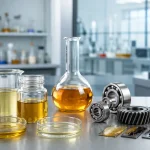
Oil Condition Monitoring Laboratory Equipment Overview
Reliable oil condition monitoring depends on matching each maintenance question with the right laboratory test and instrument. Core oil analysis equipment commonly includes viscometers, titrators, Karl Fischer moisture systems, particle counters, and instruments for wear-metal or chemical analysis. Specialized applications, such as transformer-oil monitoring, may require additional dielectric or dissolved-gas testing equipment.
Oil condition monitoring supports predictive maintenance by detecting changes in fluid condition, contamination, and machinery wear before those changes develop into more serious operating problems. As lubricants and insulating fluids operate under stress, laboratories can track physical and chemical properties and compare current results with historical trends and equipment-specific alarm criteria.
What Is Oil Condition Monitoring?
Oil condition monitoring is the systematic analysis of lubricants, hydraulic fluids, and insulating oils to evaluate both fluid health and machinery condition. Laboratories monitor parameters such as viscosity, acid or base number, water, particle contamination, wear metals, and chemical degradation indicators.
The required test package depends on the fluid and equipment being monitored. For example, hydraulic-system monitoring places strong emphasis on particle cleanliness and viscosity, while transformer-oil programs may also require dielectric and dissolved-gas testing.
Main Applications of Oil Condition Monitoring
- Internal combustion engines – monitoring engine oil for changes associated with contamination, degradation, soot, and component wear.
- Gas and steam turbines – monitoring turbine-oil condition, oxidation, water, and cleanliness in critical lubrication systems.
- Hydraulic systems – controlling particle contamination and fluid viscosity to support reliable valve, pump, and actuator operation.
- Transformers – assessing insulating-oil condition through tests such as dielectric strength, moisture analysis, and dissolved-gas analysis where required.
- Compressors – monitoring lubricant degradation, contamination, and wear indicators in rotary and reciprocating equipment.
- Industrial gearboxes – tracking lubricant condition and ferrous or elemental wear debris associated with gears and bearings.
Oil Condition Monitoring Laboratory Testing Process
Sample Collection and Handling
Representative sampling is the foundation of reliable oil analysis. Samples should be collected consistently from suitable sampling points using clean equipment so that the laboratory result reflects the condition of the operating fluid rather than contamination introduced during sampling.
QC checks: verify bottle cleanliness, record relevant sample and machine information, label samples immediately, and visually inspect for conditions such as free water or sediment.
Recommended equipment:
- Sampling pumps and clean tubing
- Pre-cleaned polyethylene or glass sample bottles
- Suitable sample transport containers
Sample Preparation
Preparation requirements depend on the analytical method and the condition of the sample. Viscous oils may require controlled warming, while some analytical techniques require dilution or other method-specific preparation. Homogenization before subsampling helps reduce bias when contaminants or wear debris are unevenly distributed.
QC checks: confirm the required preparation procedure, verify dilution where applicable, minimize air bubbles when they could affect the test, and control sample temperature when the method requires it.
Recommended equipment:
- Heating blocks or water baths
- Analytical balances
- Micropipettes and disposable tips


Physical Property Testing
Physical-property testing helps identify changes in lubricant condition and possible contamination. Kinematic viscosity is particularly important because a significant change from the expected value or historical trend can indicate degradation, contamination, or mixing with another fluid. Density and low-temperature properties may also be relevant depending on the lubricant and application.
QC checks: use suitable reference materials where required, verify temperature control, and use replicate measurements when appropriate to confirm questionable results.
Recommended equipment:
- Kinematic viscometer baths
- Density meters
- Pour point testers


Chemical Analysis
Chemical analysis evaluates lubricant degradation, additive condition, and contamination. Total acid number (TAN) and total base number (TBN) provide different indicators of oil chemistry, while FTIR spectroscopy can support trend analysis for chemical changes such as oxidation and other condition indicators. Karl Fischer titration is used when quantitative water determination is required.
QC checks: use blanks, standards, or reference materials as required by the method, verify electrode or instrument condition, and manage reagents according to the analytical procedure.
Recommended equipment:
- Auto-titrators for TAN/TBN
- Karl Fischer moisture titrators
- FTIR spectrometers suitable for oil analysis

Contaminant and Wear Analysis
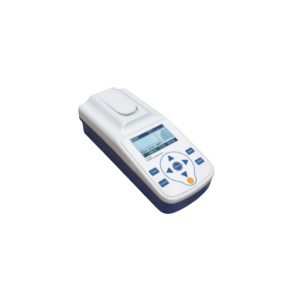
Contamination and wear analysis connects lubricant condition with machinery condition. Particle counters quantify suspended particle contamination, elemental analysis measures wear metals and other elements within the capability of the selected technique, and ferrous debris monitoring helps evaluate magnetic wear particles. These methods are complementary rather than interchangeable.
QC checks: maintain instrument cleanliness, use appropriate standards or verification materials, control sample preparation, and investigate results that do not agree with historical trends or related tests.
Recommended equipment:
- Laser particle counters
- ICP-OES or RDE spectrometers
- Ferrous debris monitors


Data Interpretation and Reporting
A single oil-analysis result is most useful when it can be compared with the correct fluid specification, equipment history, operating conditions, and previous samples. Laboratories therefore combine analytical results with trend analysis and equipment-specific alarm criteria rather than interpreting every measurement in isolation.
QC checks: review alarm logic, validate sample and data entry, investigate unexpected changes, and ensure reports receive appropriate technical review.
Recommended equipment:
- Laboratory information management systems (LIMS)
- Trend analysis software
- Workstations for data review and reporting
Key Quality Control Tests for Oil Condition Monitoring
| Quality Control Test | Purpose | Common Laboratory Equipment | Relevant Product Types / Applications |
|---|---|---|---|
| Kinematic Viscosity | Measure flow resistance and identify changes associated with degradation, dilution, contamination, or fluid mixing | Viscometer bath, capillary tubes | Engine oils, hydraulic fluids, turbine oils, gear oils |
| Total Acid Number (TAN) | Monitor changes in acidic constituents and oil degradation | Auto-titrator | Industrial oils, turbine oils, insulating oils where applicable |
| Total Base Number (TBN) | Assess remaining alkaline reserve in applications where base reserve is an important condition indicator | Auto-titrator | Primarily engine oils |
| Water Content (Karl Fischer) | Quantify water contamination that can affect lubricant performance and equipment condition | Karl Fischer titrator | Lubricants, hydraulic fluids, turbine oils, insulating oils |
| Particle Count (ISO 4406) | Classify solid-particle contamination and monitor fluid cleanliness | Laser particle counter | Hydraulic fluids, turbine oils, gear oils |
| Wear Metal Analysis | Measure elements associated with wear, contamination, or additives and support machinery-condition trending | ICP-OES or other suitable elemental-analysis system | Engine, gearbox, turbine, compressor, and hydraulic oils |
| FTIR Spectroscopy | Monitor chemical condition indicators and degradation trends | FTIR spectrometer | Engine oils, gear oils, turbine oils and other lubricants where suitable methods are available |
| Ferrous Debris Analysis | Monitor magnetic wear debris associated with ferrous components | Ferrous debris monitor | Gearboxes, transmissions, bearings, turbines |
| Dielectric Strength | Evaluate the electrical breakdown behavior of insulating oil | Oil dielectric tester | Transformer and other electrical insulating oils |
| Dissolved Gas Analysis | Analyze gases dissolved in insulating oil to support assessment of transformer condition | Gas chromatograph or suitable DGA system | Electrical insulating oils |
Core vs Specialized Oil Analysis Laboratory Equipment
Not every oil condition monitoring laboratory requires every instrument. The correct configuration depends on the machines, fluids, failure modes, test methods, and sample volume the laboratory must support.
For a general industrial lubrication program, viscosity, water, particle contamination, oil chemistry, and wear monitoring are common priorities. A laboratory serving transformer fleets has a different test profile and may require dedicated insulating-oil equipment. Similarly, a high-throughput commercial oil-analysis laboratory may justify greater automation than an on-site maintenance laboratory processing a smaller number of samples.
| Laboratory Need | Typical Test Focus | Relevant Equipment Families |
|---|---|---|
| General lubricant condition | Viscosity, oil chemistry, water | Viscometer, titrator, Karl Fischer system, FTIR where applicable |
| Hydraulic and turbine cleanliness | Particle contamination, water, viscosity | Particle counter, Karl Fischer system, viscometer |
| Machinery wear monitoring | Wear metals and ferrous debris | Elemental-analysis system, ferrous debris monitor |
| Engine-oil monitoring | Viscosity, TBN/TAN where applicable, contamination, wear, chemical condition | Viscometer, titrator, elemental-analysis system, FTIR and supporting instruments |
| Transformer-oil monitoring | Moisture, dielectric properties, dissolved gases and other required insulating-oil tests | Karl Fischer system, dielectric tester, DGA equipment and other application-specific instruments |
Recommended Laboratory Equipment for Oil Condition Monitoring Laboratories
| Laboratory Equipment | Main Application | Why It Matters |
|---|---|---|
| Kinematic Viscometer Bath | Viscosity measurement at controlled temperatures | Viscosity trending helps identify lubricant degradation, contamination, or incorrect fluid condition |
| Auto-titrator (TAN/TBN) | Acid and base number determination | Supports repeatable monitoring of chemical-condition indicators and additive reserve where applicable |
| Karl Fischer Moisture Titrator | Quantitative water determination | Provides a dedicated method for monitoring water contamination in lubricants and insulating fluids |
| FTIR Spectrometer | Chemical-condition and degradation trending | Provides spectroscopic information that can complement physical-property and chemical tests |
| ICP-OES or Other Elemental-Analysis System | Elemental and wear-metal analysis | Supports trending of elements associated with wear, contamination, and lubricant composition |
| Laser Particle Counter | Fluid cleanliness classification | Provides quantitative particle data for contamination-sensitive lubrication and hydraulic systems |
| Ferrous Debris Monitor | Magnetic wear-debris measurement | Complements elemental analysis by providing additional information about ferrous wear debris |
| Oil Dielectric Strength Tester | Breakdown-voltage testing of insulating oils | Supports condition assessment for electrical insulating-fluid applications |
| Sample Preparation Tools | Heating, homogenization, weighing, and dilution where required | Consistent preparation reduces avoidable analytical variation and supports repeatable testing |
| Laboratory Software (LIMS) | Sample, data, and trend management | Helps connect individual analytical results with historical condition-monitoring data |
How to Choose Laboratory Equipment for Oil Condition Monitoring
Selecting oil condition monitoring laboratory equipment should begin with the fluids, machines, and maintenance decisions the laboratory must support. A transformer-oil laboratory, an engine-oil analysis facility, and an industrial hydraulic-fluid laboratory may share some instruments but require different specialized capabilities.
Consider the following factors:
- Sample types and required tests: Define the fluids being analyzed and the parameters that must be measured before selecting instruments. This prevents purchasing equipment that does not match the actual test program.
- Failure modes and maintenance objectives: Match each test to the condition you need to detect. Particle counting supports contamination control, while wear-metal and ferrous-debris analysis provide different information about machinery wear.
- Sample throughput and automation: Laboratories processing larger sample volumes should evaluate sample handling, autosampler options where available, test cycle workflow, and data transfer as part of instrument selection.
- Required analytical performance: Confirm that the selected instrument and method provide suitable measurement capability for the fluids and decisions involved. Required performance should be defined from the applicable method and laboratory program rather than assumed from a generic specification.
- Calibration and quality control: Consider reference materials, calibration requirements, verification procedures, reagent management, and routine QC before purchase.
- Sample characteristics: Viscosity, contamination level, water content, debris size, and fluid chemistry can affect instrument and preparation requirements.
- Maintenance, consumables, and technical support: Review routine maintenance needs, consumable availability, service access, and operator training because these factors affect long-term laboratory uptime.
- Data management: For condition-monitoring programs, the ability to compare results with historical data can be as important as the individual measurement. Consider how instruments will integrate with reporting or LIMS workflows.
- Future expansion: If the laboratory expects to add new fluid types, test methods, or sample volume, consider whether the initial configuration can support practical expansion.
A practical purchasing sequence is to define the required test menu first, separate core tests from specialized tests, estimate sample throughput, and then select instruments that fit the analytical and operational requirements. Working with an experienced laboratory-equipment supplier can also help laboratories compare instrument types and build a configuration around their actual testing needs.

Frequently Asked Questions
What are the most important tests for industrial oil monitoring?
The most useful test package depends on the lubricant and machine, but viscosity, water content, particle contamination, oil chemistry, and wear analysis are common condition-monitoring priorities. Together, these tests help laboratories evaluate fluid degradation, contamination, and machinery wear.
How often should oil analysis be performed?
There is no single sampling interval that is correct for every machine. Frequency should reflect equipment criticality, operating conditions, failure history, lubricant type, and how quickly a developing problem must be detected. Consistent sampling intervals are particularly valuable for trend analysis.
Can one instrument perform multiple tests?
Some analytical platforms provide multiple condition indicators, but no single instrument replaces every oil-analysis method. Laboratories normally select a combination of instruments based on the fluids, required tests, sample throughput, and maintenance decisions the data must support.
What is the difference between TAN and TBN?
TAN (total acid number) is used to monitor acidic constituents and changes associated with oil condition, while TBN (total base number) indicates alkaline reserve. TBN is especially relevant to many engine-oil applications, whereas TAN is used across a wider range of lubricant and industrial-fluid condition-monitoring programs.
How do I interpret particle count results?
Particle-count results should be interpreted against the cleanliness requirements and historical trend for the specific fluid and machine. ISO 4406 is commonly used to express fluid cleanliness using particle-count codes. A change in cleanliness code can indicate increased contamination, but the maintenance significance depends on the equipment and its target cleanliness level.
What sample volume is typically required?
Required sample volume depends on the number of tests, the instruments and methods used, and whether sufficient material must be retained for repeat or confirmatory analysis. Laboratories should define bottle size and sampling volume from their actual test package rather than assuming one universal volume for every oil-analysis program.
Conclusion
An effective oil condition monitoring laboratory is built around the maintenance questions it needs to answer. Viscosity, water, particle contamination, chemical condition, and wear analysis form a strong foundation for many lubricant-monitoring programs, while applications such as transformer-oil analysis may require additional specialized testing.
The most useful equipment configuration is therefore not necessarily the laboratory with the greatest number of instruments. It is the one that connects each relevant failure mode or fluid-condition question to an appropriate test, instrument, quality-control procedure, and historical trend. Defining the test menu, sample types, throughput, and reporting requirements before purchasing equipment helps laboratories build a more practical condition-monitoring workflow.