

Inconsistent DNA or RNA quantification can disrupt PCR, cloning, sequencing, gene-expression analysis, and other downstream workflows. The problem may come from the instrument, but it can also result from an incorrect blank, poor sample mixing, contamination, an unsuitable measurement method, or misinterpretation of purity ratios.
A micro volume spectrophotometer for DNA quantification measures nucleic-acid absorbance from a small sample placed on an optical pedestal. However, reliable results require more than placing a droplet on the instrument.
This guide explains how micro volume absorbance works, what it can and cannot determine, when fluorescence or qPCR may be more appropriate, and how to compare the AELAB NANO-100, NANO-300, NANO-400A, NANO-500, and NANO-600.
Important: Published concentration ranges and sensitivity values are manufacturer specifications. Laboratories should verify performance using representative samples, compatible assays, appropriate reference materials, and their own acceptance criteria.
Quick DNA/RNA Quantification Decision Guide
| Analytical Need | Recommended Approach | Important Limitation |
|---|---|---|
| Routine concentration and purity screening of purified DNA or RNA | Micro-volume UV absorbance | Measures total UV-absorbing material and cannot fully distinguish DNA, RNA, free nucleotides, or some contaminants. |
| Low-concentration DNA or RNA | Consider a compatible fluorescence assay | Fluorescence requires assay reagents and compatible excitation and emission filters. |
| DNA-specific or RNA-specific quantification in a mixed sample | Fluorescence with an analyte-selective assay | Selectivity depends on the assay chemistry and sample matrix. |
| NGS library quantification | Absorbance for initial purity screening; fluorescence, qPCR, or dPCR for workflow-specific quantification | Absorbance alone does not identify correctly adapted and amplifiable library molecules. |
| DNA fragment size, degradation, or RNA integrity | Electrophoresis, capillary analysis, or another integrity-assessment method | A micro volume spectrophotometer does not directly determine fragment size or integrity. |
| Bacterial or microbial growth monitoring | Cuvette-based OD600 measurement | Confirm that the selected instrument includes the required cuvette and OD600 configuration. |
How Micro Volume Spectrophotometry Measures DNA and RNA
Absorbance at 260 nm
DNA and RNA absorb ultraviolet light strongly near 260 nm. The instrument measures absorbance and uses the selected optical pathlength and nucleic-acid conversion factor to calculate concentration.
The operator must select the correct analysis type, such as dsDNA, ssDNA, RNA, or oligonucleotide. Using the wrong program can produce an incorrect concentration because different nucleic-acid types use different calculation factors.
Automatic Pathlength Selection
Micro volume instruments use short optical pathlengths to measure concentrated samples without manual dilution. Models with several pathlength options can select a shorter path for concentrated samples and a longer path for less concentrated samples.
Pathlength capability affects the published dynamic range. For example, the NANO-300 and NANO-500 list pathlengths from 0.03 to 1 mm and a published dsDNA absorbance range of 2–37,500 ng/µL.
A260/A280 and A260/A230 Ratios
The A260/A280 and A260/A230 ratios provide useful screening information about sample composition:
- An A260/A280 ratio near 1.8 is commonly associated with relatively pure DNA.
- An A260/A280 ratio near 2.0 is commonly associated with relatively pure RNA.
- An A260/A230 ratio near approximately 2.0–2.2 is often expected for well-purified nucleic acid.
These values are guidelines, not universal pass-or-fail limits. They can change with sample concentration, pH, ionic strength, extraction chemistry, blank solution, residual reagents, and baseline quality.
Purity ratios may become unstable or misleading at low nucleic-acid concentrations, particularly near the lower reliable range of absorbance measurement. Always examine the complete spectrum instead of judging sample quality from one ratio alone.
What Absorbance Can and Cannot Tell You
Concentration
Absorbance estimates the total amount of material contributing to absorbance near 260 nm. This provides a rapid concentration estimate when the sample is sufficiently pure and the correct analysis factor is selected.
Purity Indicators
The full spectrum and absorbance ratios can indicate possible contamination by protein, phenol, guanidine salts, carbohydrates, extraction reagents, turbidity, or particulates.
However, a normal ratio does not prove that a sample is free from all contaminants or suitable for every downstream application.
Integrity
A micro volume spectrophotometer does not directly determine:
- DNA fragment size
- DNA degradation
- RNA integrity number
- Presence of properly adapted sequencing-library molecules
- Amplifiability in PCR or qPCR
When integrity or fragment distribution matters, use a complementary method such as gel electrophoresis, capillary electrophoresis, fragment analysis, or another application-specific QC test.
Potential Overestimation
Absorbance may overestimate DNA or RNA concentration when the sample contains other UV-absorbing materials, including:
- Another type of nucleic acid
- Free nucleotides
- Phenol
- Guanidine or extraction reagents
- Some fluorescent dyes
- Proteins or peptides
- Turbidity and suspended particles
Absorbance results should therefore be interpreted together with the spectrum, purity indicators, extraction method, and downstream application.
Absorbance vs. Fluorescence vs. qPCR
| Method | Main Strength | Main Limitation | Typical Use |
|---|---|---|---|
| UV absorbance | Fast, reagent-free concentration estimate with spectrum and purity ratios | Limited selectivity for a specific nucleic-acid type and susceptible to UV-absorbing contamination | Routine purified DNA/RNA concentration and purity screening |
| Fluorescence | Greater sensitivity and analyte selectivity with a compatible binding assay | Requires reagents, compatible filters, incubation conditions, and assay-specific calibration | Low-concentration samples and DNA- or RNA-selective quantification |
| qPCR or dPCR | Measures amplifiable or target-specific molecules | More time, reagents, method setup, and assay controls are required | NGS library quantification, target-specific analysis, and amplifiable-template assessment |
When Absorbance Is Usually Sufficient
Absorbance may be sufficient when:
- The sample is purified and within the verified absorbance range.
- The main goal is a rapid concentration estimate and purity screening.
- The downstream method tolerates the measurement uncertainty established by the laboratory.
- The full spectrum does not show significant contamination or baseline problems.
When Fluorescence Should Be Considered
Consider fluorescence when:
- The concentration is near or below the reliable absorbance range.
- DNA-specific or RNA-specific quantification is required.
- The sample may contain other UV-absorbing materials.
- The absorbance spectrum is noisy or inconsistent.
- The downstream workflow requires a more selective concentration result.
Fluorescence is not automatically immune to matrix effects. Contaminants, incorrect assay preparation, incompatible tubes, photobleaching, incubation time, or an unsuitable standard can also affect the result.
NGS Library Quantification
Absorbance is useful for initial concentration and purity screening during an NGS workflow. However, final library quantification may require a dsDNA-specific fluorescence assay, qPCR, dPCR, or a library-specific assay depending on the sequencing platform and library-preparation method.
qPCR-based library assays can selectively measure library fragments that contain the required adapter sequences, which absorbance alone cannot identify.
How to Select a Micro Volume Spectrophotometer
Sample Volume
The current AELAB NANO product pages generally list a sample volume of 0.5–2.0 µL. The NANO-300 and NANO-500 specifications advise using 2 µL.
A larger valid droplet can improve formation of the liquid column and reduce errors caused by evaporation, bubbles, poor contact, or incorrect pipetting. Follow the manual for the selected model and application.
Concentration and Absorbance Range
Select an instrument whose verified working range covers both the lowest and highest concentrations routinely expected in the laboratory.
A very high published upper range may reduce the need for dilution, but it does not prove equal accuracy across the entire range. Ask for linearity, repeatability, and verification data near your actual working concentrations.
Cuvette and OD600 Capability
A cuvette holder and a dedicated OD600 mode are related but not identical features. A full-spectrum cuvette holder may permit measurement at 600 nm, while a dedicated OD600 mode may provide a defined wavelength band and workflow for microbial-growth measurement.
Confirm:
- Whether a cuvette holder is included or optional
- Supported cuvette types and pathlengths
- Whether OD600 is a dedicated method
- Published OD600 absorbance range
- Temperature and stirring functions
Fluorescence Configuration
Do not select a fluorescence-capable instrument based only on a general sensitivity claim. Confirm:
- Whether the fluorometer is standard or optional
- Excitation and emission wavelengths
- Compatible assay kits and dyes
- Sample volume
- Assay-specific concentration range
- Required standards and consumables
- Repeatability and linearity specifications
Software and Data Requirements
For routine research, USB export and onboard calculation may be sufficient. QC or controlled environments may also require:
- User accounts and permission levels
- Audit trail
- Data backup
- Result locking or approval
- Network or LIMS connectivity
- Method version control
- Electronic-record compliance
A touchscreen, printer, or high measurement precision does not by itself establish regulatory compliance.
AELAB NANO Model Comparison

The table below summarizes information shown on the current public AELAB product pages. Optional configurations and inconsistent public claims should be confirmed through the latest manual, datasheet, and quotation.
| Model | Published dsDNA Range | Absorbance Range (10 mm equivalent) |
Cuvette / OD600 | Fluorescence | Heating / Stirring | Potential Fit |
|---|---|---|---|---|---|---|
NANO-400A |
2–4,500 ng/µL | 0.04–90 A | Not listed on the current public specification table | Not listed | Not listed | Routine micro-volume absorbance where the listed concentration range is sufficient |
NANO-300 |
2–37,500 ng/µL | 0.02–750 A | Cuvette holder and OD600 range of 0–4 A are listed | Not confirmed in the current numerical specification table; request the latest configuration | 37°C; 100–900 rpm | Wide absorbance range with cuvette, OD600, heating, and stirring requirements |
NANO-600 |
2–15,000 ng/µL | 0.02–300 A | Dedicated 600 ± 8 nm mode; 0–4 A | Not listed | Not listed | Micro-volume absorbance plus a clearly specified OD600 cuvette workflow |
NANO-500 |
2–37,500 ng/µL by absorbance | 0.02–750 A | Cuvette holder and OD600 range of 0–4 A are listed | Yes. The numerical table lists dsDNA HS at 0.01–120 ng/µL and dsDNA BR at 0.2–2,000 ng/µL. | 37°C; 100–900 rpm | Combined absorbance and confirmed fluorometer specifications |
NANO-100 |
Published up to 38,880 ng/µL; lower verified limit should be confirmed | 0–780 A | Dedicated 600 ± 8 nm mode; 0–4 A | Optional filter configurations are listed; assay-specific concentration range is not shown | Optional 25–40°C; 300–1,000 rpm | Wide absorbance range with optional fluorescence, heating, stirring, battery, and audit-trail configurations |
Comparison note: Published ranges may use different test conditions. Do not rank model sensitivity or accuracy without reviewing the latest datasheet, assay configuration, standards, and representative application data.
-
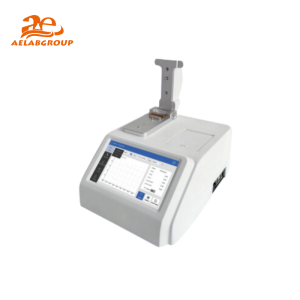 AELAB Micro Volume Spectrophotometer NANO-300 – Precision DNA/RNA AnalysisRead more
-
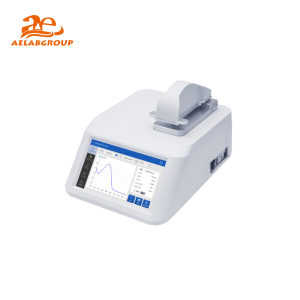 AELAB Micro Volume Spectrophotometer NANO-400A – Precision for Micro-Sample Analysis$2,680.00 Select options This product has multiple variants. The options may be chosen on the product page
-
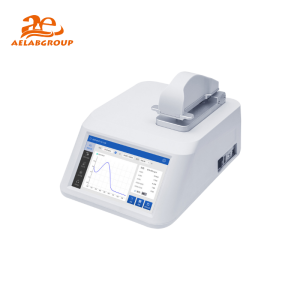 AELAB Micro Volume Spectrophotometer NANO-600 – Precision AnalysisRead more
-
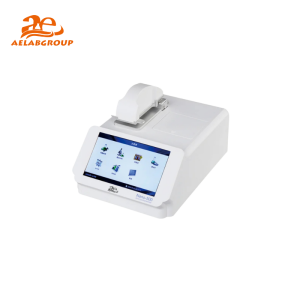 AELAB NANO-500 Micro Volume Spectrophotometer – High-Precision Biomolecule AnalysisRead more
-
 Micro Spectrophometer NANO-100Read more
Important Product-Data Clarifications
NANO-300 Fluorescence Status
The current NANO-300 public page contains general text referring to high-sensitivity or fluorescence performance, but its numerical specification table does not include fluorometer sample volume, filters, fluorescence range, linearity, or repeatability.
Therefore, fluorescence should not be treated as a confirmed standard NANO-300 capability until the current manual, datasheet, and quotation identify the installed fluorometer configuration.
NANO-500 Fluorescence Range
The NANO-500 public marketing text mentions detection down to 0.5 pg/µL, while its numerical specification table lists a dsDNA high-sensitivity range beginning at 0.01 ng/µL, equivalent to 10 pg/µL.
Use the numerical assay-specific range for preliminary comparison and request clarification of the stated detection limit, quantification limit, assay kit, filters, and calculation method before purchase.
Fluorescence Dye Compatibility
The NANO-500 specification lists standard and optional excitation and emission wavelengths, but the public table does not name every compatible dye or assay kit.
Do not assume compatibility with a branded assay solely from a similar wavelength. Ask AELAB to confirm the exact assay, reagent kit, calibration procedure, and installed filter set.
Practical Workflow for Reliable DNA/RNA Measurement

1. Select the Correct Analysis Program
Choose dsDNA, ssDNA, RNA, oligonucleotide, or the appropriate custom method before measuring the sample. The wrong calculation factor can produce a systematic concentration error.
2. Use a Matched Blank
Blank with the same solution used to dissolve or elute the sample. The blank should match the sample buffer in composition, pH, ionic strength, and additives as closely as possible.
Using water as the blank for a sample dissolved in TE, EB, or an extraction buffer can distort the baseline and purity ratios.
3. Mix and Briefly Centrifuge the Sample
Mix the sample using a method appropriate for the nucleic-acid type. High-molecular-weight genomic DNA may require gentle mixing to avoid unnecessary shearing.
Brief centrifugation can collect liquid from the tube wall and help remove bubbles from the portion being pipetted.
4. Use a Verified Pipette and Valid Sample Volume
Small pipetting errors become significant when measuring 0.5–2.0 µL. Use a pipette that performs reliably at the selected volume and verify its condition regularly.
For the NANO-300 and NANO-500, the public specifications advise using 2 µL. Follow the selected model’s manual and ensure that the droplet forms a complete liquid bridge between the optical surfaces.
5. Inspect the Droplet
Avoid bubbles, visible particles, incomplete pedestal coverage, or a droplet that spreads outside the measurement surface. Reload the sample when the liquid column does not form correctly.
6. Review the Complete Spectrum
Do not accept or reject a sample using only its calculated concentration or A260/A280 value. Review:
- Overall spectral shape
- Baseline behavior
- Absorbance around 230, 260, and 280 nm
- Unexpected peaks
- Instrument warnings
- Whether the result falls within the verified range
7. Use Replicates When Required
Replicate measurements can help identify pipetting problems, sample heterogeneity, pedestal contamination, or results close to an acceptance limit.
The number of replicates and acceptable difference should be defined by the laboratory’s method and downstream requirements. There is no universal percentage limit suitable for every PCR, cloning, or sequencing workflow.
8. Clean the Measurement Surfaces
Clean the pedestal between samples using the procedure specified in the instrument manual. Use clean, non-abrasive materials and avoid scratching or damaging the optical surfaces.
After high-concentration or potentially sticky samples, confirm that a fresh blank returns to an acceptable baseline before measuring the next sample.
9. Verify Instrument Performance
At a frequency defined by the laboratory, verify:
- Wavelength performance
- Absorbance performance
- Pathlength operation
- Repeatability
- Linearity across the laboratory’s working range
- Pipette performance
- Fluorescence performance when applicable
Use appropriate verification standards, reference solutions, or manufacturer-recommended procedures rather than relying solely on an informal DNA dilution series.
Which AELAB NANO Model Fits Your Workflow?
NANO-400A: Routine Absorbance Measurements
The NANO-400A may suit laboratories whose DNA and RNA samples fall within its published 2–4,500 ng/µL dsDNA range and that do not require a listed cuvette, OD600, heating, stirring, or fluorescence configuration.
NANO-300: Wide Absorbance Range with Cuvette Functions
The NANO-300 may suit laboratories that require a published absorbance range up to 750 A, dsDNA measurements up to 37,500 ng/µL, a cuvette holder, OD600 measurement, and cuvette heating and stirring.
Confirm fluorescence availability separately because the current public marketing text and numerical specification table are not aligned.
NANO-600: DNA/RNA Measurement and Dedicated OD600
The NANO-600 may suit molecular biology or microbiology laboratories that need micro-volume absorbance plus a clearly specified 600 ± 8 nm cuvette mode for microbial-growth measurements.
NANO-500: Absorbance and Fluorescence
The NANO-500 may suit laboratories that require both wide-range absorbance and a documented fluorometer configuration. Before purchase, confirm the installed filters, compatible assay kits, fluorescence standards, detection range, and consumable requirements.
NANO-100: Configurable Multi-Mode Operation
The NANO-100 may suit laboratories that need a wide published absorbance range, dedicated OD600, and optional functions such as fluorescence, cuvette heating and stirring, battery operation, or audit-trail permissions.
Because several features are optional, the quotation should identify exactly which modules and software functions are included.
Need help selecting a micro volume spectrophotometer?
Send AELAB your sample types, expected concentration range, required reporting limit, minimum sample volume, need for OD600 or cuvette assays, fluorescence assay requirements, daily sample volume, and data-management expectations. This information allows the technical team to confirm the appropriate NANO configuration.
Information to Provide Before Requesting a Quote
- Sample types: dsDNA, ssDNA, RNA, oligonucleotides, proteins, or cell cultures
- Expected minimum and maximum concentration
- Required reporting or quantification limit
- Typical sample volume available
- Extraction buffers and possible contaminants
- Need for absorbance only or absorbance plus fluorescence
- Required fluorescence assays or dyes
- Need for a cuvette holder or dedicated OD600 mode
- Need for cuvette heating and stirring
- Number of samples measured per day
- Required data-export format
- Need for user permissions, audit trail, printer, battery, or LIMS connection
- Verification standards and quality-system requirements
Conclusion
Reliable DNA and RNA quantification depends on selecting the correct measurement method and using it correctly. Micro-volume absorbance provides fast, reagent-free concentration estimates and useful purity indicators, but it does not directly determine nucleic-acid integrity or selectively distinguish every UV-absorbing component.
Fluorescence can provide greater sensitivity and selectivity when a compatible assay is used. qPCR or dPCR may be more appropriate when the workflow requires measurement of amplifiable or correctly adapted molecules.
The AELAB NANO series includes models for routine absorbance, high-concentration samples, dedicated OD600 workflows, cuvette heating and stirring, fluorescence, and optional data-control functions. Final selection should rely on confirmed configuration details and representative application data—not only the largest range or lowest sensitivity value shown in marketing material.
Next step: Define your sample type, concentration range, downstream application, fluorescence requirements, OD600 needs, and data-management expectations. Then request a configuration that lists the included hardware, filters, software functions, consumables, and verified analytical range.
Frequently Asked Questions
What sample volume is required for an AELAB NANO spectrophotometer?
The current product pages generally list 0.5–2.0 µL. The NANO-300 and NANO-500 specifications advise using 2 µL. Follow the model manual and confirm that the sample forms a complete liquid column.
Can a micro volume spectrophotometer distinguish DNA from RNA?
Not reliably by absorbance alone. DNA and RNA both absorb near 260 nm. The instrument calculates concentration using the selected analysis factor, but a mixed DNA/RNA sample may require a selective fluorescence assay or another method.
Why can absorbance overestimate DNA concentration?
Absorbance measures all material contributing to the UV signal. RNA, free nucleotides, phenol, guanidine, some dyes, turbidity, and other contaminants may increase the apparent concentration.
Are A260/A280 ratios reliable below 10 ng/µL?
Purity ratios may become inaccurate or unstable at low nucleic-acid concentrations. Review the full spectrum and consider a compatible fluorescence assay when the sample is near the lower reliable absorbance range.
Does a good A260/A280 ratio prove that DNA or RNA is pure?
No. It is a screening indicator. Interpret it together with A260/A230, the complete spectrum, concentration, extraction chemistry, blank, and downstream performance.
Can a micro volume spectrophotometer measure DNA or RNA integrity?
No. It estimates concentration and provides spectral purity indicators. Use electrophoresis, capillary analysis, fragment analysis, or another suitable method to assess size distribution or degradation.
When should fluorescence be used instead of absorbance?
Consider fluorescence for low-concentration samples, DNA- or RNA-selective quantification, samples containing UV-absorbing contaminants, or workflows requiring greater selectivity.
Is absorbance sufficient for final NGS library quantification?
Absorbance is useful for initial concentration and purity screening, but final library quantification may require a dsDNA-specific fluorescence assay, qPCR, dPCR, or another library-specific method.
Which AELAB NANO models have confirmed fluorescence capability?
The NANO-500 includes numerical fluorometer specifications. The NANO-100 lists optional fluorescence filters. The current NANO-300 public copy refers to high-sensitivity or fluorescence performance, but its numerical specification table does not confirm the fluorometer configuration. Request the current datasheet before selection.
What is the difference between a cuvette holder and dedicated OD600?
A cuvette holder supports conventional cuvette measurement. A dedicated OD600 mode normally defines a wavelength band and workflow for microbial-growth testing. Confirm both the hardware and method specification.
Which fluorescence dyes can be used with the NANO-500?
The public product page lists excitation and emission wavelengths but does not confirm every compatible branded assay. Ask AELAB to verify the installed filters and assay kits before purchase.
How often should performance be verified?
The laboratory should define the interval based on usage, quality-system requirements, instrument stability, maintenance, and historical verification results. Follow the manufacturer procedure and document all checks.
Technical References
AELAB NANO-100 — Product Information and Published Specifications
AELAB NANO-300 — Product Information and Published Specifications
AELAB NANO-400A — Product Information and Published Specifications
AELAB NANO-500 — Product Information and Published Specifications
AELAB NANO-600 — Product Information and Published Specifications
Thermo Fisher Scientific — Interpretation of Nucleic Acid 260/280 Ratios
Thermo Fisher Scientific — Nucleic Acid Measurement and Troubleshooting Guide
Thermo Fisher Scientific — Library Quantification Assays for Sequencing Applications
