


Gas Chromatograph &
GC-MS Systems
AELAB provides Gas Chromatography (GC) and Gas Chromatography–Mass Spectrometry (GC-MS) systems for reliable separation, detection, quantification and compound identification across laboratory, industrial and research applications.
Choose from routine GC, flexible multi-detector configurations and advanced GC-MS systems according to your target compounds, sample complexity and analytical requirements.
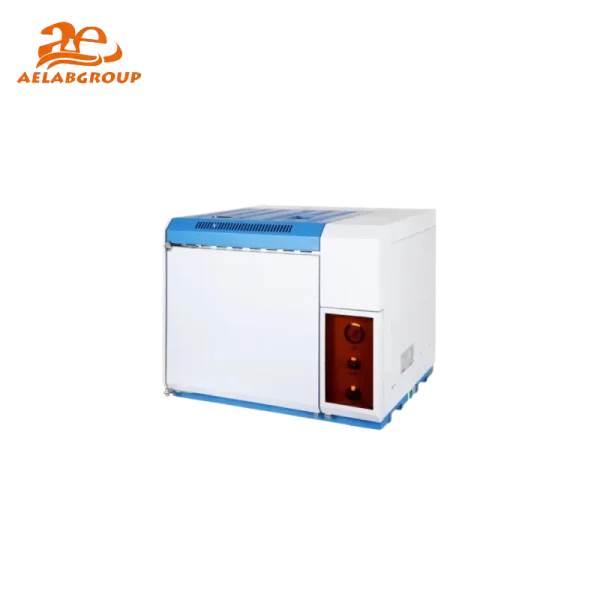
What Is Gas Chromatography?
A versatile analytical technique for separating and measuring volatile and semi-volatile compounds.
Gas Chromatography (GC) separates compounds that can be vaporized without decomposition. The sample enters a carrier-gas stream and passes through a chromatographic column, where individual compounds separate according to their volatility and interaction with the stationary phase.
After separation, compounds are measured using an appropriate detector. Common GC detector configurations include FID, TCD, ECD, FPD and NPD, depending on the target analytes, required selectivity and analytical method.
Gas Chromatograph
Best suited to routine qualitative and quantitative workflows when target compounds are known and an appropriate detector can provide the required analytical performance.
Gas Chromatograph–Mass Spectrometer
Combines GC separation with mass-spectral analysis to provide additional information for compound identification, especially in complex or unknown samples.
Compare AELAB Gas Chromatograph & GC-MS Models
Explore selected systems for routine GC, advanced multi-detector analysis and GC-MS compound identification.
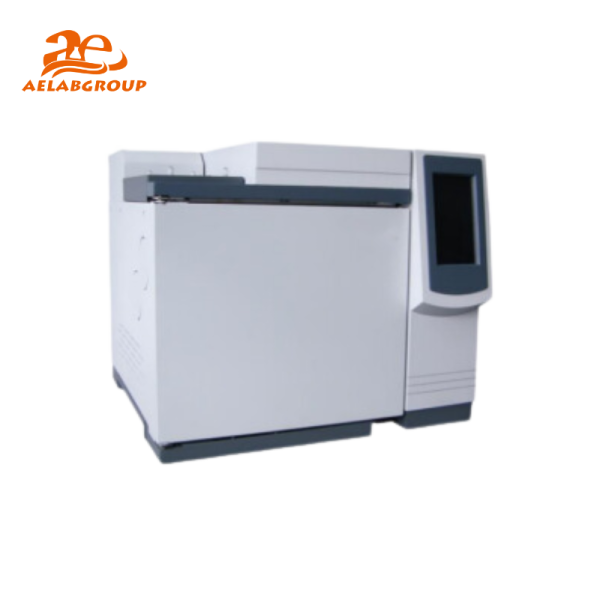
AELAB GC1290 Gas Chromatograph
A high-precision Gas Chromatograph featuring electronic pneumatic control, advanced temperature programming and flexible detector configurations.
- Electronic Pneumatic Control (EPC)
- Column oven up to 420°C
- 20 programmable temperature ramps
- FID / TCD / FPD / NPD / ECD options
- High-precision temperature control

AELAB GC1120 Gas Chromatograph
A flexible laboratory GC designed for precise chromatographic separation with multiple detector options and programmable thermal control.
- FID / TCD / FPD / NPD / ECD options
- Column oven up to 400°C
- Programmable temperature control
- Multiple sample-injector capability
- PC-based chromatographic operation
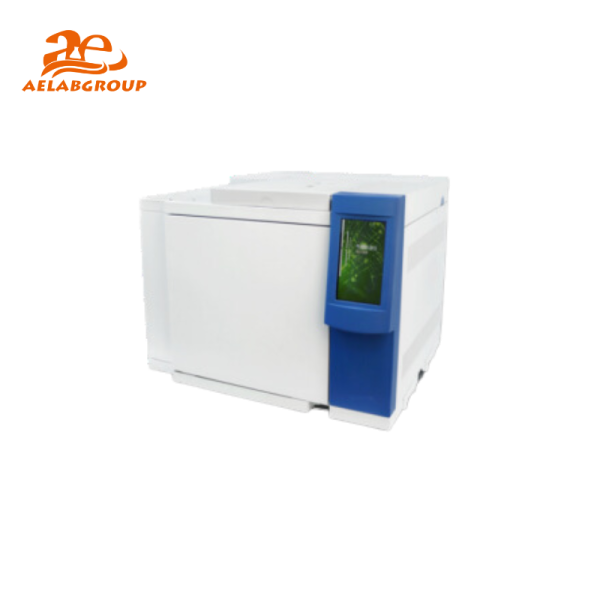
AELAB GC126N Gas Chromatograph
A modern multi-detector Gas Chromatograph designed for flexible analytical workflows with touch-screen control, dual-channel acquisition and automated sample handling options.
- 7-inch color touch screen
- FID / TCD / ECD / FPD options
- Two detectors can be installed simultaneously
- Column oven up to 400°C
- Autosampler compatibility

AELAB GC-MS 6800
A GC-MS system for qualitative and quantitative analysis where reliable chromatographic separation and compound identification are required.
- EPC pressure control
- Full Scan and SIM acquisition
- High-energy dynode electron multiplier
- Mass range up to 1000 amu
- Suitable for complex sample matrices
Which AELAB GC Configuration Is Right for You?
Compare the selected systems according to analytical complexity, detector flexibility and compound identification requirements.
| Model | System Type | Detector / Analysis | Recommended For | Main Advantage |
|---|---|---|---|---|
| GC1290 | Advanced GC | FID / TCD / FPD / NPD / ECD | Advanced analytical laboratories | EPC + advanced oven programming |
| GC1120 | Multi-Detector GC | FID / TCD / FPD / NPD / ECD | Routine & versatile analysis | Flexible detector configuration |
| GC126N | Network-Ready GC | FID / TCD / ECD / FPD | Connected & automated workflows | Touch screen + autosampler support |
| GC-MS 6800 | GC-MS | Mass Spectrometry | Complex samples & identification | Separation + mass spectral analysis |
Analytical Solutions Across Multiple Industries
GC and GC-MS are widely used for analytical testing, quality control and research across diverse sample types.
Environmental & VOC Analysis
VOCs, environmental pollutants, air monitoring and contamination studies.
Food & Beverage
Flavor compounds, residues, solvents, contaminants and quality-control workflows.
Petrochemical & Energy
Hydrocarbons, fuels, petroleum products, solvents and process-monitoring applications.
Pharmaceutical & Chemical
Residual solvents, raw-material testing, purity and analytical quality control.
Forensics & Toxicology
Screening and compound identification in complex analytical sample matrices.
Industrial Quality Control
Raw-material analysis, process monitoring and finished-product quality assurance.
How to Choose a Gas Chromatograph
The right GC configuration depends on your analytes, detector requirements, sample complexity and laboratory workflow.
Define Your Target Compounds
Identify whether you need to analyze hydrocarbons, permanent gases, solvents, pesticides, sulfur compounds or other volatile and semi-volatile analytes.
Select the Detector
Choose a detector according to compound class, selectivity, sensitivity and analytical method requirements.
Evaluate Sample Complexity
Routine known-compound analysis may require GC, while complex samples or unknown compounds may benefit from GC-MS.
Consider Workflow & Automation
Evaluate sample throughput, autosampler requirements, software control and data-management needs.
Choose the Right Detector for Your GC Application
Different detector technologies provide different selectivity, sensitivity and analytical capabilities.
Flame Ionization Detector
Commonly selected for hydrocarbons and many organic compounds.
Thermal Conductivity Detector
General-purpose detector suitable for various gases and compounds.
Electron Capture Detector
Highly useful for selected electronegative and halogenated compounds.
Flame Photometric Detector
Used for selective sulfur- and phosphorus-related analytical applications.
Nitrogen Phosphorus Detector
Suitable for nitrogen- and phosphorus-containing analytes.
Gas Chromatography Solutions for Real Laboratory Requirements
A GC system should be configured around your actual samples, analytes, detector requirements and analytical workflow.
Multiple GC Configurations
Choose between routine GC, multi-detector systems and GC-MS according to analytical complexity.
Flexible Detector Options
Configure selected GC models with detector technologies appropriate for different compound classes.
Laboratory Workflow Integration
Selected systems support PC control, software workflows, networking and automated sample handling.
Application-Based Selection
AELAB can help match configuration, detector and system type to the analytical requirements of your laboratory.
Gas Chromatograph Systems for Routine and Advanced Analysis
A laboratory Gas Chromatograph can be configured for routine quantitative testing, multi-detector analysis or specialized compound classes depending on the analytical method. Detector selection, column configuration, carrier-gas control and temperature programming all influence chromatographic performance.
For laboratories requiring stronger identification capability, a GC-MS system combines chromatographic separation with mass spectrometry. This makes GC-MS particularly useful for complex mixtures, trace-level analysis, unknown-compound investigation and qualitative workflows.
AELAB offers Gas Chromatograph and GC-MS models for environmental, petrochemical, food, pharmaceutical, chemical, forensic and industrial analytical laboratories.
Gas Chromatograph Frequently Asked Questions
What is a Gas Chromatograph used for?
What is the difference between GC and GC-MS?
Which GC detector should I choose?
Can one Gas Chromatograph support multiple detectors?
When should I choose GC-MS instead of GC?
Which carrier gases are commonly used in Gas Chromatography?
Is an autosampler available for AELAB Gas Chromatographs?
Can AELAB recommend a GC configuration for my application?
Request a GC Recommendation & Quotation
Tell us about your samples, target compounds and analytical requirements. AELAB can help identify a suitable Gas Chromatograph, detector configuration or GC-MS solution.