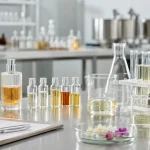
Laboratory Equipment for Soap Manufacturing QC Overview
Soap manufacturing quality control typically combines chemical, physical, and, where relevant, microbiological and stability testing. Core routine checks can include pH, free alkali or free fatty acid, moisture, weight, and physical properties, while specialty formulations may require color measurement, active-ingredient analysis, particle-size evaluation, oxidative stability testing, or microbiological testing.
The laboratory equipment required therefore depends on the soap type, formulation, manufacturing process, quality specifications, and testing methods used. A practical QC laboratory connects each production stage with the relevant test, its purpose, and the instrument needed to obtain useful and repeatable results.
In the cosmetics, personal care, and perfume industry, soap manufacturers use laboratory testing to control raw-material variability, monitor production, and evaluate finished-product consistency. From incoming oils and alkalis to the finished bar or liquid product, suitable laboratory instruments help manufacturers identify deviations before they affect subsequent processing or batch release.
Main Products and Applications
- Bar Soaps – traditional solid cleansing bars, often produced via saponification or re-melting.
- Liquid Soaps – pourable formulations where pH, viscosity, appearance, and microbiological quality may be important QC parameters.
- Glycerin and Transparent Soaps – specialty bars where clarity, color, moisture, and physical consistency can be important.
- Medicated and Antibacterial Soaps – formulations containing active ingredients that may require additional analytical testing according to the product specification and applicable test method.
- Exfoliating and Moisturizing Soaps – formulations containing particulate additives or higher oil levels that may require additional homogeneity, physical, or stability evaluation.
The critical tests are not identical for every soap. A solid bar may place greater emphasis on moisture, hardness, free alkali, appearance, and wear characteristics, while a liquid formulation may require greater attention to pH, viscosity, microbiological quality, and formulation stability. The QC plan should therefore be based on the actual product and manufacturing process rather than a single universal equipment list.
Soap Manufacturing Quality Control Workflow
Raw Material Inspection
Before production, incoming oils, fats, alkalis, and additives should be checked against the manufacturer’s raw-material specifications. Variations in raw-material properties can affect saponification, appearance, processing behavior, and finished-product consistency.
Depending on the material and the applicable test method, incoming QC may include acid value, saponification value, moisture, alkalinity, color, or other identity and quality checks. The purpose is to detect unsuitable or variable materials before they enter production and to provide reliable data for formulation and process control.
Recommended laboratory equipment for this stage:
- Titrator – supports titrimetric determination of parameters such as acid value and saponification value when required by the selected method.
- Moisture Analyzer – provides rapid moisture determination for suitable raw materials.
- Analytical Balance – provides precise weighing for sample and reagent preparation.
- pH Meter – supports measurement of suitable aqueous solutions, including process alkali solutions when the selected method uses pH.
- Spectrophotometer – can support objective color or absorbance measurements where these form part of the raw-material specification.

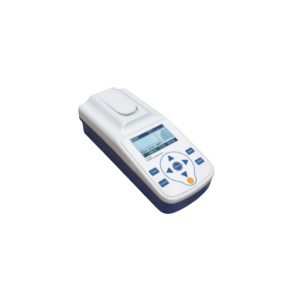


Saponification Reaction Monitoring
During saponification, manufacturers need to control process conditions and determine whether the soap mass is progressing toward the required endpoint. Temperature and chemical composition are particularly important because an off-target process can affect the amount of residual alkali or fatty acid and the consistency of the soap base.
In-process measurements allow production teams to compare the batch with defined process targets and make adjustments where their manufacturing procedure permits. The exact monitoring method and sampling frequency should be established for the specific formulation and process.
Recommended laboratory equipment for this stage:
- pH Meter – supports pH monitoring when pH is part of the validated or established process-control method.
- Titrator – supports determination of free alkali or free fatty acid using the applicable titration method.
- Thermometer or Temperature Probe – monitors process or sample temperature.
- Conductivity Meter – may support ionic measurement where conductivity has been established as a meaningful process parameter for the formulation.


Soap Base Quality Verification
After saponification, the soap base can be evaluated before fragrances, colorants, exfoliants, or other additives are introduced. Parameters such as moisture and free caustic alkali provide useful information about base consistency and suitability for downstream processing. Other compositional measurements may be included where required by the manufacturer’s specification and test method.
This intermediate QC step helps separate base-related variation from problems introduced during later mixing, finishing, or additive incorporation.
Recommended laboratory equipment for this stage:
- Moisture Analyzer – provides rapid water-content measurement where suitable for the sample and method.
- Titrator – supports titrimetric determination of free caustic alkali and other specified chemical parameters.
- Analytical Balance – provides precise sample and reagent weighing.
- Laboratory Oven – supports gravimetric drying methods where these are used for moisture or solids determination.

Additive Integration and Homogeneity
Fragrances, colorants, exfoliants, and active ingredients should be distributed consistently throughout the batch according to the product specification. Poor dispersion can appear as streaks, spots, particle agglomeration, or variable composition between samples.
The appropriate homogeneity test depends on the additive. Color can be assessed instrumentally, insoluble particles can be examined visually or by microscopy, and specified active ingredients may require an appropriate quantitative analytical method. Advanced analytical equipment should therefore be selected according to the substance being measured rather than added to the laboratory without a defined analytical need.
Recommended laboratory equipment for this stage:
- Spectrophotometer or Colorimeter – provides objective color comparison where instrumental color measurement is required.
- Particle Size Analyzer – may be appropriate when particulate size or distribution is a defined formulation parameter.
- Microscope – supports visual examination of insoluble particles and dispersion characteristics.
- Titrator or HPLC System – may be used for quantitative analysis when the target ingredient and established analytical method are compatible with the technique.


Finished Product Physical Testing
Finished soap testing confirms whether the manufactured product meets the company’s defined release and performance specifications. For solid bars, relevant checks may include weight, hardness or compression behavior, appearance, foam performance, and wear or dissolution characteristics. The selected tests should reflect the product attributes that matter to manufacturing consistency and intended use.
Physical measurements are most useful when sample preparation, conditioning, test procedure, and acceptance criteria are kept consistent. This allows results to be compared meaningfully between batches and during product development.
Recommended laboratory equipment for this stage:
- Hardness Tester – measures resistance to penetration or compression using a defined test procedure.
- Foam Tester – evaluates foam generation or stability under controlled test conditions.
- Dissolution Rate Apparatus – supports controlled comparison of wear or dissolution behavior when this is part of the manufacturer’s test program.
- Analytical Balance – supports weight checks and mass-loss measurements.
- Visual Inspection Station – provides consistent viewing conditions for assessment of surface and appearance defects.
Accelerated Stability and Shelf-Life Testing
Stability studies are used to observe how a soap formulation and its packaging change over time under defined storage conditions. Depending on the formulation, manufacturers may monitor appearance, color, odor, mass, physical properties, oxidation-related changes, and microbiological quality.
Controlled elevated-temperature or humidity studies can provide comparative stability information and help identify formulation or packaging weaknesses. However, accelerated testing conditions and interpretation should be established for the specific product; an accelerated study should not automatically be treated as a universal substitute for an appropriate real-time stability program.
Recommended laboratory equipment for this stage:
- Stability Chamber – provides controlled temperature and, where applicable, humidity conditions for stability studies.
- Spectrophotometer – provides objective monitoring of color change where relevant.
- Rancimat or Oxidative Stability Instrument – may be useful for formulations where oxidation of lipid components is an important stability concern.
- Microbiological Testing Equipment – supports microbiological testing when required for the product and established method.
- Olfactory Evaluation Kit – can support structured sensory comparison of fragrance or odor changes, while an analytical balance can be used separately for relevant mass measurements.

Common Quality Control Challenges in Soap Manufacturing
- pH or alkalinity variation between batches.
- Excess free alkali or off-target fatty-acid characteristics.
- Moisture variation affecting bar consistency and processing behavior.
- Color and fragrance variation between batches.
- Oxidative changes in formulations containing oxidation-sensitive lipid components.
- Microbiological quality concerns in water-containing formulations such as liquid soaps.
- Uneven additive distribution creating visual or compositional variability.
- Inconsistent hardness, foam behavior, weight, or wear characteristics in finished products.

Key Quality Control Tests for Soap Manufacturing
The most useful QC plan connects a specific manufacturing risk with a defined measurement and appropriate instrument. The exact test method and acceptance criteria should come from the manufacturer’s product specification, established laboratory procedure, or other applicable verified requirement.
| Quality Challenge | Quality Control Test | Recommended Laboratory Equipment | Application |
|---|---|---|---|
| Variable pH | pH measurement | pH Meter | Suitable raw materials, process samples, and finished-product preparations |
| High free alkali | Free caustic titration | Titrator | Soap base, finished bar |
| Moisture imbalance | Moisture content analysis | Moisture Analyzer, Laboratory Oven | Raw materials, soap base, finished bars |
| Poor or inconsistent foam | Foamability test | Foam Tester | Finished product |
| Color inconsistency | Instrumental color measurement | Spectrophotometer, Colorimeter | Additive blends, finished product |
| Oxidation risk | Oxidative stability evaluation | Rancimat, Stability Chamber | Formulations where lipid oxidation is relevant |
| Microbiological quality concern | Applicable microbiological testing | Incubator, Plate Counter | Water-containing formulations and relevant raw materials |
| Inadequate or variable hardness | Penetration or compression testing | Hardness Tester | Finished solid bar |
Laboratory Equipment Required for Soap Manufacturing Quality Control
A soap QC laboratory should be built around the tests that are actually required for the manufacturer’s products. For many operations, routine chemical and physical QC begins with accurate weighing, pH measurement, titration, moisture determination, temperature measurement, and controlled sample preparation. These instruments support common incoming, in-process, and finished-product checks without adding unnecessary analytical complexity.
Additional equipment becomes useful when the product or specification creates a defined need. Hardness and foam testing can provide repeatable physical-performance data for solid soaps. Spectrophotometers or colorimeters can improve objective color control. Stability chambers support controlled storage studies, while microbiological equipment is relevant where microbiological testing forms part of the QC program. HPLC, particle-size analysis, or other advanced techniques are justified when a specific formulation parameter or analytical method requires them.
| Testing Requirement | Laboratory Equipment | Why Manufacturers Use It |
|---|---|---|
| Free alkali/fatty acid control | Titrator | Provides quantitative chemical data for process and product control |
| pH monitoring | pH Meter | Tracks pH where it is a defined raw-material, process, or product parameter |
| Moisture content | Moisture Analyzer | Monitors water-content variation that can affect processing and product consistency |
| Color uniformity | Spectrophotometer | Provides objective comparison of color between samples and batches |
| Foam performance | Foam Tester | Provides controlled comparison of foam behavior |
| Bar hardness / texture | Hardness Tester | Quantifies resistance to penetration or compression under defined conditions |
| Microbiological testing | Incubator, Autoclave, Plate Counter | Supports an established microbiological laboratory workflow where required |
| Stability studies | Stability Chamber | Provides controlled environmental conditions for comparative stability evaluation |
When these instruments are integrated into a defined sampling and testing schedule, QC results can be compared between raw materials, process stages, and finished batches. The objective is not to install every available instrument, but to build a laboratory in which each piece of equipment answers a specific quality-control question.
Basic Laboratory Setup for Soap Manufacturers
The appropriate laboratory level depends on product complexity and testing scope. A small manufacturer making a limited range of conventional soaps may need only the instruments required for routine release checks, while a facility producing multiple formulations or products with analytically measured ingredients may need additional physical, stability, microbiological, or chromatographic capabilities.
| Laboratory Level | Recommended Equipment | Suitable For |
|---|---|---|
| Basic QC Laboratory | pH Meter, Moisture Analyzer, Analytical Balance, Titrator, Laboratory Oven | Manufacturers performing core routine chemical and moisture-related QC |
| Advanced QC Laboratory | All basic equipment plus Spectrophotometer, Hardness Tester, Foam Tester, Stability Chamber, Incubator | Operations requiring broader physical, color, stability, or microbiological testing |
| Advanced Analysis Laboratory | All advanced equipment plus HPLC, GC-MS, Particle Size Analyzer, Rheometer | R&D or manufacturing laboratories with defined advanced analytical and formulation-characterization requirements |
Advanced instruments should be added because a defined test or analytical question requires them, not simply because the production facility is larger. This distinction can reduce unnecessary capital expenditure while keeping the laboratory aligned with actual QC needs.
How to Choose Laboratory Equipment for Soap Manufacturing QC
Selecting laboratory equipment begins with the tests, not the instrument catalogue. Map each product and manufacturing stage to the parameter that must be measured, the method used, expected sample volume, and the decision that will be made from the result. This creates a defensible equipment list and helps distinguish essential QC instruments from optional advanced capabilities.
Define the Testing Scope
Start by mapping the product range and associated quality risks. Solid soap may require moisture, free alkali, hardness, weight, appearance, and foam-related testing, while liquid formulations may place greater emphasis on pH, viscosity, microbiological quality, and stability.
For each parameter, identify the applicable test method and the measurement requirements defined by that method. This determines whether an instrument is genuinely necessary and prevents equipment selection from being based only on generic industry lists.
Evaluate Laboratory Workflow Requirements
Consider testing frequency, number of samples, required turnaround time, sample preparation, operator expertise, and available laboratory space. A laboratory processing many titrations may benefit from greater automation, while a lower-throughput facility may not require the same level of automation.
Also consider how samples enter the laboratory and move through preparation, measurement, cleaning, and result recording. Equipment capacity should support the actual workflow without creating unnecessary bottlenecks or complexity.
Compare Measurement and Method Requirements
Before selecting a specific instrument, confirm that its measurement principle and capabilities are appropriate for the intended test method and sample type. Relevant selection factors can include the required measurement range, accuracy or repeatability, sample size, temperature conditions, accessories, data handling, and calibration approach.
For advanced instruments such as HPLC, GC-MS, particle-size analyzers, or rheometers, the analytical method and target measurement should be defined before equipment selection. This helps avoid purchasing advanced equipment that does not match the laboratory’s actual analytical task.
Compare Long-Term Equipment Support
Reliable laboratory operation also depends on calibration, preventive maintenance, consumables, spare parts, documentation, training, and technical support. These factors should be evaluated alongside initial equipment capability and purchase cost.
Companies like AELAB can help match testing requirements with appropriate instrument categories. Providing the product type, required tests, selected methods, expected sample throughput, and existing laboratory equipment makes it easier to identify a practical configuration without adding instruments that do not serve a defined QC purpose.
Who Needs Laboratory Testing Solutions for This Industry?
- Soap manufacturing plants producing bar and liquid soap brands.
- Contract manufacturers formulating private-label soap products.
- R&D centers developing new soap formulations and additives.
- Third-party testing laboratories offering soap analysis services.
- Start-up soap businesses scaling up production and establishing QC protocols.
Frequently Asked Questions
What is the most important QC test for soap manufacturing?
The most critical test is often free caustic alkali titration, as excess alkali can cause skin irritation and product rejection. Alongside pH measurement, it confirms the safety and mildness of the finished soap.
How often should soap samples be tested during production?
Sampling frequency depends on batch size and process variability. Typically, in-process checks (pH, temperature) are performed continuously or every hour, while finished product tests (hardness, lather, moisture) are conducted on each batch before release.
What equipment is needed to start a small soap manufacturing QC lab?
A basic lab can begin with a pH meter, moisture analyzer, analytical balance, and a simple titration setup. These instruments cover essential tests like pH, moisture content, and free alkali evaluation, providing a solid foundation for quality control.
How can I measure soap hardness accurately?
Soap hardness is commonly measured using a penetrometer or a universal testing machine configured for compression. These devices apply a controlled force to the soap bar and record the resistance, giving a repeatable hardness value that correlates with consumer perception and wear rate.
Conclusion
Effective soap manufacturing quality control starts by defining the product, manufacturing stage, quality parameter, and test method before selecting laboratory equipment. Routine laboratories can often cover core QC needs with pH measurement, titration, moisture analysis, accurate weighing, temperature measurement, and appropriate sample-preparation equipment. Physical, microbiological, stability, and advanced analytical instruments can then be added where the formulation or testing program creates a specific requirement.
This test-first approach gives manufacturers a more scalable laboratory: each instrument has a defined purpose, results can be connected to production decisions, and advanced equipment is introduced when the analytical need justifies it.
Laboratory Equipment Solutions for Soap Manufacturing
AELAB helps soap manufacturers connect product types, sample types, required tests, analytical methods, and throughput requirements with suitable laboratory equipment categories. The appropriate configuration may range from a basic QC setup for routine pH, moisture, weighing, and titration work to a broader laboratory incorporating physical testing, stability studies, microbiology, or advanced analytical techniques.
For equipment-selection discussions, useful information to prepare includes the soaps you manufacture, the parameters you need to test, the methods you use, expected daily sample volume, and the equipment already available in your laboratory. These details provide a practical basis for comparing instrument categories and planning a QC laboratory that can expand with future testing requirements.