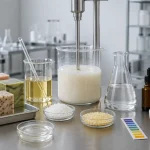
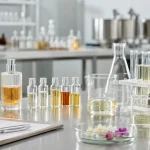
Laboratory Equipment for Cosmetic Raw Material Testing Overview
Cosmetic raw material testing verifies that incoming ingredients meet defined identity, quality, purity, and performance requirements before they are released for manufacturing. The required tests depend on the material and its specification, but commonly include identity verification, physical-property testing, moisture determination, chemical analysis, microbiological screening, and stability-related evaluation.
A practical cosmetics QC laboratory therefore combines routine instruments such as analytical balances, pH meters, viscometers, moisture analyzers, and spectrophotometers with more advanced equipment such as FTIR, HPLC, GC, Karl Fischer titrators, elemental analysis systems, microbiology equipment, or stability chambers when the material portfolio and test methods justify them.
The objective is not to perform every possible test on every ingredient. Instead, manufacturers should match each raw material and its critical quality attributes with an appropriate test method, acceptance specification, and laboratory instrument.
Main Products and Applications
Cosmetic raw material testing supports a wide range of product categories, including:
- Skin care creams, lotions, and serums
- Hair care shampoos, conditioners, and styling products
- Color cosmetics such as foundations, lipsticks, and eyeshadows
- Personal hygiene items like deodorants and body washes
- Fragrance and perfume formulations
Different product categories place different demands on incoming materials. Powders and pigments may require close control of particle size and color, oils may require moisture or oxidation-related evaluation, surfactants may require pH or compositional testing, and active ingredients may require more selective analytical methods.

Cosmetic Raw Material Testing Quality Control Workflow
A useful incoming quality-control workflow moves from rapid confirmation tests to more selective analysis when required:
| QC Stage | Main Question | Typical Tests | Relevant Equipment |
|---|---|---|---|
| Identity verification | Is this the correct material and grade? | Spectroscopic identity, refractive index, melting behavior, pH or other material-specific checks | FTIR spectrometer, refractometer, melting point apparatus, pH meter |
| Physical inspection | Does the material have the expected physical characteristics? | Appearance, color, viscosity, density, particle size, moisture | Color measurement instrument, viscometer, density meter, particle size analyzer, moisture analyzer |
| Chemical analysis | Does composition or purity meet specification? | Assay, impurity analysis, residual solvent analysis, water determination, elemental analysis | HPLC, GC, Karl Fischer titrator, automatic titrator, AAS or ICP-OES |
| Microbiological screening | Does a microbiologically relevant material meet its defined microbial specification? | Microbial enumeration and specified-organism testing where applicable | Incubator, biological safety cabinet, autoclave, colony counter |
| Stability or performance evaluation | Is the material suitable for storage and formulation requirements? | Controlled environmental exposure, thermal behavior, oxidation-related evaluation | Stability chamber, DSC, oxidative stability tester |
Incoming Raw Material Identity Verification
When raw materials arrive at the manufacturing facility, the first objective is to confirm that the received material corresponds to the ordered ingredient and its defined grade or specification. A material should not be accepted simply because its label and supplier documentation appear correct.
Identity testing can use spectroscopic, chemical, or characteristic physical-property methods depending on the ingredient. FTIR is useful for rapid comparison of many organic materials, while refractive index, melting behavior, pH, or other material-specific properties can provide additional confirmation where appropriate.
The selected identity method should be suitable for the raw material being tested and capable of distinguishing it from plausible incorrect or substituted materials.
Recommended laboratory equipment for this stage:
- FTIR Spectrometer – Supports rapid identity verification of many organic raw materials by comparing infrared absorption characteristics.
- Refractometer – Measures refractive index, a useful characteristic property for suitable liquid materials such as selected oils and solvents.
- Melting Point Apparatus – Determines the melting range of suitable solid materials as part of identity or quality evaluation.
- Analytical Balance – Provides accurate mass measurement for sample preparation and quantitative laboratory procedures.
- UV-Vis Spectrophotometer – Supports absorbance-based identification or quantitative methods for suitable analytes.
- pH Meter – Measures acidity or alkalinity where pH is a defined quality attribute of the raw material or its prepared solution.


Physical and Organoleptic Inspection
After identity is confirmed, raw materials can be evaluated for physical and organoleptic characteristics such as appearance, color, odor, and texture. Unexpected changes may indicate deterioration, contamination, supplier variation, or an incorrect material and should trigger further investigation against the applicable specification.
Instrumental physical testing is especially important when a property affects processing or finished-product performance. Particle size can influence the behavior of powders and pigments; viscosity can affect the handling of thickeners and other liquid or semi-solid materials; density supports material characterization and process calculations; and moisture content can be important for hygroscopic or moisture-sensitive ingredients.
Recommended laboratory equipment for this stage:
- Colorimeter or Spectrophotometer for Color Measurement – Provides objective color measurements for materials where batch-to-batch color consistency is important.
- Viscometer – Measures viscosity of suitable liquids and semi-solids and can support incoming control of materials whose flow behavior affects processing.
- Particle Size Analyzer – Determines particle size distribution of suitable powders, pigments, and particulate raw materials.
- Density Meter or Pycnometer – Measures density or specific gravity where this property forms part of the raw material specification.
- Moisture Analyzer – Supports loss-on-drying-type moisture determination for materials and methods suited to this technique.


Chemical Purity and Composition Analysis
Chemical analysis is required when identity testing alone cannot demonstrate that a raw material meets its composition or purity specification. Depending on the ingredient, the laboratory may need to quantify an active component, preservative, impurity, volatile component, water content, or elemental contaminant.
The analytical technique should be selected according to the target analyte and the required selectivity. HPLC is appropriate for many nonvolatile compounds that can be separated chromatographically, while GC is suited to many volatile components. Karl Fischer titration provides a more selective approach to water determination than general loss-on-drying methods when the material and method require it. Elemental analysis may be used when elemental impurities form part of the applicable quality specification.
Recommended laboratory equipment for this stage:
- High-Performance Liquid Chromatography (HPLC) System – Separates and quantifies suitable active ingredients, preservatives, and impurities using validated analytical methods.
- Gas Chromatograph (GC) – Supports analysis of suitable volatile components and residual solvents.
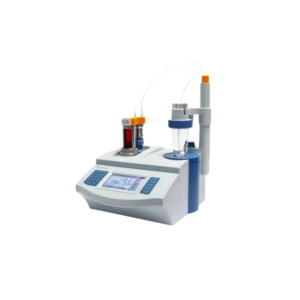
- Karl Fischer Titrator – Measures water content in materials for which selective water determination is required.
- Automatic Titrator – Automates suitable acid-base, redox, and other titrimetric determinations used for raw material analysis.
- Atomic Absorption Spectrometer (AAS) or ICP-OES – Supports elemental analysis when specified metals or other elements must be quantified.



Microbiological Safety Screening
Microbiological testing is particularly relevant to raw materials that can support or introduce microbial contamination, including certain water-containing ingredients and materials of natural origin. The exact testing program should be based on the raw material specification, contamination risk, intended use, and the manufacturer’s quality procedures rather than applying the same microbiological tests to every ingredient.
Where required, testing may include microbial enumeration and screening for specified microorganisms. Appropriate laboratory segregation, aseptic practices, media handling, incubation conditions, and contamination controls are important for obtaining meaningful results.
Recommended laboratory equipment for this stage:
- Autoclave – Sterilizes suitable microbiological media, laboratory materials, and waste according to the laboratory procedure.
- Biological Safety Cabinet – Provides a controlled workspace for microbiological procedures requiring containment and protection appropriate to the laboratory method.
- Incubator – Maintains controlled incubation conditions for microbiological culture methods.
- Colony Counter – Assists with counting colonies generated by applicable culture-based enumeration methods.
- Microbial Air Sampler – Supports environmental microbiological monitoring where airborne contamination monitoring forms part of the laboratory program.


Stability and Performance Pre-evaluation
Not every incoming raw material requires a dedicated stability study, but additional evaluation can be useful for materials known to be sensitive to temperature, humidity, light, oxidation, or other storage conditions. These studies can support supplier qualification, storage decisions, formulation development, or investigation of material changes.
Controlled environmental exposure, thermal analysis, and oxidation-related testing provide different types of information and should be selected according to the material and the question being investigated. Raw material stability data can support formulation work, but it should not be treated as a substitute for stability testing of the finished cosmetic formulation.
Recommended laboratory equipment for this stage:
- Stability Chamber – Provides controlled environmental conditions for planned temperature- and humidity-exposure studies.
- Differential Scanning Calorimeter (DSC) – Measures thermal transitions and can support characterization of suitable raw materials.
- Oxidative Stability Tester – Evaluates oxidation-related behavior of suitable oils, fats, and other applicable materials under defined test conditions.
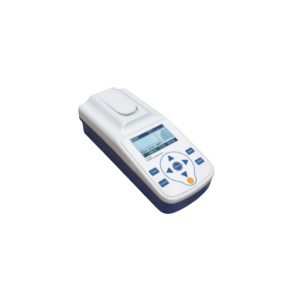
- Conductivity Meter – Measures electrical conductivity where ionic content or conductivity is a relevant quality attribute.


Common Quality Control Challenges in Cosmetics and Personal Care
Manufacturers often face raw material testing challenges that cannot be solved by supplier documentation alone:
- Supplier and batch variation: Changes in incoming material properties can affect processing behavior and formulation consistency.
- Microbial contamination: Materials with relevant microbiological risk require appropriate controls before use.
- Adulteration or substitution: Higher-value or complex materials may require stronger identity or compositional testing when authenticity is a concern.
- Moisture variation: Hygroscopic or moisture-sensitive materials may change during storage and transport.
- Slow release testing: Dependence on external laboratories can extend incoming-material release time when rapid decisions are operationally important.
- Complex specifications: Novel ingredients and mixtures may require multiple complementary methods because one measurement cannot describe every critical quality attribute.
A practical response is to define the critical quality attributes for each material first and then choose the minimum set of tests capable of controlling those attributes reliably.
Key Quality Control Tests for Cosmetic Raw Materials
The following table shows how common incoming-material problems connect to testing methods and laboratory equipment. The appropriate method still depends on the material specification and validated laboratory procedure.
| Quality Challenge | Quality Control Test | Recommended Laboratory Equipment | Application |
|---|---|---|---|
| Incorrect raw material identity | Spectroscopic or material-specific identity testing | FTIR Spectrometer | Rapid identity confirmation for suitable organic powders and liquids |
| Purity or assay outside specification | Chromatographic assay or impurity analysis | HPLC System, Gas Chromatograph | Quantification of suitable active ingredients, components, or impurities |
| Water or moisture outside specification | Karl Fischer titration or suitable moisture method | Karl Fischer Titrator, Moisture Analyzer | Water or moisture determination according to the material and method |
| Microbial contamination | Microbial enumeration or specified-organism testing where required | Incubator, Biological Safety Cabinet, Autoclave | Microbiological quality control of relevant raw materials |
| Unwanted color variation | Instrumental color measurement | Spectrophotometer for color | Objective comparison of pigments, dyes, and other color-critical materials |
| Incorrect particle size distribution | Particle size analysis | Particle Size Analyzer | Quality control of suitable powders, pigments, and particulate ingredients |
| Viscosity outside specification | Viscosity measurement | Viscometer/Rheometer | Characterization of materials where flow behavior is a critical property |
| Elemental contamination | Elemental analysis | AAS or ICP-OES | Quantification of specified elements when required by the material specification |
Laboratory Equipment Required for Cosmetics Quality Control
A cosmetic raw material testing laboratory should be configured around the materials actually received and the tests needed to release them. For many manufacturers, this means combining routine physical measurements with selected analytical and microbiological capabilities rather than purchasing every available instrument.
Physical testing equipment such as viscometers, density meters, particle size analyzers, and moisture analyzers characterizes properties that can influence material handling and formulation behavior. Chemical analysis tools such as chromatographs and titrators provide more selective information about composition, assay, impurities, or water. Microbiological equipment supports materials with relevant contamination risks, while stability chambers and thermal-analysis instruments are generally more appropriate when storage behavior or detailed material characterization must be investigated.
| Testing Requirement | Laboratory Equipment | Why Manufacturers Use It |
|---|---|---|
| Identity and composition | FTIR, HPLC, and GC | Confirming suitable material identities and investigating composition or impurities |
| Moisture or water content | Moisture analyzer, Karl Fischer titrator | Controlling moisture-sensitive materials using a method appropriate to the sample |
| pH and conductivity | pH meter, conductivity meter | Measuring electrochemical properties where they form part of the material specification |
| Color quality | Spectrophotometer for color measurement | Providing objective color comparison for color-critical raw materials |
| Microbiological quality | Autoclave, incubator, biological safety cabinet | Supporting culture-based microbiological testing where required |
| Physical consistency | Viscometer, density meter, particle size analyzer | Characterizing properties that can affect handling, processing, or formulation behavior |
| Stability and thermal behavior | Stability chamber, DSC | Supporting controlled environmental studies and thermal characterization |
| Elemental impurities | Atomic absorption or ICP-OES | Measuring specified elements when elemental analysis is part of the control plan |
Which Instruments Are Essential and Which Are Advanced?
The distinction between basic and advanced equipment should be based on testing need rather than instrument complexity alone.
Routine QC instruments are justified when they support frequent release tests across many incoming materials. Analytical balances, pH meters, viscometers, moisture analyzers, and UV-Vis instruments often fit this role when the manufacturer’s raw material specifications use those measurements.
Advanced analytical instruments such as HPLC, GC, ICP-OES, DSC, or specialized particle characterization equipment become more appropriate when the laboratory needs greater selectivity, lower-level quantitative analysis, more detailed material characterization, or enough sample throughput to justify bringing those methods in-house.
The best equipment list is therefore the one that covers the laboratory’s actual release specifications efficiently while leaving specialized or infrequent analyses to an appropriate external laboratory when that is more practical.
Basic Laboratory Setup for Cosmetics Manufacturers
The following tiers provide a practical planning framework. They are not universal requirements; the correct configuration depends on the manufacturer’s raw materials and test methods.
| Laboratory Level | Recommended Equipment | Suitable For |
|---|---|---|
| Basic QC Laboratory | Analytical balance, pH meter, viscometer, moisture analyzer, UV-Vis spectrophotometer, melting point apparatus | Manufacturers performing frequent physical measurements and relatively straightforward chemical tests |
| Advanced QC Laboratory | HPLC, Karl Fischer titrator, particle size analyzer, FTIR, color spectrophotometer, incubator, autoclave | Operations requiring stronger identity, compositional, physical, moisture, and microbiological testing capabilities |
| Advanced Analysis Laboratory | GC-MS, ICP-OES, DSC, TGA, rheometer, stability chambers, biological safety cabinet | Larger QC or R&D laboratories requiring specialized characterization and advanced analytical capabilities |
Before choosing a laboratory tier, manufacturers should compare the proposed equipment list with their actual incoming-material specifications. An instrument that does not support a required test method may add cost without improving release capability, while a frequently outsourced test may justify an in-house instrument when sample volume, turnaround time, and staff capability support the investment.
How to Choose Laboratory Equipment for Cosmetic Raw Material Testing
Selecting laboratory equipment starts with the test requirement, not the instrument catalog. A useful purchasing sequence is:
Raw material → critical quality attribute → test method → required measurement capability → sample volume → instrument configuration.
This prevents both under-specifying an instrument and paying for capabilities that the QC program does not use.
Define the Testing Scope
Begin by listing the raw materials used at the facility and the critical quality attributes defined for each one. A surfactant, pigment, oil, preservative, and botanical ingredient may require very different combinations of tests.
Then map each required test to the appropriate technique. If viscosity is a release parameter, determine the type of sample and expected measurement conditions before selecting a viscometer. If chromatographic analysis is required, identify the actual methods and analytes before deciding on the chromatography configuration. If moisture is critical, determine whether a general loss-on-drying approach or a more selective water determination method is appropriate.
This method-first approach reduces the risk of purchasing equipment that cannot reproduce the laboratory’s required test procedure.
Evaluate Measurement and Sample Requirements
Instrument selection should reflect the samples and measurement conditions the laboratory actually encounters. Relevant considerations can include:
- Expected sample types and physical form
- Required measurement range and analytical sensitivity
- Required repeatability and method performance
- Sample preparation requirements
- Number of samples tested per day or week
- Need for automated sample handling or data processing
The goal is to define these requirements before comparing models rather than selecting an instrument first and adapting the QC procedure around it.
Evaluate Laboratory Workflow Requirements
Consider daily testing volume, release-time expectations, and the skill level of laboratory personnel. Higher-throughput environments may benefit from automation, autosamplers, stored methods, or simplified routine workflows.
Laboratory infrastructure also matters. Depending on the instrument, installation planning may need to consider bench space, electrical supply, environmental stability, ventilation, gases, water, waste handling, or vibration control. These requirements should be checked for the specific equipment under consideration before purchase and installation.
Compare Long-Term Equipment Support
Purchase price is only one part of laboratory equipment selection. Manufacturers should also evaluate calibration and service support, availability of replacement parts, operator training, routine maintenance, software support where applicable, and recurring consumables such as columns, lamps, reagents, standards, or sample accessories.
Instrument uptime is especially important when the equipment controls raw material release. A technically capable instrument can still become a bottleneck if maintenance support, consumables, or trained operators are not readily available.
Collaborating with a laboratory equipment partner like AELAB can help manufacturers compare these factors against their sample types, required tests, testing frequency, and planned laboratory workflow.
Who Needs Laboratory Testing Solutions for This Industry?
- Cosmetics contract manufacturers performing incoming raw material testing against client or internal specifications.
- In-house QC laboratories at skin care, hair care, color cosmetics, fragrance, and personal care manufacturing facilities.
- R&D laboratories characterizing raw materials for formulation development and troubleshooting.
- Ingredient suppliers generating quality-control data for supplied cosmetic raw materials.
- Quality and compliance teams responsible for confirming that defined material specifications and internal release requirements are met.
Frequently Asked Questions
What laboratory equipment is essential for a small cosmetic raw material testing lab?
A small laboratory should start with instruments that cover its most frequent incoming-material specifications. For many operations, this may include an analytical balance, pH meter, viscometer, moisture analyzer, and UV-Vis spectrophotometer. Equipment should ultimately be selected from the actual tests required for the manufacturer’s raw materials rather than from a universal equipment list.
How often should laboratory instruments be calibrated in a cosmetics QC lab?
Calibration and verification frequency should be defined by the laboratory’s quality system based on instrument type, method requirements, usage, performance history, risk, and manufacturer guidance. Routine performance checks may occur more frequently than full calibration. The laboratory should maintain documented procedures appropriate to each instrument and test method.
Can the same HPLC system be used for multiple raw material tests?
Yes. One HPLC platform can support multiple suitable analytical methods when its detector, pump, injector, column configuration, and other required capabilities match those methods. Different analyses may require different columns, mobile phases, sample preparation procedures, and system conditions, so laboratories should also consider changeover time, contamination risk, and sample throughput.
What level of microscopy is useful for cosmetic raw material testing?
Basic optical microscopy can be useful for examining particle morphology, visible foreign material, or other microscopic characteristics of suitable raw materials. More advanced microscopy may be valuable for specialized R&D or investigation work but is not automatically required for routine incoming QC.
Does every cosmetic raw material need the same laboratory tests?
No. The test plan should reflect the identity, critical quality attributes, specification, intended use, supplier controls, and relevant risks of each material. A pigment, oil, preservative, surfactant, and water-based ingredient may therefore require different combinations of physical, chemical, and microbiological tests.
When should a cosmetics manufacturer add advanced analytical equipment?
Advanced equipment is most useful when required release or investigation tests cannot be performed reliably with basic instruments, when greater analytical selectivity is needed, or when sample volume and turnaround requirements justify bringing an outsourced method in-house. The decision should also account for trained personnel, method capability, maintenance, consumables, and laboratory infrastructure.
Conclusion
A strong cosmetic raw material testing program begins by defining what must be controlled for each incoming ingredient and then matching those requirements to suitable test methods and laboratory equipment.
Routine instruments such as balances, pH meters, viscometers, moisture analyzers, and spectrophotometers can cover many frequently performed QC measurements. FTIR, chromatography, Karl Fischer titration, elemental analysis, microbiological equipment, thermal analysis, and stability chambers add capabilities when the raw material specification or laboratory workflow requires them.
The most effective laboratory is therefore not necessarily the one with the largest instrument list. It is the one that can reliably perform the required incoming tests, generate useful release data, support the expected sample volume, and maintain the instruments and methods over time.
Laboratory Equipment Solutions for Cosmetics and Personal Care
Setting up or expanding a cosmetic raw material testing laboratory requires alignment between the materials being tested, their critical quality attributes, the required methods, and the laboratory’s expected sample volume.
AELAB supports manufacturers by evaluating sample types such as oils, powders, water-based ingredients, and other cosmetic raw materials together with the tests the laboratory needs to perform. This provides a practical basis for comparing instrument categories and planning a laboratory configuration rather than selecting equipment in isolation.
When evaluating a new laboratory or an upgrade, useful information to prepare includes the raw materials being tested, required test methods, expected sample volume, existing equipment, laboratory infrastructure, and the analyses currently outsourced. These details make it easier to identify which instruments belong in the core QC laboratory and which advanced capabilities are justified by the actual workload.