


Introduction
When your laboratory requires trace elemental analysis, the choice between Inductively Coupled Plasma Optical Emission Spectrometry (ICP-OES) and Inductively Coupled Plasma Mass Spectrometry (ICP-MS) is one of the most consequential decisions you will make. Both techniques use an argon plasma to ionize a liquid sample, but they detect the resulting signals very differently — and the analytical capabilities, operational costs, and required infrastructure diverge sharply.
Many labs default to ICP-OES because it is simpler and less expensive, only to discover that the required detection limits are unattainable. Others invest in ICP‑MS for ultra‑trace sensitivity but find the sample matrix is too harsh for routine operation. This guide will help you understand where each technology fits, what questions to ask before purchasing, and how to match your application needs to the right instrument type.
Quick Selection Summary
For most routine multi‑element analysis at parts‑per‑billion (ppb) levels, ICP‑OES is the practical and cost‑effective choice. When detection limits below the ppb range, isotopic information, or high‑salt matrix tolerance are essential, ICP‑MS becomes the necessary platform. Select ICP‑OES when your target analytes are typically above 1‑10 µg/L and sample matrices are moderate. Choose ICP‑MS when you need single‑digit ng/L detection, speciation capability, or direct analysis of samples with up to 10% dissolved solids.
How ICP-OES and ICP-MS Work

Both techniques start with a liquid sample introduced via a nebulizer into a high‑temperature argon plasma (6,000–10,000 K). The plasma atomizes and ionizes the sample. In ICP‑OES, the excited atoms and ions emit light at characteristic wavelengths; an optical spectrometer disperses this light and measures intensities. In ICP‑MS, the ions are extracted through an interface into a mass spectrometer, sorted by mass‑to‑charge ratio, and counted by a detector.
The fundamental difference is that OES measures photons, while MS measures ions directly. This leads to orders‑of‑magnitude differences in sensitivity, spectral interference types, and instrument complexity.
Key Differences Between ICP-OES and ICP-MS

Detection Limits
Based on typical instrument specifications, ICP‑OES detection limits are in the range of 0.1–10 µg/L (ppb) for most elements, while ICP‑MS routinely achieves 0.1–10 ng/L (ppt). This represents a 100‑ to 1000‑fold improvement. For applications such as semiconductor high‑purity reagent analysis or ultratrace environmental monitoring, ICP‑MS is mandatory.
Analytical Working Range
ICP‑OES can comfortably measure concentrations from low ppb to percent levels, offering a dynamic range of 10⁵–10⁶. ICP‑MS extends to lower concentrations but may require dilution for high matrix samples to avoid detector saturation, though its dynamic range is typically 10⁸ with dual‑mode detectors. For samples with a wide elemental concentration range, OES is often more straightforward.
Sample Matrix and Interferences
ICP‑OES suffers from spectral interferences (overlap of emission lines) which can be mitigated by choosing alternative lines or using high‑resolution optics. ICP‑MS faces isobaric and polyatomic interferences, which are addressed with collision/reaction cell technology and careful method development. ICP‑MS can often handle higher dissolved solids (up to 10% salt in some instruments) without dilution, an advantage for direct analysis of brines or metallurgical solutions.
Isotope Information
Only ICP‑MS can measure individual isotopes. This is critical for isotope dilution quantification, isotope ratio studies, and tracing sources. If your lab needs isotope data, ICP‑MS is the only option.
Speed and Throughput
A typical ICP‑OES analysis can measure 5–10 elements per minute sequentially; simultaneous OES systems can capture the full spectrum in under a minute. ICP‑MS is inherently fast: a full‑mass scan takes seconds, allowing high throughput. However, sample preparation and method development may take longer for ICP‑MS due to interference management.
Cost and Infrastructure
ICP‑OES instruments generally have a lower purchase price, lower maintenance costs, and simpler operational requirements. They need argon gas, a cooling water supply, and standard laboratory exhaust. ICP‑MS instruments cost significantly more, often require additional gases (e.g., helium, hydrogen) for the collision cell, more rigorous clean‑room‑like conditions, and highly trained operators. The total cost of ownership for ICP‑MS can be two to three times that of OES.
-
 ICP K8000 Inductively Coupled Plasma Emission Spectrometer | AELABRead more
-
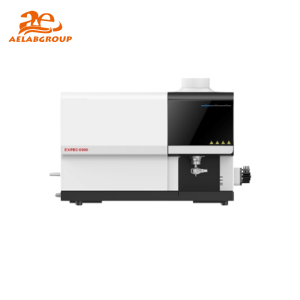 AELAB EXPEC 6500 ICP-OES | Advanced Inductively Coupled Plasma SpectrometerRead more
-
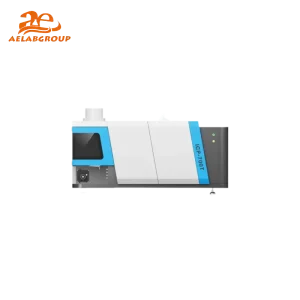 AELAB ICP-700T Inductively Coupled Plasma Emission Spectrometer for Precise Multi-Element AnalysisRead more
-
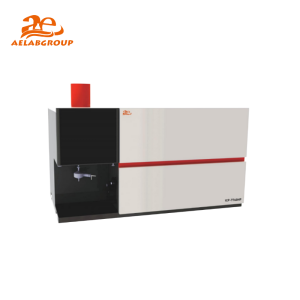 AELAB ICP-7760HP Simultaneous ICP-OES for Fast Multi-Element AnalysisRead more
-
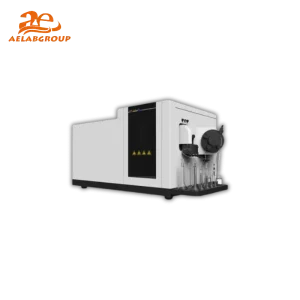 AELAB ICP-MS Spectrometer 7000 – Advanced Elemental AnalysisRead more
-
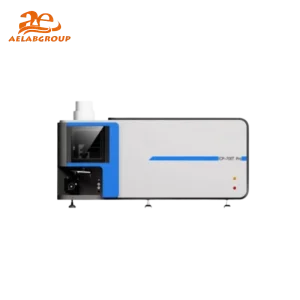 AELAB ICP700T Pro Inductively Coupled Plasma Emission SpectrometerRead more
When to Choose ICP-OES
- Your required detection limits are in the ppb range, not ppt.
- You need to analyze major, minor, and trace elements simultaneously without frequent method changes.
- Sample throughput is high, and you need robust, minimal‑downtime operation.
- You are analyzing routine samples such as environmental waters, soil digests, metal alloys, or geological materials.
- Your budget and operational infrastructure are limited.
When to Choose ICP-MS
- Detection limits below 1 µg/L (sub‑ppb) are non‑negotiable.
- You need isotopic ratio measurements or isotope dilution analysis.
- Your samples have extremely low concentrations in complex matrices (e.g., high‑purity chemicals, semiconductor processing fluids).
- You require elemental speciation (when coupled with LC or GC).
- You are analyzing radioactive or hazardous materials that benefit from minimal sample handling and rapid, sensitive detection.
Common Buying Mistakes
Avoid these pitfalls when selecting between ICP‑OES and ICP‑MS:
- Assuming OES can always reach the required detection limits. Many labs purchase an OES only to find they need an MS to meet regulatory or research demands. Always verify detection limits with your specific analytes and matrices.
- Underestimating the complexity and cost of ICP‑MS. The instrument is only part of the budget; operator training, clean sample preparation, higher‑purity reagents, and maintenance costs can be prohibitive.
- Ignoring sample matrix effects. High salt or acid concentrations can suppress signals or create severe interferences in both techniques, but the solutions differ. Test before you buy.
- Not considering future needs. If you might need lower detection limits or speciation in the future, a more capable instrument (or modular upgrade path) may be a wiser long‑term investment.
For a full equipment overview beyond the ICP, consult AELAB’s Environmental Monitoring Laboratory Setup Guide or the Pharmaceutical QC Laboratory Equipment Guide.
Product Fit: AELAB ICP Spectrometers
AELAB offers a range of ICP instruments spanning sequential and simultaneous OES, as well as ICP‑MS. Selecting the right model depends on your analytical requirements, throughput, and budget. The table below compares the four current models based on provided specifications.
| Feature | ICP-700T | ICP-700T Pro | ICP-7760HP | ICP-MS 7000 |
|---|---|---|---|---|
| Technology | Sequential ICP-OES | Sequential ICP-OES (upgraded) | Simultaneous ICP-OES (CCD) | ICP-MS (quadrupole) |
| Detection Limit | Meets A-level national standard (typical ppb) | Meets A-level national standard (typical ppb) | Not specified in provided data (typical ppb) | ppt level (as per description) |
| Precision (RSD) | ≤1.5% (2ppm mix) | ≤1.0% (2ppm mix) | Not specified in provided data | Not specified in provided data |
| Optical Resolution (at Mn 257.610nm) | ≤0.005nm (4320 l/mm grating) | ≤0.005nm (4320 grating) | 0.007nm @200nm (echelle) | N/A |
| Wavelength Range | 190-460nm (4320 grating) | 190-460nm (4320 grating) | Full spectrum (190-?nm) | N/A |
| Analysis Speed | 5-10 elements/min | 5-10 elements/min | Simultaneous full spectrum in minutes | Rapid full mass scan |
| Qualitative Analysis without Standards | No | No | Yes | Yes |
| Argon Consumption | Not specified | <14 L/min | Not specified (low, with MFCs) | Not specified |
| Matrix Tolerance | Options for HF-resistant chamber | HF, high salt, organic options | Various injection systems | Up to 10% dissolved salt |
| Collision/Reaction Cell | No | No | No | Yes (KED) |
| Isotope Capability | No | No | No | Yes |
| Special Features | Patented atomization chamber | Audit tracking, flame video, low Ar | CCD, echelle, qualitative mode | PPT detection, high salt, on‑board systems |
Product-specific values are based only on the provided product data and should be confirmed with AELAB before purchase.
-
AELAB ICP-700T Inductively Coupled Plasma Emission Spectrometer for Precise Multi-Element AnalysisRead more
-
AELAB ICP-7760HP Simultaneous ICP-OES for Fast Multi-Element AnalysisRead more
-
AELAB ICP-MS Spectrometer 7000 – Advanced Elemental AnalysisRead more
-
AELAB ICP700T Pro Inductively Coupled Plasma Emission SpectrometerRead more
Which One Should You Choose?
If your laboratory performs routine multi‑element analysis at ppb levels with moderate sample complexity, the sequential ICP‑OES models (ICP‑700T or ICP‑700T Pro) provide a reliable, cost‑effective platform. Choose the Pro version if you need better precision, lower argon consumption, and compliance‑oriented software features.
For high‑throughput labs that require rapid qualitative screening and full spectral information without standards, the simultaneous ICP‑7760HP offers significant speed and flexibility advantages.
When your work demands detection limits below the ppb range, isotope data, or tolerance to extreme matrices, the ICP‑MS 7000 is the appropriate choice. Its collision cell and specialized application solutions extend capabilities far beyond OES.
Need help selecting the right ICP system for your application?
Tell us about your typical sample types, the elements you need to measure, your required detection limits, and your expected sample throughput. AELAB’s technical team will recommend the best instrument and configuration, and provide a quote tailored to your laboratory. Contact us at info@aelabgroup.com.
Conclusion
The decision between ICP‑OES and ICP‑MS ultimately rests on your laboratory’s detection limit requirements, sample complexity, and budget. ICP‑OES remains the workhorse for routine trace analysis, while ICP‑MS opens the door to ultratrace and isotope‑specific investigations. Evaluating the total cost of ownership, operator skill level, and future application needs will guide you to a sustainable choice.
Do this next: Make a list of your five most demanding analytes and the lowest concentration you must report. Then request a demonstration or feasibility test from AELAB using one of your own samples. This will confirm which technique meets your actual workload before you invest.
Frequently Asked Questions
Can ICP-OES detect elements at the parts-per-trillion level?
No. Typical ICP‑OES detection limits are in the low ppb range for most elements. Achieving ppt levels requires ICP‑MS. Some elements with strong emission lines may reach sub‑ppb, but generally ppt is not attainable with OES.
Is ICP-MS much more expensive to operate than ICP-OES?
Yes. ICP‑MS instruments have a higher purchase price, require additional high‑purity gases for the collision cell, cleaner laboratory conditions, and more expensive consumables and maintenance. Operator training is also more intensive. The operating cost can be two to three times that of OES.
What sample matrices are problematic for ICP-OES?
High dissolved solids (above approximately 1–2%) can clog the nebulizer or cause drift. Hydrofluoric acid digests require HF‑resistant sample introduction systems. Organic solvents need special torch and injection setup. These challenges are manageable with proper accessories, but should be considered during instrument selection.
Does ICP-MS require a different sample preparation from ICP-OES?
In general, sample preparation is similar: dissolution or digestion, filtration, and dilution. However, ICP‑MS requires cleaner reagents, lower blanks, and careful control of contamination to achieve ultratrace levels. Some matrices may require dilution to reduce matrix effects.
Can I switch between ICP-OES and ICP-MS on the same instrument?
No, they are fundamentally different detection technologies and cannot be combined into one unit. You must choose one technique, though many labs operate both instruments for different tasks.

