

What Actually Determines the Right Electrophoresis Tank and Power Supply
When selecting electrophoresis equipment, the spec sheet is only a starting point. The right choice depends on factors like the type of molecules you’re separating—DNA, RNA, or proteins—the gel chemistry, the expected sample volume, and the level of resolution required. For DNA and RNA, horizontal tanks are common because they work well with agarose gels and are simple to operate. Vertical tanks are typically preferred for proteins because polyacrylamide gels require a vertical format for SDS-PAGE, native PAGE, and blotting workflows. Key tank features include buffer capacity, gel tray compatibility, casting convenience, electrode material, leak resistance, and thermal behavior during longer runs. Power supply selection hinges on output stability; a unit with low ripple, precise voltage/current control, and dependable protection features is crucial for sharp bands and repeatable migration. Trade-offs always exist: higher-capacity tanks support larger gels and higher throughput, but they also consume more buffer and take up more bench space. More advanced power supplies offer constant voltage, constant current, and programmable run settings, which are valuable in research and protein workflows, but may be excessive for routine QC.
| Selection Factor | Why It Matters | What to Check Before Buying |
|---|---|---|
| Molecule Type | DNA, RNA, and proteins require different gel systems and separation conditions | Match the tank format to agarose or polyacrylamide workflows |
| Tank Orientation | Horizontal and vertical systems behave differently in sample loading, heat dissipation, and gel compatibility | Choose horizontal for nucleic acids and vertical for protein-focused workflows |
| Power Stability | Electrical instability directly affects band clarity and migration consistency | Look for low ripple, stable output, and reliable load regulation |
| Buffer Capacity | Too little buffer can lead to overheating and inconsistent conductivity | Confirm recommended running volume and refill practicality |
| Gel Size Compatibility | System fit affects throughput and method flexibility | Check compatibility with standard gel dimensions and casting accessories |
| Safety Features | Bench safety and protection against run failure are essential in routine use | Look for lid interlocks, overload protection, and stable connectors |

Operator Note: Always verify that the tank’s gaskets and seals are intact before use; even minor leaks can ruin a run by altering buffer levels and causing uneven heating.
Why Stable Operation Depends on More Than Voltage Settings
Reliable separation is not just about dialing in a voltage number. Power supply performance factors such as ripple, load regulation, timer control, output accuracy, and protection circuits directly influence band sharpness and migration consistency. High ripple can introduce electrical noise and produce fuzzy bands in nucleic acid gels. Poor output regulation under changing load conditions can create inconsistent run-to-run performance. In protein electrophoresis, unstable power or poor thermal control can increase heating, distort migration, and compromise band resolution. The tank also matters here: poor heat dissipation, low buffer volume, weak seals, or inadequate ventilation increase the likelihood of melting gels, evaporating buffer, and uneven field distribution. Experienced users do not only check the maximum voltage range; they also verify whether the unit maintains stable output over time and whether the tank design supports the run conditions they actually use.
| Power Supply Feature | Practical Impact on Electrophoresis | Why It Matters in Real Use |
|---|---|---|
| Low Ripple | Improves field stability | Helps produce sharper, more defined bands |
| Constant Voltage Mode | Keeps voltage steady during migration | Useful for many routine DNA and RNA separations |
| Constant Current Mode | Keeps current controlled despite resistance changes | Important for methods sensitive to heat buildup |
| Constant Power Mode | Balances output under changing run conditions | Useful in more advanced or variable workflows |
| Overload Protection | Protects the unit from short circuits or incorrect setup | Reduces downtime and operator error risk |
| Timer Function | Improves run repeatability | Helpful in standard QC and training environments |
| Multiple Output Capability | Supports more than one tank in some workflows | Useful for higher throughput labs |
The Operating Sequence That Prevents Common Errors
Before purchasing or setting up, follow this workflow to ensure your electrophoresis system meets your needs. Many labs start incorrectly by focusing only on price, brand familiarity, or catalog appearance. A better approach is to begin with application requirements, then work outward toward tank design, power delivery, safety, and routine maintenance.
- Define Your Application: List the molecules you separate most often, such as DNA fragments, RNA samples, denatured proteins, or native proteins. Include sample volume, expected band size range, and whether you need analytical or preparative resolution.
- Choose Tank Type: Select horizontal systems for agarose-based nucleic acid separation and vertical systems for PAGE and blotting applications. Match the tank design to the gel matrix, separation orientation, and throughput level.
- Evaluate Power Supply: Match the output range to your workflow. Routine DNA runs may only require moderate voltage ranges, while some protein methods demand tighter control and broader electrical capability. Prioritize low ripple, stable regulation, timer control, and dependable safety protection.
- Check Compatibility: Make sure the tank supports the gel sizes and casting accessories you plan to use, and confirm that lead connections and operating ranges are fully compatible with the power supply.
- Review Thermal and Buffer Behavior: Estimate how much heat your runs generate, how much buffer the system needs, and whether the tank design supports stable long-duration operation without evaporation or uneven migration.
- Verify Setup: Before routine use, run a control gel with a known ladder or reference sample to confirm band sharpness, migration uniformity, and stable system behavior under your actual lab conditions.
Many users skip the final verification step and move directly into live sample testing, which leads to wasted reagents, lost time, and unnecessary troubleshooting. Always verify that the system performs as expected with your specific gels, buffers, and sample types.
Where Most Equipment Selections Go Wrong
Common assumptions can derail electrophoresis setups long before the first run. One of the biggest mistakes is assuming that one tank or one power supply is equally suitable for every application. In practice, DNA and protein separations have different requirements in gel chemistry, orientation, voltage behavior, and heat sensitivity. Another common problem is underestimating the importance of electrode quality and chemical resistance. Users also often assume that higher voltage always means faster and better runs; in reality, pushing voltage too aggressively can overheat the gel, increase smiling, and reduce resolution. Maintenance is another frequent blind spot. Electrode cleaning, seal inspection, lead connection checks, and periodic output verification are often ignored until performance declines. Finally, many labs choose equipment based on general catalog language instead of matching the system to actual sample type, workflow intensity, and failure tolerance.
Operator Note: I’ve seen labs buy a power supply without checking output stability, only to spend weeks troubleshooting blurry DNA bands before realizing the issue was electrical behavior rather than gel preparation.
What the Failure Pattern Usually Means
When electrophoresis results are inconsistent, the failure pattern often points directly to the underlying cause. Reading those patterns correctly can save time, reduce repeat runs, and prevent incorrect equipment upgrades.
- Symptom: Bands are fuzzy or smeared. Likely cause: High ripple from the power supply or unstable output under load. Why it happens: Electrical noise disrupts the uniform electric field needed for clean migration. Corrective action: Use a power supply with lower ripple, verify output performance, or add a line filter if needed. Prevention tip: Check output stability before purchase and perform regular output verification.
- Symptom: Gel melts, distorts, or bubbles form during the run. Likely cause: Overheating caused by excessive voltage, insufficient buffer volume, or poor tank cooling behavior. Why it happens: Excessive current generates heat faster than the system can dissipate it. Corrective action: Reduce voltage, improve ventilation, increase buffer stability, or use a tank better suited for the run conditions. Prevention tip: Monitor buffer temperature and avoid selecting systems that run too close to their practical thermal limit.
- Symptom: Uneven migration across the gel. Likely cause: Leaking tank, uneven buffer levels, warped tray placement, or non-uniform field distribution. Why it happens: Small setup inconsistencies disturb electrical uniformity. Corrective action: Replace worn gaskets, level the setup, refill buffer uniformly, and inspect the tank body for physical wear. Prevention tip: Inspect seals before each run and standardize fill volume.
- Symptom: No current flow or intermittent power. Likely cause: Loose electrode connections, damaged leads, corroded contacts, or unstable lid engagement. Why it happens: Oxidation, salt buildup, and connector wear interrupt the electrical circuit. Corrective action: Clean contacts, verify lid placement, tighten connections, and inspect lead integrity. Prevention tip: Include connection checks in monthly maintenance routines.
- Symptom: Bands are too faint, weak, or not visible. Likely cause: Poor staining, incorrect sample loading, buffer depletion, or excessive run time reducing effective contrast. Why it happens: Conductivity and visualization conditions are no longer optimal by the end of the run. Corrective action: Replace buffer, confirm staining conditions, and optimize sample concentration and run duration. Prevention tip: Use fresh buffer for critical runs and standardize staining workflows.
- Symptom: Power supply shuts off unexpectedly. Likely cause: Overload protection triggered by short circuit, incorrect wiring, debris, or trapped bubbles causing unstable electrical paths. Why it happens: The unit detects unsafe operating conditions and interrupts the run to prevent damage. Corrective action: Inspect the gel and chamber, check for air bubbles, verify polarity, and confirm the setup matches the intended operating mode. Prevention tip: Remove visible bubbles, check the run path, and avoid overloading wells.

How the Right Choice Changes by Lab Type
The optimal electrophoresis setup changes significantly depending on the lab environment. In regulated QC laboratories, consistency, documentation, and validation readiness are critical, so tanks and power supplies should support standard operating procedures, repeatable outputs, and maintainable records. In high-throughput research labs, flexibility and time efficiency matter more, which often favors systems with faster setup, multi-gel capability, and more programmable electrical control. In smaller academic or general R&D labs, users may prioritize versatility and cost control, but that should not mean forcing one configuration into applications it does not suit well. In biotech and protein-focused environments, vertical electrophoresis systems with strong thermal stability and precise electrical control are especially important because proteins are more sensitive to denaturation, band distortion, and method variation.
| Lab Type | Primary Priority | Best Selection Focus |
|---|---|---|
| Pharma QC Lab | Repeatability, documentation, compliance | Stable power delivery, standardizable workflow, durable components |
| Research Lab | Method flexibility and throughput | Programmable power supply, multiple gel options, adaptable tank formats |
| Academic Lab | Ease of use and budget control | Simple setup, reliable safety features, practical versatility |
| Biotech Protein Lab | High-resolution protein separation | Vertical tanks, better thermal control, precise electrical regulation |
| Teaching Lab | Safety and operational simplicity | Robust construction, easy setup, low-maintenance systems |
Operator Note: In our QC lab, we standardized vertical systems for protein assays after repeated inconsistencies appeared when less suitable formats were used under longer run conditions.
Horizontal vs Vertical Electrophoresis: A Practical Comparison
Choosing between horizontal and vertical electrophoresis is not simply a matter of form factor. The two systems support different gel matrices, sample classes, and operational goals. Horizontal electrophoresis is generally associated with agarose gels and is widely used for DNA and RNA separation because it offers simple casting, easy sample loading, and practical visualization of nucleic acid workflows. Vertical electrophoresis is typically used with polyacrylamide gels and is favored for proteins because it supports finer resolution, denaturing and native methods, and downstream blotting applications.
| Feature | Horizontal Electrophoresis Tank | Vertical Electrophoresis Tank |
|---|---|---|
| Main Applications | DNA and RNA separation | Protein separation, PAGE, blotting |
| Typical Gel Type | Agarose | Polyacrylamide |
| Ease of Setup | Generally simpler | Usually more method-specific |
| Resolution Potential | Good for many nucleic acid workflows | Higher control for protein-focused separations |
| Common Use Context | Routine molecular biology workflows | Protein analysis and specialized research |
| Blotting Compatibility | Limited | Strong workflow alignment |
Application-Based Product Selection Guide
A strong article should not only explain electrophoresis theory. It should also help the reader understand which system fits which workflow. That matters both for technical accuracy and for sales conversion. Most buyers are not simply asking, “What is electrophoresis?” They are really asking, “Which system fits my workflow, sample type, throughput, and reliability target?” The following product guide is designed to answer that question in a practical way.
| Workflow Need | Recommended System Type | What the Buyer Should Prioritize |
|---|---|---|
| Routine DNA/RNA gel checks | Compact horizontal or mini integrated systems | Fast setup, simple operation, safety, low bench footprint |
| Higher-volume nucleic acid analysis | Horizontal tank with flexible comb options and stable cooling behavior | Sample capacity, buffer stability, loading convenience |
| Protein separation on mini-format gels | Mini vertical electrophoresis system | Leak-free casting, repeatable gel preparation, compatibility |
| Protein transfer / blotting | Vertical transfer tank | Transfer quality, cooling support, membrane compatibility |
| High-resolution DNA/RNA analysis | Sequencing-oriented vertical tank | Resolution, fragment discrimination, analytical precision |
| Clinical or specialized membrane methods | Cellulose acetate / immunoelectrophoresis system | Method alignment, repeatability, clinical practicality |
| Programmable power control | Advanced electrophoresis power supply | Constant voltage/current/power, memory, protection features |
Recommended AELAB Systems for Routine DNA and RNA Workflows
For routine nucleic acid workflows, labs usually need speed, simplicity, safe operation, and a compact footprint rather than excessive complexity. This is where integrated mini systems and practical horizontal tanks become commercially attractive: they reduce setup friction, shorten training time, and support everyday fragment analysis without overcomplicating the bench workflow.
Mini DNA/RNA Workflows with Fast Setup and Built-In Safety
The AELAB Mini-ES series is a strong fit for labs that need compact DNA/RNA electrophoresis with simple operation and a small footprint. It is specifically designed for DNA and RNA electrophoresis, offers selectable 35V, 50V, and 100V output, and includes a magnetic lid sensor that stops current flow when the lid is removed. In buyer terms, this makes it attractive for education labs, routine molecular biology workflows, PCR fragment analysis, DNA fingerprinting, and other environments where safety, speed, and ease of use matter as much as technical capability.
-
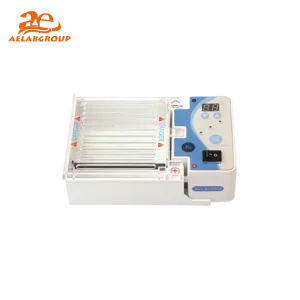 AELAB Mini Electrophoresis System – Mini-ES Series for DNA/RNARead more
-
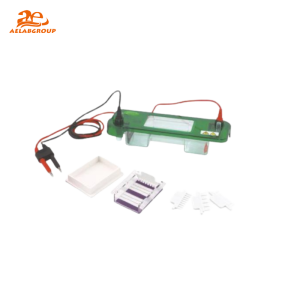 SPAT Horizontal Electrophoresis Tank$98.00 Select options This product has multiple variants. The options may be chosen on the product page
Why a Compact Horizontal Tank Still Matters in Busy Labs
The SPAT Horizontal Electrophoresis Tank is useful for labs that want a compact standalone horizontal system with better flexibility in sample loading. Its abundant buffer capacity supports cooling and pH stability, removable electrodes simplify maintenance, and the comb options support multiple sample counts. From a sales perspective, this type of system appeals to customers who want a practical bench-top unit that is easy to maintain, easy to load, and suitable for everyday nucleic acid work without moving to a more complex platform.
When a Lab Needs More Than a Basic Mini Unit
The AE-subMINI horizontal electrophoresis apparatus fits buyers who still want a compact horizontal platform but need more control over sample loading and run behavior. It is positioned for nucleic acid and protein separation, with emphasis on even sample loading and adjustable electrode positions. That makes it useful when a lab wants a small system, but not an overly simplified one.
How to Choose Between AE-POWER300 and BG-POWER300
Power supplies often make or break run quality, yet they are frequently treated like generic accessories. That is a mistake. A better power supply improves repeatability, supports different gels more confidently, and reduces troubleshooting. The two AELAB series below address different levels of workflow maturity.
AE-POWER300 Series for Core Gel Electrophoresis Control
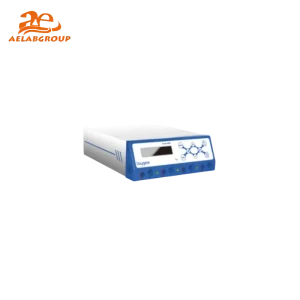
The AE-POWER300 series is the practical choice for labs that need adjustable voltage and current, digital display visibility, timer control, multiple output support, and core protection features such as overcurrent and overvoltage protection. This makes it commercially strong for teaching labs, routine QC, and standard research workflows where the goal is dependable gel running rather than complex protocol storage or high-end power management.
BG-POWER300 Series for More Advanced and Programmable Workflows
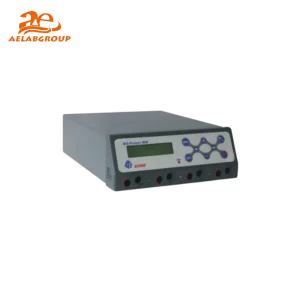
The BG-POWER300 series is better suited for buyers who need a more advanced control layer. It supports constant voltage, constant current, and constant power modes, includes programmable methods, pause/resume, stored programs, automatic recovery after power failure, and monitoring for over-voltage, arc, no-load, overload, and short circuit conditions. In real buying scenarios, this matters for research labs, QC teams, and higher-control environments where repeatable method execution and protection against interruption are important.
| Power Supply Series | Best Fit | Main Commercial Advantage |
|---|---|---|
| AE-POWER300 Series | Teaching labs, routine research, standard QC | Simple, reliable, and sufficient for many everyday gel workflows |
| BG-POWER300 Series | Advanced research, more controlled QC, multi-step methods | More programmable, more protective, and better suited for method-driven workflows |
Recommended AELAB Systems for Protein Separation and Transfer
Protein workflows are where many labs realize that a generic horizontal setup is not enough. Better band quality, better transfer efficiency, and better compatibility with PAGE and blotting workflows usually require a vertical format. This is also where buyers often become more quality-sensitive, because failed protein runs cost more time, more reagents, and more troubleshooting effort.
Mini Vertical Protein Electrophoresis with Easier Casting
The AE-verMINI is designed as a dual vertical electrophoresis system for mini-format gels. Its leak-proof casting stand, clear monitoring panel, and casting-friendly design make it attractive for labs that want reliable small-format PAGE workflows without the frustration of poor gel preparation. This is the kind of product that helps buyers reduce manual casting errors while keeping a compact vertical workflow on the bench.
Compact Transfer Capability for Blotting-Oriented Labs
The AE-verBLOT is positioned for compact protein or DNA gel transfer and is described with ice box support and polycarbonate construction. Used alongside a compatible vertical electrophoresis workflow, it becomes relevant for buyers focused on membrane transfer reliability rather than basic gel running alone. In practical terms, this matters to customers doing protein transfer to nitrocellulose or PVDF where transfer quality directly affects downstream interpretation.
Vertical Transfer and Resolution for Professional Lab Environments
The AE-transBLOT is aimed at users who need a durable vertical system with adjustable electrodes and a clear viewing panel. Its value lies in supporting efficient protein and nucleic acid work in a vertical format while giving the operator more visual and electrical control. That makes it suitable for labs that want a more professional, method-oriented transfer or separation setup rather than an entry-level device.
-
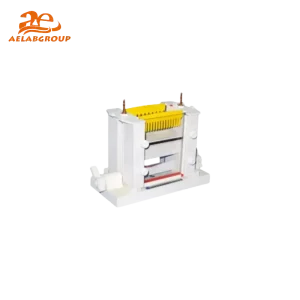 AE-verMINI Vertical Electrophoresis Tank – AELAB Lab EquipmentRead more
-
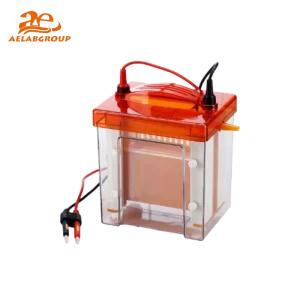 AELAB Electrophoresis Tank AE-verBLOT – Compact Protein TransferRead more
-
 AELAB Electrophoresis Tank AE-verSEQUENCING (W) – DNA Separation SystemRead more
-
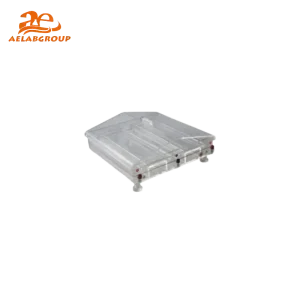 AELAB Horizontal Electrophoresis Apparatus AE-caTANKRead more
-
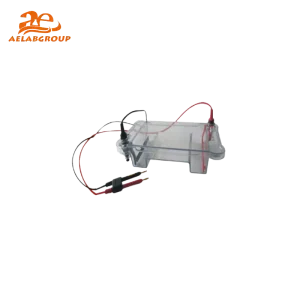 AELAB Horizontal Electrophoresis Apparatus AE-subMINI – Precise DNA & Protein SeparationRead more
-
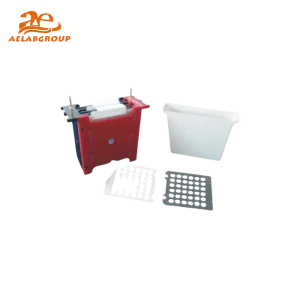 AELAB Vertical Electrophoresis Tank AE-transBLOTRead more
Recommended AELAB Systems for Specialized and High-Resolution Applications
Not every buyer needs a general-purpose gel tank. Some laboratories need systems aligned to very specific analytical methods. This is where specialized equipment becomes commercially important: it is easier to justify the investment when the product clearly solves a method-specific problem that a general tank cannot solve as cleanly.
High-Resolution DNA/RNA Analysis for Demanding Molecular Work
The AE-verSEQUENCING (W) is designed for high-resolution DNA and RNA separation and is positioned for advanced applications such as DNA fingerprinting, SSCP, and oligonucleotide studies. This makes it relevant for labs where fragment-level analytical resolution matters more than general routine throughput. From a buyer’s perspective, it is not just “another tank”; it is a more specialized analytical tool for finer molecular discrimination.
Clinical and Membrane-Based Electrophoresis Workflows
The AE-caTANK is different from routine agarose systems because it is aligned with immunoelectrophoresis, cellulose acetate membrane electrophoresis, and paper electrophoresis. That immediately changes the buyer profile. This is a more method-specific option for hospitals, blood stations, disease control centers, and clinical or pharmacopoeia-oriented laboratories that need a system matched to membrane-based or clinical electrophoresis methods.
How Buyers Should Read Product Placement Inside This Category
One reason electrophoresis category pages become confusing is that all tanks and power supplies appear together. But buyers should not read them as interchangeable. A better way to understand the category is to separate it into decision layers:
- Application Layer: Are you separating DNA, RNA, proteins, or working with membrane-based clinical methods?
- Format Layer: Do you need a horizontal tank, a vertical mini system, or a transfer-oriented platform?
- Control Layer: Do you only need a stable power source, or do you need programmable voltage/current/power behavior with stronger safety logic?
- Operational Layer: Is your lab optimizing for training simplicity, research flexibility, transfer quality, high-resolution analysis, or workflow standardization?
This way of reading the category helps both users and sales teams. The customer stops asking, “Which one is better?” and starts asking the more useful question: “Which one is better for my workflow?”
How the Right Choice Changes by Workflow Scenario
Sometimes the fastest way to make a buying decision is to match the product to the scenario rather than to read the entire catalog in sequence.
| If Your Lab Needs… | Best Product Direction | Why It Makes Sense |
|---|---|---|
| Fast routine DNA/RNA checks with minimal setup | Mini-ES | Integrated, compact, safe, and easy to operate |
| Compact standalone horizontal gel running | SPAT | Flexible comb options, practical maintenance, stable buffer behavior |
| Small-format horizontal runs with more adjustment flexibility | AE-subMINI | More control over sample loading and electrode behavior |
| Mini-format PAGE in a research environment | AE-verMINI | Leak-reduced casting and vertical gel suitability |
| Compact protein transfer workflows | AE-verBLOT | Designed for transfer tasks and small-format blotting support |
| Vertical transfer or professional blotting/separation setup | AE-transBLOT | Durable vertical format with adjustable control elements |
| High-resolution nucleic acid analysis | AE-verSEQUENCING (W) | Better alignment with advanced DNA/RNA analytical work |
| Clinical immunoelectrophoresis or membrane methods | AE-caTANK | Method-specific fit for specialized clinical workflows |
| Reliable everyday power supply performance | AE-POWER300 Series | Good balance of control, display, and protection |
| Programmable and more advanced power control | BG-POWER300 Series | Better for method-driven labs needing memory and stronger monitoring |
Why This Matters for Sales Conversations
A good electrophoresis article should support the reader technically, but it should also support commercial decision-making. That means each product must be explained in terms the buyer understands:
- What it is: the system format and technical role
- What it does: the separation or transfer function it performs
- What it is used for: the application and lab context
- Why it is worth buying: the operational or analytical problem it helps solve
This is especially important in electrophoresis because many buyers compare visually similar products without understanding that their intended use cases are very different. The more clearly the article explains product fit, the easier it becomes for the customer to move from browsing to asking for a quote.
Putting It All Together: Your Next Steps
To choose and implement the right electrophoresis system, begin by auditing your real applications rather than your assumptions. Identify whether your lab is primarily running nucleic acid or protein workflows, estimate your throughput, review your most common failure patterns, and determine whether your current limitations come from tank format, electrical instability, thermal behavior, or maintenance neglect. Then compare your needs against the workflow and selection criteria above. If you are upgrading an existing setup, do not only compare headline specifications; compare how each option will behave under your routine conditions, with your actual gels, buffers, and sample load.
Do this next: List your top three electrophoresis applications, define the gel format and resolution requirement for each one, and use that shortlist to narrow down the tank and power supply options that best fit your workflow, throughput, training level, and reproducibility goals.
FAQ
What is the difference between horizontal and vertical electrophoresis tanks?
Horizontal electrophoresis tanks are mainly used for DNA and RNA separation with agarose gels because they are easy to cast, load, and operate. Vertical electrophoresis tanks are generally used for proteins with polyacrylamide gels and are better suited for PAGE and blotting workflows.
Which AELAB system is better for routine DNA/RNA analysis?
For routine DNA/RNA analysis, Mini-ES is a strong choice when ease of use, compact design, and built-in safety are priorities. SPAT and AE-subMINI are also relevant when the lab prefers a more traditional horizontal tank workflow.
What is the practical difference between AE-POWER300 and BG-POWER300 series?
AE-POWER300 is a strong fit for standard gel electrophoresis where reliable voltage/current control, display visibility, and basic safety are enough. BG-POWER300 is a better option when the lab needs constant voltage/current/power modes, stored programs, pause/resume, and more advanced protection and recovery features.
Can one electrophoresis tank be used for both DNA and protein separation?
In some cases a lab may try to maximize versatility, but dedicated systems usually perform better because DNA and protein electrophoresis often require different gel chemistries, formats, transfer needs, and operating conditions.
When should a lab choose a vertical transfer tank instead of a standard gel tank?
A vertical transfer tank becomes the better choice when the workflow includes blotting, membrane transfer, or protein-focused applications where transfer efficiency and vertical-format compatibility are more important than simple routine gel running.
Which system is suitable for immunoelectrophoresis and cellulose acetate applications?
The AE-caTANK is the more appropriate choice for immunoelectrophoresis, cellulose acetate membrane electrophoresis, and related specialized or clinical workflows.
Why does my electrophoresis gel overheat during a run?
Overheating usually results from excessive voltage, poor buffer management, inadequate heat dissipation, or choosing a tank not well suited for the required run conditions. Monitoring buffer temperature and using a well-matched tank and power supply can reduce this risk.
What should I check before buying an electrophoresis tank?
Check the intended application, gel compatibility, tank orientation, buffer capacity, seal integrity, operating convenience, maintenance needs, and whether the system fits your expected throughput and routine lab conditions.


