

That is why selecting the right system requires more than comparing a few specifications. A good dissolution tester should match your sample volume, your method complexity, your documentation needs, and your expected laboratory growth. It should also be easy enough to operate consistently, because even technically capable instruments can create problems if daily setup, access, and repeatability are not practical for real users.
For laboratories looking to compare options more effectively, AELAB offers multiple dissolution tester configurations covering single-cup analysis, three-position routine testing, six-position QC workflows, high-precision multi-vessel systems, and ZRS models with electric lifting and overturn functions for easier handling and faster setup. That makes this category especially useful for buyers who want to match instrument format to actual workload instead of overbuying or underbuying.
What Matters Most When Choosing a Dissolution Tester
The best dissolution tester for your lab depends on four main questions: how many samples you run, how much precision you need, how much manual handling your team can manage, and how quickly you expect your testing volume to grow.
If your work is focused on method development, formulation comparison, or lower-volume testing, a simpler system may be the better fit. If your lab performs routine quality control for tablets and capsules every day, a three-vessel or six-vessel model usually gives a stronger balance of throughput, repeatability, and cost control. If you need faster turnaround and higher sample capacity, an eight-vessel system can reduce scheduling pressure and improve productivity across shifts.
Precision also matters more than many buyers expect. A dissolution tester must maintain stable bath temperature, consistent rotational control, and reliable timing so that results stay reproducible from vessel to vessel and from run to run. This becomes even more important in environments where multiple analysts use the same equipment or where data must support formal release and documentation workflows.
Ease of operation should be part of the buying decision too. Features such as electric head lifting, automatic overturn, stored parameters, LCD visualization, programmable timing, and alarm functions are not just convenience features. In busy labs, they reduce handling mistakes, support repeatable setups, and help operators maintain cleaner workflows with less effort.

Operator Note: The right dissolution tester should make correct work easier. If the system is stable, accessible, and easy to standardize across operators, your lab will spend less time troubleshooting and more time producing useful data.
How to Choose the Right Model by Lab Type
For R&D, formulation screening, and lower-volume analysis
If your lab needs focused drug release analysis without high sample volume, a compact single-cup platform can be the most practical place to start. The AELAB RC-1 Dissolution Tester is designed for single-cup dissolution analysis and is especially suitable for formulation screening, generic comparison, research applications, and educational or development-focused environments where simplicity and controlled performance matter more than throughput.
For routine QC with moderate sample volume
When the priority is routine tablet and capsule dissolution testing with consistent day-to-day output, multi-position RC models are often the better choice. The AELAB RC-3 Dissolution Tester supports three-vessel testing with programmable timing, controlled speed, and stable bath conditions, making it a practical option for smaller QC labs and development teams that need more capacity than a single-cup instrument. The AELAB RC-6 Dissolution Tester extends that workflow to six vessels and six poles, which is often a better fit for laboratories performing more routine batch evaluation and repeat testing.
For labs that need stronger precision and repeatability
Some laboratories need tighter rotational accuracy and stronger process control because they are handling more demanding methods, higher-value batches, or more formalized release workflows. In these cases, the AELAB RC-6D Dissolution Tester and AELAB RC-8D Dissolution Tester are stronger options. These models are positioned for high-precision tablet and capsule dissolution analysis, with ±1 rpm control, stable bath regulation, programmable timing points, and continuous LCD parameter display.
For higher-throughput pharmaceutical QC
If your lab needs to increase sample throughput and reduce repeat setup cycles, moving to an eight-vessel platform can make a clear operational difference. The AELAB RC-8DS Dissolution Tester supports eight vessels, intelligent lifting, and controlled reproducibility for higher-throughput testing. It is a strong option for QC environments that need more capacity without losing workflow control.
For users who want easier access and more convenient operation
Some buyers place extra value on user convenience, easier paddle or basket replacement, and more streamlined daily handling. In those cases, the ZRS family becomes especially attractive. The AELAB ZRS-3ST, ZRS-6ST, and ZRS-8ST add electric lifting, head overturn functions, parameter storage, programmable sampling periods, and convenient LCD-guided operation, helping laboratories reduce manual intervention during setup and changeover.
Comparison of AELAB Dissolution Tester Models
For buyers evaluating the category, it helps to think in terms of workflow fit rather than just instrument names.
- RC-1 is the best fit for single-cup testing, focused formulation work, lower-volume analysis, and labs that want a compact entry point.
- RC-3 is better for smaller routine QC workflows that need more efficiency than a one-cup platform.
- RC-6 is a stronger standard choice for everyday QC where six-position throughput offers better operational balance.
- RC-6D is ideal when six-vessel testing must be paired with stronger precision, ±1 rpm speed control, and more advanced timing support.
- RC-8D is suitable for higher-capacity labs that also need high-precision rotational control and stable thermal regulation.
- RC-8DS is designed for eight-vessel throughput with intelligent lifting and reproducible operation in controlled lab conditions.
- ZRS-3ST / ZRS-6ST / ZRS-8ST are especially appealing for users who want electric lifting, head overturn, stored methods, and more operator-friendly daily handling.
This kind of comparison helps both users and search engines understand the commercial structure of the category. Instead of presenting all models as near-duplicates, the category becomes clearer: compact analysis, moderate routine QC, high-precision QC, high-throughput testing, and convenience-focused ZRS operation.
The Operating Sequence That Protects Data Quality
Even the best dissolution tester still depends on correct setup. Reliable results begin with preparation discipline, because small setup errors often create larger variations later in the run.
- Prepare the dissolution medium correctly and deaerate it when required by the method.
- Fill each vessel consistently and allow the bath to reach the target temperature before introducing samples.
- Confirm paddle or basket installation, centering, and immersion conditions.
- Verify programmed speed, timing, and any required operating sequence.
- Place tablets or capsules carefully to avoid unintended disturbance in the vessel.
- Sample at the defined time points using a controlled, repeatable routine.
- Monitor unusual dosage form behavior such as coning, floating, sticking, or delayed breakup.
Labs often lose data quality not because the instrument is weak, but because the setup process is rushed. A system that helps operators work more consistently will always have an advantage in real laboratory conditions.
Where Labs Usually Lose Time and Confidence
One of the most common problems in dissolution testing is choosing an instrument that does not match the real lab workload. A lower-capacity system may look economical at first, but if the lab soon needs more runs, more methods, or more repeat work, the tester quickly becomes a bottleneck. On the other side, buying a larger system without considering workflow discipline can create underused capacity and unnecessary investment.
Another common issue is overlooking ease of use. In practice, laboratories gain more value from instruments that are easy to access, easy to monitor, and easy to standardize across analysts. This is where features like electric lifting, automatic head movement, parameter storage, and clear display logic make a real difference.
Labs also lose time when they treat all dissolution testers as interchangeable. They are not. A compact single-cup platform solves different problems than a six-vessel precision system. An operator-friendly ZRS model serves different priorities than a more traditional RC workflow. Clear positioning improves both the user decision and the SEO clarity of the category.
Operator Note: A dissolution tester should support the way your lab works today and the way it is likely to work six to twelve months from now. That is how you avoid buying twice.
What the Failure Pattern Usually Tells You
High variability between vessels
This often points to alignment issues, unstable setup, or inconsistent handling. If the problem appears repeatedly, the lab should review apparatus positioning, vessel preparation, and daily verification discipline.
Results drifting from run to run
This usually suggests instability in temperature control, rotational control, or preparation consistency. Systems with stronger bath regulation and more reliable control logic reduce this risk.
Slow workflow and repeated setup delays
This is usually a capacity issue. A lab that runs too many samples on a lower-capacity tester often loses efficiency through repeated cycles instead of one cleaner multi-vessel run.
Frequent setup mistakes
This often points to equipment that is too manual or too inconvenient for the actual lab environment. More operator-friendly systems, especially those with electric lifting or stored parameters, can reduce these errors significantly.
Difficulty scaling methods and throughput
If a lab is growing but the tester is no longer keeping up, the problem is usually not the method. It is that the original equipment choice no longer matches the workload.

Why This Category Should Be More Than a Technical Guide
A strong dissolution tester category page should do more than explain what dissolution testing is. It should also help users make a buying decision. That means the page must support both technical and commercial intent at the same time.
From an SEO perspective, this is important because users do not all search the same way. Some search for dissolution tester troubleshooting. Others search for tablet dissolution testing equipment, dissolution tester supplier, dissolution tester for QC lab, or best dissolution tester for tablets and capsules. A category-supporting article should help all of those users move toward the right product family without sounding forced or over-optimized.
That is why this page works best when it combines technical value, clear model differentiation, internal links to the main product pages, and a natural path toward quotation or consultation. When those signals are present, the page becomes stronger for users, clearer for search engines, and more useful for sales.
-
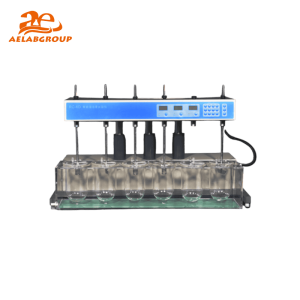 AELAB Dissolution Tester RC-6D – Precision Tablet & Capsule Dissolution AnalysisRead more
-
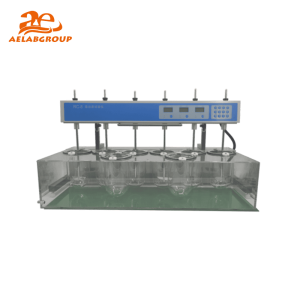 AELAB Dissolution Tester RC-8D – High-Precision Tablet & Capsule Dissolution AnalysisRead more
-
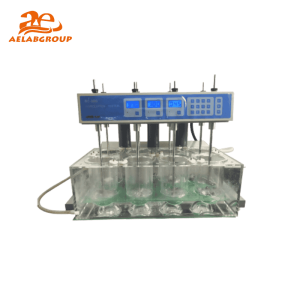 AELAB Dissolution Tester RC-8DS | Precision Tablet & Capsule Dissolution AnalysisRead more
-
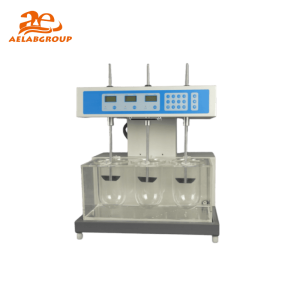 AELAB Dissolution Tester ZRS-3ST | Precision Tablet & Capsule Dissolution AnalysisRead more
-
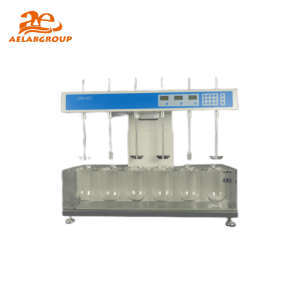 AELAB Dissolution Tester ZRS-6ST | Precision Tablet & Capsule Dissolution AnalysisRead more
-
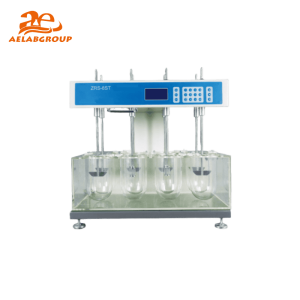 AELAB Dissolution Tester ZRS-8ST – Precision Tablet and Capsule Dissolution AnalysisRead more
-
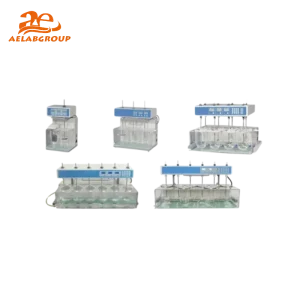 AELAB RC-1 Dissolution Tester – Single-Cup Precision Drug Release AnalysisRead more
-
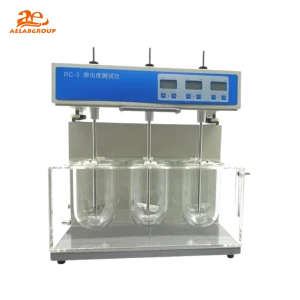 AELAB RC-3 Dissolution Tester for Tablet and Capsule Dissolution Rate AnalysisRead more
Why Pharmaceutical Labs Choose AELAB Dissolution Testers
Pharmaceutical laboratories usually do not choose a dissolution tester for one reason only. They choose based on the total fit between performance, usability, throughput, and long-term workflow value. AELAB’s category strength is that it does not force one generic format on every buyer. Instead, it offers a product range that supports compact single-cup analysis, moderate routine QC, higher-precision testing, higher-throughput multi-vessel operation, and operator-friendly ZRS configurations.
This helps buyers move from broad category interest to a more confident shortlist. If the lab is focused on development work, the RC-1 or RC-3 may be enough. If the lab needs more routine QC throughput, RC-6 or RC-6D becomes more attractive. If higher capacity matters, RC-8D or RC-8DS is easier to justify. If convenience, electric lifting, and faster setup changeover are priorities, the ZRS family offers a clearer match.
That kind of model clarity improves the user experience and makes the category commercially stronger. Buyers stay longer on the page because the information helps them decide, not just learn.
Ensuring the Process Stays Audit-Ready
In regulated environments, audit readiness depends on consistent setup, stable instrument control, clear documentation, and repeatable operation across users. A dissolution tester should fit comfortably into SOP-driven workflows, verification routines, and formal reporting processes.
For that reason, many labs prefer systems that combine accurate thermal and rotational control with features that make operation easier to standardize. Stored parameters, timed sequences, alarms, LCD visualization, and stable mechanical construction can all support a more controlled daily testing process.
Do this next: Review your current sample volume, testing frequency, and operator workflow, then compare those needs to the full AELAB dissolution tester range. If your work is focused and low-volume, start with RC-1. If you need routine multi-sample QC, compare RC-3 and RC-6. If precision and repeatability are more critical, evaluate RC-6D or RC-8D. If throughput and easier handling matter most, shortlist RC-8DS and the ZRS models. That comparison will bring you much closer to the right purchase decision.
FAQ
What is a dissolution tester used for?
A dissolution tester is used to measure the rate and extent of drug release from solid dosage forms such as tablets and capsules in a defined medium under controlled conditions.
Which dissolution tester is best for tablets and capsules?
The best model depends on your sample volume, required precision, and workflow. Lower-volume labs may prefer RC-1 or RC-3, while routine QC and higher-throughput environments usually benefit from RC-6, RC-6D, RC-8D, RC-8DS, or ZRS-series systems.
What is the difference between RC and ZRS dissolution testers?
RC models cover compact, routine, and precision multi-vessel workflows, while ZRS models are especially attractive for users who want electric lifting, head overturn, stored methods, and more operator-friendly handling.
Which dissolution tester is better for R&D?
For formulation screening and lower-volume research work, RC-1 and RC-3 are usually practical starting points because they support controlled testing without forcing the lab into a higher-throughput platform too early.
Which dissolution tester is better for routine QC?
For routine pharmaceutical QC, RC-6 and RC-6D are often strong choices because they provide more daily throughput while still supporting controlled, repeatable operation.
When should a lab move to an eight-vessel dissolution tester?
A lab should consider an eight-vessel model when sample volume grows, turnaround time becomes more important, or more parallel testing is needed to support release and comparison workflows efficiently.
Why is temperature stability important in dissolution testing?
Temperature stability helps maintain consistent hydrodynamic and dissolution conditions, which is essential for producing reproducible results across vessels and across runs.
Are automated features worth paying for?
Yes, especially in busy labs. Features such as electric lifting, head overturn, stored parameters, alarms, and programmable timing often reduce manual errors and improve consistency enough to justify the investment.