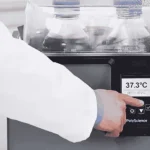
This guide is designed to help laboratory buyers, managers, technicians, and researchers choose the right solution faster. It also includes recommended product options inside the article, so you can move from evaluation to shortlist without leaving the page.
Recommended Water Bath Options by Lab Scenario
Before comparing every specification line by line, it is usually faster to start with the type of application you actually run. For many laboratories, the right model depends less on the maximum temperature range and more on whether the bath is used for routine warming, higher-uniformity circulation work, or repeated batch processing throughout the day.
- Routine QC and general lab use: standard digital water bath models are often sufficient and cost-effective.
- Applications needing better uniformity: circulating water baths are usually the better fit.
- Higher sample loads or repeated batches: choose models with stronger recovery performance and better thermal consistency.
- Shared multi-user labs: prioritize simple controls, reliability, and easier daily operation.
Start here: these product options are suitable for common laboratory use cases and can serve as a practical shortlist before deeper comparison.
-
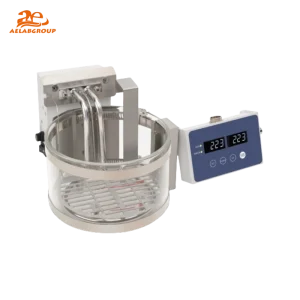 AELAB TB-H240-V1 Constant Temperature Bath – Precision PID Heating SystemRead more
-
 AELAB Transparent Water Bath TMS-2 Series – Precise Temperature Control for Lab HeatingRead more
-
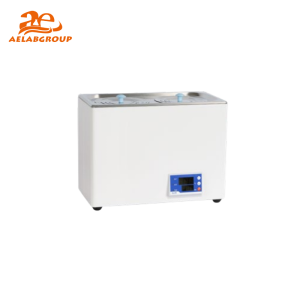 AELAB TYS Series Constant Temperature Water Bath – Precise Heating ControlRead more
-
 AELAB Water Bath E-WB27-6 Series – Precise Lab Temperature ControlRead more
What Actually Determines the Right Choice
When selecting a constant temperature solution, most labs start with the advertised temperature range or a familiar brand. In practice, the real decision depends on how accurately the system maintains the set temperature, how uniformly heat is distributed across the bath, and how quickly it returns to the target temperature after samples are added.
For example, a bath may look good on paper but still create delays if temperature recovery is slow after loading vials or racks. In routine production or QC environments, that kind of performance gap can reduce throughput and create inconsistent conditions between batches.
Quick Selection Matrix
| Lab Need | Best Choice | Why It Fits |
|---|---|---|
| Routine sample warming | Standard static water bath | Simple, economical, and suitable for general non-critical work |
| Better temperature uniformity | Circulating water bath | Improved heat distribution and more consistent sample conditions |
| Frequent daily batch processing | Bath with stronger recovery performance | Reduces waiting time after sample loading |
| Shared lab use | User-friendly digital model | Easier operation and fewer setting errors between users |
| Higher compliance expectations | Model with calibration and validation support | Improves long-term maintenance and documentation readiness |
Which Parameters Change Real-World Results
Beyond the basic temperature range, the most useful parameters to compare are temperature stability, bath uniformity, heat-up time, cool-down time when relevant, and flow performance in circulating systems. These factors directly affect repeatability, especially when multiple samples are processed at once.
Poor uniformity can create temperature differences between one area of the bath and another. Slow recovery can create delays every time samples are introduced. Weak circulation may allow stratification, which means the display looks accurate while actual sample conditions vary across the chamber.
For laboratories comparing water bath systems, it is important to match the design to the workflow rather than buying a more complex unit than the application really requires.
Shortlist: Good Options for Most Labs
If your goal is to balance performance, ease of use, and long-term value, the shortlisted options below are a practical next step. These are especially relevant for labs that need dependable temperature control without overbuying features that may never be used.
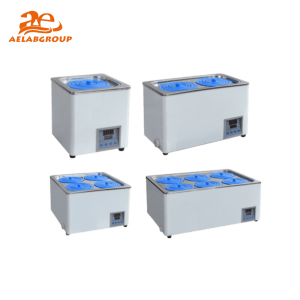

How to compare them: focus on bath volume, stability tolerance, circulation method, controller usability, and expected daily workload. These criteria usually reveal the right fit faster than looking only at maximum range or wattage.
How the Right Choice Changes by Lab Type
The ideal system can vary significantly depending on the operating environment. In a routine QC laboratory, you may need fast startup, straightforward controls, and reliable batch-to-batch consistency. In R&D environments, flexibility and broader application fit may matter more. In shared labs, ease of use and resistance to operator error become important. In regulated environments, support for calibration, maintenance planning, and documentation becomes more valuable over time.
A circulating water bath can be a strong choice for applications where tighter temperature consistency is important, but for simpler warming or incubation tasks, a standard digital bath may offer a better cost-to-usefulness ratio.
Common Assumptions That Lead to Bad Decisions
One common mistake is assuming that a more expensive unit automatically delivers better value. Another is assuming that all constant temperature baths provide similar real-world stability. In practice, hidden operating costs often come from maintenance, calibration drift, inconsistent performance under load, or choosing a system that is oversized or over-engineered for the actual task.
False assumption 1: a wider temperature range is always better. In many labs, the extra range is rarely used and may not improve daily performance.
False assumption 2: setup is a one-time event. Without periodic verification, calibration checks, and fluid maintenance, even a good system can drift and create unreliable results.
False assumption 3: every lab needs a high-end circulating bath. For many routine applications, a well-matched standard water bath is the better purchase.
What the Failure Pattern Usually Means

If a water bath repeatedly shows unstable operation, the problem is not always maintenance alone. In many cases, recurring issues are signs that the selected system is not well matched to the application, sample load, or working conditions.
- Symptom: Erratic temperature fluctuations
Likely cause: Air bubbles in the fluid or a clogged pump
Corrective action: Degas the fluid and inspect the circulation path - Symptom: Slow heating to set point
Likely cause: Heater power is too low for bath volume or sample load
Corrective action: Reduce load or choose a model with better heating capacity - Symptom: Poor temperature uniformity across the bath
Likely cause: Weak circulation or blocked flow patterns
Corrective action: Reposition samples or select a design with stronger circulation performance - Symptom: Controller shutdown or repeated error codes
Likely cause: Sensor issues or electrical instability
Corrective action: Inspect sensor condition, recalibrate, and service if needed - Symptom: Fluid contamination or biological growth
Likely cause: Poor water quality or neglected cleaning schedule
Corrective action: Drain, sanitize, and refill using the appropriate fluid practice - Symptom: Gradual drift over time
Likely cause: Sensor aging or calibration shift
Corrective action: Recalibrate and verify against a trusted reference standard
Commercial takeaway: if the same instability, drift, or slow recovery problems keep returning, replacing the bath with a better-matched model may be more cost-effective than continuing to work around a poor fit.
The Operating Sequence That Prevents Common Errors
Use this sequence to narrow down the right model before purchase instead of jumping straight into random product comparisons.
- Define the real application: identify sample type, required temperature range, stability expectations, and batch size.
- Assess workload: estimate how often the bath runs, how many samples are loaded, and whether recovery time affects throughput.
- Compare meaningful specs: prioritize stability, uniformity, circulation, and usable bath volume.
- Review maintenance reality: consider cleaning, calibration, serviceability, and expected reliability over time.
- Shortlist the right models: compare only the units that actually match your workflow instead of every model in the category.

Where many buyers go wrong is starting from model names instead of application needs. Once your workflow is clear, the right product category usually becomes obvious much faster.
Find the Right Water Bath for Your Workflow
The best constant temperature bath is not necessarily the most advanced or the most expensive. It is the one that fits your required stability, sample volume, operating frequency, and day-to-day lab reality.
If you already know your approximate temperature range, container size, and whether you need standard or circulating performance, you can move directly to a shortlist now. If not, use the recommended product blocks above as a starting point and compare them based on real use conditions rather than marketing claims alone.
Next step: review the recommended models in this article and compare them against your required volume, stability needs, and daily workload. If you need help choosing the right unit for your application, contact AELAB with your basic requirements and shortlist the right model faster.
FAQ
What matters more than temperature range when selecting a water bath?
In most practical lab workflows, temperature stability, bath uniformity, recovery speed, and circulation performance matter more than headline temperature range alone.
When is a circulating water bath worth the extra cost?
A circulating model is usually worth it when your work needs better temperature uniformity, tighter consistency, or stronger performance under repeated sample loading.
Is a standard digital water bath enough for routine lab use?
Yes. For many routine warming, incubation, and general lab tasks, a standard digital water bath is often the most practical and cost-effective choice.
Why do some water baths perform well on paper but poorly in actual use?
Because real-world performance depends on sample load, recovery time, circulation quality, maintenance, and how closely the bath matches the actual application.
How should I shortlist the right water bath faster?
Start with your application, required stability, batch size, and workflow. Then compare only the models that fit those conditions instead of browsing every available unit.