


Introduction
Monitoring plant health accurately is essential for effective crop management, agricultural research, and plant physiology studies. A chlorophyll meter provides a fast, non-destructive way to assess relative chlorophyll content in leaves, while a plant nutrition analyzer can evaluate multiple plant parameters depending on the instrument and model.
These portable tools allow researchers, agronomists, and growers to collect measurements directly from plants without waiting for visible symptoms to appear. The resulting data can support nutrient management, plant stress assessment, fertilizer optimization, and long-term crop monitoring.
This guide explains the differences between chlorophyll meters and plant nutrition analyzers, how they work, their applications, and the key factors to consider when choosing an instrument.

What Is a Chlorophyll Meter?
A chlorophyll meter is a portable instrument used to estimate the relative chlorophyll content of plant leaves, usually through optical measurement.
Instead of removing or chemically processing the leaf, the instrument measures how the leaf interacts with light at selected wavelengths. The result is commonly expressed as a relative chlorophyll index such as a SPAD value.
Because leaf chlorophyll is associated with photosynthetic activity and can also correlate with plant nitrogen status, chlorophyll meters are widely used in agriculture, plant science, crop research, and fertilizer management.
They are particularly useful when researchers need to take repeated measurements from the same plants throughout different growth stages.
What Is a Plant Nutrition Analyzer?
A plant nutrition analyzer is designed to provide broader information about plant physiological or nutritional status.
The parameters measured depend on the specific instrument. Some multi-parameter models can measure or estimate several variables during a single test, such as:
- Relative chlorophyll content
- Nitrogen-related parameters
- Leaf temperature
- Leaf humidity
This makes plant nutrition analyzers useful for researchers and agricultural professionals who require more information than chlorophyll measurements alone.
It is important to note that not every plant nutrition analyzer directly measures all macro- and micronutrients. Capabilities vary significantly between models and measurement technologies, so instrument specifications should always be checked before selection.
Chlorophyll Meter vs. Plant Nutrition Analyzer
Although the terms are sometimes used together, chlorophyll meters and plant nutrition analyzers do not necessarily perform the same functions.
| Feature | Chlorophyll Meter | Plant Nutrition Analyzer |
|---|---|---|
| Relative chlorophyll measurement | Yes | Often available |
| SPAD measurement | Common | Model-dependent |
| Nitrogen-related assessment | Often indirect/correlated | Model-dependent |
| Leaf temperature | Model-dependent | Available on some models |
| Leaf humidity | Usually not the primary function | Available on some models |
| Multi-parameter measurement | Limited | Often broader |
| Primary purpose | Chlorophyll monitoring | Broader plant monitoring |
| Typical use | Field and plant research | Agriculture and plant research |
A chlorophyll meter may therefore be sufficient when the main objective is rapid chlorophyll monitoring. A multi-parameter plant nutrition analyzer may be more appropriate when several plant indicators need to be evaluated together.
Why Chlorophyll and Plant Nutrition Monitoring Matters
Chlorophyll plays a central role in photosynthesis, allowing plants to absorb light energy and convert it into chemical energy.
Changes in chlorophyll readings can provide useful information about plant condition. However, chlorophyll values should not be interpreted as a standalone diagnosis.
Differences in readings may be associated with factors such as:
- Nutrient status
- Plant species or variety
- Growth stage
- Environmental stress
- Water availability
- Leaf age
- Disease or other physiological conditions
For this reason, repeated measurements and comparison with appropriate reference plants or established baselines are generally more informative than relying on a single reading.
Plant nutrition monitoring provides additional information that can help researchers and growers identify trends and make more informed management decisions.

How Do Chlorophyll Meters and Plant Nutrition Analyzers Work?
The measurement principle depends on the type of instrument.
How a Chlorophyll Meter Works
Many portable chlorophyll meters use an optical measurement system.
The leaf is positioned in the measurement area and exposed to light at selected wavelengths. Sensors detect differences in light transmission or absorption, and the instrument calculates a relative chlorophyll index.
Because the leaf remains intact, measurements can be repeated on the same plant throughout its growth cycle.
This is particularly useful for field experiments, crop monitoring, plant breeding studies, and fertilizer trials.
How a Plant Nutrition Analyzer Works
A multi-parameter plant nutrition analyzer may combine optical measurements with additional sensors to evaluate several plant characteristics during the same measurement session.
Depending on the model, the instrument may provide readings for chlorophyll, nitrogen-related parameters, leaf temperature, or leaf humidity.
The advantage is speed: several indicators can be recorded in the field without destructive sampling.
However, these measurements should be interpreted according to the instrument’s measurement principle and specifications rather than treated as a complete replacement for laboratory chemical analysis.

Key Features of Chlorophyll and Nutrition Analyzers
These advanced tools offer practical features that improve the accuracy, speed, and ease of plant monitoring in everyday farming
Non-Destructive Testing
These analyzers offer a non-invasive way to measure plant health, preserving the integrity of the plant for ongoing growth.Real-Time Data
Instant feedback on plant health allows for timely decisions regarding nutrient management, irrigation, and pest control.Multi-Parameter Measurement
Monitor multiple variables at once, including chlorophyll levels, nitrogen content, leaf temperature, and more, to gain a comprehensive understanding of plant health.Portability and Ease of Use
Most models are compact and field-ready, making them ideal for use in both research and agricultural settings.

Benefits of Using Chlorophyll and Nutrition Analyzers
These tools provide several benefits that help make farming more efficient, eco-friendly, and yield-driven.
Increase Crop Yield
Accurately monitoring chlorophyll and nutrient levels allows you to optimize your fertilization strategies, leading to healthier plants and increased crop yields.
Reduce Costs and Waste
By identifying nutrient deficiencies early and applying only the necessary amount of fertilizer, farmers can reduce the costs associated with excess fertilizer use and minimize environmental impact.
Sustainable Agriculture
Efficient nutrient management reduces soil degradation, minimizes runoff, and promotes more eco-friendly farming practices.
Early Detection of Stress
A chlorophyll and nutrition analyzer helps detect plant stress long before visible symptoms appear, allowing for early intervention and minimizing crop loss.
How to Choose a Chlorophyll Meter or Plant Nutrition Analyzer
The right instrument depends primarily on what you need to measure.
Before selecting a model, consider the following factors:
1. Measurement Parameters
Determine whether you only need relative chlorophyll measurements or additional parameters such as nitrogen-related readings, leaf temperature, or humidity.
2. Measurement Range and Accuracy
Compare the instrument’s measurement range, accuracy, and repeatability with the requirements of your experiment or application.
3. Measurement Speed
Fast measurement is especially valuable when hundreds of leaves or multiple field locations need to be evaluated.
4. Portability
For field applications, consider instrument size, weight, battery capacity, and environmental operating conditions.
5. Data Storage
Research projects involving repeated measurements may benefit from instruments with internal memory and data-transfer capabilities.
6. Measurement Area
The size of the measurement area can be important when working with plants that have particularly small or narrow leaves.
7. Data Export and Analysis
Check whether stored measurements can be transferred to a computer or other system for further analysis.
8. Application
Finally, consider whether the instrument will primarily be used for crop management, greenhouse monitoring, university research, plant physiology, breeding studies, or another specialized application.
Need help selecting an analyzer?
Tell AELAB which plant parameters you need to measure and how the instrument will be used. Our team can help identify a suitable model for your agricultural or research application.
Best Practices for Using Chlorophyll and Nutrition Analyzers
To fully benefit from chlorophyll and nutrition analyzers, it’s important to follow best practices:
Regular Monitoring
Continuous monitoring helps identify issues early and adjust fertilization or irrigation before problems escalate.Combine with Soil and Tissue Testing
For the most accurate understanding of plant health, combine analyzer data with soil tests and tissue samples.Ensure Proper Calibration
Regularly calibrate your analyzer to ensure the data remains accurate and reliable over time.Monitor Throughout Growth Stages
Use the analyzer at different plant growth stages to track nutrient requirements and adjust interventions accordingly.

Handheld Analyzers vs. Laboratory and Traditional Methods
Portable analyzers, laboratory testing, and visual inspection serve different purposes and should be considered complementary rather than interchangeable.
| Method | Speed | Field Use | Destructive Sampling | Main Strength |
|---|---|---|---|---|
| Handheld chlorophyll/plant analyzer | Fast | Excellent | Usually no | Rapid repeated monitoring |
| Laboratory tissue analysis | Slower | No | Usually yes | Detailed chemical analysis |
| Visual inspection | Immediate | Excellent | No | Simple preliminary observation |
A handheld analyzer is particularly useful for screening and repeated measurements, while laboratory testing remains important when detailed chemical analysis or reference measurements are required.
Recommended AELAB Chlorophyll & Plant Nutrition Analyzers
AELAB offers instruments for both focused chlorophyll measurement and broader multi-parameter plant monitoring.
AELAB TYS-B Chlorophyll Meter
The TYS-B Chlorophyll Meter is designed for rapid, non-destructive measurement of relative chlorophyll content and leaf temperature.
Its optical measurement system calculates a SPAD value from leaf measurements, making the instrument suitable for agricultural, botanical, ecological, and plant physiology research.
Key characteristics include:
- Relative chlorophyll measurement (SPAD)
- Leaf temperature measurement
- Non-destructive testing
- Dual-wavelength optical measurement
- Portable rechargeable design
- Suitable for field and laboratory use
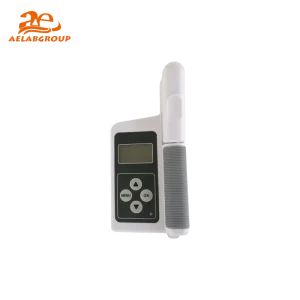
AELAB TYS-4N Plant Nutrition Analyzer
For applications requiring several plant parameters, the TYS-4N Plant Nutrition Analyzer provides multi-parameter measurement in a portable format.
The instrument can measure:
- Chlorophyll: 0.0–99.9 SPAD
- Nitrogen: 0.0–99.9 mg/g
- Leaf humidity: 0.0–99.9 RH%
- Leaf temperature: -10 to 99.9°C
It can store up to 999 groups of data and has a measurement interval of less than three seconds, making it suitable for repeated measurements in agricultural and plant research applications.

Conclusion
Chlorophyll meters and plant nutrition analyzers provide fast, non-destructive information that can support plant monitoring, agricultural management, and scientific research.
A chlorophyll meter is a practical choice when the primary objective is repeated measurement of relative leaf chlorophyll. A multi-parameter plant nutrition analyzer may be more suitable when chlorophyll, nitrogen-related parameters, temperature, humidity, or other plant indicators need to be evaluated together.
The best instrument therefore depends on the parameters you need to measure, required accuracy, sampling conditions, data-management needs, and intended application.
For detailed nutrient chemistry, portable analyzer measurements should be used alongside appropriate laboratory methods when necessary.
Call to Action (CTA):
Need help choosing the right analyzer?
Tell us which plant parameters you need to measure and your application. Our team can help you select a suitable AELAB model and provide specifications and pricing.

